

If you’ve heard of Montessori preschools or the Montessori method, you’ve almost certainly heard it heaped with praise. Parents who have placed their kids in a school that uses these methods tend to absolutely love the results.
Now, a newly-released study shows that they’re right. Children who attend Montessori-style preschools leave with a skill set that endures, including reading, memory, and executive function levels that score above those of their peers.
Here’s a look at what the Montessori method does differently, and how the results show up.
Researchers Examined The Effects Of Public Montessori Preschools
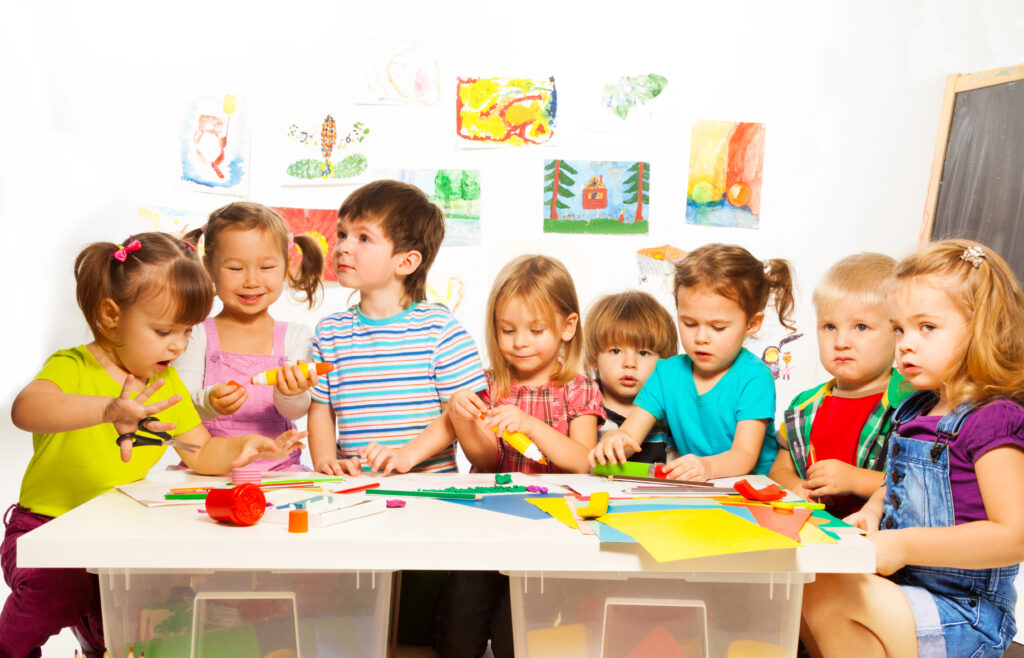
The study, published in the journal Proceedings of the National Academy of Sciences, followed 588 children from age 3 until the end of kindergarten, with 242 of the kids being awarded a spot in a public Montessori-style pre-k program via a lottery. The outcomes were studied through the end of kindergarten. Some of the children also attended Montessori-style kindergarten, and the researchers were unable to obtain complete data because, they report, some parents consented to participate in the study but did not respond to subsequent communications.
The students who participated attended one of 24 different Montessori-style programs across the U.S. Then they were tested at one-year intervals in a blind study where testers did not know this was an examination of Montessori outcomes on a series of skills:
Children were individually tested by professional data collectors in the fall of 2021 and for the three subsequent springs (2022, 2023, 2024) on reading, vocabulary, math, executive function (HTKS), memory (forward and backward digit span), persistence, social problem-solving, and social understanding (Theory of Mind Scale).
The Outcomes Show Merits Of Montessori Education
The researchers acknowledge that their data are limited by the inability to collect data from all students and by coverage ending at the end of kindergarten. That said, the data they gathered show strong positive effects of this type of education, and the results warrant further examination, both with larger groups of students and over longer periods.
The tests examined kids’ abilities in word and letter recognition, in memory (repeating patterns of digits), in executive function (carrying out tasks), and in theory of mind (understanding that another person may have different perspectives, feelings, and thoughts).
Kids from the Montessori group outscored the control group in all these areas, and to a smaller degree (but still significantly) in tests requiring them to repeat a series of digits in reverse order, match words to images, and carry out math functions.
Why Does This Matter?
During the preschool years, children’s brains are growing rapidly and are primed for learning. It’s well established that early education is a significant advantage for lifelong learning and retention.
However, as the study authors acknowledge, there’s still considerable controversy around early education, because formal education is characterized by extensive paperwork, testing, and scoring, and sitting still — all factors that are not so compatible with younger children.
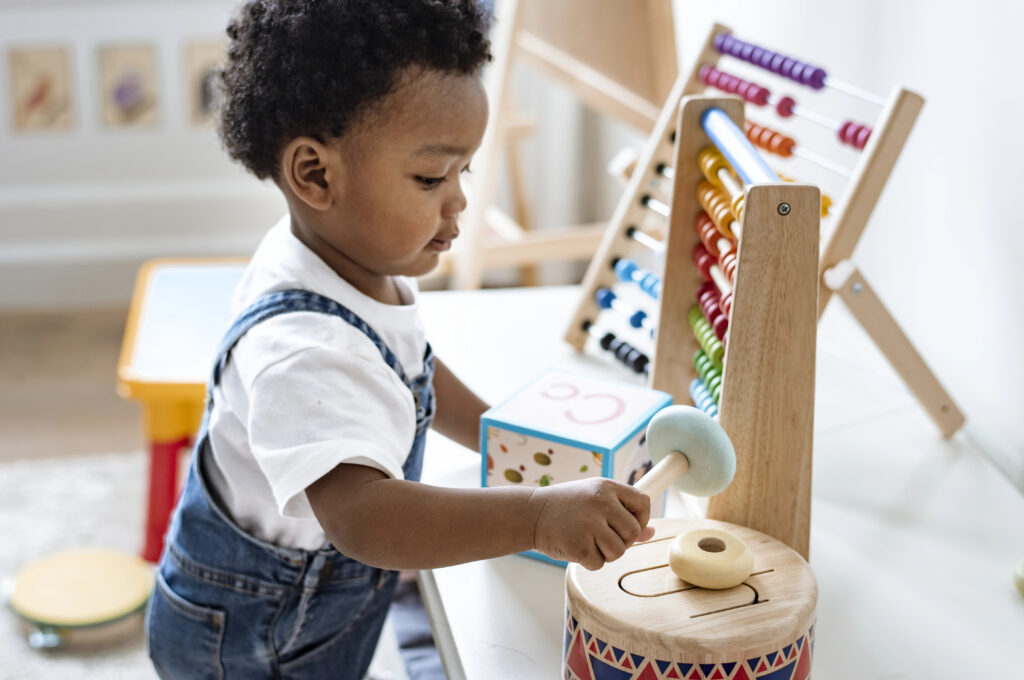
Montessori-style learning takes this into account and meets kids where they are. For preschoolers, learning is predominantly achieved through play and engagement with interests.
It seems intuitive that this style would work better for kids, and observational anecdotes have borne this out over generations, but researchers wanted hard data that could be presented clearly. This could be especially relevant to policy debates over preschool accessibility.
