

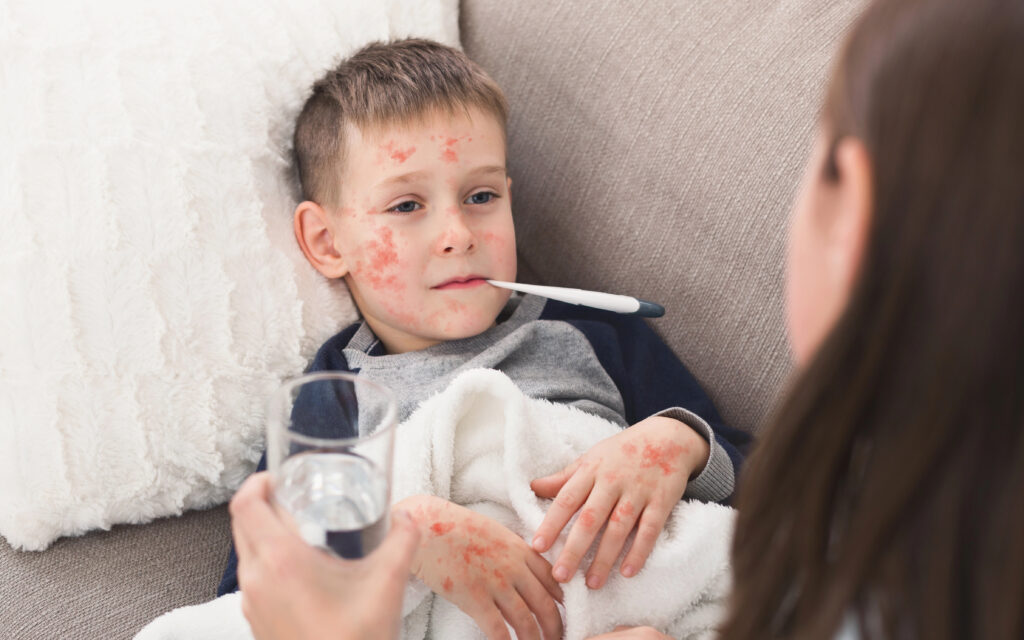
A measles outbreak traced back to Spartanburg, South Carolina, is hitting neighboring North Carolina hard, but there are also documented cases spreading as far away as Ohio and Washington that originated in the same outbreak.
The disease has been on the rise across the country, with the increase in parents who dodge the vaccine for their children, many filing for nonmedical exemptions to school requirements. The spread is predominantly centered in communities with high levels of antivax sentiment, although people who cannot receive the vaccine, and some with compromised immune systems, can also be at risk.
Here’s what parents should know about the current outbreak, and how to protect your children from it.
Spartanburg, SC, Is The Epicenter Of This Outbreak
The outbreak began in Spartanburg, and according to WYFF4, the majority of the cases are still there, with further cases appearing in Greenville, Anderson, and Columbia. However, the four most recent known exposure locations, including the South Carolina State Museum and the Walmart on Cedar Springs Road, mean that, until at least the 28th of January, officials say people in the area who may have been exposed should continue to be on the lookout for symptoms.
As of Friday the 16th, there are 531 people in quarantine and 85 in isolation. Another 124 cases were confirmed between Tuesday and Friday. Of the total 558 confirmed cases, 483 are in unvaccinated people; 6 in people who were partially vaccinated; and 56 of unknown status. Only 13 cases occurred among individuals known to be fully vaccinated, highlighting how rare the infection is when protected.
The state has attempted to identify individuals who were exposed to the disease and quarantine them, but over the Christmas holidays, the Post & Courier reports that many families traveled to visit loved ones, and there’s evidence that some brought measles along for the ride.
“A family from South Carolina took a trip to the Seattle area from Dec. 27 to Jan. 1 before flying back. The family visited at least four cities and hit three different restaurants, went to a church and a trampoline park, before dropping off a rental car and flying out of Seattle-Tacoma International Airport, Snohomish County Health Department reported.”
Upon return, the family reported symptoms in their children. Now two Seattle schools have closed due to exposures.
Neighboring North Carolina Suffers From SC Outbreak
North Carolina health officials are reportedly not considering the cases in their state a separate outbreak. Instead, they trace these back to the Spartanburg contagion. (There are two basic ways to trace the origin of an outbreak: by tracing contacts and by comparing strands of the virus, which can mutate over time.)
However, describing it as part of the Spartanburg outbreak doesn’t mean that NC is avoiding the problem. As of Friday, NC officials are reporting 8 confirmed cases across 4 counties. That’s one case each in Carrabus, Rutherford, and Polk Counties, and 5 in Buncombe. Though for privacy reasons the state isn’t giving out much identifying information, officials did share on Thursday that two new cases had hit unvaccinated siblings.
Health officials in North Carolina are urging parents to ensure their children are up to date on vaccinations, including the MMR vaccine, which protects against measles (as well as mumps and rubella).
What Should Parents Watch For?
If you think your child may have been exposed to someone infected with the measles, contact your local health department. They may request that your child quarantine for a period of time.
It can take between 7 and 14 days from the time your child is exposed to the virus until symptoms appear. However, your child may be contagious as early as 4 days before the rash appears, meaning that it’s possible to spread measles to loved ones and strangers before you’re even aware your child has contracted the virus.
The typical symptoms can be mild in many people, but may be more severe in children under age 5, adults over age 20, pregnant people, and those with compromised immune systems. These groups are more likely to suffer additional complications, according to the CDC.
Even symptoms described as “mild” can be miserable. They typically start with a high fever (potentially 104° or higher), a cough and runny nose, and red watery eyes.
A few days later, white spots appear in the mouth, followed by the measles rash. According to the CDC:
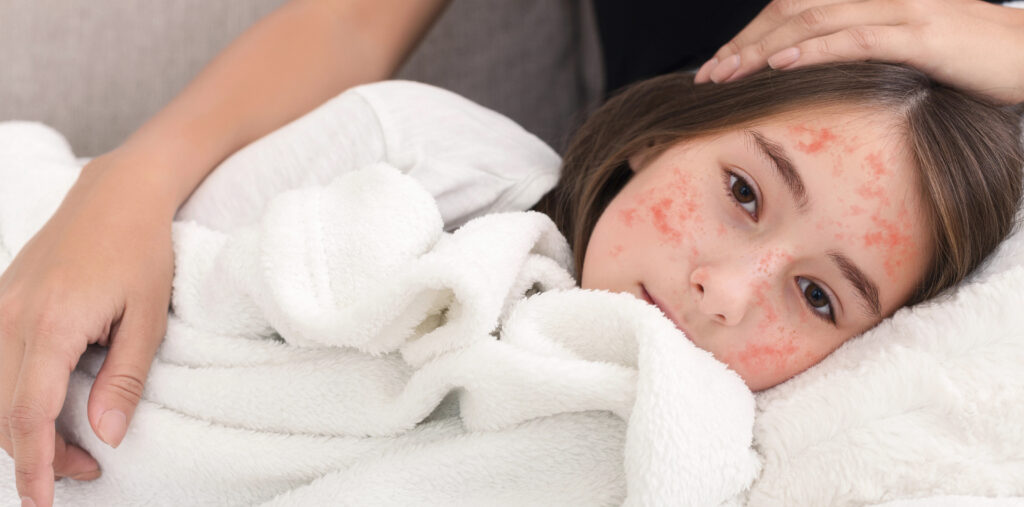
“It usually begins as flat red spots that appear on the face at the hairline. They then spread downward to the neck, trunk, arms, legs, and feet.”
This is commonly accompanied by additional fever spikes.
The most common complications are ear infections and diarrhea. More severe complications can include pneumonia and encephalitis (swelling of the brain, which can result in permanent deafness or intellectual disability). In pregnant women, measles can cause premature birth.
Vaccinations & Herd Immunity Are Key
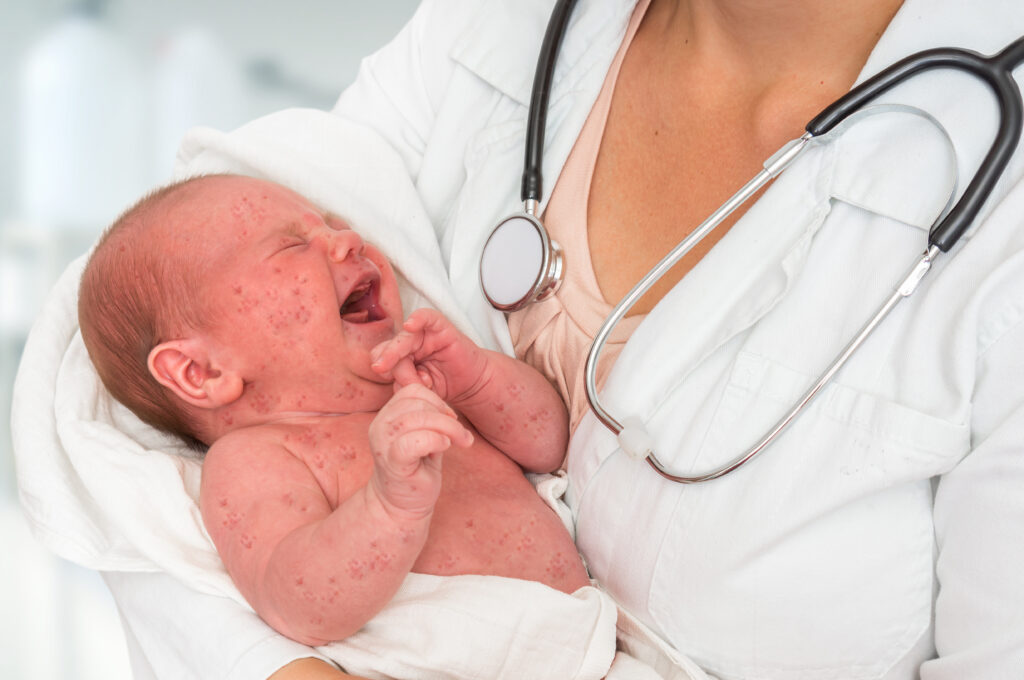
Not everyone can take the measles vaccine.
Children typically receive their first dose of the MMR vaccine at 12-15 months, and a second at 4-6 years of age. The CDC says the vaccine can be given to children as young as 6 months old if they’re at increased risk (such as living in an area with a current outbreak), and children may receive their second dose at a younger-than-usual age under similar circumstances.
However, most children under age 4 will not be fully vaccinated, and children under 6 months cannot receive the MMR vaccine. (Side note: while about 1 in 5 people infected with measles will be hospitalized, this risk is much higher for children under age five.)
The recent shifts in vaccine schedules and recommendations at the federal level, as well as the spread of antivax conspiracy theories and sentiments, can further complicate this, resulting in more children remaining unvaccinated past the point when they would typically have received their shots.
Some individuals with specific medical conditions, including prior allergic reactions to certain vaccine components, may also be unable to receive the vaccine.
Some small percentage of individuals who are fully vaccinated may still not be protected against the virus due to conditions, including immune disorders, which they may or may not be aware they have. By contrast, the National Foundation for Infectious Diseases estimates that about 90% of unvaccinated individuals who come into contact with the virus will contract it.
However, it’s impossible to contract the virus without exposure, which means that maintaining high vaccination rates nationwide can keep infection levels near zero.
