


For many parents trying to conceive, IVF, or in vitro fertilization, has been a miracle and a game-changer. The process can be expensive and arduous, but the result, for many patients, is a successful pregnancy and a precious new life.
Now, researchers are working on a technology that could make the process a little less painful, at least in the initial stages, by eliminating daily injections.
There’s a long way to go before the needle-free option could be on the table for patients, but early testing is providing hope that it could be in the future.
Hormone Injections Are A Standard Part Of IVF
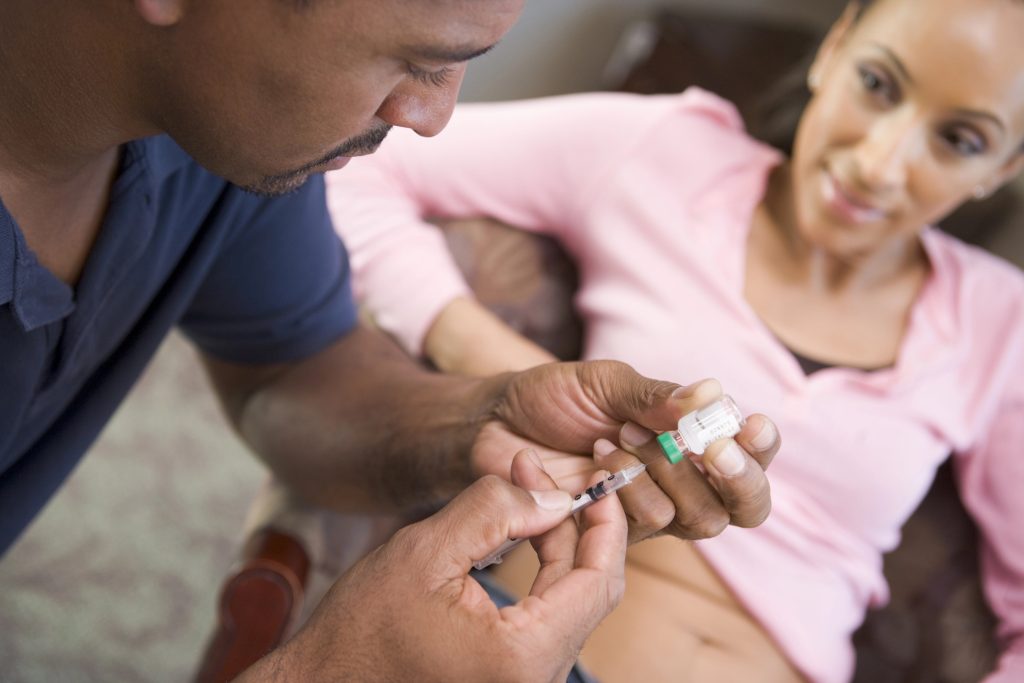
In a typical reproductive cycle, one ovary releases one mature egg. However, there’s no guarantee that any single specific egg is viable, so even under ideal circumstances, fertilization and implantation is a gamble each time. In IVF, the goal is to harvest several eggs at once to increase the likelihood that a single treatment cycle will be successful.
Since the body doesn’t naturally release this many mature eggs at once, a patient begins daily hormone injections to stimulate superovulation. As the National Institutes of Health documentation explains, this can involve 8 to 14 days of injections, while egg maturation is monitored by transvaginal ultrasound and blood tests, followed by another injection, this one of the hormone hCG, to prompt the body to release those eggs for harvesting.
What that all adds up to is many, many needles — which can be a sticking point (no pun intended) for some patients, and also has other drawbacks. There’s the risk of missing or forgetting a dose, and the simple hassle of putting oneself in pain (and enduring tissue trauma) repeatedly.
Microneedle Patches Are A Potential Game-Changer For Several Aspects Of Medicine
Microneedle patches are the next step up from transdermal patches. Instead of applying a medication that is absorbed through the skin, they would offer direct administration for treatments that can’t be absorbed but must penetrate the skin.
The technology is currently in animal trials and has been used in some human trials for vaccines and innumerable therapies, as well as for biopsy applications, according to ScienceDirect.
Aside from painless delivery, there’s also a potential to use the patches with dissolving technology for time-release.
In the context of IVF, this could reduce hormone spikes through gradual release and reduce the risk of a missed dose.
The Current Research On IFV Patches
In a paper published in the journal Small, a group of researchers discusses their hopes for using microneedle patches to deliver the daily shots that make IVF possible.
They say that use of different polymers can make a patch that could gradually deliver dosages over as much as a month (well past the two weeks of injections for IVF) and that it could eliminate not only painful injections, ut the risk of human error in dosage.
They’re currently working with a version of the patch that releases a bolus of leuprolide, a gonadotropin used in IVF to stimulate egg maturation.
By using nanoparticles coated with light-breakable mesoporous silica, the research team believes they’ve found a way to address the challenge of controlling release rate. The process involves hitting the patch with a burst of near-infrared light, which breaks the nanoparticles and delivers a dose.
So far, they see success in rats. When the process can be trialled in humans, it could not only be a step toward making one part of IVF much easier, but also be used for other daily injections, such as for diabetes.
