
Parenting styles aren’t formed in a vacuum. They’re shaped by culture, personal history, and family dynamics; by the values parents were taught, the fears they carry, and the lessons they consciously or unconsciously pass down. Over time, these choices ripple outward, influencing not only children but also other parents, subtly shaping how the next generation is raised.
In 2026, parenting styles are often defined and labeled to help families make sense of their approach; what’s working, what isn’t, and why certain patterns keep repeating. These frameworks aren’t about prescribing a “right” way to parent, but about giving parents language and insight to better understand their own instincts and decisions.
No family fits neatly into a single category. Still, learning how different parenting styles work in real households can be incredibly valuable, offering practical ideas that parents can adapt, refine, or intentionally avoid as they shape their own family dynamics.
I’ve included information on each parenting style: the approach, the goal of each style, the types of parents who tend to use each style, and the “warmth and control” profile of each approach.
Helicopter Parenting
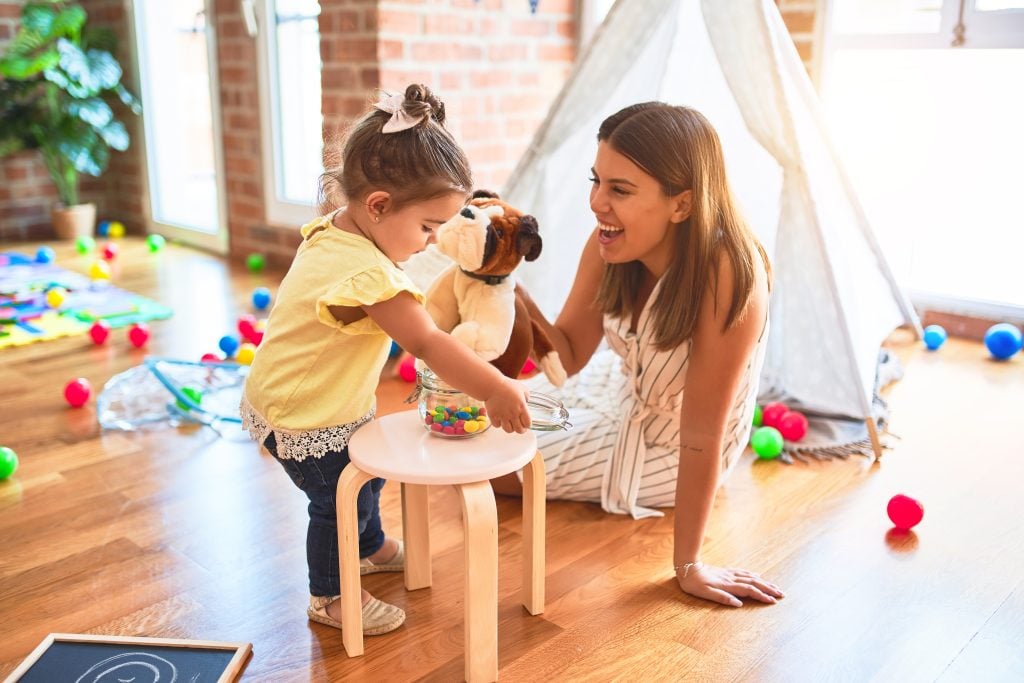
Warmth / Control Profile: High Warmth, High Control
Type of Parent: Highly involved, protective, and vigilant.
Goal: To protect children from harm and ensure success by minimizing mistakes and setbacks.
Like a helicopter hovering over the ground before landing, a helicopter parent refers to the lingering imagery of a helicopter. Helicopter parents tend to be overprotective and micromanage their children’s decisions. A helicopter parent could behave this way out of fear for their child’s safety or to give their child a different life than they had.
Pros and Cons of Helicopter Parenting: Like all parenting styles, there are pros and cons to being a helicopter parent. One benefit is that kids genuinely feel protected and comfortable with their parents, especially when problems or struggles are addressed early. A con, however, is that a child may not feel confident in their own abilities because their parents always had control.
Lawnmower Parenting

Warmth / Control Profile: High Warmth, Very High Control
Type of Parent: Driven, problem-solving, and outcome-focused.
Goal: To create a smooth, frustration-free path that maximizes achievement and minimizes struggle.
Like most parents, lawnmower parents want the best for their kids. Just as a lawnmower demolishes weeds, tall grass, and cuts sticks, lawnmower parents tackle every hurdle in their child’s life. Lawnmower parents devour challenges so their child has an easy, seamless upbringing.
Pros and Cons of Lawnmower Parenting: The pros of being a lawnmower parent include helping kids achieve their goals, fostering a close bond with their parents, and driving them. The cons are that they may not have the skills to handle life’s obstacles and struggle to be independent without their parents.
Authoritative Parenting

Warmth / Control Profile: High Warmth, High Control
Type of Parent: Nurturing, supportive, and communicative.
Goal: To raise confident, socially responsible, and self-regulated children.
Authoritative parenting is increasingly popular among younger generations. It’s a combination of boundaries and warmth. Parents set clear rules and guidelines for their children to follow. When children disobey or break the rules, parents warmly explain why and set realistic expectations. Consequences are fair and not open threats.
Pros and Cons of Authoritative Parenting: Children learn to set clear boundaries for themselves and aren’t afraid of consequences when they make mistakes because their parents calmly and fairly explain what those consequences are. Kids are independent and generally think longer before doing something. The cons of this parenting style are that it requires a lot of patience on both sides. Parents should regulate their emotions before calmly explaining the situation to their child.
We cover many types of parenting styles and authoritative parenting is one style has had led to children developing an “odd skill” later in life.
Slow Parenting

Warmth / Control Profile: High Warmth, Moderate Control
Type of Parent: Present, reflective, and relationship-focused.
Goal: To foster emotional well-being, resilience, and meaningful family relationships.
In a world where everything is fast-paced and instant, slow parenting is an effort to slow everything down. Rushing can stress families, leaving them to miss out on special moments or small wins. Effort is put into outdoor time with limited electronics, and the entire family makes decisions together.
Pros and Cons of Slow Parenting: Being a slow parent allows kids and parents to feel seen and heard. Emotions are supported, and days are more relaxed. Schedules are lax, mornings are calm, and kids learn to handle their boredom for what it is. One con of slow parenting is having to adapt to a non-slow life. Others may have a hard time adapting to your slow lifestyle, and kids may struggle to relate to those with packed schedules.
Uninvolved Parenting

Warmth / Control Profile: Low Warmth, Low Control
Type of Parent: Detached, disengaged, and minimally responsive.
Goal: Often unintentional, but centered on minimizing parental effort or involvement.
Uninvolved parenting (also called neglectful parenting) is when parents have a standoffish approach with their kids. Rules and parental involvement in school and activities are limited, and emotional responses are few.
Pros and Cons of Uninvolved Parenting: Uninvolved parenting can be dangerous, especially if children are left unattended at a young age. With this approach, there are more cons than pros. Children are often insecure and have low educational standards. Self-esteem issues arise, and there are high-risk behaviors in teenagers. One pro of the style is that children become self-reliant early and learn to problem-solve because there’s no guidance.
Permissive Parenting

Warmth / Control Profile: High Warmth, Low Control
Type of Parent: Affectionate, lenient, and child-centered.
Goal: To maintain harmony and ensure children feel loved, heard, and free to express themselves.
Permissive and Authoritative parenting styles are similar. Permissive parenting offers boundaries and rules while also showing warmth and love in its delivery and responses. Permissive parenting takes a “hands-off” approach, aiming to be their child’s friend rather than their parent. Parents are affectionate and responsive, but also enforce rules by what they deem correct.
Pros and Cons of Permissive Parenting: One pro of permissive parenting is the ability to express emotions calmly and appropriately. Kids feel loved and confident, think freely, and can feel themselves. One con is that kids don’t have self-control or know what’s expected when they can’t do exactly what they want all the time.
Crunchy Parenting

Warmth / Control Profile: High Warmth, Variable Control
Type of Parent: Health-conscious, intentional, and values-driven.
Goal: To support physical, emotional, and environmental well-being through mindful living.
Crunchy parenting is a style that’s gotten a lot of traction on social media. Crunchy parents are health-conscious, holistic, and environmentally friendly. Non-toxic household items are important to crunchy moms, and living sustainably is important to them. Crunchy moms believe that living this way supports their family’s overall mental and physical health.
Pros and Cons of Crunchy Parenting: Eating fewer processed and toxic foods can create healthier, better-balanced families. Keeping the mind and body as the main focus while also consciously caring for our planet are benefits for crunchy parents. A con to crunchy parenting, however, is that worrying about the mind-body-earth connection can cause anxiety or fear in children. It can also be expensive to live sustainably and organically.
Gentle Parenting

Warmth / Control Profile: Very High Warmth, Low to Moderate Control
Type of Parent: Empathetic, emotionally attuned, and patient.
Goal: To raise emotionally intelligent children who can self-regulate and empathize with others.
Gentle parenting is exactly that: Gently parenting a child through the highs and lows. The style focuses on quietly understanding and emphasizing with a child. Respect and choices are given instead of clear-cut demands. The main objective of gentle parenting is to raise kids who self-regulate their emotions and have empathy and understanding for others.
Pros and Cons of Gentle Parenting: One benefit of gentle parenting is that children have respect and sympathy for themselves and others. A deep understanding of emotions, actions, and repercussions is a given for those who are deeply in tune with their feelings. As always, there are some cons to gentle parenting. Sometimes, gentle parenting isn’t practical for every family because it requires extreme patience. Clear boundaries or consequences can also get confused with this approach.
Tiger Parenting

Warmth / Control Profile: Low to Moderate Warmth, Very High Control
Type of Parent: Achievement-driven, demanding, and structured.
Goal: To ensure academic excellence, discipline, and long-term success.
Tiger parenting’s main goal is to help their children excel academically, as parents set high expectations for discipline and brilliance. Like a tiger in the jungle, a tiger parent micromanages their young to help them succeed in life. Tolerance for failure is low, and standards for thriving are high.
Pros and Cons of Tiger Parenting: Children with tiger parents often have high grades and strong academic records and resumes. They have a strong work ethic and appreciate structure. However, children with tiger parents tend to have high stress, a need for gratification, and a fear of failing.
Dismissive Parenting

Warmth / Control Profile: Low Warmth, Low to Moderate Control
Type of Parent: Emotionally unavailable and minimizing.
Goal: Often unconscious, but rooted in emotional avoidance or discomfort with vulnerability.
Dismissive parents tend to be emotionally unavailable. They minimize feelings and ignore emotional and physical needs when a child is in distress. It’s not that a dismissive parent doesn’t care; they just can’t show up for their child in the emotional way children need to thrive.
Pros and Cons of Dismissive Parenting: One possible benefit of having a dismissive parent is that children learn to be independent early in life. They can problem-solve on their own and stay calm in tense moments. However, there are more cons than pros to dismissive parenting, as children grow to learn their feelings are unimportant. They’ll learn to avoid others, have trust issues, and be emotionally closed off.
Attachment Parenting

Warmth / Control Profile: Very High Warmth, Moderate Control
Type of Parent: Bond-focused, responsive, and nurturing.
Goal: To build a strong emotional bond that fosters trust, security, and healthy relationships.
Attachment parenting centers itself on the close bond between parent and child. The universal connection between parents and children is the focus of attachment parenting. Things like breastfeeding, tummy time, and co-sleeping are prime examples of attachment parenting. In return, parents and children have a connection with trust, understanding, and closeness.
Pros and Cons of Attachment Parenting: Because attachment parenting leans into spending a lot of time together, children feel safe with their parents and deeply trust them. Children (and adults) feel comfortable sharing their emotions and expressing themselves because of that sense of knowing and trust. Some downsides to attachment parenting are separation anxiety from both parties and general exhaustion from the parent.
Free Range Parenting

Warmth / Control Profile: High Warmth, Low Control
Type of Parent: Trusting, independence-focused, and confidence-building.
Goal: To develop independence, resilience, and real-world problem-solving skills.
Children learning to explore their independence without hovering parents is the key to free-range parenting. The style advocates that children find independence in a safe environment. This could mean letting their children bike to a friend’s house on their own, giving them time to be outside alone, etc. The style is to trust a child’s thought process and to teach self-reliance.
Pros and Cons of Free–Range Parenting: One benefit of free-range parenting is that children tackle problems without seeking help. They can assess risks and recover quickly. A major drawback of the style is safety: mistakes and accidents are more likely without parental monitoring.
Authoritarian Parenting

Warmth / Control Profile: Low Warmth, High Control
Type of Parent: Strict, rule-oriented, and authority-driven.
Goal: To maintain order, discipline, and respect for authority.
Authoritarian parenting has also gained some attention in mainstream media. The style has parents as the rule-makers, a means for their children to show respect. Obedience, control, and discipline are the goals. Often, rules or boundaries are given to the child without explanation. A “Because I said so” moment is a great example.
Pros and Cons of Authoritarian Parenting: The pros of authoritarian parenting include household structure. Parents and children know the expectations. Children are well-behaved and respectful to those around them. Anxiety and poor parent-child relationships are some of the cons. Children may rebel later on if they are unable to express themselves freely.