

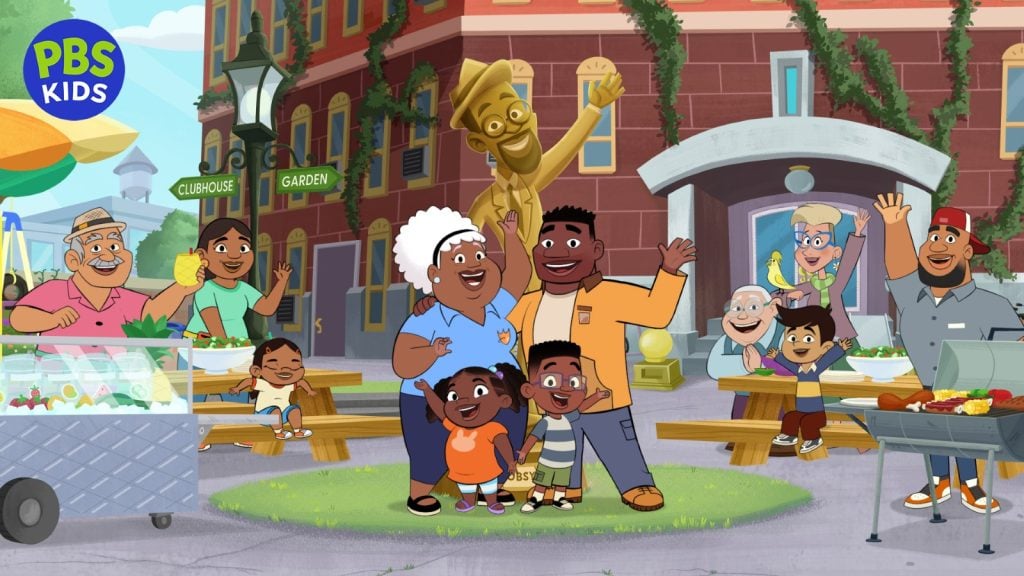
Phoebe & Jay is a brand new preschool animated series produced by Phoebe & Jay Productions and launching on PBS Kids February 2, 2026. The 11-minute episodes follow twins, Phoebe and Jay, as they play and have adventures around their apartment complex, the delightful Tobsy Towers. The twins meet a slew of colorful and interesting neighbors while learning about something all kids need to know: literacy, reading, and recognizing the texts in their everyday lives.
According to The Nation’s Report Card, as of 2022, only 33% of American fourth-graders are at or above the NAEP Proficient standard in reading. This is a drop compared to 2019. The key to raising these numbers is catching kids when they are young.
Phoebe & Jay is a show that preschool and younger kids can watch with their parents, helping them recognize words and phrases they see day-to-day. Mailing labels, signs and other texts are read and analyzed by the twins as they discover literacy through play.
Phoebe & Jay go beyond TV as well, with several simple video games based on show stories debuting on PBSKids.org alongside episode releases. In both media, Phoebe & Jay make learning about literacy a fun, story-driven adventure for kids. Parents watching with their kids can encourage them to be curious about words and texts and gently ease them into reading in a way that isn’t overwhelming or dry.
I recently had a chance to sit down with Phoebe & Jay show creators, Genie Deez and Thy Than, to discuss how the show evolved by putting community first and balancing education and fun so that kids don’t even realize they’re learning. We were also joined by Adriano Schmid, Vice President of PBS Kids Content.
The Genesis of Phoebe & Jay
Jeff Moss [Parenting Patch]: What was the original spark that led to creating Phoebe & Jay and the focus on making literacy and reading?
Genie Deez: We are really fortunate to have the support of the Ready to Learn Grant. That’s what funded our pilot, so part of the grant’s focus was a literacy-based project, given how important literacy is and how those skills are developing in kids 3 to 5. Thy and I had a chance to create these characters in a world that we can invite kids into, to hang out with these characters, but also engage some of those skills that they are just starting to recognize in themselves. We’re really fortunate to have received the Ready to Learn grant, which helped us get started.
Thy Tran: Genie and I grew up as PBS kids, and children’s media is very important to us. So when this opportunity came, it was just pretty much kismet. We were both Fred Rogers Memorial Scholarship winners, so we understand and appreciate respecting children, especially young children. Their minds are so malleable at this age, and so you want to give them the best. I always say, if you’re going to feed them something, try not to feed them junk food; let’s try to feed them some organic food, some really positive, awesome things.
Jeff Moss: Adriano, from PBS Kids’ perspective, what stuck out about Phoebe & Jay that grabbed your attention?
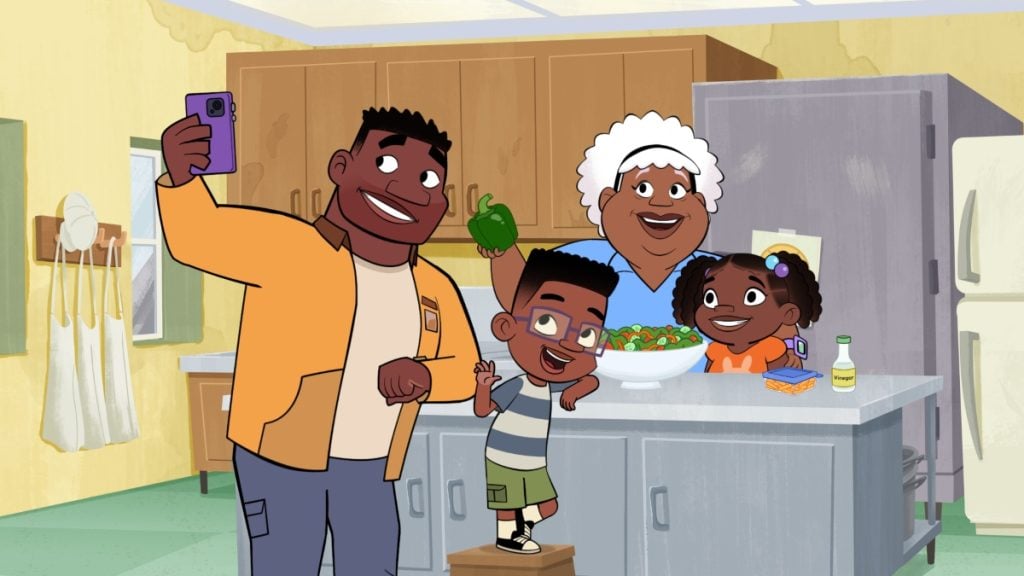
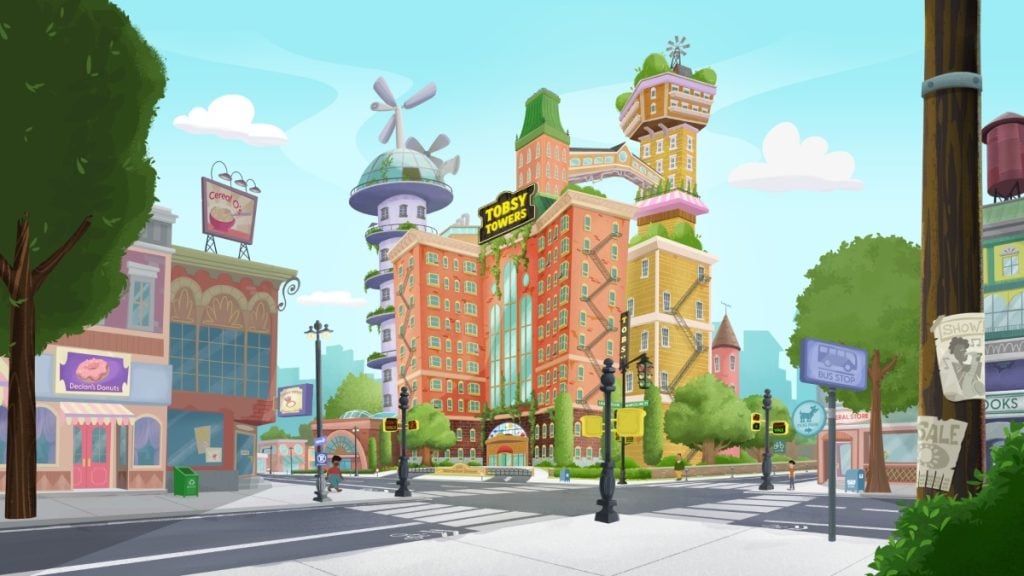
Adriano Schmid: From the beginning, Genie and Thy were brimming with ideas for the characters, the world, and adventures that comprise Phoebe & Jay that felt heartfelt, funny, and unlike anything we had seen. They brought depth and perspective to all the elements of this series, with this family of a single dad who’s doing his best, a grandmother who supports them (and is a force of nature in her own right), and the twins, so different and so lovingly dedicated to each other. And the setting of the Tobsy Towers, an old, grand hotel converted into affordable housing, makes for wonderful adventures.
Each episode feels unique to the series, and we couldn’t wait to dive into this world. It felt like the perfect match to the curriculum goal of making children familiar with all of the texts surrounding them, helping them navigate their world, and an ideal showcase of how children can become active members of their community.
Jeff Moss: So, with that in mind, how did you approach balancing the educational aspects of Phoebe & Jay with making it fun and engaging for kids?
Thy Than: It was really challenging. My background is animation, and I’m a storyteller first. Genie and I, and the whole team, believe that you have to keep kids engaged for them to actually learn. And the best way to keep them engaged is to keep them engaged through story. So we’re very story-focused first. And then we weave the curriculum into the story. So the kids run into a problem, like an everyday problem that any other kid would run into, something very relatable, something very engaging.
They run into a problem, just like some kids would run into in real life, and the text helps them solve the problem. So it’s very contextual. And it’s very comprehensive, so it’s not just decoding. It’s very holistic and engaging: it’s a story that can happen to you, and the live-action interstitials reinforce that.
I have learned so much about preschool, and the challenging part is repetition, because that’s how kids learn. You have to keep it simple and keep it slow. A lot of shows are very whiz-bang these days, and we are very cognizant of that. We have such great advisors. Kelly Cartwright is our lead advisor, and from 3 to 4 to 5, their minds are so different. You have to approach kids where they are. That’s a key PBS goal: to meet kids where they are, mentally and developmentally. I call it the Mr. Miyagi effect because they don’t realize that they’re learning. It’s like literacy karate at your fingertips.
Also, we like to make shows that we want to watch as well, so we tried really hard to make this a show that adults will also find humor in. As a result, we’ve been working to engage caregivers. Parents, grannies, everybody.
Stories Drive The World of Phoebe & Jay
Jeff Moss: Each episode of Phoebe & Jay is a very different story from the previous one, but still features the same skills. When trying to figure out a season of shows like that, where did you draw inspiration for the story aspect of things from?
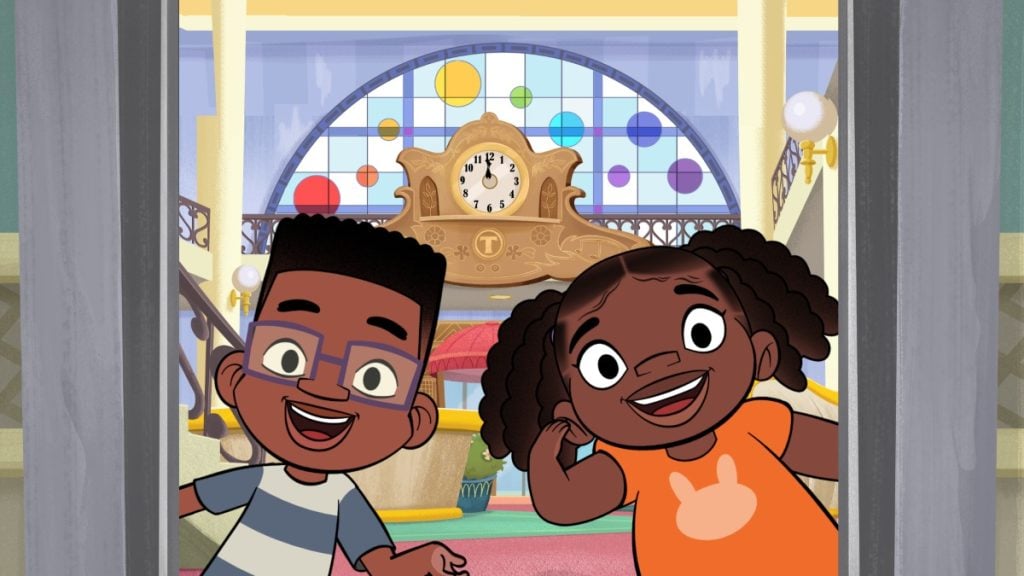
Genie Deez: There’s a lot of literal me and Thy in there. We’re just pouring our hearts and souls into it. For example, the episode that was about Grandma Annie helping the kids find a bird that got loose in Tobsy Towers. I lived with my Grandma Annie, and I did magic, and my bird got loose, and I had to beg her to help me find this bird outside. We never found that bird, by the way. That bird is halfway to Mexico. But there are a lot of us just, like, drawing from our own experiences that go into the show.
Thy is such an artist in that she’s put Easter eggs of ourselves in there. Like, we’re literally in the show. The writers and folks behind the scenes, too. Our hard-of-hearing writer wrote the episode about the hard-of-hearing character, and a hard-of-hearing actor played that character. It’s just coming from our lived experience.
Jeff Moss: It brings an authenticity to it, which I think is really cool. You know, because a lot of kids’ TV is fantastical, and there are some fantastical elements, you know, the magic building, Tobsy Towers, is wonderful. I want to live there!
Genie Deez: Yeah, there are blueprints and everything. There are floor plans; we really built out the place. It’s crazy.
Thy Than: We want to reflect real life in the animated portion, to be as close as possible as a child might see in real life, so that it connects, right? My art director and I joke that we can make a theme park at the end of the show. So, (laughs) we’ll see if we can get funding for that. Sure, I’ll make a theme park. Families come in different shapes, communities come in different shapes, and not everyone lives in a single home, so we have Tobsy Towers. The community living aspect had to be authentic and reflect our lived experiences and those of many of our viewers. So that they can see, ‘hey, that’s me’, because Genie and I didn’t see that when we were growing up, and so we just want to make sure kids see themselves.
Characters Were Carefully Cultivated To Reflect Authenticity
Jeff Moss: I found all of the characters in Phoebe & Jay to be really relatable and distinct from one another. They bring about a real sense of community. We live in a highly online world, and kids are playing together, but often not in the same room. How important was community to the setting of the show, as well as pushing forward the literacy and reading skills?
Genie Deez: It’s pretty important. The way Thy and I grew up, community was sort of what you leaned on, and so I think that’s part of our experience. The show offers so many ways for people to recognize themselves in it, and I think one thing we’re excited about is when you live in a community, there’re going to be people who think differently from you. So community is the backbone and a pillar of Tobsy Towers.
But there’s also an opportunity to collaborate with others, modeling different thinking strategies and ways to work together. We have the Global Village and the virtual village, but that’s different from being in person, talking to people, and coming up with solutions, finding common ground, and making compromises.
Thy Than: Yeah, we really want to encourage kids to be curious about their community, be curious about their neighbors, and by the end of the episode, we hope we empower them to have the courage to just go out and play. Just experience the world and help their community as well. They’re not just stuck in their apartment. They go out into the lobby, and they meet all the different neighbors, and they ask how they’re doing.
We designed the courtyard in a way that preschoolers can learn to ask their parents if they can go out, and it’s a safe space for them to explore. And we did that purposefully and intentionally. They have a kids’ clubhouse where they meet other kids and play with them. But there’s usually another neighbor around, just to make sure it’s safe. It’s all about hoping they feel empowered to explore their world, recognize functional and everyday text, engage with it, and, hopefully, recall, ‘hey, I remember that story.’
Jeff Moss: I find the setting of Phoebe & Jay so interesting because it does bring people together, and I love that. You mentioned that you really wanted the show to be a co-viewing experience. What is it you hope parents take away from it?
Genie Deez: I’ve learned a lot about reading in text with my own kids. I have a 1-year-old and a 4-year-old, so I’ve borrowed a lot. The whole point of this is that kids watch this with their parents and then kids go out into the world with power and go, oh, ‘I can do this’ with agency. It gives the parents a chance to say, ‘that’s how Dad talked about it with Phoebe and Jay, that’s how Grandma talked about it, we can talk about it too.’
I drive my daughter to daycare and sometimes I’ll be stressed and I’ll forget her water bottle, or forget some part of her lunch, and the other week, she was just like, ‘maybe you should make a checklist, like Grandma Annie.’ Similarly, we want kids to feel empowered to navigate text, and we want parents to feel empowered to have these conversations and talk about reading with their kids, too. All caregivers, you know, babysitters, parents, older siblings, everyone.
Jeff Moss: I really connected with Phoebe and Jay’s Dad, Pete. He’s very calm, patient, and nurturing. Often in kids’ media, the dad character ends up the bumbler, or a bit more out there. You rarely see a character like Pete, and you also rarely see a single dad.
Genie Deez: And you’d never see a single black dad. There are so many tropes about the absent father, so it was a chance to show us black dads out here. I’m not a single dad, but a lot of Pete’s life was shaped by Jonathan Langdon, our actor. We wrote Pete to be funny and charismatic, and then Jonathan sort of brings in a whole new life. He has twins, no?
Thy Than: I think he does.
Genie Deez: I want to say he has twins, so there are so many ways he connected with the material and brought life into it. We hope people love Pete. We love Pete.
Jeff Moss: Grandma’s great, too, but Pete really stuck out for me.
Thy Tran: And that’s what we hope, you know? We hope everyone connects with a specific character. We’ve made such a vast character line-up with such great personalities that we hope that everyone can elate. We give them depth, and we have them do dad jokes, too, which is pretty funny. I always like dad jokes.
Jeff Moss: I believe dad jokes are legally required.
Genie Deez: (laughing) Yeah, yeah.
Learning Through Play Led To The Development of Companion Games
Jeff Moss: Learning through play is very important in Phoebe & Jay. Were you able to pull from your own experiences, in terms of the games they might play, or was that something that just kind of evolved naturally?
Genie Deez: A lot of it we had kind of a built-in audience, as one of our curriculum advisors has children, I have children, and so, we can see from there in our little internal audience. We do have a game Thy is producing, and that’s a way to extend the gameplay from the episodes into the online space. But it was definitely top of our mind, like you said. Pete and Grandma are part of that play, and the fact that they can do that with them, that they live and play, that’s how we hide in a lot of the curriculum.
Thy Than: One of our themes is that things don’t have to be the best to make the best of things. So, we always played when we were kids. You were too busy playing to recognize that reality and it’s not until you go to school and you compare yourself to other kids, you realize what you don’t have. We always want Phoebe & Jay to be asset framing. So we really encourage play, because that’s a way of finding the joy in life. I think if you’re having fun, especially behind the scenes, it’s gonna show up on the screen, and so we just encourage that with our writers and animators from story conception all the way through boards and animation.
Jeff Moss: One of the very cool things about Phoebe & Jay that extends beyond the show is the companion video games. Was the show designed with the games in mind, or was that something that came later?
Thy Than: We knew that we had to make the games, and we’re making five. We watch the episodes, then identify which ones would make a good game and translate well. There’s an episode that’s coming out that I’m super proud of about the functional text of video games. And so the game in the episode is gonna kind of be the game that we’re making, so that kids can technically play with Phoebe and Jay.
Adriano Schmid: Games are a critical part of our multiplatform approach to our PBS Kids series and have always been part of the plan for Phoebe & Jay. Games are the primary way kids spend their screen time (outside of TV). They are a natural extension of our multiplatform series and, in this case, allow kids to interact with Phoebe and Jay in new and exciting ways. Plus, they have been shown to reinforce learning and inspire kids to emulate what they just played online in the real world.
In this series and its curriculum focused on everyday literacy, kids will learn new dance moves, play with clothing labels, checklists, diagrams, and other activities that may have felt beyond their understanding. Games are also an exciting way to reach new kids and families and encourage the interactivity and co-playing that this series lends itself to. Games have been a part of PBS Kids’ multiplatform content for over 25 years. PBS KIDS offers the largest library of free, educational games for kids, with more than 340 across platforms.
The Webby- and Kidscreen Award-winning PBS Kids Games App, named the top gaming destination for kids ages 2-5 in the U.S., is a key part of PBS Kids’ commitment to making a positive impact on children’s lives through curriculum-based media. We’re excited to launch Phoebe & Jay’s Dance Party game, which will debut on pbskids.org and the PBS Kids Games app in tandem with the series launch on February 2.
Players will help the twins get ready for themed dance parties by finding inspiration at the Pass- It-On table, making posters, sorting party outfits by size, dressing up, and learning special dance moves. Additional games will roll out after the premiere and will be available in both English and Spanish.
Thy Than: As we mentioned before, PBS Kids meets kids and families where they are, so we offer wonderful animated episodes with live-action interstitials you can watch, and we also have games. I think that’s one of the strengths of PBS: they’re always evolving and trying to meet kids where they are. And so they have all these great digital games now, because, as Genie noted, there are different modes of teaching and learning, and some kids learn better through interactive play. So we’ll have games as well.
We’re launching with a dance party game when the show debuts, and we have another game that’ll launch a month later— Signs and Seek. But everything’s reinforcing the curriculum and the everyday text. It’s a different mode and a different way of learning the same texts that they learned in the episode.
The State of Kids Content and Public Broadcasting
Jeff Moss: Adriano, before we go, given all that’s happened with funding public broadcasting in the last year, does PBS Kids have strategies to keep kids’ content coming?
Adriano Schmid: Last year was defined by two major losses in our funding structure— the early termination of the Ready to Learn grant from the US Department of Education and the rescission of federally appropriated dollars. This has not changed the core of our mission, but we’ll need to forge new paths in this funding environment to continue supporting the well-being of children and deliver new content that positively impacts their lives.
We had to shift priorities, develop new strategies to adapt to this landscape, and reduce certain activities and offerings to align with the new funding realities. For instance, we no longer have the resources to support the ability for users to download games from the PBS Kids Games app for offline play, an accessibility feature that was instrumental for families on the move, or, more importantly, without reliable access to the internet. To restore key elements of our offerings (we hear you, parents!) and continue nurturing our content pipeline, we’re pursuing additional funding sources to fill the gap.
I also want to acknowledge the continued support from families across the country, which has made us even more determined to find new paths forward. We’ve received simple, heartfelt messages about our impact, along with children sending their allowances or asking guests at birthday parties to donate to PBS Kids in lieu of gifts. That means so much to us. All that to say, PBS Kids is still here, and our mission to provide accessible, high-quality, educational media to kids and families in the US won’t change. You can find us on your local PBS station, pbskids.org, and the PBS Kids Video and Games apps!
Phoebe & Jay debuts on PBS Kids February 2, 2026, along with the Phoebe & Jay’s Dance Party game, which will arrive on pbskids.org and the PBS Kids Games app in tandem with the series launch.

