

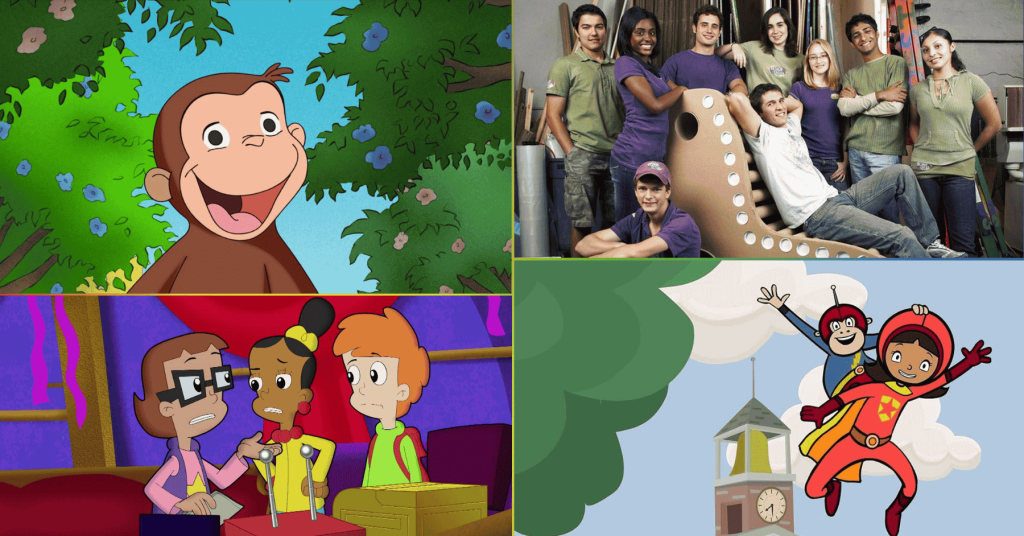
It’s no secret that public broadcasting is in rough shape these days. Cuts to funding, difficulty reaching kids, and the diversity of their educational needs make creating kids’ content that resonates difficult, but not impossible. PBS Kids shows teach a wide variety of skills in fun, adventurous ways that keep kids engaged without realizing they are learning.
Launched in 1999, PBS Kids is a channel, app, and website built and maintained by PBS. PBS Kids has long been one of the top destinations for new and exciting programming for kids that aims to “reach them where they are” and develop viewing habits that educate, entertain, and create not just skills but memories as well.
The 2000s were a golden era for PBS Kids, marked by the launch of the PBS Kids GO! block for older children and a surge in high-quality educational programming. This decade introduced many of the most iconic “edutainment” series that still resonate today. The following are some of the biggest and best shows released between 2000 and 2009, available to stream on PBSKids.org and other PBS Kids apps and channels.
Alongside the best PBS Kids shows of the 2000s, I’ve included the recommended age range for each show, but many older kids will still love many of the shows intended for a younger audience, and vice versa, so use your best judgment as a parent and let your kids choose whatever shows they show interest in watching.
Clifford the Big Red Dog (2000)
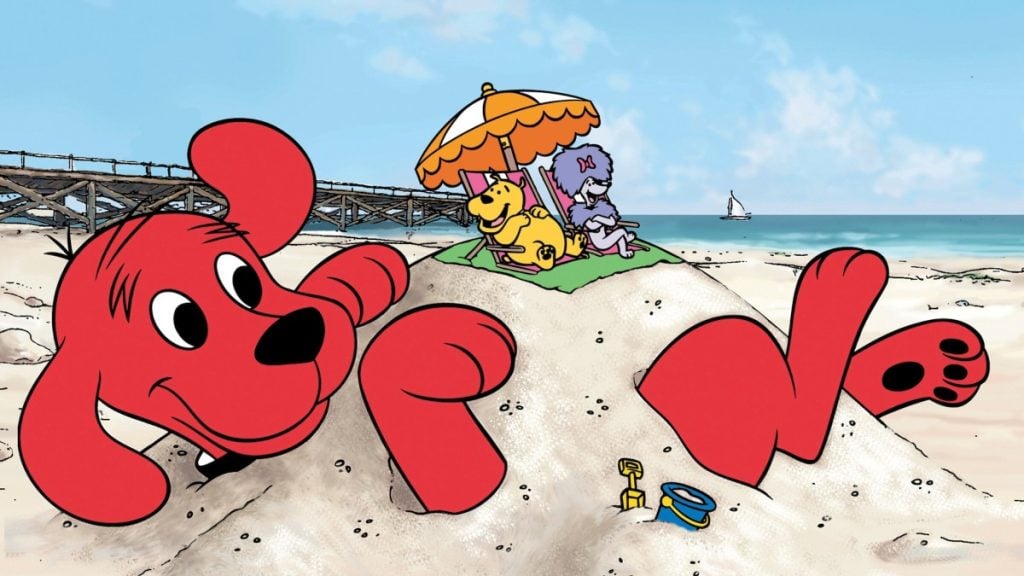
Based on the classic books by Norman Bridwell, the show follows the adventures of a 25-foot-tall red dog named Clifford and his owner, Emily Elizabeth. Clifford navigates the challenges of being “too big” for a normal world alongside his dog friends, T-Bone and Cleo. Clifford the Big Red Dog stories are gentle, relatable reflections of a child’s daily social experiences.
Each episode featured two stories: one about Clifford and his canine friends, and the other about Emily Elizabeth and her friends, Jetta, Vaz, and Charley. From the dogs’ perspective, they communicate through speech; when humans are present, they bark as usual.
What ‘Clifford The Big Red Dog’ Teaches Kids: The key takeaway from a Clifford story is the idea that being different is OK. Clifford is a big dog in a world built for the small, so he does his best, and his friends and family accept him for who he is. This teaches children how to be part of a community and the importance of accepting others’ differences.
In episodes like “Special Delivery”, in which Clifford accidentally breaks a package he was supposed to deliver, Clifford learns that it’s best to be honest, right from the start. For kids watching, this demonstrates the importance of telling the truth and taking responsibility for one’s actions.
Recommended Ages: 3–7
Cyberchase (2002)
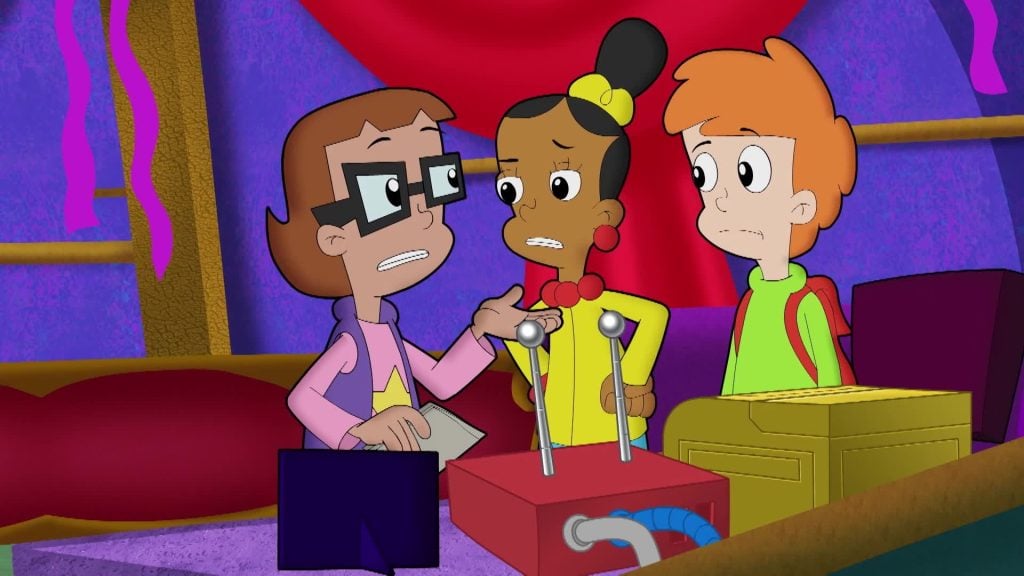
Cyberchase is a math-based show that stars Jackie, Matt, and Inez, three Earth kids who are pulled into a digital universe called Cyberspace to protect the ruler, Motherboard. The kids travel throughout cyberspace with a wisecracking cyber-bird named Digit to thwart the plans of the villainous Hacker. Cyberspace is full of planet-like bases called Cybersites.
Each Cybercity has a theme, such as the Old West, Ancient Egypt, and Greek Mythology, which is meant to represent the diversity of websites on the Internet and reflect the many cultures and ecosystems of Earth. Hacker threatens these cities, and the Cybersquad steps in to help. Each episode concludes with a live-action segment in which real kids explore the episode’s themes.
What ‘Cyberchase’ Teaches Kids: Cyberchase first and foremost teaches kids that “math is everywhere” and is a powerful tool for solving complex real-world problems. The live-action segments at the end of the episode reinforce skills from the story that kids can use in real life.
Throughout the episodes, viewers watch as the Cybersquad uses logic, geometry, and algebra to navigate puzzles and outsmart villains. In later seasons, Cyberchase shifts its focus to the “math of sustainability” and offers math-based solutions to environmental issues, such as calculating water usage and waste management.
Recommended Ages: 8–12
Curious George (2006)
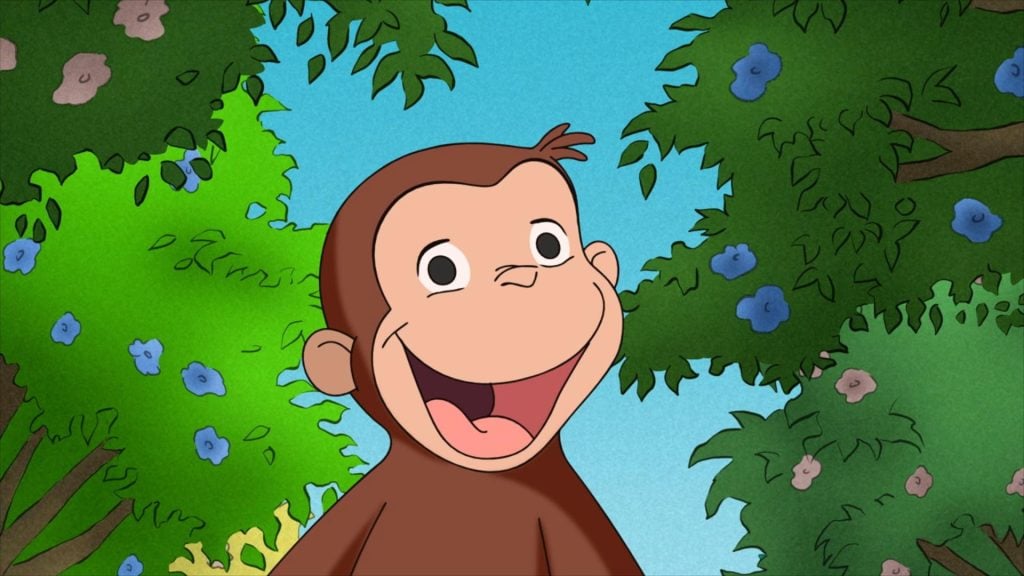
A new animated reinvigoration of the classic books featuring George, the endlessly curious little monkey, and his friend, the Man with the Yellow Hat. Curious George splits its time between both the busy “City” and the natural “Country.” In the city, George lives in an apartment building with The Man in the Yellow Hat, and in the country, they share a small cabin.
This allows the show to mirror the experiences of kids who live in both environments. In each episode, George explores how the world works through inquiry and hands-on investigation. George’s unintentional “messes” serve as the starting point for scientific or mathematical discoveries, all the while teaching kids that curiosity is something to be nurtured and used to learn about the world around them.
What ‘Curious George’ Teaches Kids: This more modern version of Curious George encourages children to ask “how” and “why” by exploring concepts in science, engineering, and math. Episodes like “Curious George vs. the Turbo Python 3000,” in which George wants to ride a rollercoaster but is too short, teach kids to use tools such as rulers and scales to measure, count, and predict outcomes.
Also, because George’s attempts to do good deeds or learn a new skill often go awry, kids learn that making mistakes is a natural part of the learning process. They also learn that it’s important to be resilient and that, even when something doesn’t go as expected, they should keep trying.
Recommended Ages: 3–5
Design Squad (2007)
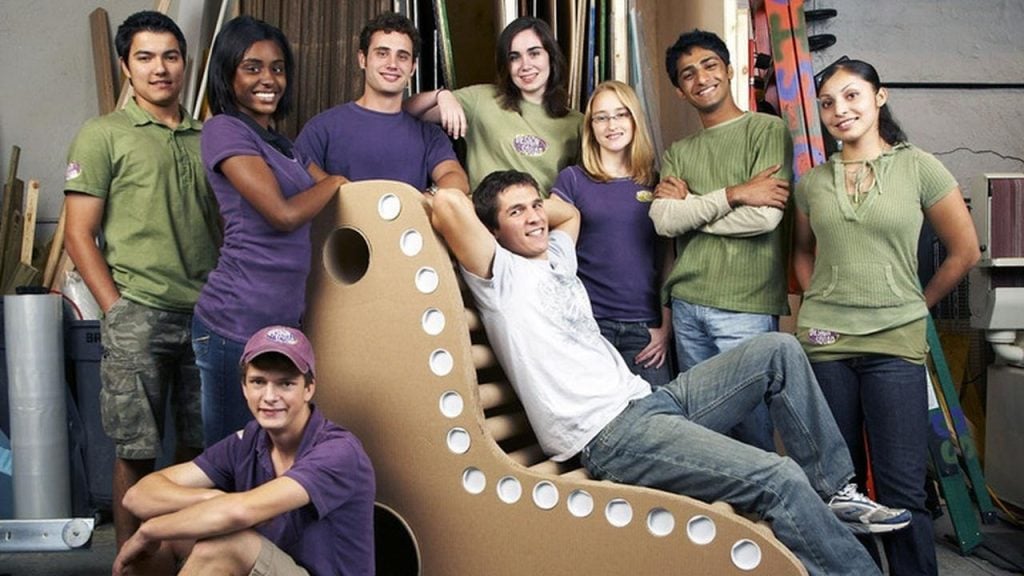
Design Squad is a bit of a departure for PBS Kids, but a ton of fun. The show is a reality competition in which real students design and build engineering projects and machines to compete for a $10,000 college scholarship. Contestants work in teams to solve engineering problems, ranging from building motorized dragsters to peanut butter makers for communities in Haiti.
Hosted by real-life engineer Nate Ball (and Deanne Bell in season 1), Design Squad emphasizes the “Design Process” of brainstorming, building, testing, and redesigning.
What ‘Design Squad’ Teaches Kids: Throughout the seasonal competition, Design Squad teaches kids the cycle of defining a problem, creating a prototype, and iterating on a solution, using physics and mechanics concepts such as torque, electricity, and aerodynamics through practical application.
The show’s lighthearted approach to competition teaches kids that, in scientific exploration, making mistakes and working through problems are an important part of the process. The show’s projects, like an 11-foot-tall water slide for the community pool, teach kids how engineering can be used to solve community and humanitarian issues and improve lives.
Recommended Ages: 10–13
Super Why! (2007)
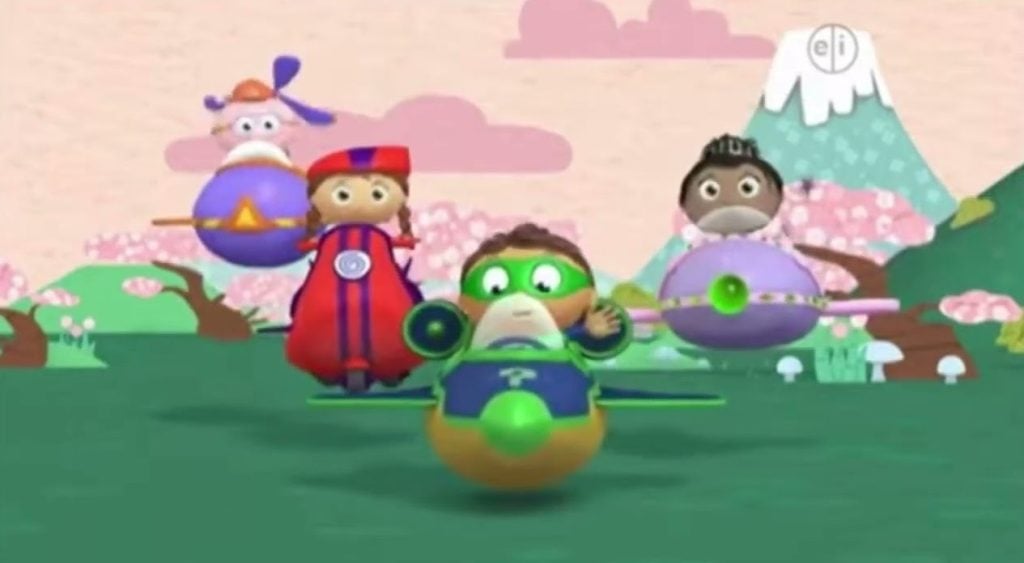
Super Why! is a reading and literacy-based show that stars Wyatt and his fairytale friends who live in Storybrook Village. Wyatt and his friends can transform into “Super Readers” with literacy-based powers. Together, they enter classic stories to decode and adapt the text to solve problems in their village.
The show explores many different kinds of stories and reading, like mysteries and comic books, while breaking the fourth wall to encourage the viewer to be the fifth “Super Reader” named “Super You.”
What ‘Super Why!’ Teaches Kids: Super Why! primarily focuses on learning, reading, and story concepts through adventure and problem-solving. It is based on the National Reading Panel’s core pillars: phonics, spelling, vocabulary, and alphabet skills. The fourth-wall-breaking segments invited children into the story to learn about punctuation, nouns, verbs, tenses, and other literary concepts.
Super Why! also teaches different story genres and gently shows children how to follow a plot and identify a story’s “moral” or lesson. By utilizing the superhero mechanic, Super Why! empowers kids to see that reading is a “superpower” that helps solve problems in stories and in day-to-day life.
Recommended Ages: 3–6
WordGirl (2007)
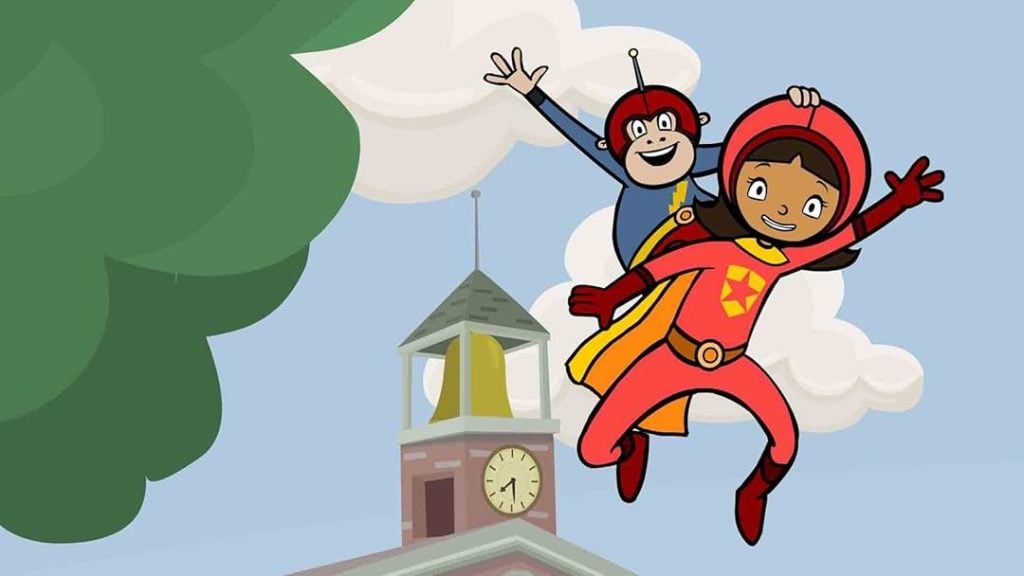
WordGirl is a fast-paced parody of superhero tropes, featuring quirky villains who often use words incorrectly. Young Becky Botsford is a secret superhero from the planet Lexicon who fights crime in “Fair City” with her monkey sidekick, Captain Huggy Face. Becky attends Woodview Elementary School as a fifth grader and tries to balance her superhero activities with her “normal” life.
She battles against an assortment of villains that include The Butcher, Chuck the Evil Sandwich Making Guy, Dr. Two-Brains, Lady Redundant Woman, Amazing Rope Guy, and The Whammer. The villains are all prone to malapropism,s and WordGirl frequently pauses to define advanced words in the middle of their battles.
What ‘WordGirl’ Teaches Kids: WordGirl aims to build literacy skills by offering advanced vocabulary (e.g., “cumbersome” or “adversary”) and providing clear definitions and contextual usage. The show features the “May I Have a Word?” segments, in which game show host Beau Handsome asks three contestants to define a particular word. Another set of interstitials stars the announcer asking Captain Huggy Face for a visual demonstration of a certain word (such as “strenuous” or “flummoxed”).
When Captain Huggy Face correctly demonstrates the meaning of the word, a definition is given, followed by a victory dance by the chimpanzee sidekick. WordGirl stories highlight the importance of using the right words to express ideas clearly while teaching wordplay and wit to solve mysteries and defeat “evil” through brainpower.
Recommended Ages: 6–11
WordWorld (2007)
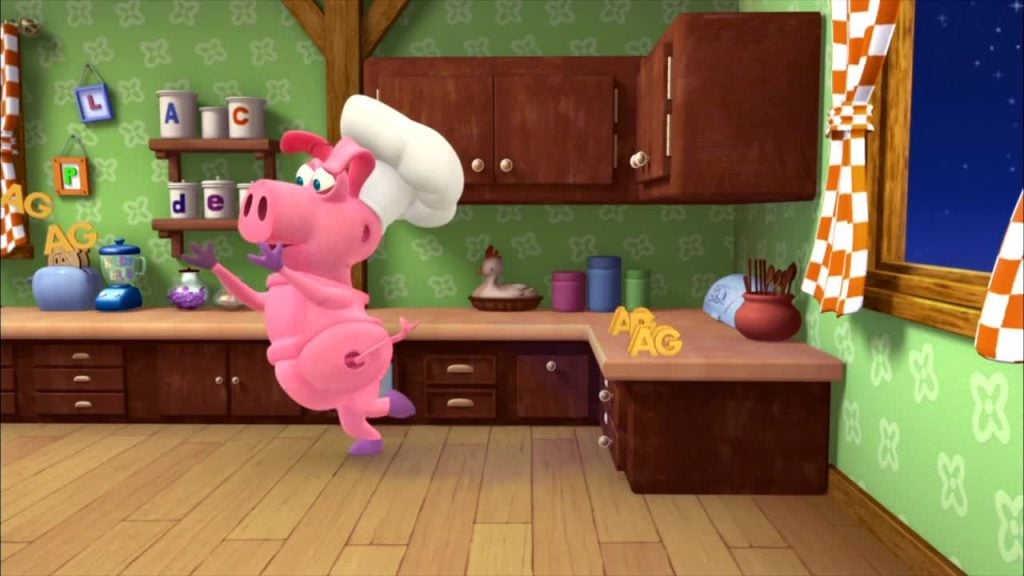
Set in a world where everything is made of the letters that spell its name (e.g., an ant is physically shaped like the letters A-N-T), WordWorld stars “WordFriends” like Sheep, Duck, and Frog, who go on adventures that can only be resolved by “building a word.” In each episode, the characters have an adventure to “build a word” to solve a problem.
The episodes include concepts such as rhymes, compound words, and plural formation. In non-English speaking countries, WordWorld is designed to teach children English as a second language. Each episode ends with a “Build a Word” song where the letters “morph” into the object they spell.
What ‘WordWorld’ Teaches Kids: WordWorld helps kids build literacy by showing them the connection between letters and physical objects, as well as spelling and pronunciation. Episodes focus on identifying letters and the sounds they represent. For example, in the episode “Duck at Bat,” Duck loses the letter B to his baseball bat just before the big game.
Duck tries to build other words to hit the ball: mat, hat, but soon learns that you need the right letter with the right sound to build the right word and hit a homer. Other episodes help kids learn the concepts behind rhyming, sounding out letters, and “chunking” word parts.
Recommended Ages: 3–5
Sid The Science Kid (2008)
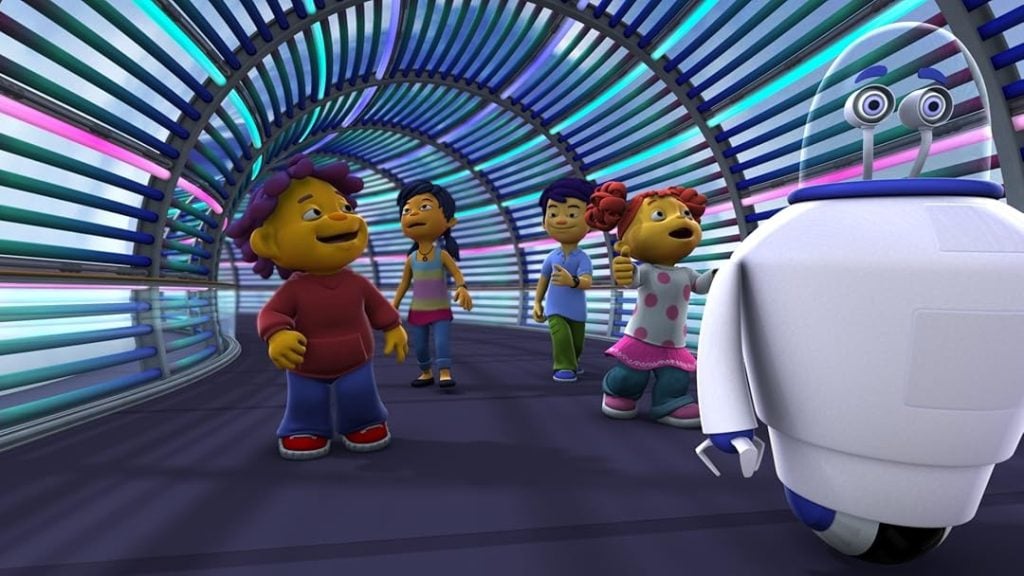
In Sid the Science Kid, Sid is an inquisitive preschooler who starts every day with a “Big Question” about how something works, for example, “Why do bananas go mushy?” Sid investigates his questions with his teacher, Susie, and his classmates using the scientific method. Sid the Science Kid’s content is based on national science learning standards, cognitive learning theory, and the preschool science curriculum, Preschool Pathways to Science.
The show is a co-production with The Jim Henson Company, which used cutting-edge digital puppetry to allow for fluid, expressive characters and musical numbers.
What ‘Sid The Science Kid’ Teaches Kids: Sid The Science Kid emphasizes the Scientific Method and teaches kids to observe, hypothesize, test, and share their findings. In “My Ice Pops,” Sid finds out that his frozen ice pop melted during the night and learns about the transformation of matter stages between liquids and solids.
The show also introduces basic equipment like magnifying glasses, thermometers, and journals. The show explores a range of topics, including the science of basketball shots, healthy eating, and environmental issues, as Sid encounters problems and questions that mirror kids’ real-life situations and inquiries.
Recommended Ages: 3–6
Dinosaur Train (2009)
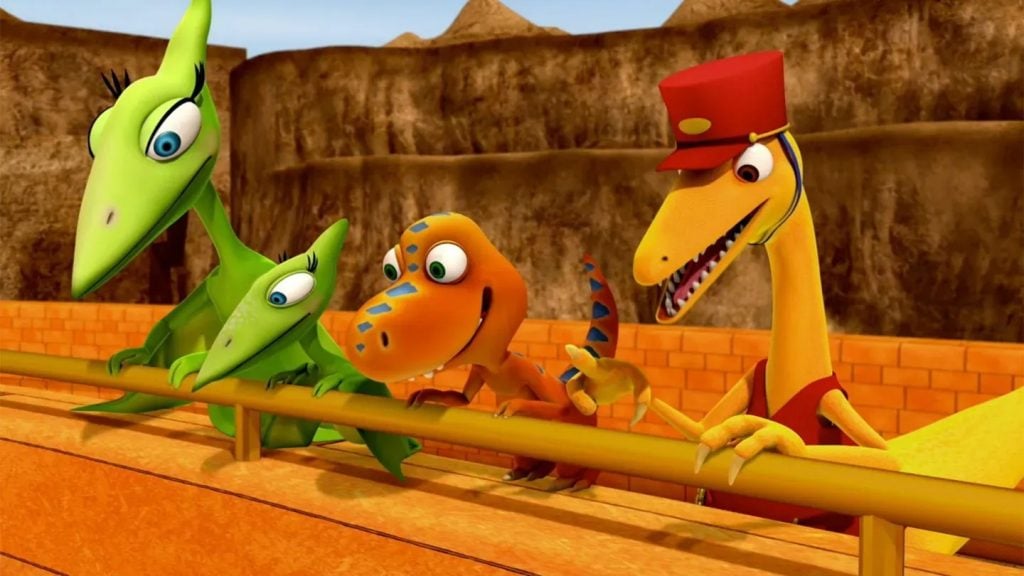
Dinosaur Train stars Buddy, a curious young T. rex, who is adopted by a family of Pteranodons and lives in a “mixed-species” nest. Buddy and his family take rides on the time-travelling “Dinosaur Train” to explore the Triassic, Jurassic, and Cretaceous periods and learn about the dinosaurs, environments, and other creatures that lived during those periods.
On the trips, Buddy is guided by the knowledgeable Troodon Conductor, and each episode wraps with a live-action segment featuring real-life palaeontologist Dr. Scott D. Sampson, who explains the episode’s science and accurate facts about the period.
What ‘Dinosaur Train’ Teaches Kids: First and foremost, Dinosaur Train teaches kids about Paleontology and Natural History through accurate, credible facts about dinosaur species, diets, and habitats. It encourages kids to compare and contrast different species and their differences (e.g., “What makes a herbivore different from a carnivore?”).
The other concept Dinosaur Train emphasizes is diversity and inclusion. The show uses Buddy’s adoption to teach that family is built on love and acceptance, regardless of physical differences. They also encounter other prehistoric species that mirror various family and social structures of today.
Recommended Ages: 3–6

