

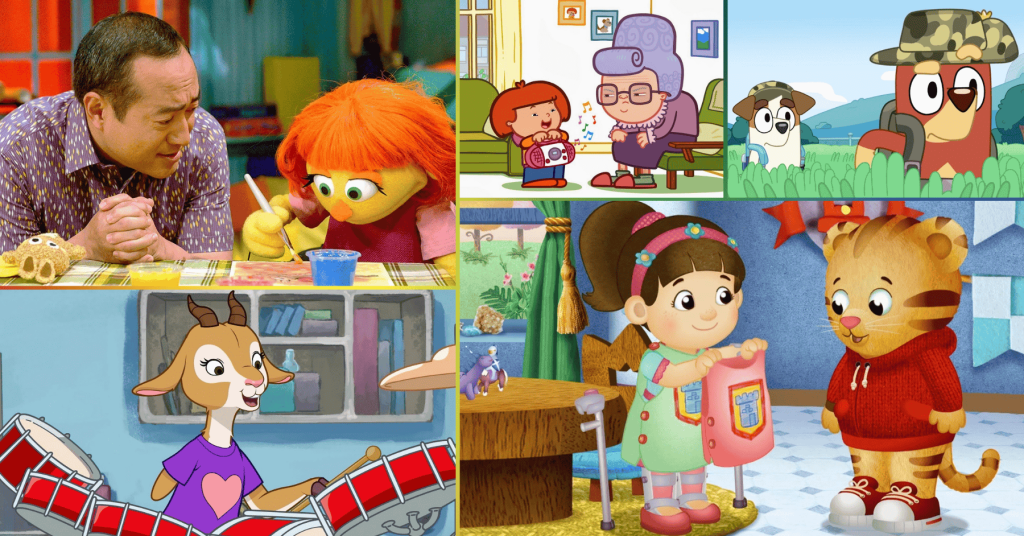
Today, more than ever, diversity and inclusion in the media our kids consume matter. As we continue to learn more about neurodiversity and the technologies that support people with physical differences, it’s important for children and parents to see those experiences represented thoughtfully and positively on screen.
Most families know someone with a neurological or physical difference. Through real-life relationships, kids learn that these individuals are capable, creative, hardworking people navigating the same world as everyone else. For children who haven’t yet had that exposure, media can serve as an important introduction. Including characters with visible and invisible differences in kids’ shows helps normalize those experiences and demonstrates that being different does not mean being less capable.
Below is a list of characters from some of the most popular children’s television shows of the past two decades. Each features individuals whose differences may be described as disabilities in clinical or educational settings. Through their stories, these shows highlight friendship, resilience, humor, and community, while reinforcing for young viewers that differences are simply part of the human experience.
Editor’s Note: Language surrounding disability and neurodiversity continues to evolve. In this article, we use the term “disabled” to reference conditions formally recognized as disabilities under medical and educational guidelines. For example, autism is medically and legally classified as a neurological and developmental disability, though experiences and support needs vary widely, and many autistic individuals may not personally identify as disabled. Our goal is to approach this topic respectfully while celebrating diverse experiences.
This list includes both characters whose diagnoses are explicitly stated within their shows and others whose traits have been confirmed by creators, reflecting the broad and varied ways neurodivergence can be represented on screen.
Neurodivergence (Autism) – Julia (Sesame Street)
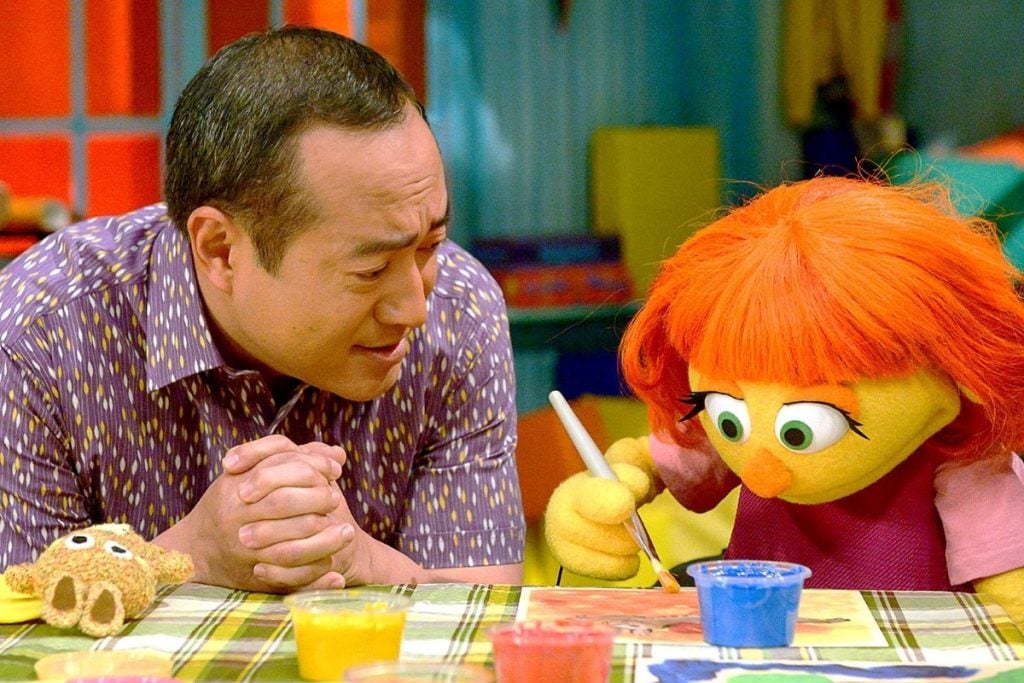
Julia joined the cast of Sesame Street in 2017 and was the first neurodivergent Muppet in history. Julia is an Autistic 4-year-old Muppet with bright orange hair who enjoys various activities, including drawing and playing with her stuffed toy rabbit, Fluffster. Julia lives with her supportive family consisting of her father, Daniel (an EMT), her mother, Elena (an art teacher), her older brother, Samuel, and their pet dog, Rose.
How Julia Is Portrayed on Sesame Street: Julia’s Autism is shown through “Elmo’s World”- style explanations, giving kids a window into her sensitivity to loud noises and her unique way of communicating. Sesame Street emphasizes that while Julia does things “a little differently,” she is a core part of the neighborhood. Julia’s adventures are a good opportunity for children to gain a stronger understanding and greater acceptance of autistic children.
How Many Episodes Feature Julia: 20+ episodes (plus numerous digital shorts and books).
Mobility Aid (Crutches) – Chrissie (Daniel Tiger’s Neighborhood)
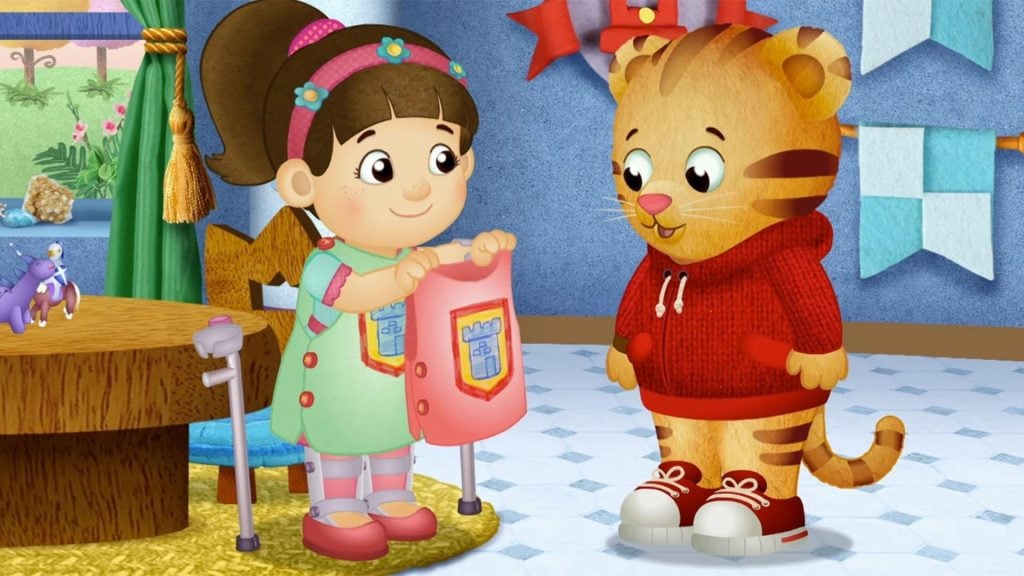
Chrissie is the niece of King Friday and Queen Sarah Saturday and the cousin of Prince Wednesday and Prince Tuesday. Chrissie is a vibrant 6-year-old who loves horses and playing pretend. She is a frequent visitor to the Neighborhood of Make-Believe. Chrissie’s favourite horse is Peaches, with Chrissie explaining that her name refers to her soft fur. Chrissie can ride Peaches but needs some assistance to climb onto her back.
How Chrissie Is Portrayed in Daniel Tiger’s Neighborhood: While Chrissie’s reason for using crutches isn’t specific, the character Chrissie was inspired by “Mister Rogers’ Neighborhood” guest Chrissy Thompson, who used crutches and leg braces as a result of spina bifida. In the show, Chrissie uses crutches because her legs are not strong enough to support her weight. This inspires the famous song, “In some ways we are different, but in so many ways we are the same,” normalizing her mobility aids.
How Many Episodes Feature Chrissie: 5 episodes.
Neurodivergent (Down Syndrome) – Punky (Punky)
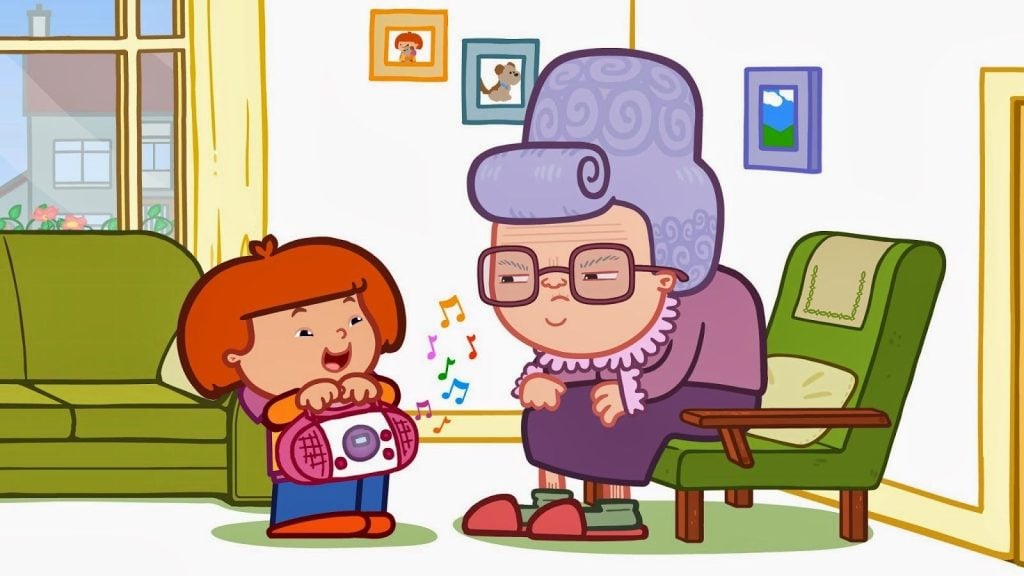
In this award-winning Irish series, Punky is a 6-year-old girl with Down Syndrome who lives with her mom, grandma, and brother. Punky is shown finding joy in everyday adventures as she relates tales from her everyday life. Punky is characterized as a happy little girl who loves music, dancing, and hugs. Punky plays with her older brother, “Con”, and her dog, “Rufus”. She also tries to make her grandmother “just a little less cranky”.
How Punky Is Portrayed in Punky: As mentioned, Punky has Down syndrome, making her the first lead character with the condition. It shows her disability from her perspective and how she solves problems with her “Punky” way of thinking. The lead character is voiced by Aimée Richardson, a voice actress who has Down syndrome. The series is produced with the support of Down Syndrome Ireland, which also contributed to its development and production.
How Many Episodes Feature Punky: 40 episodes
Hearing Impaired – Dougie (Bluey)
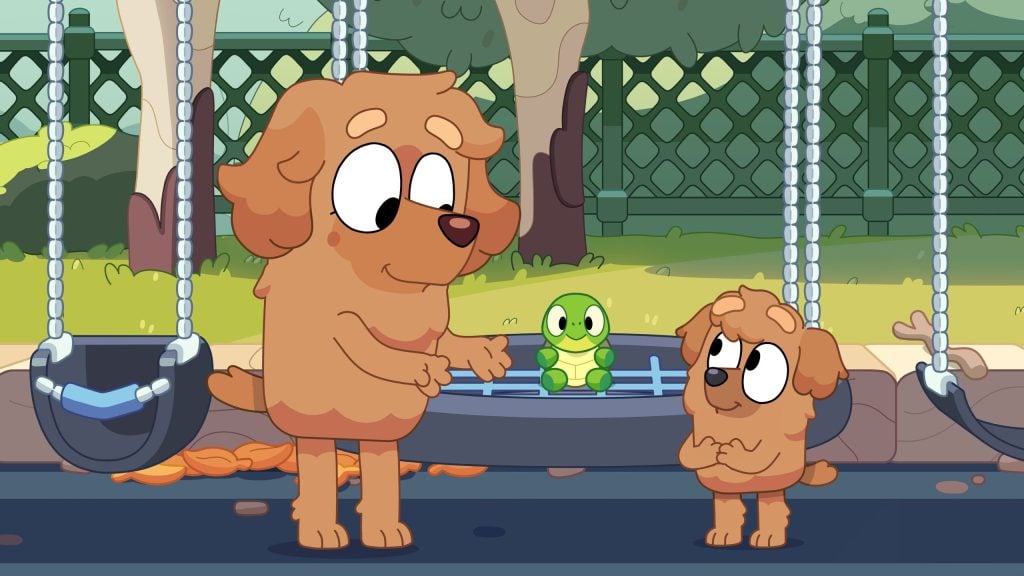
Dougie is a young Cavapoo who appears in the episode “Turtleboy,” in which he and Bingo play with the same toy at different times of day in the Park. Dougie is very similar to Bingo in that he loves to play and has a big imagination. While Dougie only appears in one episode, his passion for play and his use of sign language make it a very memorable one.
How Dougie Is Portrayed in Bluey: Dougie is deaf and uses Auslan (Australian Sign Language) to communicate. The show helps kids understand that Dougie’s hearing doesn’t change anything about him by using a split-screen to show Dougie and Bingo playing the same way, highlighting the universal nature of play regardless of how one communicates.
How Many Episodes Feature Dougie: 1 episode.
Mobility Aid (Prosthesis) – Audrey Antelope (Llama Llama)

Audrey Antelope is one of Llama Llama’s newer friends, who became a recurring character in season 2. Audrey is active, jovial, and carefree. She plays sports well, thanks to her prosthetic leg, and plays instruments like drums. Audrey is a cheerful friend of Llama Llama who loves to run and play alongside her friends.
How Audrey Is Portrayed in Llama Llama: Audrey has a prosthetic leg. No reason is given for her prosthesis, and it is treated as a simple fact of her life that doesn’t slow her down. The show addresses Audrey’s difference from the other kids by showing her active participation in all school activities, teaching kids that physical differences don’t limit capability.
How Many Episodes Feature Audrey: 2 episodes.
Neurodivergent (Autism) – Bebe (The Proud Family: Louder and Prouder)
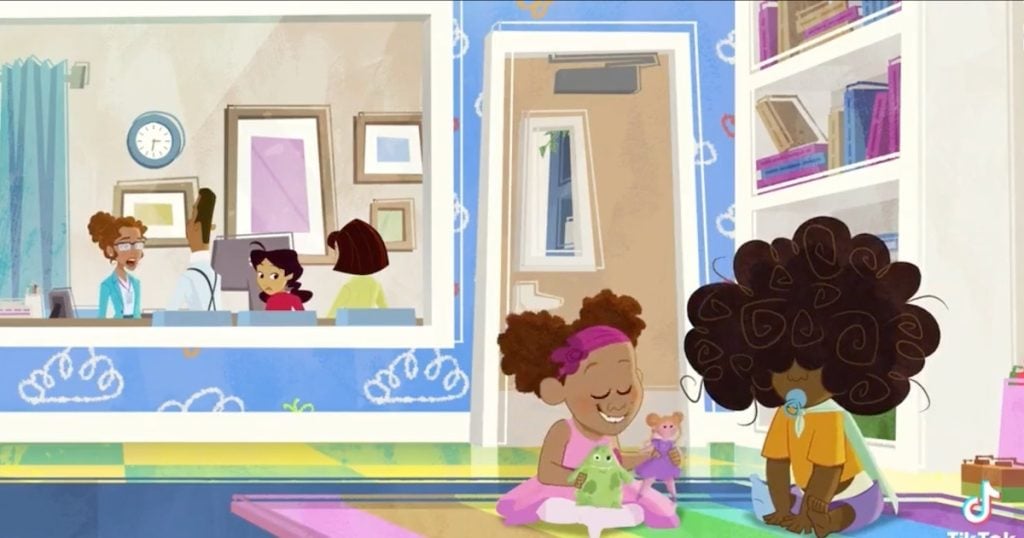
In the original series, The Proud Family, Bebe was one of the central characters, Penny Proud’s twin infant brothers, known for his signature blue diaper and mischievous nature. In the 2022 revival, The Proud Family: Louder and Prouder, the twins are toddlers, and BeBe now wears purple shorts, a mint green cape, and the same orange shirt that reveals his stomach. His bottle is replaced with a pacifier. In the episode “Bebe”, it is revealed that BeBe is Autistic, a move planned by the show’s creators from the start.
How Bebe Is Portrayed in The Proud Family: The family addresses Bebe’s diagnosis with love, patience, and specialized learning toys. The show portrays his family learning to adapt and navigate his sensory needs while also celebrating his unique personality. It’s also important to note that the voice of BeBe, Aiden Dodson, is also on the spectrum, lending authenticity to Bebe.
How Many Episodes Feature Bebe: Bebe appears in all 52 original episodes and most of the 20 revival episodes.
Hearing Impaired – Pickles and Dave (Madagascar: A Little Wild)
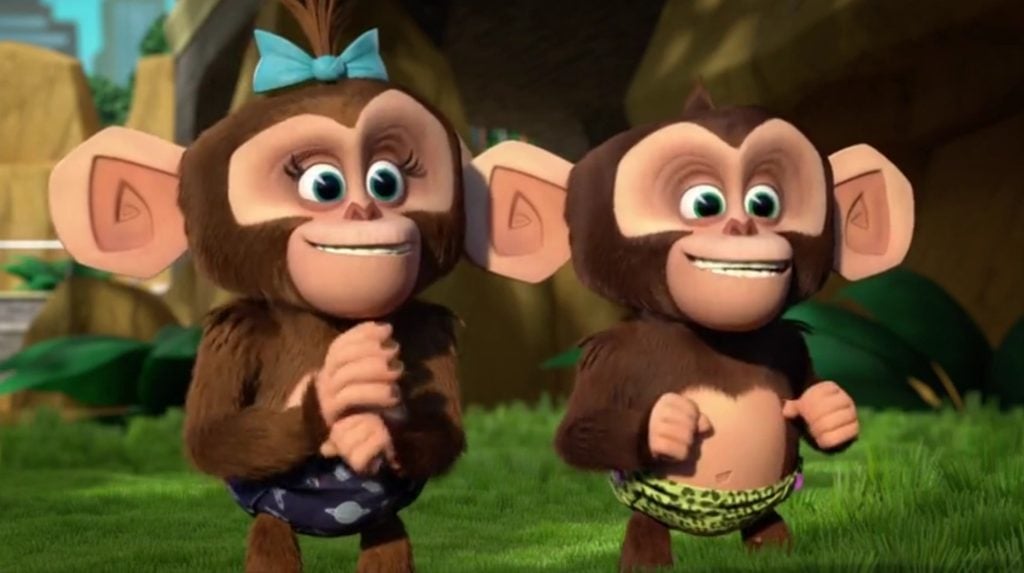
Pickles and Dave are brother and sister chimpanzees who live in the trees in the same habitat as the Zoosters. Pickles is a very tomboyish monkey, while her brother, Dave, is deaf and communicates through American Sign Language (ASL). They have a secret lever in their tree that opens a tunnel, allowing the Zoosters to go out into the city, but only after the Zoosters pay them a toll.
How Dave Is Portrayed in Madagascar: A Little Wild: Dave is deaf and communicates with Pickles using American Sign Language (ASL). While Dave communicates primarily through his sister, the other characters in the show learn signs to talk to him, teaching viewers real ASL throughout the episodes.
How Many Episodes Feature Dave and Pickles: 8 episodes.
Neurodivergent (Down Syndrome) – CJ (The Casagrandes)
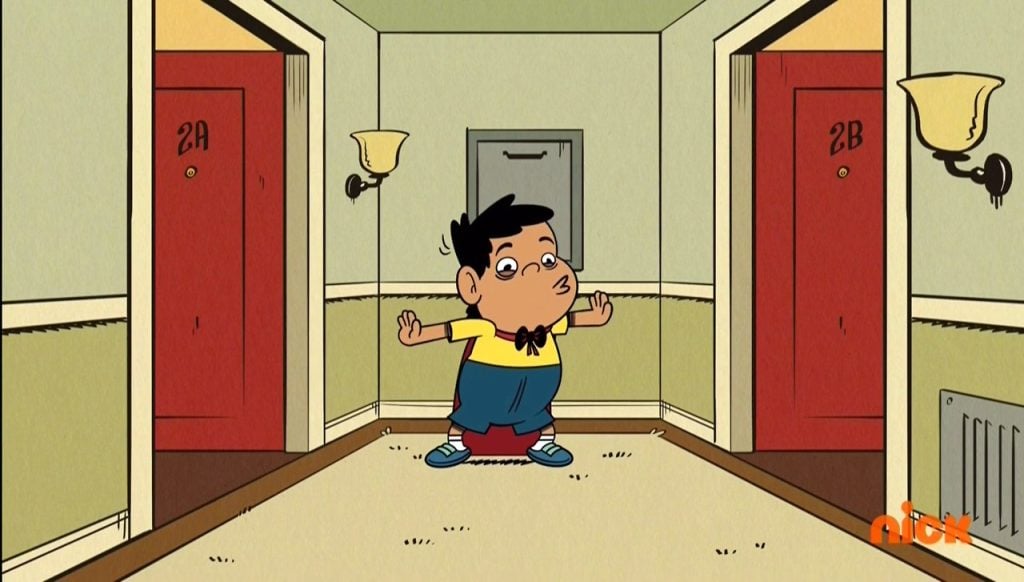
Carlos Jr. (CJ) is a 13-year-old boy living in Great Lakes City who is incredibly outgoing and loves pirates. He is the second-oldest child of the Casagrande family. CJ has Down syndrome and is portrayed as enthusiastic, affectionate, and deeply perceptive. He loves to play children’s games like pirates and superheroes, and he can easily befriend anyone. CJ is also very perceptive. Many times, he notices things before other members of his family.
How CJ Is Portrayal in The Casagrandes: CJ is shown that despite his diagnosis, he is a social butterfly who is deeply involved in his family’s business. His condition is never an issue or the “problem” of an episode; instead, the show focuses on his passions and his role as a loving brother. CJ is also shown as being very perceptive, often noticing things like relatives arriving before any of his relatives do.
How Many Episodes Feature CJ: Approximately 45 episodes.
Mobility Aid (Crutches) – Eddie Mambo (Alma’s Way)
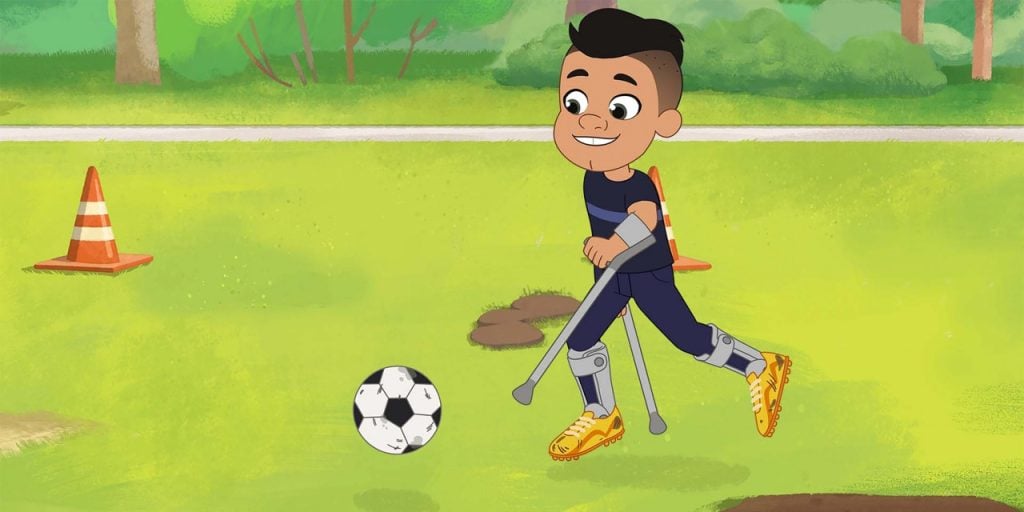
Eddie “Mambo” Montoya is Alma’s 6-year-old “primo-amigo” (cousin-friend) who has cerebral palsy. Eddie uses leg braces and crutches to navigate his daily life. Eddie is a kind and patient boy who loves music and sports. He’s a talented multi-instrumentalist, playing everything from the drums to the DJ decks, and he’s an avid fan of the City Seagulls baseball team.
How Eddie Is Portrayed in Alma’s Way: Eddie is inspired by real-life individuals with cerebral palsy. The creators worked closely with medical advisors and a young teenager with the same diagnosis as Eddie to create reference videos for the animators, showing that he is not restricted and capable of movements like climbing stairs, dancing, and running with crutches. Because of this, Eddie’s portrayal is both accurate and deeply meaningful, highlighting how thoughtful representation can foster understanding and inclusion.
How Many Episodes Feature Eddie: Eddie appears regularly across Alma’s Way’s 60+ episodes.
Neurodivergent (ADHD) – Jack (Bluey)

Jack Russell is a high-energy Jack Russell Terrier who first appears in the episode “Army.” Jack makes friends with Bluey and the other kids, fitting in well with the group. He lives with his mum and dad and has a younger sister, Lulu. Jack does his best to be a “good boy,” but sometimes he finds it difficult to sit still or remember to do the things he’s told by his parents and teachers.
How Jack Is Portrayed in Bluey: While the word is never explicitly used, Jack exhibits traits of ADHD, describing himself as a dog who “can’t sit still or remember anything.” The show addresses this by showing him finding focus through structured, imaginative play and “Army” drills. The other children and adults are patient and kind with Jack, which helps viewers see that even if someone’s brain works differently, they are still capable and just need a little help to figure things out.
How Many Episodes Feature Jack: 4 episodes.
Mobility Aid (Wheelchair) – Mandy Mouse (Peppa Pig)
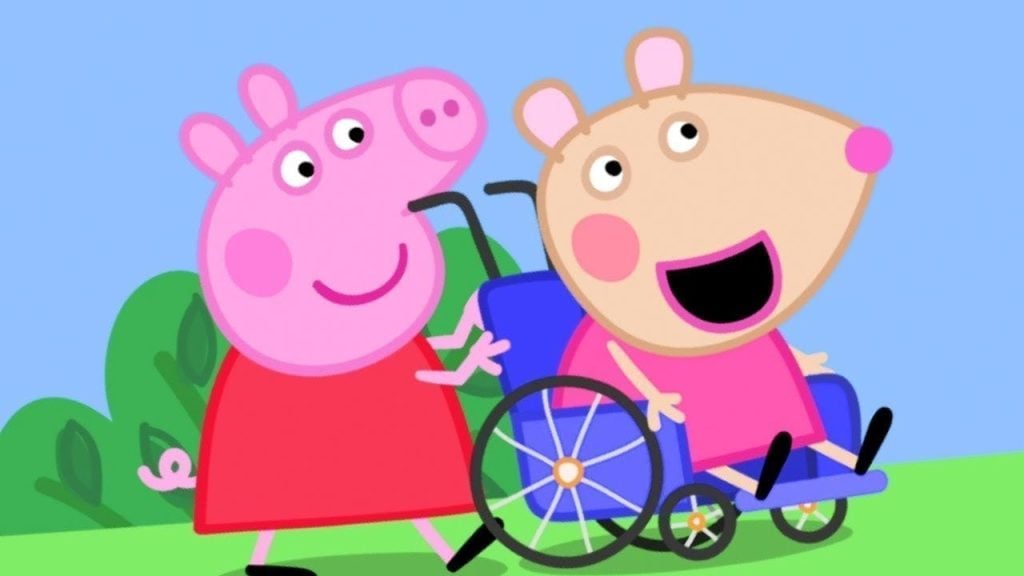
Mandy Mouse is a sporty student in Peppa’s playgroup who joined the series in 2019. Mandy uses a wheelchair because her legs do not work well. She is 4 years old, and her mom is Mummy Mouse, and her dad is Daddy Mouse. Mandy has many talents, including playing the recorder and basketball. She is commonly found in the background of episodes holding a ball. She said she wanted to be a nurse when she was older, and instead of jumping in muddy puddles like her friends, she tilts her wheelchair backward and tilts it forward fast.
How Mandy Is Portrayed in Peppa Pig: Mandy uses a wheelchair, and her introduction focused on her being a “super-fast” racer. The reason Mandy uses a wheelchair is never stated, but her speed and interest in playing games and exploring with her friends emphasize her athletic abilities over limitations. The show also gives kids a glimpse into Mandy’s needs as her mother always carries her out and into the wheelchair. This helps kids understand that Mandy isn’t very different from them; she just needs a little help here and there.
How Many Episodes Feature Mandy: Approximately 15 episodes.
Neurodivergent (Autism) – Entrapta (She-Ra & the Princesses of Power)

In 1985, She-Ra: Princess of Power, Entrapta was the evil Horde’s technician and Catra’s sidekick. In the 2018 update of She-Ra and the Princesses of Power, Entrapta is given much more depth and is written as Autistic. She is a brilliant but socially awkward inventor who is obsessed with ancient technology, often preferring the company of robots to people. Entrapta can also mentally control her hair as if it were another appendage, to fight enemies or operate her various machines.
How Entrapta Is Portrayed in She-Ra & The Princesses of Power: Though the term isn’t used in the fantasy setting, the creator, ND Stevenson, confirmed Entrapta is autistic. The show addresses this through her hyper-fixations, her struggle with social cues, and eventually, her friends learning to appreciate her unique logical mind. Entrapta is portrayed as a skilled but reckless inventor, showing viewers that her autism doesn’t mean she can’t create useful, well-fitting items that fit in with the other princesses.
How Many Episodes Feature Entrapta: 35 episodes.
Mobility Aid (Wheelchair) – Rex (Paw Patrol)
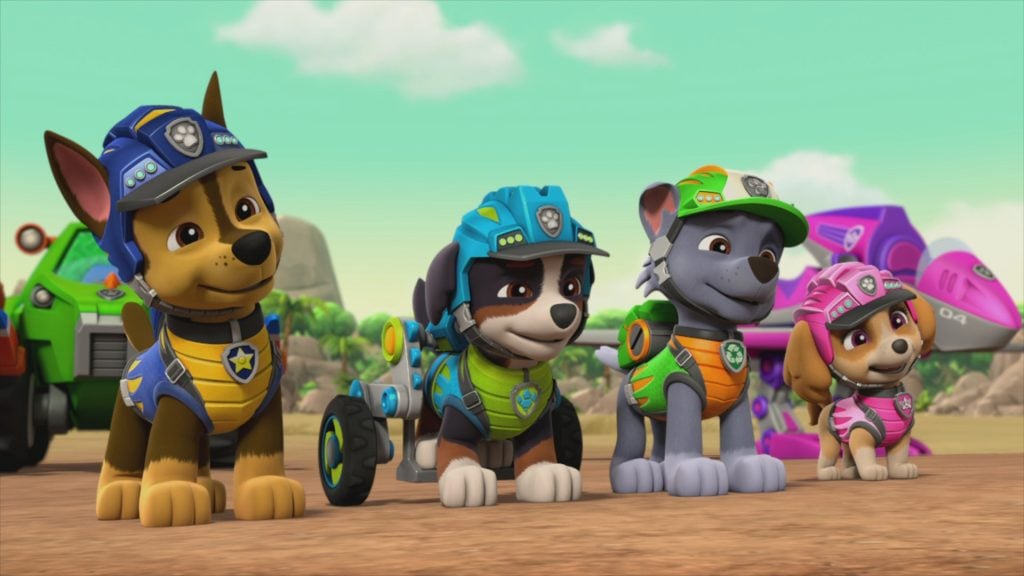
Rex is a Bernese Mountain Dog who lives in Dino Wilds and is an expert on all things dinosaurs because he can talk to them. Rex uses a specially-made wheelchair, making him the first member of the Paw Patrol with a physical disability. Rex uses his high-tech wheelchair to get around and communicate directly with dinosaurs to assist with rescues. He lives with Dr. Tammy Turbot and her daughter, Taylor.
How Rex Is Portrayed in Paw Patrol: Rex uses his wheelchair not just for mobility, but for communication and working with the other pups, showing that with the right tools, he can be a hero just like the rest of the Paw Patrol. The Paw Patrol are all very accepting of Rex and make sure that he’s included in all their Dino Adventures, as well as giving him the responsibility of being the only pup to watch over the Dino Wilds.
How Many Episodes Feature Rex: 10+ episodes.

