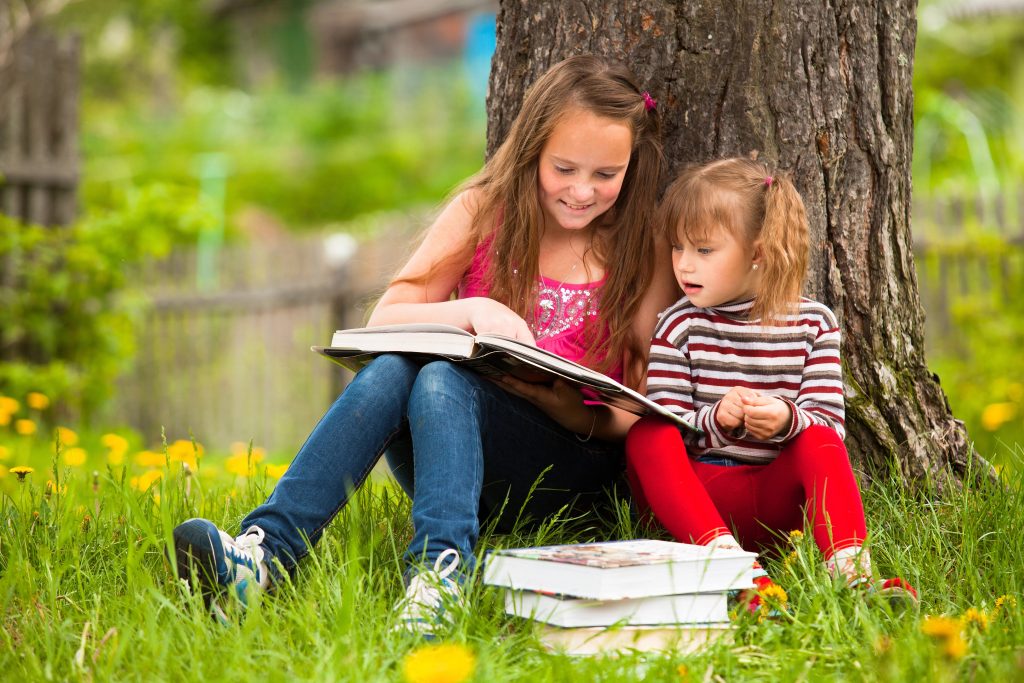
We all know reading is important for our children’s development. Most of us probably think about reading in terms of its literacy or educational benefits. But new research is showing that even beyond the words on the page, reading has a lot of social emotional benefits for children (and even adults too).
When you think about what it takes to read a work of fiction, it’s pretty amazing what your child’s brain is doing. Their brain builds a whole new in their imagination — it includes a setting, characters, and storyline. When they’re reading a work of fiction, in particular, your child’s brain is entering into a world that they may not have experienced in real life. It’s really remarkable that our brains can do this, but it’s also very beneficial.
The Link Between Fiction Reading and Empathy
Around the ages of 4 to 6 years old, children develop a skill called perspective taking. This enables them to mentally put themselves in someone else’s shoes. This skill takes a certain level of cognitive maturity to develop; this is why it hasn’t developed in very young children. But once they develop the skill, it becomes more possible for them to think about how other people feel and experience what other people might be feeling.
As you can imagine, this is a key element of children developing empathy and understanding other people. New research is showing that children who read more storybooks (particularly fiction) tend to develop this skill more easily. This study found that children who read more fiction books tend to have higher levels of empathy. You can see why this is the case: the ability to put yourself in someone else’s mind is a skill that is honed by reading fiction books. While it may be true that watching a movie does something similar, it’s not quite the same. With reading, the child has to create this world themselves, as opposed to a movie or a show where the world is already ready-made.
The Social Aspects Of Reading Matter

The other aspect of reading that is often overlooked is the social aspect. Although the image we see of children today is them being glued to technology, that is not always the case. Even children enjoy book clubs and reading books with their friends and talking about the storyline. We clearly saw this years ago when the Harry Potter series first came out. Children were so enamored with it, discussed it, and formed groups to talk about it. That kind of passion for books is still possible for children today. Shared book reading can be a source of bonding and social connection.
Furthermore, when children read fiction, they’re exposed to different people and characters from a variety of countries and experiences. This type of reading not only sets them up for a very full and rich life, but research shows it helps them develop a sense of intellectual humility, knowing that the world is a very big place.
How To Help Reluctant Readers
It’s clear that reading books, especially fiction, is more than just about literacy and education. It’s about developing a child’s whole intellect, as well as emotional well being. If your child does not love to read, it’s understandable. There are many distractions in our world today that make it hard to focus on reading a book. Here are a few tips to help encourage your reluctant readers:
- Encourage them to choose books that are focused on their interests. Although most of us might prefer our kids to read classic works of fiction, it’s not always necessary. If your child is into sports or particular hobbies, these can be jumping-off points for introducing them to storylines that involve those interests (even if they seem mundane to you).
- Try audiobooks. Audiobooks are a little different from reading, but research reiterates that, to your child’s brain, they’re almost the same. If your child struggles with the details of reading and staying focused on a paper book, try pairing it with an audio book. This way they can follow along with the text, but also hear it at the same time, and that might add to their enjoyment of the book and ability to follow the storyline.
- Leave books lying around the house. This seems like such a simple idea, but it often works wonders. If you leave a book at the breakfast table or a one in the car while they’re driving to activities or practice. This just opens one more opportunity for them to take a look at the book, and maybe it might grab their interest.