

Learned helplessness can leave children believing there is little point in trying, even when they are capable of succeeding. For parents, understanding how this mindset develops—and knowing when to step back—can help kids build confidence, resilience and independence.
Learned helplessness occurs when someone repeatedly experiences situations they believe they cannot control and eventually stops trying to change them. Psychology Today notes that the pattern can appear in children who give up on schoolwork and is associated with low motivation, poor persistence and reduced self-esteem.
The concept dates back to psychologist Martin Seligman’s research in the 1960s, when experiments found that subjects exposed to situations they could not control eventually stopped trying, even when circumstances changed. The underlying lesson for children can become, essentially, “Nothing I do matters.”
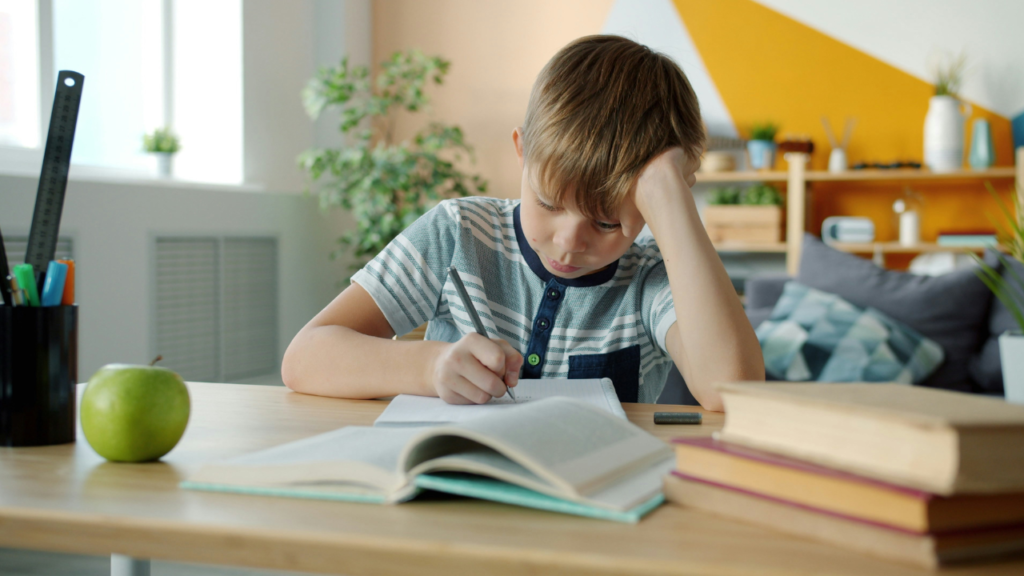
In school, that mindset may look like a student immediately saying, “I can’t,” refusing to attempt an assignment or giving up after making a mistake. Edutopia notes that learned helplessness can negatively affect both academic performance and students’ mental well-being.
The problem can become a cycle: repeated struggles create discouragement, discouragement reduces effort, and reduced effort makes future success less likely. Helping children understand that mistakes and setbacks are temporary can begin breaking that cycle.
When Helping Kids Too Much Backfires
Parents generally step in because they want to protect their children from frustration or failure. But doing everything for a child can unintentionally prevent them from developing the skills and confidence needed to solve problems independently.
Empowering Parents describes this as “over-functioning,” explaining that parents who routinely rescue their children can rob them of opportunities to develop competence and mastery. The cycle can become self-reinforcing: the more parents do, the less children do, which can make children appear even more helpless.
This can happen with surprisingly ordinary tasks, from tying shoes and completing chores to homework and forgotten school assignments. A parent who constantly fixes these problems may be saving time today but reducing a child’s opportunities to practise responsibility tomorrow.
That doesn’t mean parents should abandon children when they struggle. Instead, the goal is to provide support without automatically taking over, particularly when a child already has the skills necessary to complete the task.
Helping Kids Build Confidence and Independence
One practical approach is to ask questions instead of immediately providing solutions. Try asking, “What do you think you could try?” or “What have you already tried?” before stepping in to solve the problem.
Parents can also break intimidating assignments into smaller, achievable steps. Edutopia recommends bite-sized goals and celebrating progress, while emphasizing effort rather than treating ability as something fixed.
Another strategy comes from teacher and parent Colleen Borgert, who uses a “Give me three” approach when her children say they cannot do something they already know how to do. She asks them to make three attempts before she demonstrates the solution, reinforcing that trying is part of learning.
Most importantly, parents should distinguish between supporting a child and rescuing them. Building independence takes patience, but giving children safe opportunities to struggle, make mistakes and try again can help them develop the confidence to think, “I can figure this out.”

