

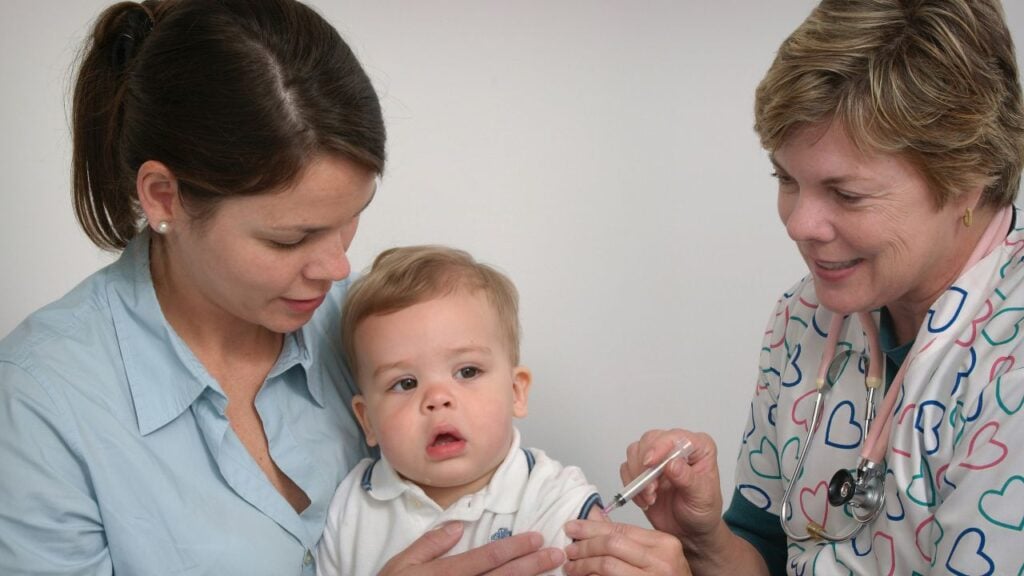
Flu cases are on the rise among children and health officials are urging parents to watch for seven red flags that indicate the need for immediate medical assessment.
The 2026–2027 U.S. flu season is off to an unusually early start, with the Centers for Disease Control and Prevention (CDC) estimating at least 1.7 million illnesses, 25,000 hospitalizations, and 1,400 deaths so far this season
People with emergency warning signs of the flu need to seek medical attention. Those with milder symptoms should not visit the ER. People need to know which flu symptoms require immediate care, per the CDC.
1. Fast Breathing or Ribs Pulling In

If your child is breathing very rapidly or the skin between the ribs is going in with each breath, don’t wait for it to sort itself out. Breathing difficulties require urgent medical attention.
Check your child’s chest when they’re at rest. It’s much easier to notice these signs when they’re not crying or moving about.
2. A Bluish Tint Around the Lips or Face
Cyanosis, as doctors call it, looks like a blue or gray cast around the mouth or across the face. It means the blood isn’t carrying enough oxygen.
Health authorities list it as a danger sign when flu is spreading in children and it shouldn’t be treated as something to monitor overnight. If you see it, get help immediately.
3. Dehydration That Is Getting Serious
Children can dry out quickly when they have a fever and aren’t drinking much. Watch out for signs such as dry mouth, crying without tears, and not passing urine for eight hours. These signs may mean your child needs medical attention.
Keeping a rough count of how much your child drinks and how often they pee sounds tedious, but it gives you a clear answer when a doctor asks.
4. Vomiting That Won’t Stop

Vomiting can happen with the flu, especially in children. Repeated vomiting that prevents your child from keeping liquids down is a serious concern.
Your child can become dehydrated quickly if they cannot drink enough fluids. Seek medical help rather than waiting until the next morning.
5. Extreme Sleepiness or Not Responding
Flu makes kids tired and that’s perfectly normal. What’s not normal is a child who won’t wake up properly, seems confused or doesn’t respond to you.
Health authorities would regard this as a neurological emergency in a young patient. If your child is just too drowsy to engage at all, then it’s an emergency.
6. Fever Above 40 °C (104 °F)

A fever that does not respond to medication is an emergency situation and should be seen by a doctor immediately. Very high fevers can also increase the risk of febrile seizures in children.
Take your child to the emergency room if your child has a seizure or continues to have a fever despite the medications taken.
7. Symptoms That Come Back Worse
Some children begin to feel better but then suddenly become sick again. A fever that returns with a worsening cough could signal another infection.
Parents may think the flu is simply taking longer to go away. However, these returning symptoms could point to a new infection that needs medical attention.
What Parents Should Do Now

Vaccination is still the best protection. Children aged 6 months and older should receive an annual flu vaccine, unless their doctor advises otherwise.
Babies under 6 months can’t be vaccinated, so the adults in the household need to be vaccinated. Wash hands, avoid sick contacts, cover coughs and keep a feverish child home from school.

