


Three children’s rights organizations filed a federal court motion on November 13, 2026, seeking clearer protections for immigrant children trying to contact attorneys while in government custody, per the Associated Press.
The filing follows reports that some children remained in U.S. Customs and Border Protection (CBP) facilities for weeks, despite rules generally limiting stays to 72 hours.
The Center for Human Rights and Constitutional Law and the National Center for Youth Law and Children’s Rights are asking the court to clarify children’s rights to confidential legal communication under the Flores Settlement Agreement.
Families Reported Extended Detention in Border Facilities

Federal records show that CBP exceeded recommended processing periods for families between March and June 2026, even as border arrests remained at historically low levels.
Legal advocates subsequently documented cases involving children reportedly held for nearly a month in facilities intended for temporary processing.
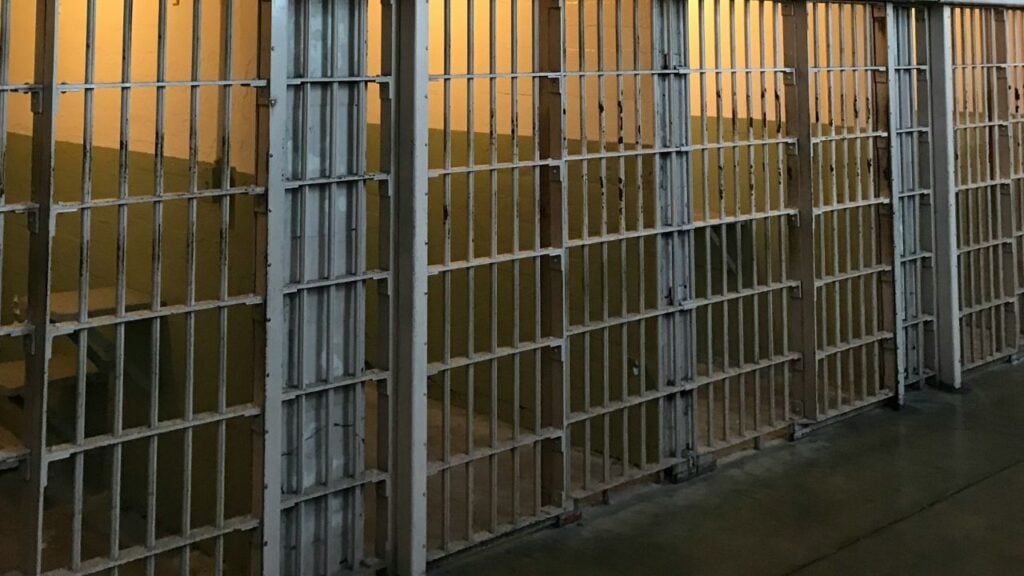
Parents detained in Del Rio and Laredo, Texas and San Diego reported difficulties contacting attorneys. Some claimed they received no phone access, while others described conversations lasting fewer than five minutes.
The accounts raise questions about whether families can report detention conditions and seek legal assistance while remaining in federal custody.
Parents Described Children’s Health and Living Conditions

Families described cold rooms with continuous artificial lighting and limited opportunities for recreation.
One mother detained with her teenage daughter in Laredo explained how they identified the time of day. “In the morning they bring us a burrito and that’s the way we learn that it is the morning,” she stated in her declaration.
Another mother reported that her child developed a rash from a sleeping mat. She explained how she tried to protect him.
“At night I lie on my back and I tell him not to touch the mat but to lie on top of me, to sleep on my chest. His rash has gone down since we began sleeping this way, with me as his bed, protecting him,” she said.
A mother detained with her 4-year-old daughter reported that the child lost weight and developed a stutter during their two-week detention.
The mother also described her concerns about how much time her daughter spent confined. “That is not enough for a child to be locked in a cell 23 hours a day,” she said.
She further claimed that her daughter’s stutter worsened after witnessing a restrained man being escorted for deportation.
“She started crying, asking if they would chain her and take us from here the same way. Her stutter increased after that. Every time she thinks of it, she starts to cry again,” the mother explained.
These accounts have not been independently established as medical findings.
What the Flores Settlement Requires

The Flores Settlement Agreement, established in 1997, sets standards for the treatment and release of immigrant children in federal custody.
It generally requires children to be transferred promptly from temporary holding facilities, with a 72-hour limit applying under normal circumstances.
The federal government is also appealing an earlier court decision refusing to terminate the agreement, while advocates continue seeking enforcement of existing safeguards.
The Justice Department and the Department of Homeland Security did not immediately respond to requests for comment, per the Associated Press.
The latest motion focuses specifically on whether detained children can communicate privately with attorneys to report potential violations. The court has not yet resolved that request.

