

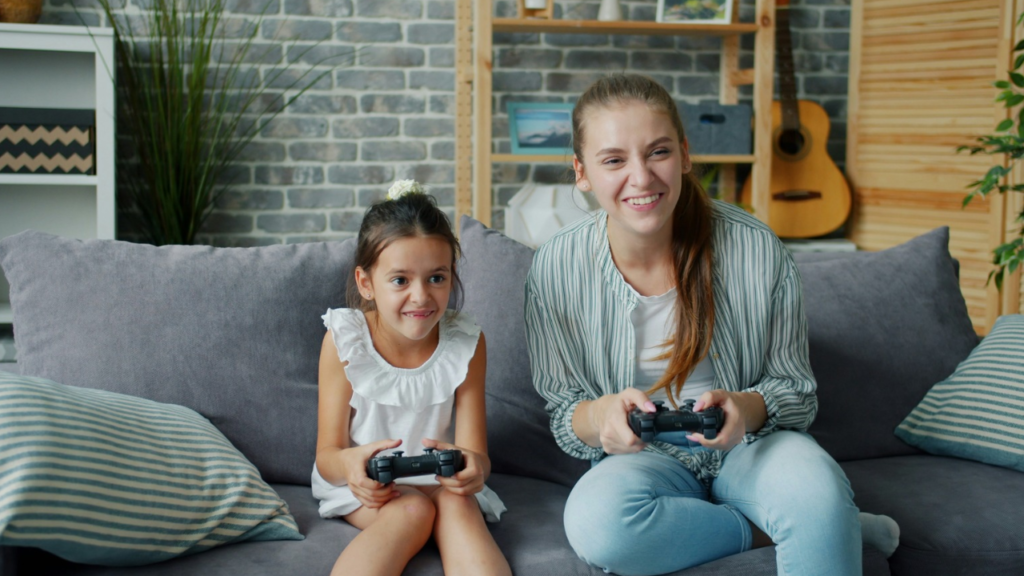
Video games are often treated as a source of distraction or screen-time conflict in many households, but playing together can offer parents a different way to connect with their children. Instead of simply telling kids to put down the controller, parents might want to consider picking one up themselves.
A recent holiday survey highlighted just how much children want their parents involved in their gaming experiences. Children aren’t just asking for new video games as gifts; many also want a parent to join them as their Player Two.
Gaming together gives parents an opportunity to participate in something their children already enjoy. It can also create shared memories, encourage conversations, and show kids that their interests matter to the adults in their lives.
The Benefits of Parents Playing Video Games With Their Children
Playing video games together can offer benefits beyond entertainment. A recent study found that parents who played video games with their children reported stronger connections and more positive interactions.
Researchers also found that cooperative gaming could help reduce conflict between parents and children. Rather than making gaming another source of disagreement, playing together can turn screen time into a shared family activity.
Video games can also encourage problem-solving, communication and teamwork. When parents and children work together to complete challenges, they have opportunities to practice patience, celebrate accomplishments, and learn how to handle frustration.
How Parents Can Choose Good Video Games to Play Together
Not every video game is appropriate for every child, so parents should consider age ratings, content and gameplay before choosing a family activity. Parents should look beyond a game’s popularity and consider whether its features and demands are suitable for their child’s developmental needs.
Start by checking the Entertainment Software Rating Board (ESRB) rating, which provides information about age suitability and potentially concerning content. Parents should also look into online communication, in-game purchases, and whether a game allows children to interact with strangers.
Finally, let children help choose games that interest the whole family. Cooperative adventures, creative building games, puzzles and family-friendly sports titles can all provide opportunities to play together without making competition the focus.
Ultimately, parents don’t have to be expert gamers to become great Player Two partners. Showing up, having fun, and sharing the experience may be the most important parts.

