

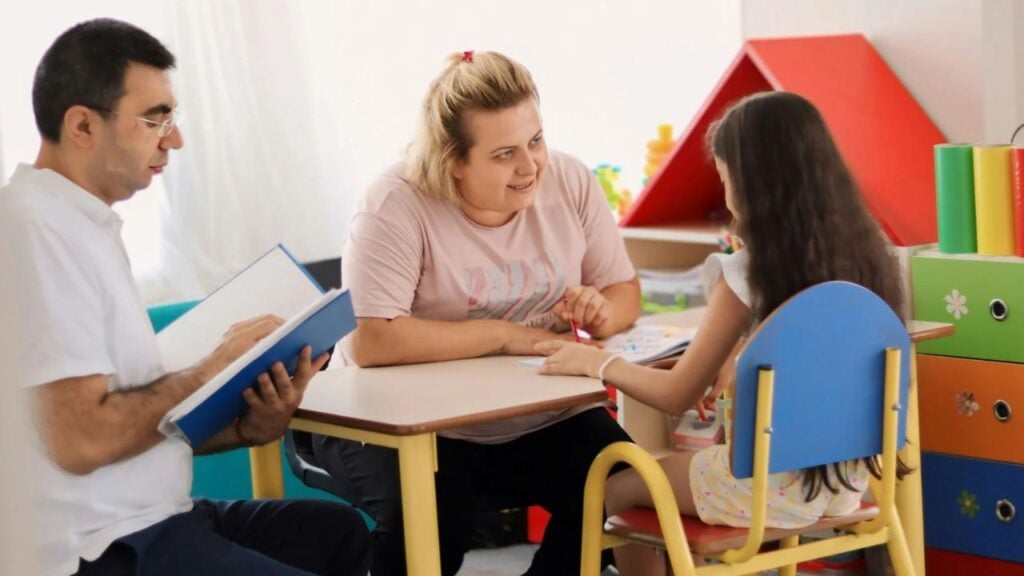
Parent-teacher conferences are often very short, lasting only 10-15 minutes. Many parents start by asking, “How is my child?” and the teacher may reply, “Everything’s fine,” and that’s the end of it. The parent may still have no clear idea what’s going on in the classroom.
Asking more specific questions can go a long way toward helping parents gain real insight into their child’s day-to-day school life, learning, and friendships.
The teacher will have seen the child in a wide variety of situations that the parent may not have witnessed at home. Here are seven questions to help parents make the most of their next meeting.
1. What Does a Day in Class Look Like for My Child?

Find out how your child is getting on in the classroom, who they sit with and what activities they like. You can also find out whether they’re joining in with the lessons or are more of a quiet worker.
This can help parents get a much better idea about what their child’s school life is like and learn things they may not otherwise talk about at home.
2. What Are My Child’s Strengths and In What Areas Do They Require Support?
A child’s grades don’t necessarily tell you what they actually know or where their difficulties lie. They may be absolutely brilliant at maths, yet struggle with multi-step problems.
Ask the teacher which subjects your child enjoys and which skills they need to work on. You can also ask for examples to give you a clearer picture of where additional help is needed.
3. How Does My Child Get Along With the Other Students?

Kids don’t always talk about their school friendships at home. Some may have been left out during playtime and others may have found it difficult to make friends or join groups.
Find out whether your child has friends, whether they take part in group activities and how they get on with their classmates. The teacher may also have noticed changes in how your child interacts with others, which would be worth discussing.
4. What Does My Child Do When Something Feels Difficult?

Children react in all sorts of ways when a lesson or an activity is difficult. Some will ask for help, some will get fed up, some will just give up and others will lose interest completely.
Ask how your child copes with a difficult task or a mistake in class.
- Do they ask for help?
- Do they try again?
- Do they give up very easily?
This can be a really useful indicator of how you might support them at home.
5. What Can I Do at Home to Help My Child?

Parents can ask the teacher for one or two very simple things that they can do at home to support their child’s learning. This could be as simple as reading together for 10 minutes, doing math problems or setting aside time for homework.
Small things can make a big difference in helping the child develop their skills without them feeling overwhelmed. The parent can also ask the child which area they’d like to work on first.
6. What Should I Know About the Months Ahead?
Ask the teacher about any lessons, school projects, tests or activities coming up that may require extra work. This gives the parents a chance to help their child plan and prepare.
You can also ask whether there are any changes in your child’s learning or behavior you should watch out for. This way, you can raise any concerns you have before they become bigger problems.
7. What’s the Best Way to Stay in Touch?

Parent-teacher communication doesn’t have to end when the meeting’s over. Check with the teacher whether they’d prefer to communicate via email, phone call or messages through the school application.
It’s also useful to know when parents should be in touch if they have any concerns about homework, behavior or anything going on in the classroom. It’s far easier to talk about a child’s progress if you’re in regular contact with the school.
Make the Most of Your Meeting

Before the meeting, make a list of the questions you’d like to ask. This ensures you get to the important questions, especially when you’re running short on time.
If your child is old enough, you can also ask them if they have anything they’d like to raise with the teacher.
You may not have the time to go through all seven questions, so just start with the two or three that are most important.
A good chat can help parents to understand what their child needs and what they can do at home to support them.

