
Inside Out (2015)
Synopsis:
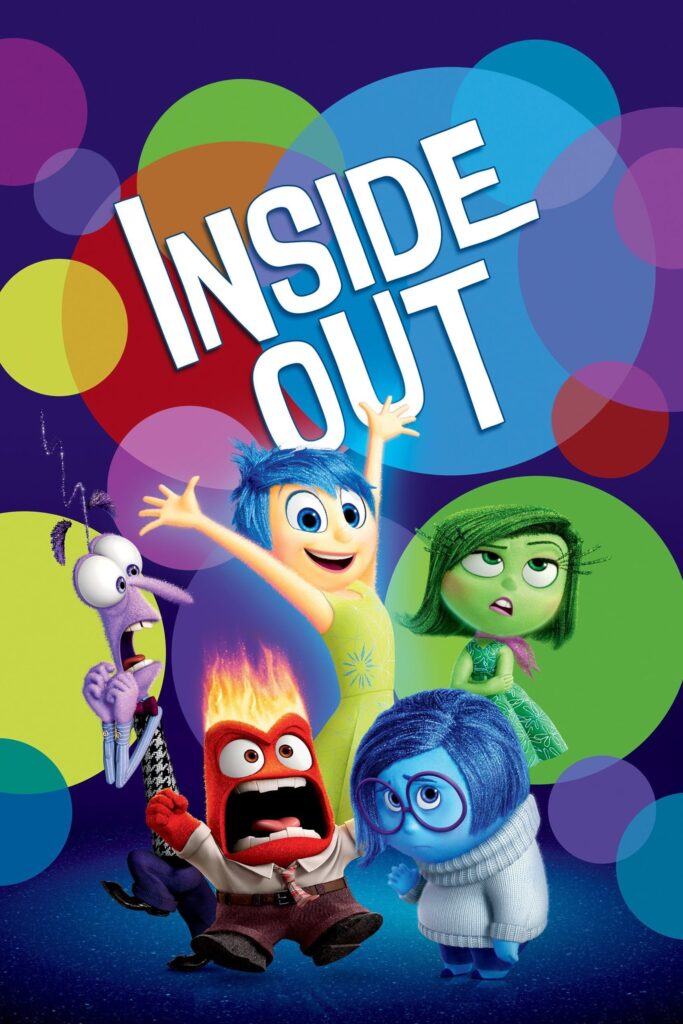
When 11-year-old Riley moves to a new city, her life is guided by five personified Emotions living inside her mind: Joy, Fear, Anger, Disgust, and Sadness. These colorful characters work together at headquarters to help Riley navigate the challenges of her big transition. Joy tries to keep things positive, but when she and Sadness accidentally get lost in the far reaches of Riley's mind, they must embark on an urgent journey through unfamiliar places to find their way back home. Meanwhile, with Joy and Sadness gone, the remaining Emotions struggle to help Riley cope with her new surroundings. This imaginative adventure explores how feelings work together to shape our experiences, offering kids and families a creative look at the inner workings of the mind during a difficult time of change.
Where To Watch: Inside Out
Parental Feedback
Inside Out balances heartfelt emotional depth with clever humor, creating an experience that moves between lighthearted moments and genuinely poignant scenes about growing up and change. The pacing is thoughtful rather than frenetic, allowing space for both imaginative visual sequences and quieter character moments. Parents should be prepared for themes of loss, sadness, and the challenges of major life transitions, all presented through a creative lens that personifies emotions as characters navigating a young girl's mind.
Why Kids Should Watch Inside Out
This Pixar production offers several valuable lessons wrapped in an inventive and engaging story.
The narrative provides a unique framework for understanding emotions, giving children vocabulary and visual metaphors to identify and discuss their own feelings. By personifying Joy, Sadness, Fear, Anger, and Disgust, it makes abstract concepts concrete and accessible.
The story emphasizes that all emotions serve important purposes, including sadness, which is often dismissed or avoided. This validation helps children understand that feeling sad or scared is normal and necessary for processing difficult experiences.
The adventure through Riley's mind showcases creativity and problem-solving as Joy and Sadness work together to find their way home. Their journey demonstrates the importance of cooperation and accepting help from others, even unlikely allies like Bing Bong.
The family dynamics portrayed show loving parents trying to support their daughter through a difficult move, modeling patience and care even when they don't fully understand what she's experiencing. This representation of family support provides a comforting framework for children facing their own transitions.
Why Kids Shouldn't Watch Inside Out
Despite its many strengths, some elements may prove challenging for certain children or families.
The emotional intensity can be overwhelming for younger or more sensitive viewers, particularly scenes involving loss and the fading of childhood memories. The sacrifice made by Bing Bong and his disappearance may be especially difficult for children to process.
The abstract concepts and metaphorical storytelling require a certain level of cognitive development to fully grasp. Younger children may struggle to understand the representation of memory, personality islands, and the inner workings of the mind, potentially leading to confusion or disengagement.
Riley's emotional struggles, including her withdrawal from family and friends and her attempt to run away, depict a child in genuine distress. While ultimately resolved positively, these scenes show a young person making poor decisions during a crisis, which some parents may find concerning or fear could be imitated.
Verdict: Parent Approved
Inside Out earns approval for its thoughtful exploration of emotional health and its message that all feelings matter, making it a valuable tool for family conversations about mental well-being.
What Parents Should Know About Inside Out
| Question | Answer |
|---|---|
| Does this Movie model positive behavior that my child can understand and repeat? | Yes, it models emotional honesty, teamwork, and the importance of allowing yourself to feel and express sadness rather than suppressing difficult emotions. |
| Does this Movie include emotional moments my child might find confusing or intense? | Yes, particularly the scenes involving Bing Bong's sacrifice, the crumbling of personality islands, and Riley's depression and withdrawal from her family. |
| Does this Movie show consequences for unkind or unsafe behavior? | Yes, when Riley shuts out her parents and attempts to run away, she experiences isolation and distress, ultimately learning that opening up to loved ones leads to support and healing. |
| Does this Movie reinforce helpful social skills like sharing, apologizing, or teamwork? | Yes, Joy and Sadness must learn to work together despite their differences, and Riley ultimately shares her true feelings with her parents, demonstrating vulnerability and communication. |
| Will my child come away with any clear moral or message? | Yes, the central message is that all emotions, including sadness, play vital roles in our lives and that expressing difficult feelings is essential for emotional health and connection with others. |
The Overall Sentiment From Parental Feedback
Parents generally praise Inside Out for opening meaningful conversations about emotions and mental health with their children. Many appreciate how the personified emotions give kids a framework to discuss their own feelings, making abstract concepts tangible. The film is frequently noted as a helpful tool for families navigating transitions like moves, school changes, or other disruptions. Some parents mention that younger children may not grasp all the nuances but still enjoy the colorful characters and adventure elements, while older children and even adults find deeper meaning in the emotional journey. A common observation is that the movie resonates differently at various ages, with parents sometimes reporting being more moved than their children. The emotional weight, particularly surrounding Bing Bong and Riley's depression, is acknowledged as intense but ultimately worthwhile for the lessons it imparts about accepting all feelings as valid and necessary.
Official Inside Out Trailer
Why Kids Love Inside Out
Joy zips around Headquarters like a human lightning bolt, pushing buttons and pulling levers to keep Riley happy while the other Emotions scramble to keep up. When Joy and Sadness get sucked out of Headquarters through a vacuum tube, they tumble into the wild maze of Riley's mind, racing against time to get back before everything falls apart. Fear, Anger, and Disgust are left frantically manning the control panel, creating hilarious chaos as they try to run things without Joy.
The journey through Long Term Memory turns into a massive adventure with endless shelves of glowing memory spheres toppling like dominoes. Bing Bong, Riley's goofy imaginary friend made of cotton candy, cries candy tears and rides around in his rocket wagon, helping Joy and Sadness navigate the crumbling pathways. When they stumble into Imagination Land, everything goes bonkers with giant imaginary boyfriends, a house made of cards, and a lava floor that makes them shrink and stretch in ridiculous ways.
The Train of Thought becomes a wild escape vehicle as the trio races to catch it before it stops running for the night. Abstract Thought turns them into flat shapes and squiggly lines, creating silly visual gags as they squeeze through tight spaces. Every colorful corner of Riley's mind offers new surprises and fast-paced problem-solving that keeps the rescue mission zooming forward.