

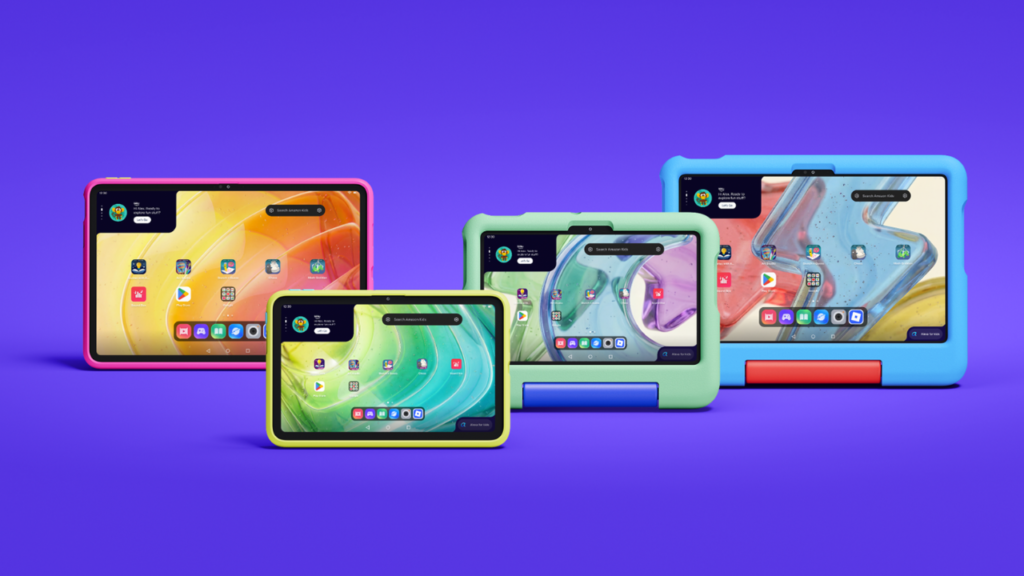
Amazon is expanding its tablet lineup with two new devices designed specifically for children. The Amazon Kids Tablet 8 starts at $229.99, while the larger Amazon Kids Tablet 11 starts at $329.99, with both models available for preorder and scheduled to begin shipping in Canada and the U.S. on October 14, 2026.
According to Engadget, the tablets feature aluminum bodies, eight-core processors and colorful protective cases. The smaller model has an 8.7-inch display and up to 14 hours of video playback, while the 11-inch version offers a higher-resolution 2.5K display and stylus support.
Each device includes a one-year Amazon Kids+ subscription, providing access to books, games, videos, apps and audiobooks from brands such as Disney, Nickelodeon and LEGO. Amazon is also introducing Storybuilder, an AI-powered feature that lets children create picture books and comics using their own characters and story ideas.
How Amazon’s Kids Tablets Stand Out
Unlike many traditional children’s tablets, Amazon’s new models run on Android and offer parent-managed access to the Google Play Store. This gives families more flexibility to install apps beyond Amazon’s curated Kids+ library while maintaining control over which downloads children can access.
Amazon is offering two age-oriented designs: a thicker bumper case for children ages three and up, and a slimmer protective case for kids six and older. The company describes the devices as “real tablets, not a toy,” emphasizing hardware intended to support children as their interests evolve.
As Amazon explains in its announcement, the tablets combine familiar Android functionality with child-focused software and creative tools. The built-in Storybuilder feature adds another dimension, encouraging children to experiment with storytelling rather than simply consuming entertainment.
Parental Controls Help Families Manage Screen Time
Every tablet comes with Amazon’s Parent Dashboard, allowing parents to set daily screen-time limits, monitor activity and establish learning goals. The Learn First setting can prioritize educational apps and reading before entertainment, while parents can pause or resume device access remotely.
Parents can also manage web browsing, apply content filters and approve every Google Play download. The dashboard supports up to four child profiles, allowing families to customize settings for different ages and needs.
These controls give parents meaningful oversight, but they still need to review apps, discuss online safety and establish healthy screen-time routines. The tablets offer useful safeguards, not a substitute for ongoing parental involvement.

