

A 5-year-old Blue Ivy’s quiet struggle to love her natural curls set something in motion that her father carried for nearly a decade, and Beyoncé has now shared the full arc of that story.
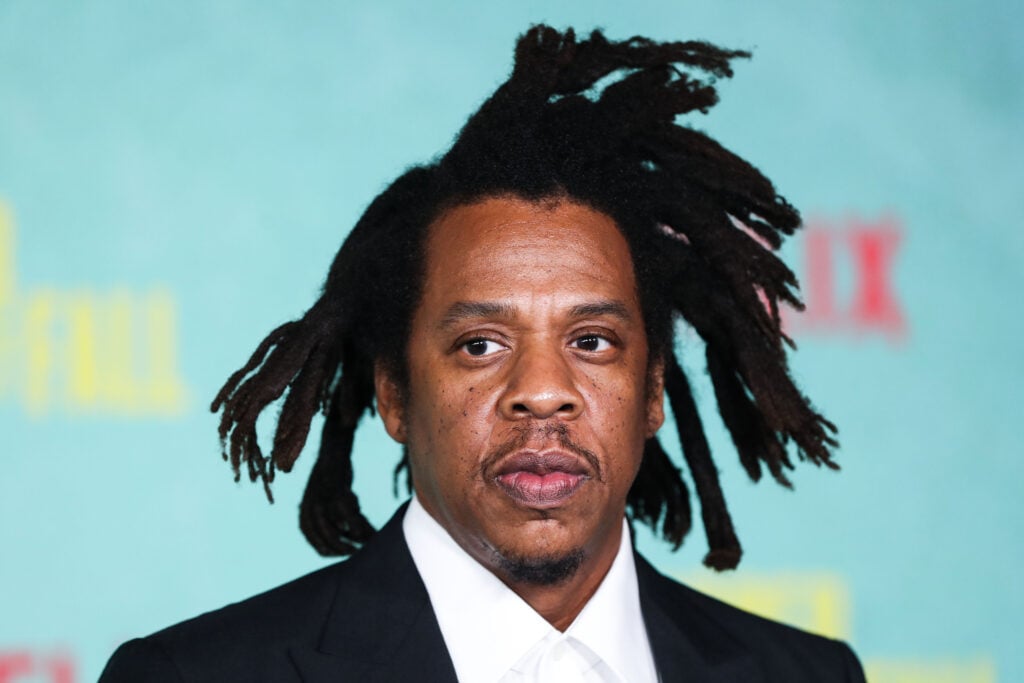
Through a video tied to her haircare brand Cécred, the singer revealed that Jay-Z’s decision to grow locs was rooted in solidarity with his daughter, and that those same locs were recently transformed into an afro honoring his late father, Adnis Reeves, completing a multigenerational journey that began with a little girl and her curls.
When Blue Ivy was around 5 years old, she was struggling to feel confident about her natural hair texture. As Page Six reported, Blue “had no idea that her father’s hair had texture like hers” until Jay-Z made the decision to grow it out.
That discovery became the foundation of something much larger. Beyoncé explained the family’s motivation plainly, telling viewers in the Cécred video, “We really wanted her to love and embrace every inch of her gorgeous curls.”
Jay-Z responded by letting his own hair grow, eventually wearing locs for the next eight years. The hope was straightforward: if Blue could see her father’s natural texture celebrated and visible, she might find it easier to celebrate her own.
It was a parenting instinct rooted in representation at its most personal level, not a magazine cover or a celebrity campaign, but a father growing his hair out in his own home for his daughter.
Eight Years Of Locs, Six Days Of Transformation
Earlier this year, Jay-Z decided the locs had reached the end of their chapter. As E! News noted, he had been maintaining those locs for nearly a decade to show Blue, now 14, what natural hair could look like.
He was preparing for a headline performance at Philadelphia’s Roots Picnic and wanted to debut a new look, specifically an afro, as a tribute to his late father Adnis Reeves, whose own signature style was an afro.
The six-day process of detangling Jay-Z’s locs involved Beyoncé, Blue Ivy, and hairstylist Letisia Ravelo working through the transformation. Blue, now approximately 14 years old, even helped comb out sections of her father’s hair, making her both the origin and an active participant in the story’s conclusion.
Beyoncé admitted she felt some reluctance about letting the locs go. The years attached to them carried weight, and the memories woven into that hairstyle were not easy to set aside. But the meaning behind the new style gave the moment its own emotional gravity.
Jay-Z stepped onto the Roots Picnic stage wearing the afro his father once wore, connecting three generations through a single hairstyle.
Why This Moment Resonates Beyond The Carter Family
For parents raising children with natural hair, particularly Black children navigating questions of beauty and self-worth, the story Beyoncé shared carries a specific kind of weight.
The idea that a parent might reshape their own appearance to help a child feel seen in theirs is not a grand gesture in the celebrity sense. It is the kind of quiet, sustained commitment that plays out in households everywhere, usually without cameras or brand videos attached to it.
What makes the Carter family’s version of this story unusual is the full circle it eventually traced. What started as Jay-Z growing his hair for Blue became, years later, Blue helping her father comb that same hair out so he could honor his own father.
Grief, identity, and a child’s confidence all converged in a six-day detangling session in what is, by any measure, a genuinely remarkable family moment.
Stories like this one are worth paying attention to because they illustrate something research on child development has long supported: children build self-image partly by watching the adults closest to them.
When a parent visibly embraces the same physical trait a child feels uncertain about, the message lands differently than any affirmation spoken out loud. Jay-Z did not tell Blue Ivy her hair was beautiful.
He grew his own out for eight years so she could see it for herself. That distinction matters, and it is a model any parent can adapt, regardless of what the specific insecurity happens to be.
A Story That Belongs To All Three Generations
The Cécred video framed the moment as a Father’s Day tribute, and the timing gave it a particular resonance. Jay-Z’s afro is simultaneously a callback to his daughter’s childhood, a tribute to his late father, and a statement about what natural hair has meant to the Carter family across generations.
Beyoncé’s decision to document and share the transformation through her haircare brand added a layer of intentionality, connecting the personal story to a broader conversation about Black hair, identity, and the products families use to care for both.
What began nearly a decade ago as a father noticing his daughter’s struggle and deciding to do something about it quietly, without announcement, ended with a headline performance and a hairstyle that carried the weight of two generations.
Blue Ivy, who inspired the whole journey at 5 years old, was there at the end of it, comb in hand.

