

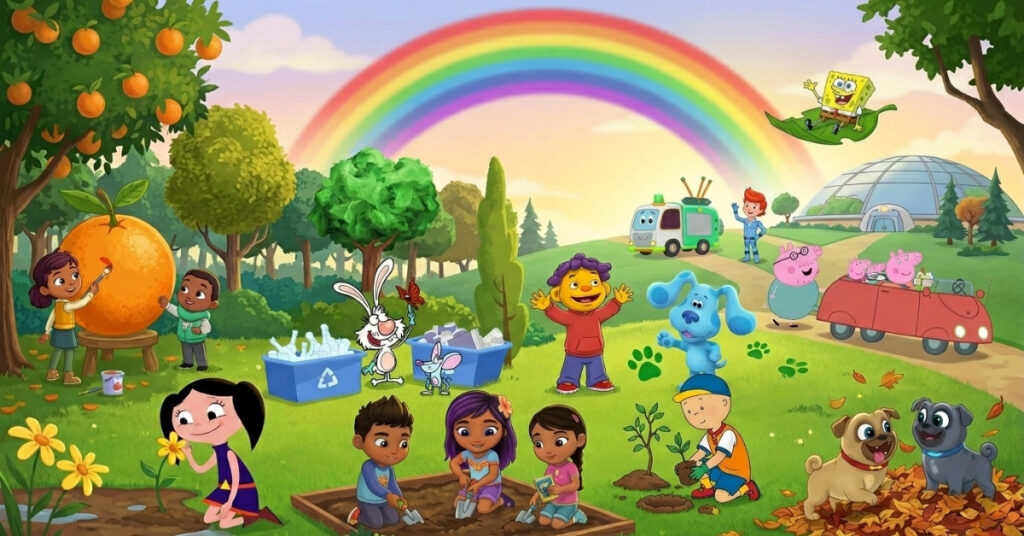
Exploring Earth and everything it has to offer opens the door to lessons about wildlife conservation, biodiversity, and protecting the planet from pollution. Cartoons about Earth use engaging stories and colorful animation to help kids discover oceans, deserts, rainforests, and even their own backyards while learning how to care for the world around them.
These cartoons blend entertainment with meaningful environmental education. Kids are introduced to animal behavior, plant life, ecosystems, habitat conservation, and seasonal changes. Many stories highlight teamwork, showing characters working together to protect their environment; an approach that encourages kids to apply those same values in real life.
Whether you’re ready to celebrate Earth Day with your kids or just want to teach them about our planet, these fun and engaging cartoons offer a great way for them to connect with the world around them. Along the way, they build awareness, spark curiosity, and inspire the next generation to take care of the Earth.
Where To Watch Note: Some streaming services may list episodes in a different order or split episodes into multiple parts. Streaming availability and age recommendations in this guide reflect platforms commonly used by families in the United States. International availability may vary by region due to licensing.
The Leaf Painter From Weather Hunters (Season 1, Episode 6)
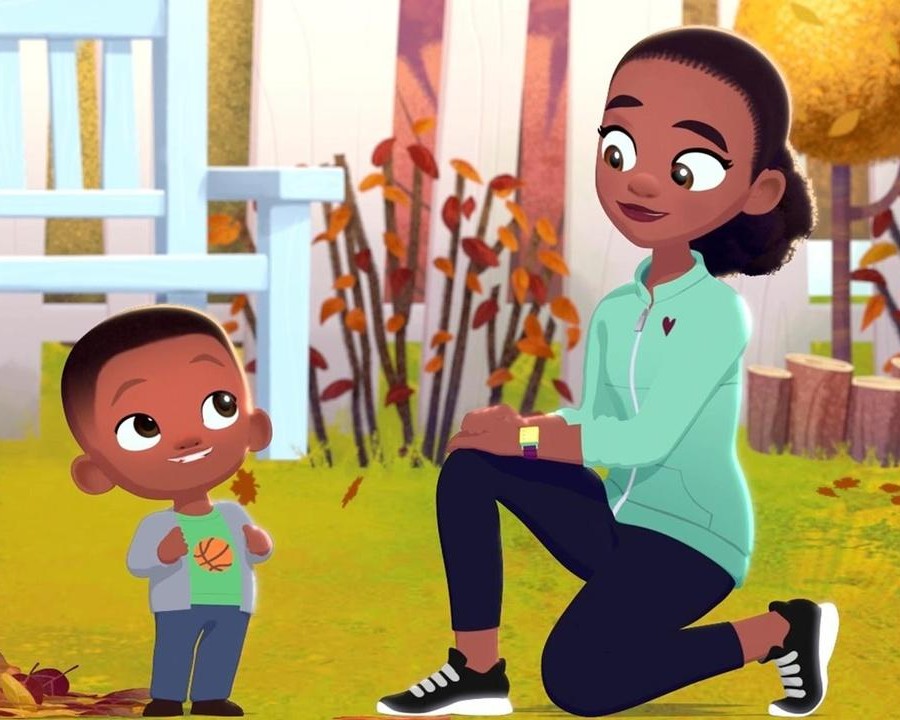
The Hunter family has fun jumping into a pile of leaves in their backyard. The children explore their different theories about why the fall season occurs. Dot, their mother, explains the history of autumn. This experience sparks a trip to the state park, where the whole family observes and discovers why the leaves change color.
What Important Lessons “The Leaf Painter” Teaches Children: Seasons have scientific reasons for happening. Trees get food from the chlorophyll in the leaves, gathering it from the sunlight through a process called photosynthesis. With shorter days and colder temperatures in the fall, the colors in leaves turn to shades of red, yellow, and orange as chlorophyll levels decrease. Trees slow down food production and shed leaves to make way for new leaves in the spring.
Age Recommendation: 5 to 8 years
Where To Watch Weather Hunters And “The Leaf Painter”: PBS Kids
I Feel The Earth Move From Ready, Jet, Go! (Season 2, Episode 8a)
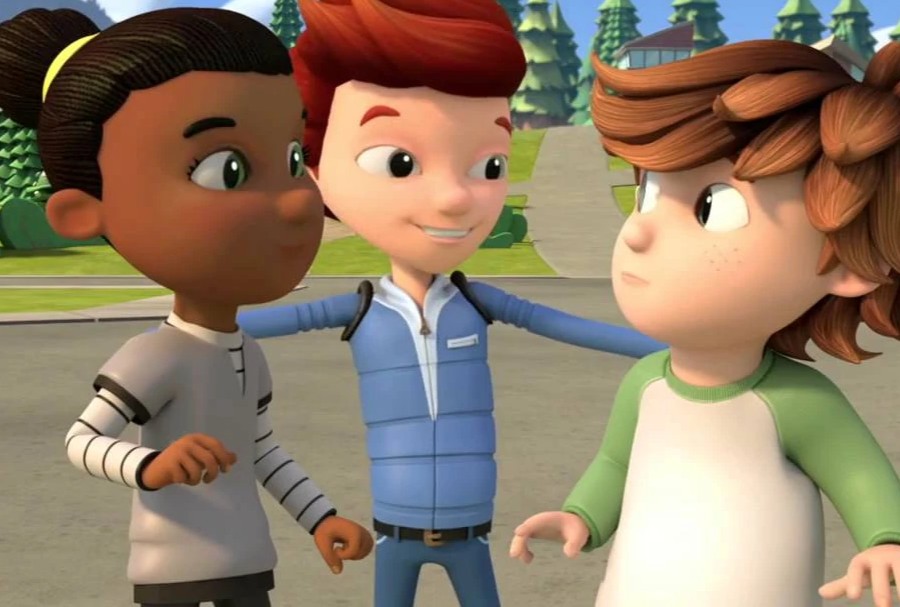
Jet and his friends are enjoying a bounce house. They experience an earthquake happening throughout Boxwood Terrace. His Earthbound friends teach him about earthquakes because Jet and his father think that a hiccupping volcano is causing the Earth to shake.
Mindy, Sydney, and Sean look inside a book to discover how rocky Earth plates float on magma to make the Earth’s crust. Sean takes everyone to speak to his mother, who works at the TSA. She confirms their findings by leading them in a fun experiment with soup and crackers to illustrate how earthquakes happen. Jet’s mom takes them on an exploration mission in their ship to learn more.
What Important Lessons “I Feel The Earth Move” Teaches Children: Earth isn’t one solid piece. The planet is made up of hard rocky plates floating on softer, hot material beneath them. This foundational understanding of Earth science is important to understand how earthquakes happen. Movement beneath the surface causes the shaking that everyone feels on Earth during one of these events. Collaboration is important when learning new concepts about the Earth, so investigating and learning with a group of friends or classmates leads to better understanding.
Age Recommendation: 3 to 8 years
Where To Watch Ready, Jet, Go! And “I Feel The Earth Move”: PBS Kids and Netflix
Zerk Visits Earth From Ready, Jet, Go! (Season 2, Episode 8b)
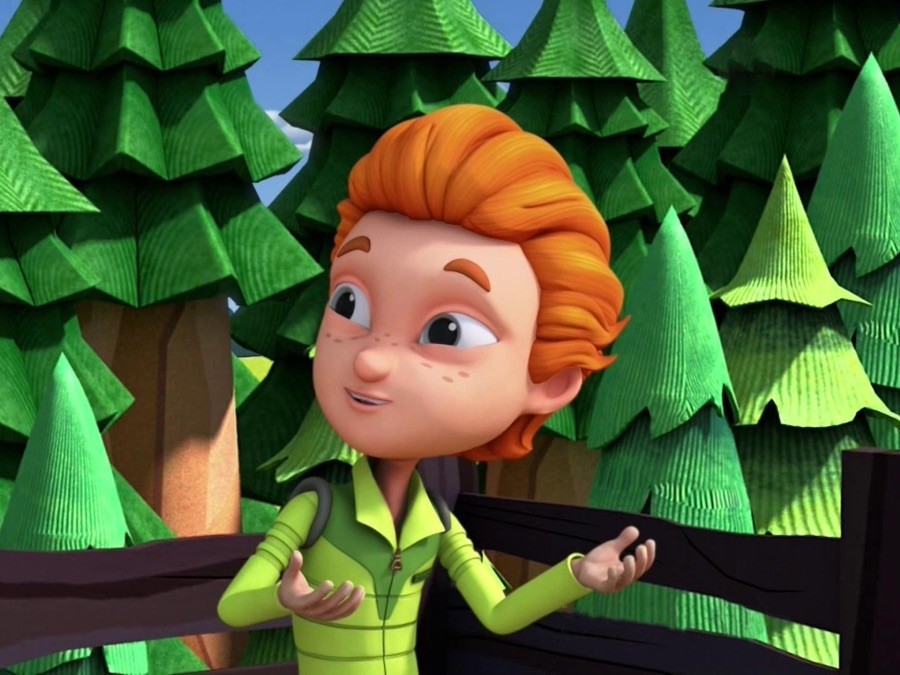
Jet’s cousin, Zerk, comes from outer space to visit Planet Earth. Zerk is excited to discover green plants, hills, and earthbound animals. Mindy, Jet, Sydney, and Sean show Zerk the local lake, where he can swim and explore the wildlife. He’s even more excited to see that apples come from trees and can be cooked into other delicious dishes like pancakes, pies, cupcakes, and applesauce.
What Important Lessons “Zerk Visits Earth” Teaches Children: Everyone can appreciate Earth’s natural beauty. Seeing the green trees and surrounding lakes can help kids to value the environment around them. Natural food can be found throughout the Earth, not just in stores. This lesson builds awareness about agriculture, with many delicious foods coming from farm to table. Exploring ecosystems also helps children appreciate the local wildlife and the habitats they live in.
Age Recommendation: 5 to 8 years
Where To Watch Ready, Jet, Go! And “Zerk Visits Earth”: Insert
Yay, Earth Day! From Puppy Dog Pals (Season 2, Episode 20b)
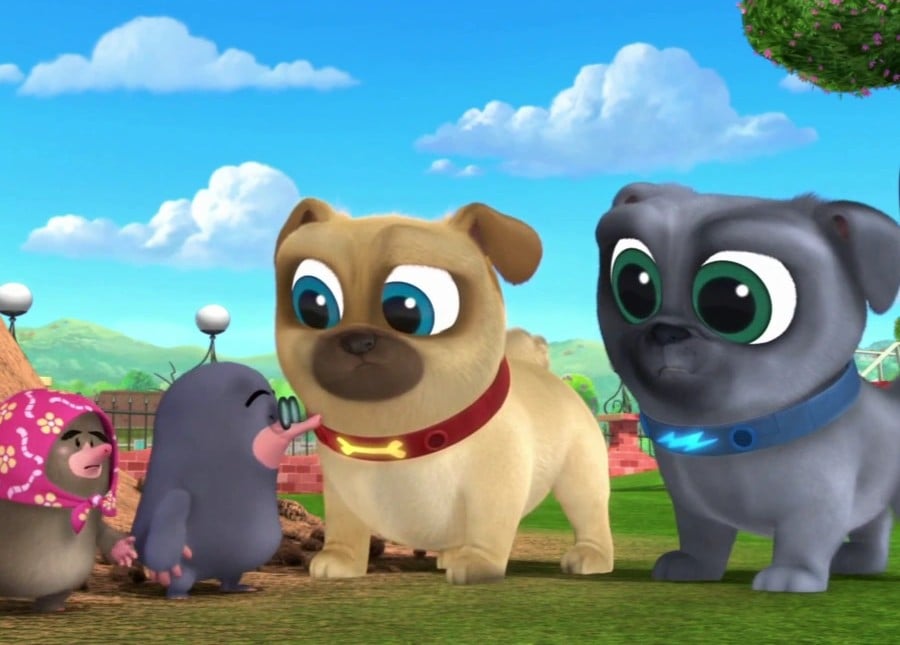
Bingo and Rolly start helping Bob and Earth lovers in the community to plant trees for Earth Day. They meet some moles who are having trouble getting back home in one of these adventurous cartoons about Earth. The canines bring their mole friends to a bakery after the mole friends say their home smells lovely.
The moles, Alberta and Lawhorn, describe their home as smelling like flowers and sounding like loud machines. This brings the four of them to a perfume factory. They eventually return to a tree nursery, where they see a backhoe scooping up dirt. Lawhorn and Alberta confirm that’s their home and are excited to be back.
What Important Lessons “Yay, Earth Day!” Teaches Children: Not all animals have good sight. Moles compensate for a lack of sight by smelling their way through their environment. Planting trees is a great, eco-friendly way to increase oxygen in the Atmosphere for mammals to breathe. Animals can, unfortunately, sometimes get displaced when construction or other human-led activities occur. Hence, it’s best to be careful not to disrupt ecosystems when considering how our actions can affect wildlife’s homes and overall survival.
Age Recommendation: 2 to 6 years
Where To Watch Puppy Dog Pals And “Yay, Earth Day!”: Disney+
Recycling From Peppa Pig (Season 2, Episode 11)
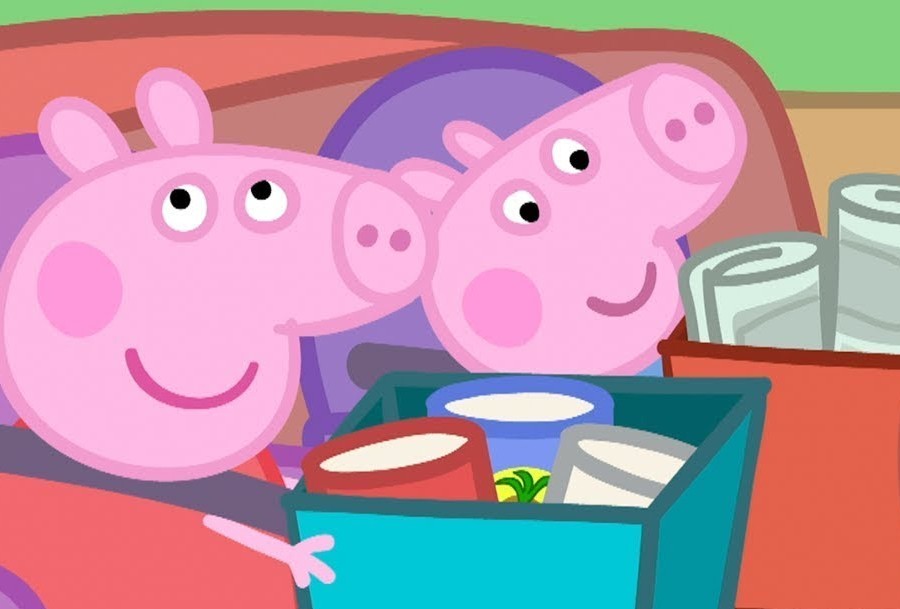
Mummy and Daddy Pig show Peppa and George the difference between trash and recycling. They show the appropriate bins for each recycled item. The family takes a trip to the recycling center to drop off paper, bottles, and cans to empty their bins. Peppa and George help Mummy and Daddy match their bins to the appropriate disposal areas for each type of recycled material. Bottles go in the green bin, cans in the blue one, and newspapers in the red bin.
What Important Lessons “Recycling” Teaches Children: Trash is items that cannot be reused, such as food packaging and dirty plastic bags. Plastic bottles, tin cans, and newspapers are great examples of items that can be recycled to create new products and conserve natural resources. Recycling these items helps reduce waste in landfills while protecting the environment.
Age Recommendation: 3 years and older
Where To Watch Peppa Pig And “Recycling”: Paramount+, Philo, and Amazon Prime
SpongeBob’s Last Stand From SpongeBob SquarePants (Season 7, Episode 8)
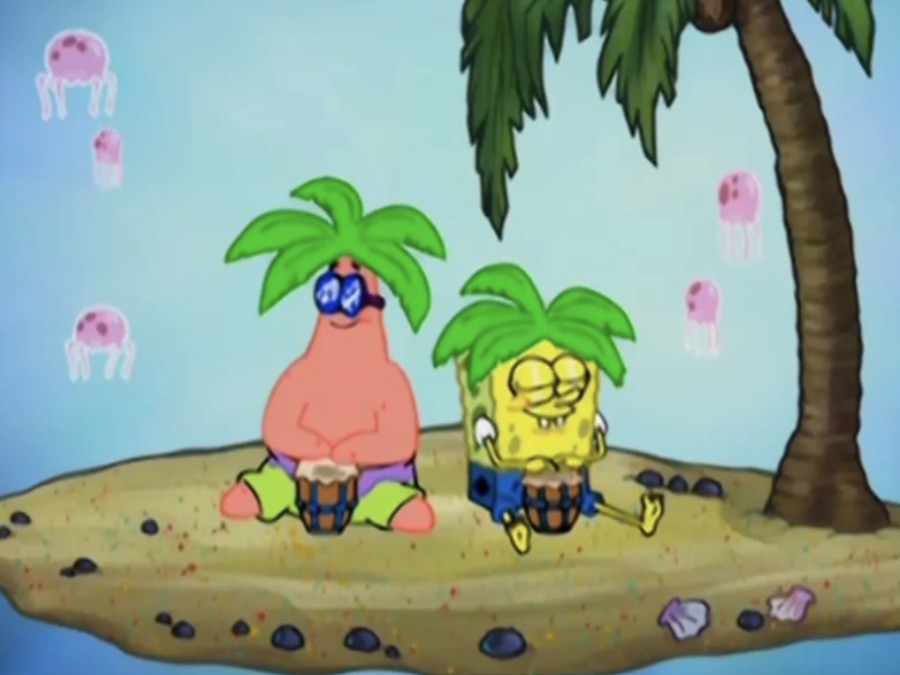
SpongeBob and Patrick are enjoying a day at Jellyfish Fields. They soon learn that the Shelly Superhighway will eventually be built over Jellyfish Fields. SpongeBob attempts to rally supporters throughout Bikini Bottom to protest the construction of this highway over his beloved habitat. However, no one listens to his reasoning.
Mr. Krabs supports building the highway, believing his viewpoint would bring customers to the Krusty Krab. Meanwhile, SpongeBob uncovers Plankton’s plan to destroy the Krusty Krab and steal all the business. This prompts him and Patrick to distribute flyers and sing “Give Jellyfish Fields a Chance” to raise awareness amongst townsfolk.
The impending pollution and chaos cause the jellyfish to rebel against Bikini Bottom’s citizens. The jellyfish attack the Chum Bucket and halt his scheme to destroy the Krusty Krab. SpongeBob seizes the chance and rallies the townspeople to destroy the highway and enjoy Jellyfish Fields and all its beauty.
What Important Lessons “SpongeBob’s Last Stand” Teaches Children: Standing up for the environment, even when no one listens, is a virtuous thing to do. Advocating to protect natural habitats to safeguard the wildlife and its ecosystems. Teamwork and community involvement can make a difference in this endeavor when everyone rallies together. Positive change is possible when like-minded people work together to defend what is right while protecting the world around them.
Age Recommendation: 4 years and older
Where To Watch SpongeBob SquarePants And “SpongeBob’s Last Stand”: Paramount+ and Amazon Prime Video
Blue Goes Green From Blue’s Clues & You! (Season 4, Episode 32)
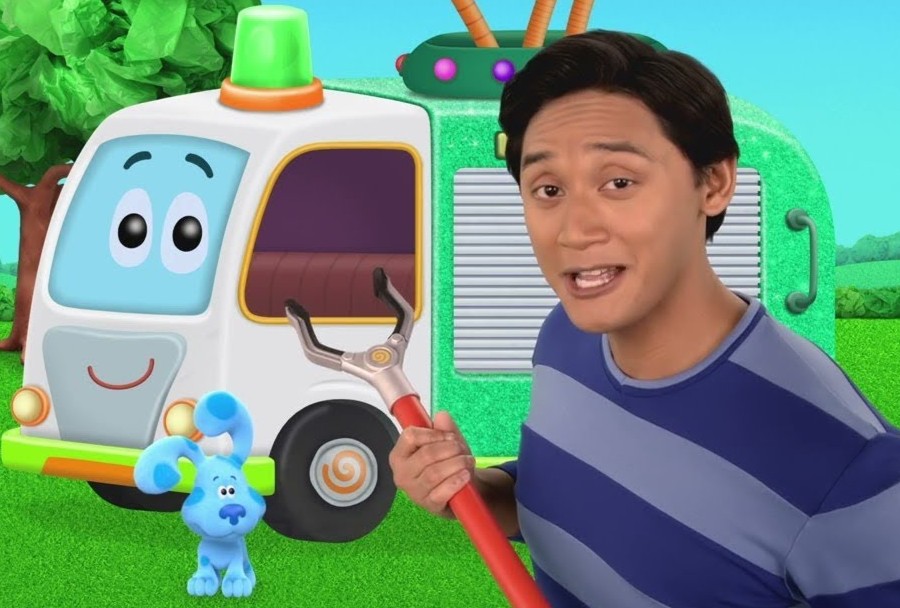
Rainbow Puppy is about to host her concert at the local park. Blue and Josh are puzzled by the amount of litter lying around near the concert venue. They help to pick up the trash while investigating why so much litter is accumulating throughout the park. Josh and Blue meet Paper, Plastic, and Metal to sort the litter they find throughout the park into the appropriate bins.
Josh and Blue’s visit to Recycle Town leads them to create crafts from recycled materials. Tickety Tock joins the adventure, showing viewers how to repurpose buttons and paper. Mr. Salt organizes recycling bins to help everyone keep on track while cleaning up the park.
Important Lessons “Blue Goes Green” Teaches Children: Sorting and recycling help protect the environment, which is one way everyone can care for the planet daily. Materials can be reused creatively to make fun crafts rather than always buying special supplies that only add to the growing waste. The episode teaches kids that we need to protect our environment, and we can start by taking steps to make a difference in our local environment.
Age Recommendation: 2 to 6 years
Where To Watch Blue’s Clues & You! And “Blue Goes Green”: Philo and Amazon Prime Video
Earth Day Today From Nature Cat (Season 1, Episode 15a)
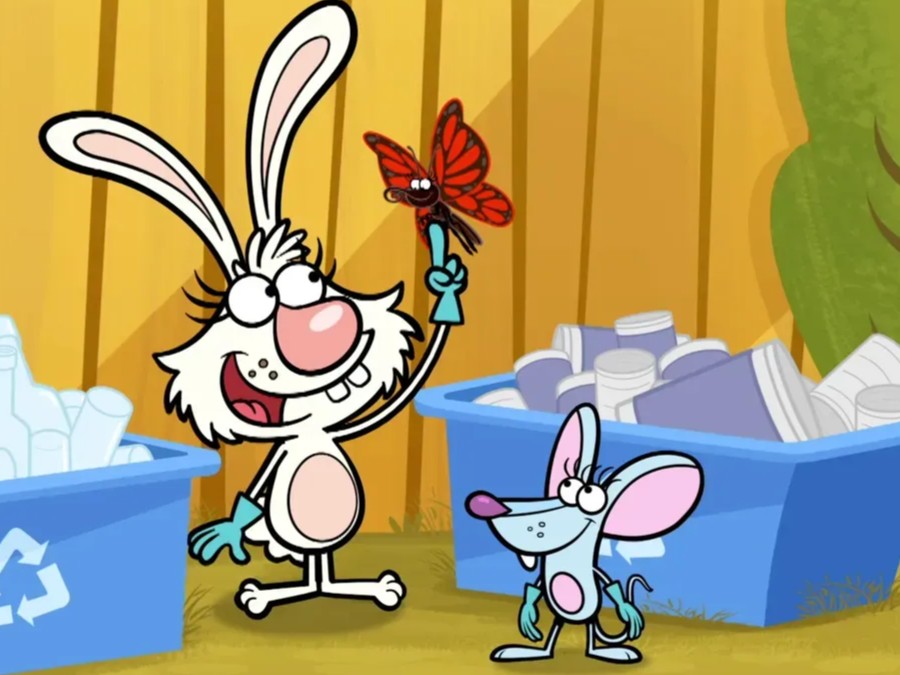
Nature Cat and the crew embark on a hike through Butterfly Hills. They notice one plastic bag after another floating through the wind during their hike. With some investigative work, Nature Cat and his friends realize that these plastic bags are coming from local stores. Nature Cat uses his extra shirts to create reusable bags for customers to purchase, reducing their reliance on plastic bags.
What Important Lessons “Earth Day Today” Teaches Children: The opening song that Nature Cat and his friends sing shows different ways to be eco-friendly for the Earth, such as hanging clothes out to dry on a clothesline and recycling materials. Plastic pollution hurts the environment by damaging wildlife and littering local areas. Everyone can take practical steps to protect wildlife, reduce litter, and continue to care for their local environment.
Age Recommendation: 4 to 8 years
Where To Watch Nature Cat And “Earth Day Today”: PBS Kids and YouTube
Earth Day Every Day From Nature Cat (Season 1, Episode 17b)
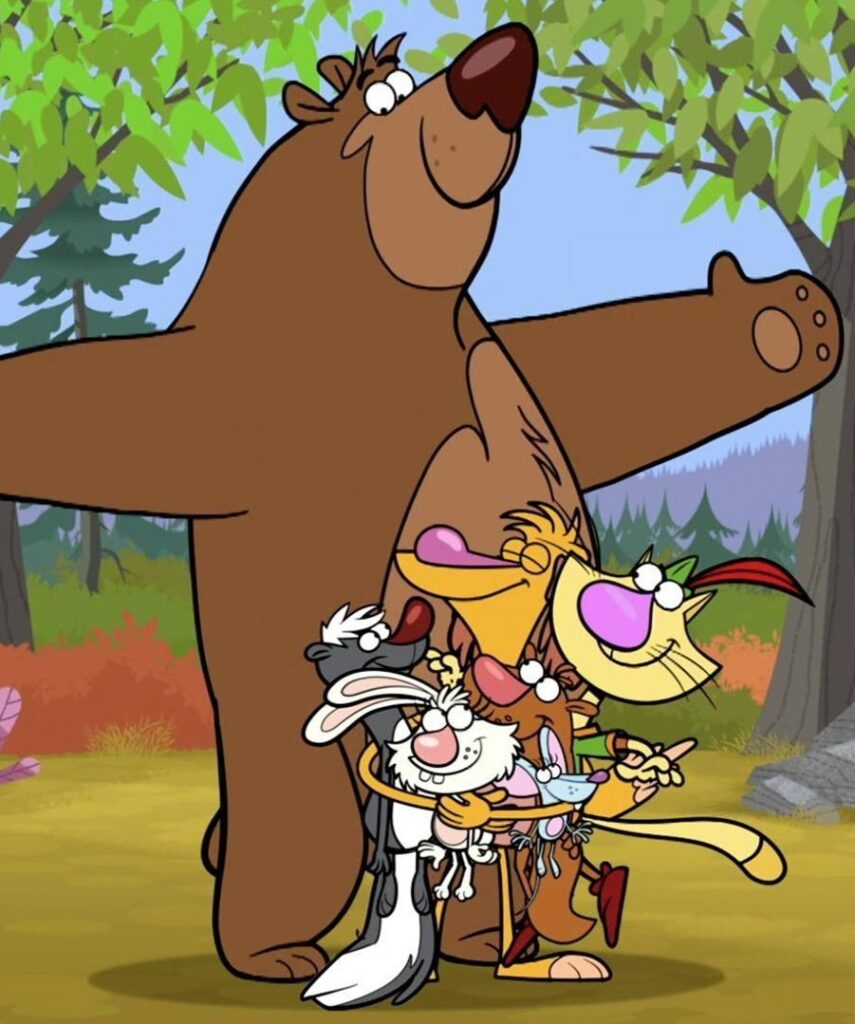
Now that Nature Cat and his buddies solved the plastic bag dilemma, they return to hiking through Butterfly Hills to celebrate Earth Day. Along their way, they clean a marsh and plant a butterfly garden. A plastic bag floats by them, and a plastic bottle flows through the river. Nature Cat, Hal, Squeaks, and Daisy catch every piece of trash they see during the hike.
They speak to a fish that shows them where the plastic trash washing up on the nearby shore is coming from. A dolphin comes to thank them for their kindness in removing the trash.
What Important Lessons “Earth Day Every Day” Teaches Children: Small actions make a bigger difference. Reducing pollution at the source, such as using reusable items, can reduce waste in landfills, oceans, and surrounding environments. Hence, preventing waste is just as important as cleaning it up, so there’s less global warming in the world. Litter can damage an ecosystem and reduce its safety for local wildlife, so it’s imperative to continue regular prevention and clean-up.
Age Recommendation: 4 to 8 years
Where To Watch Nature Cat And “Earth Day Every Day”: PBS Kids and YouTube
Digging Deeper From Spirit Rangers (Season 3, Episode 7)
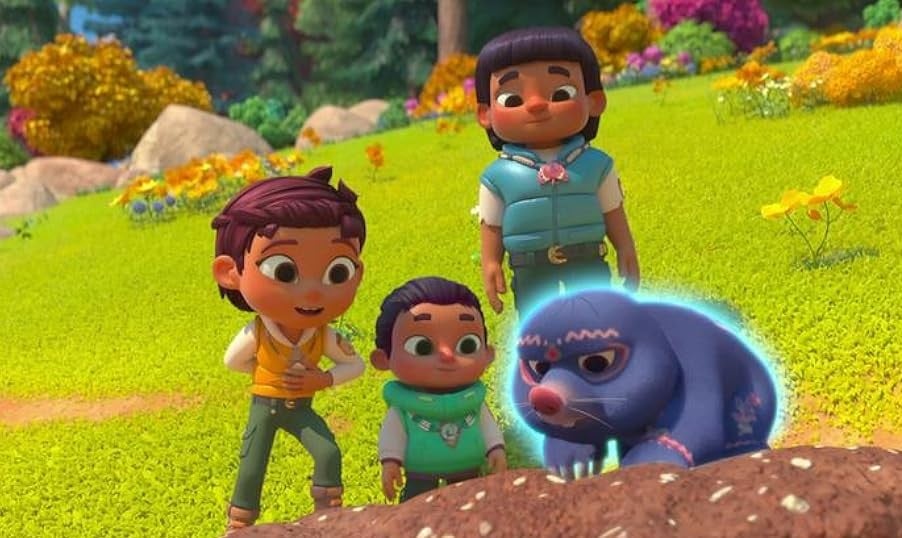
Kodi, Summer, and Eddy are trying to practice their Samala language skills. Tanegwa, a mole spirit, comes to them while they are trying to hide from an unidentified creature digging tunnels beneath the local park. The demolition is threatening to destroy Spirit Park by unearthing lava from the Earth’s surface.
The being digging through the tunnels turns out to be Tanegwa’s grandmother, Utani. The Spirit Rangers confront Utani, but they can’t understand her Cherokee language. Tanegwa admits she ran from her grandmother because she felt that learning Cherokee was too difficult. The Rangers encourage Tanegwa not to give up. Their mole spirit friend eventually confronts Utani, and the Spirit Rangers redirect the lava away from destroying Spirit Park.
What Important Lessons “Digging Deeper” Teaches Children: Nature can be quickly damaged with planned or unforeseen demolition. Caring for the land and preventing harm is important for Earth’s preservation. Natural ecosystems are interconnected, and when one part of an ecosystem is harmed, it can compromise the rest. Indigenous languages also carry knowledge about different ways to care for the Earth.
Age Recommendation: 3 to 7 years
Where To Watch Spirit Rangers And “Digging Deeper”: Netflix
A Rainbow Every Day! From Sid The Science Kid (Season 2, Episode 9)
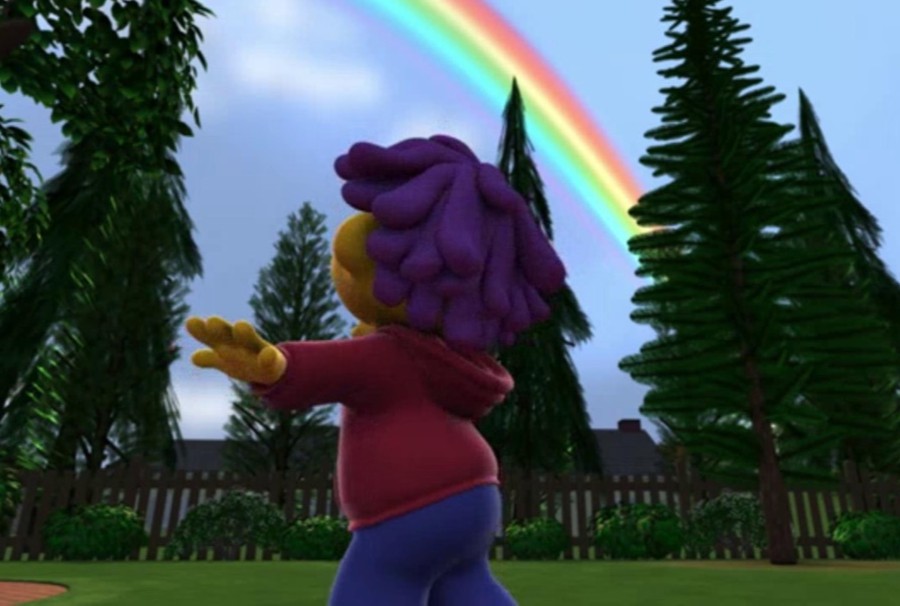
Sid comes outside one morning when it’s sunny after a rainy previous day. He tries to show his parents and little brother, but it disappears before they can see it. Mom and Sid investigate rainbows on the computer before she drops him off at school. He brings up his discovery at school, and Miss Susie teaches them the specific weather conditions needed for a rainbow to pop up in the sky.
The kids engage in a Super Fab Lab activity with Miss Susie outside by using a prism to create a makeshift rainbow. Viewers retain their learning when listening to the Rainbow Rhyme towards the end of the episode.
What Important Lessons “A Rainbow Every Day!” Teaches Children: The science behind a rainbow is that sunlight refracts through water droplets, displaying all 7 colors. This primarily occurs when the sun comes out directly after a rainstorm. Children can learn that it’s smart to observe weather patterns to better understand how certain natural events happen, such as recognizing the right conditions for rainbows to appear in the sky. The sun, rain, and atmosphere all work together while following predictable patterns.
Age Recommendation: 3 to 6 years
Where To Watch Sid The Science Kid And “A Rainbow Every Day!”: Amazon Prime Video, Sling TV, Roku Channel, and YouTube on the Jim Henson’s Family Hub channel.
Earth Day From Caillou’s New Adventures (Season 5, Episode 21)
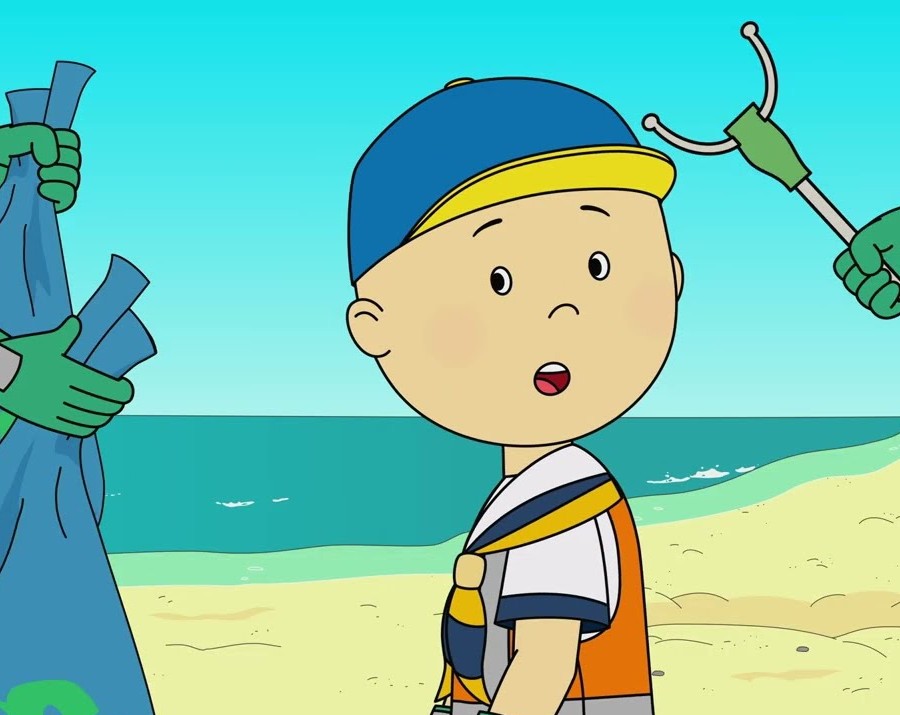
Caillou and his classmates are helping to clean up a local beach. The opening scene shows Caillou imagining himself as an undersea hero fighting pollution. He challenges himself to be the fastest person to pick up trash and recycling throughout the beach. Caillou eventually reframes his mindset to work together with his classmates to pick up the trash. In the end, the kids enjoy popsicles as a treat for a job well done.
What Important Lessons “Earth Day” Teaches Children: Working together makes a greater difference when trying to protect the Earth’s environment. School classes can model community involvement and environmental stewardship early on in their lives. Life exists in the ocean, and children can learn to appreciate and honor these organisms. Hence, disposing of waste responsibly ensures land and sea animals can thrive longer.
Age Recommendation: 2 to 5 years
Where To Watch Caillou’s New Adventures and “Earth Day”: Roku Channel and YouTube on the Caillou’s New Adventures – Wild Brain channel.
That Just Rained Smell From Earth To Luna (Season 1, Episode 6)
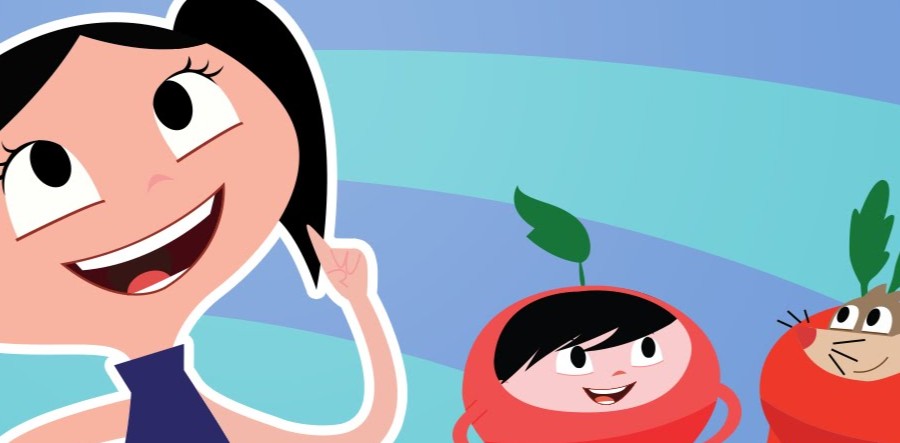
Everyone has enjoyed that “just-rained smell” before. Luna, Jupiter, and Clyde, their pet ferret, plan to fill a watering can with a hose. Just before Luna goes to turn on the hose, it starts raining. She puts an umbrella up, and Jupiter puts his snorkel on to match his swim flippers.
The trio follows an earthworm to get answers to the question about what makes it smell after rain. They conduct an experiment and find that the specific smell comes only from the wet dirt after the rain, not from the dirt pile with the worm on it. Luna, Clyde, and Jupiter turn into radishes to explore the dirt smell further. They learn about microbes and how the rain interacts with them to cause that special smell.
What Important Lessons “That Just Rained Smell” Teaches Children: Curiosity leads to discovery. Everyday experiences can spark meaningful exploration as they explore the Earth and the science in the world around them. Experimentation can identify causes while observing differences. Problem-solving is best done through realistic experimentation and observation rather than making guesses.
Age Recommendation: 3 to 7 years
Where To Watch Earth To Luna And “That Just Rained Smell”: The Roku Channel, Amazon Prime Video, and the Earth To Luna YouTube channel
Gravity From Blippi Wonders (Season 1, Episode 6)

Blippi is driving at night and witnesses Tabs bouncing on a bounce house. He thinks about what would happen if he and Tabs tried to bounce on the moon. The Blippi Mobile takes them to the moon, where they meet Rocky. They start bouncing together and notice they float longer in the air on the moon compared to when they jump on Earth.
What Important Lessons “Gravity” Teaches Children: Different planets and celestial bodies do not have the same gravitational pull. Earth has more gravity, so people and things that rise into the air come back down quickly because of the stronger gravitational pull. The moon has a lower gravitational pull, which is why people and things float longer in this area.
Age Recommendation: 2 to 6 years
Where To Watch Blippi Wonders And “Gravity”: Hulu and Disney+
A Collection To Get Rid Of From Carl The Collector (Season 1, Episode 14a)
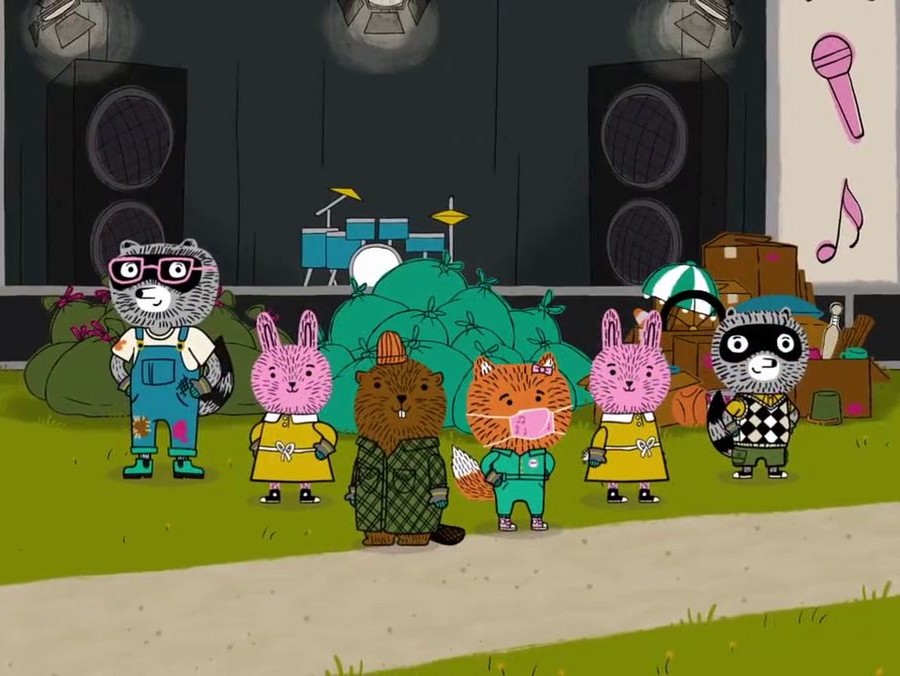
Carl and his friends have a fun sack race, causing Forest to trip over a can. They notice that the bulk of Fuzzytown Park is littered with trash, so the friend group decides to collect supplies like gloves, masks, and trash-picking wands alongside Carl’s mom.
Once the piles accumulate, Carl and his mother separate them into three categories: trash, recycling, and upcycling. Some Earth cartoons are endearing with representation in the characters, such as how Carl is autistic, and learning that not every collection has to be kept. The Punk Turtles return because one of their band members had lost a guitar pick. They start helping the crew pick up trash and even contact their fans to help with the cleanup effort.
What Important Lessons “A Collection To Get Rid Of” Teaches Children: It’s best to be thoroughly prepared for a neighborhood cleanup. Gathering protective supplies such as gloves and masks is important for safeguarding health during the activity. Youth also learn that waste can be easily separated into manageable systems: trash in trash bags and recycling in the appropriate cans. The episode that mentions upcycling can spark conversations between kids and their parents about how they can reuse different items to make something new and useful for their daily lives.
Age Recommendation: 4 to 8 years
Where To Watch Carl The Collector And “A Collection To Get Rid Of”: PBS Kids and Netflix
Flight Of The Pollinators From Wild Kratts (Season 1, Episode 32)
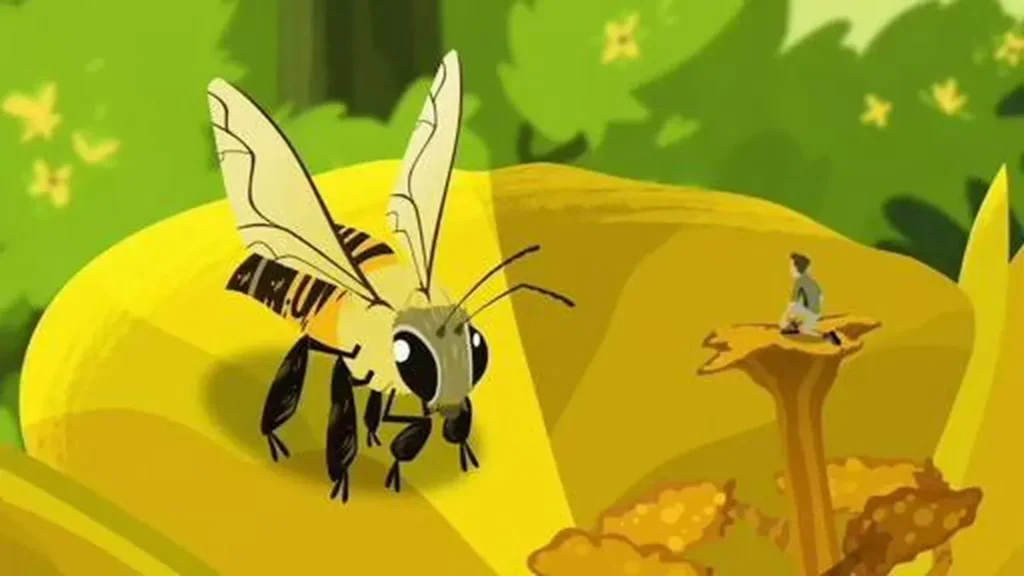
Chris rides his Buzz Bike onto a flower as Beast, a honeybee, arrives to pollinate it. While examining Beast, Chris and his Buzz Bike accidentally stick to him, causing him to be carried away. Martin and Aviva attempt to follow Chris to rescue him, but they become confused and have to return to Tortuga. Chris undergoes pollen transfer and ends up inside the flower, so he calls his friends to come help him. Along the way, Chris narrowly avoids an eyelash viper and a crab spider.
Eventually, a hummingbird carries Chris away from the flower and lands on a fig wasp emerging from a gourd. Aviva activates the Pollinator Attractor to bring a swarm of pollinators to Chris’s rescue. The Wild Kratts summarize pollinator-flower relationships when the cartoon returns to live action on a farm.
What Important Lessons “Flight Of The Pollinators” Teaches Children: Pollinators are essential members of the circle of life. They help plants reproduce through pollen transfer, which supports the growth of fruits, vegetables, and flowers in the wild and in small gardens. Humans and animals rely on these foods and flowers, showing youth how ecosystems are interconnected. Preserving biodiversity is important for crops and plants to grow on time for human and animal consumption and use during harvest season.
Age Recommendation: 4 to 10 years
Where To Watch Wild Kratts And “Flight Of The Pollinators”: Amazon Prime Video and Apple TV
Garbage From City Island (Season 2, Episode 8)
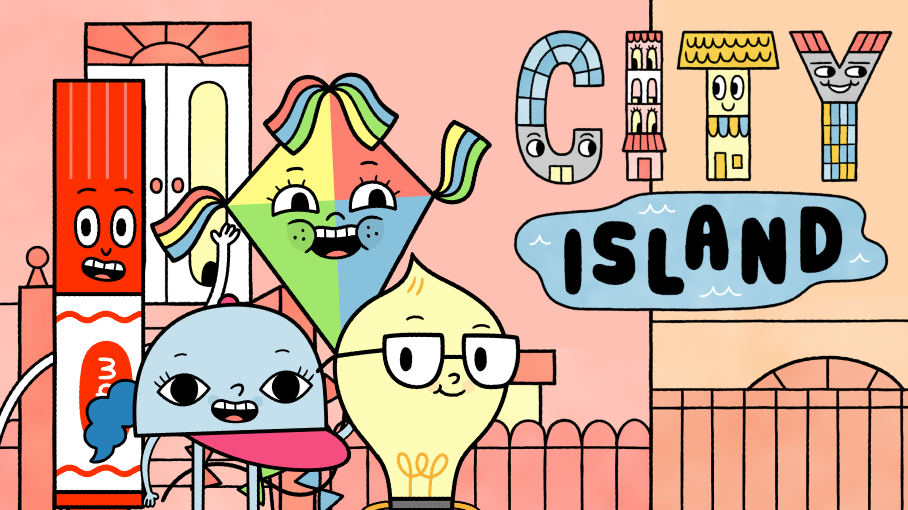
Watt’s dad is looking for his favorite drawing pen. His son admits that he threw away the pen because it wasn’t working. The father is saddened that it was thrown out because it only needed new ink. Watt and his dad go to look in the garbage can where the pen was discarded, but the trash is gone.
Garbo, a trash truck, offers Wyatt and his father a ride to the waste management center after hearing of their plight. Along the way, the crew meets a recycling truck. Detritus, the facility’s supervisor, gives them a tour. In the end, Watt asks Detritus for an autograph and pulls out a pen, which happens to be his father’s favorite one. It turns out Watt didn’t throw out that pen after all.
What Important Lessons “Garbage” Teaches Children: Too much garbage is a problem for the Earth because it causes global warming and pollution contributing to environmental destruction. Communities can work together to address environmental issues by properly disposing of waste. Things that can be reused should be kept for as long as possible until they can no longer be repurposed.
Hence, everyone should think about whether the item can be repurposed before throwing it away. Pay attention to your belongings as one way to reduce waste, so there is less need to replace lost items.
Age Recommendation: 4 to 8 years
Where To Watch City Island And “Garbage”: PBS Kids
The Great Qyah Clean Up From Molly Of Denali (Season 3, Episode 6)
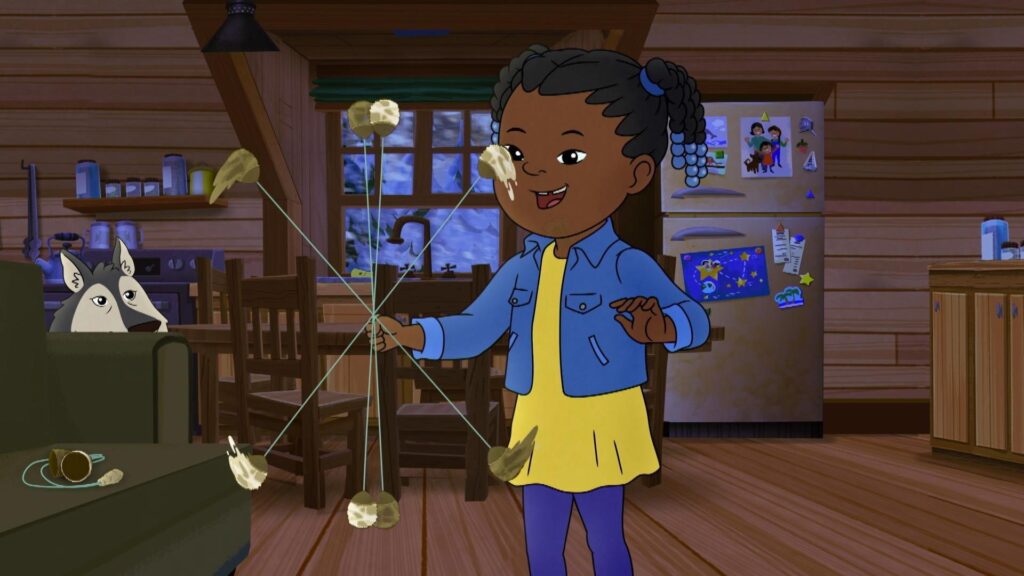
Molly and her friends are participating in a local cleanup throughout the village to prepare for spring. Tooey and Molly find something on the ground that turns out to be a unique treasure. The village folk continue to focus on the environmental cleanup as the snow melts. The unusually annoying chore turns into a fun treasure hunt where they find items they have never seen before. Cartoons about the Earth can unveil fun surprises even through what are usually mundane tasks.
What Important Lessons “The Great Qyah Clean Up” Teaches Children: Neighborhood cleanups do more than safeguard Earth’s natural resources and improve the local environment. Spring is a great time to participate in a local cleanup to remove winter debris and to guide the community to new growth in the upcoming season. Cleanup activities can lead to more exciting finds and new lessons never learned before about the local area. Children can gain a sense of responsibility and pride for their community by participating in an age-appropriate way to help clean up the environment.
Age Recommendation: 4 to 8 years
Where To Watch Molly Of Denali And “The Great Qyah Cleanup”: PBS Kids and Apple TV
The Green House From The Loud House (Season 1, Episode 11b)
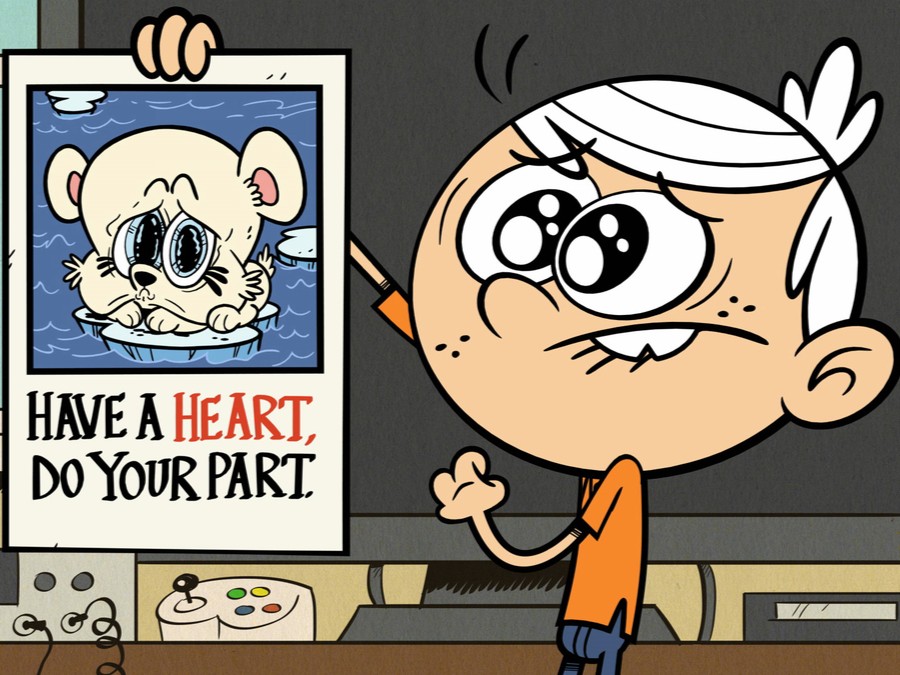
Lincoln is taking part in his class’s Polar Bear Challenge by helping reduce their carbon footprint as much as possible. He feels discouraged at first because his big family uses a lot of energy. His sisters disagree with joining in on the project until Lincoln shows them pictures of polar bears. Emotions can definitely swing up and down in some Earth cartoons, prompting viewers to consider how their actions affect their planet.
The Loud family eventually reduces their energy output. However, Lincoln becomes hypocritical when he cuts off power to the rest of the house so he and his friends can play an online game. His sisters become livid and abandon the eco-friendly effort. Lincoln realizes his mistake and that eco-friendly projects should be pursued for the right reasons, not for popularity. Despite the hiccup on his end, his class wins the eco-friendly challenge.
What Important Lessons “The Green House” Teaches Children: Using less energy is essential for a smaller carbon footprint. Limiting electronic usage and finding other non-tech activities to engage in are great tactics for contributing to a greener environment. Going green is a collaborative effort among family, friends, and classmates that should be done equitably, with set energy limits for everyone to follow. Personal responsibility and integrity is essential to show genuine care for the planet. Continuous, sustainable habits ensure environmental benefits while participants enjoy a higher quality of life and use less energy.
Age Recommendation: 5 to 10 years
Where To Watch The Loud House And “The Green House”: Netflix and Paramount+
Happy Earth Day! From Betsy’s Kindergarten Adventures (Season 1, Episode 8b)
One day, Betsy talks with Mrs. O’Connor and Principal Warner about the importance of recycling before going to school. Mrs. O’Connor shows Betsy the recycling symbol on the plastic juice bowl. She explains to Betsy how plastic and other materials can be repurposed to make new products and reduce landfill waste.
Mrs. O’Connor discusses the history and importance of Earth Day. Betsy talks with her classmates about recycling during recess, and she tells her mom about what she learned after going home from school. The next day, Mrs. O’Connor asks everyone to bring in a fun creation made from recycled materials.
What Important Lessons “Happy Earth Day!” Teaches Children: Daily actions can help the environment. Buying materials from the store to complete a project contributes to more waste in landfills. Using current household resources to create something new and useful reduces waste while encouraging creativity and problem-solving. Children can share what they have learned on their reusing and recycling journey to help others make environmentally friendly choices, too.
Age Recommendation: 2 to 6 years
Where To Watch Betsy’s Kindergarten Adventures And “Happy Earth Day!”: Pluto TV, Amazon Prime Video, and YouTube on the Betsy’s Kindergarten Adventures channel
Environments From Blue’s Clues (Season 3, Episode 29)
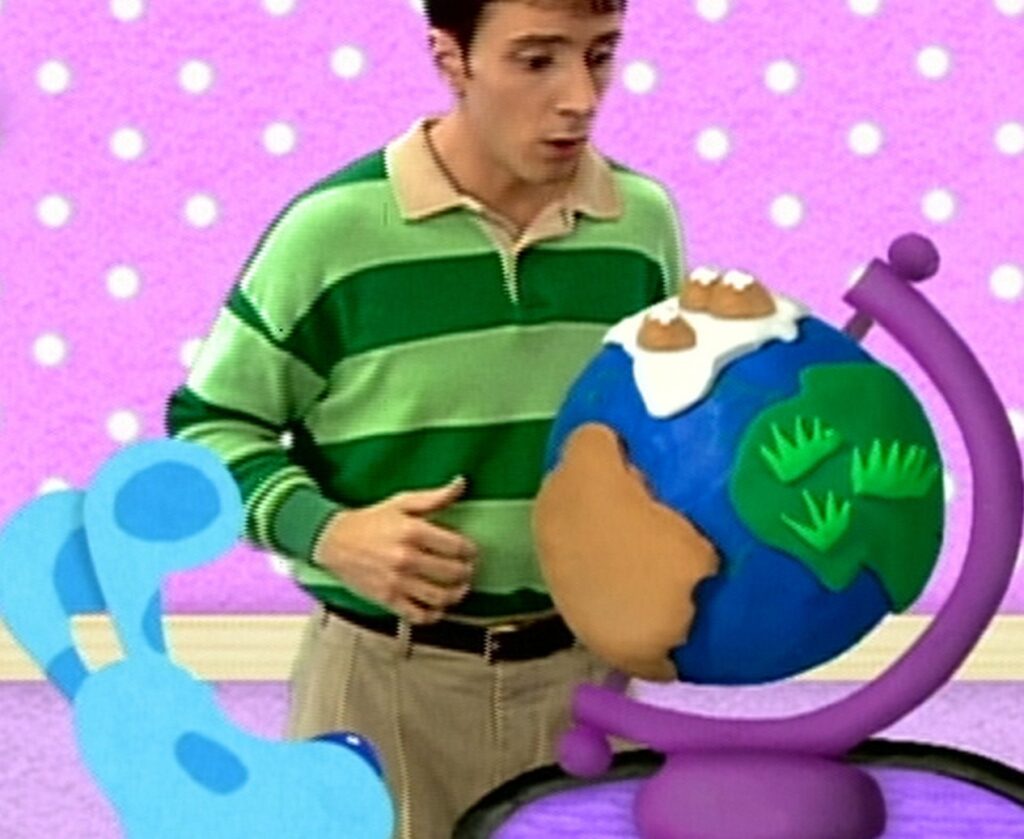
Blue and Steve explore different environments so Blue can choose where she wants to go for an adventure. The friends explore forests, deserts, swamps, tundras, islands, and grasslands. Steve and Blue ask viewers for help on dressing appropriately to explore each environment. During their journey, they meet Mother Nature, who explains the similarities and differences among the environments they’re exploring.
Along the way, Steve and the viewers collect clues: the sun, sand, and a cactus. When they have all three clues, Steve goes to the Thinking Chair to figure out where Blue wants to go. They discover that Blue wants to see the desert and prepare appropriately for the journey.
What Important Lessons “Environments” Teach Children: Knowing about climate and ecosystems is essential for understanding how plants, animals, and humans adapt to different environments across the world. Every environment has a unique weather pattern, terrain, and wildlife to respect. Recognizing environmental patterns can help youth make thoughtful choices in how to interact with the world around them. Everyone can plan accordingly to dress for the weather while respecting nature within that environment.
Age Recommendation: 2 to 6 years
Where To Watch Blue’s Clues And “Environments”: Amazon Prime Video
Goodbye Lake Hoohaw From PB&J Otter (Season 3, Episode 26)
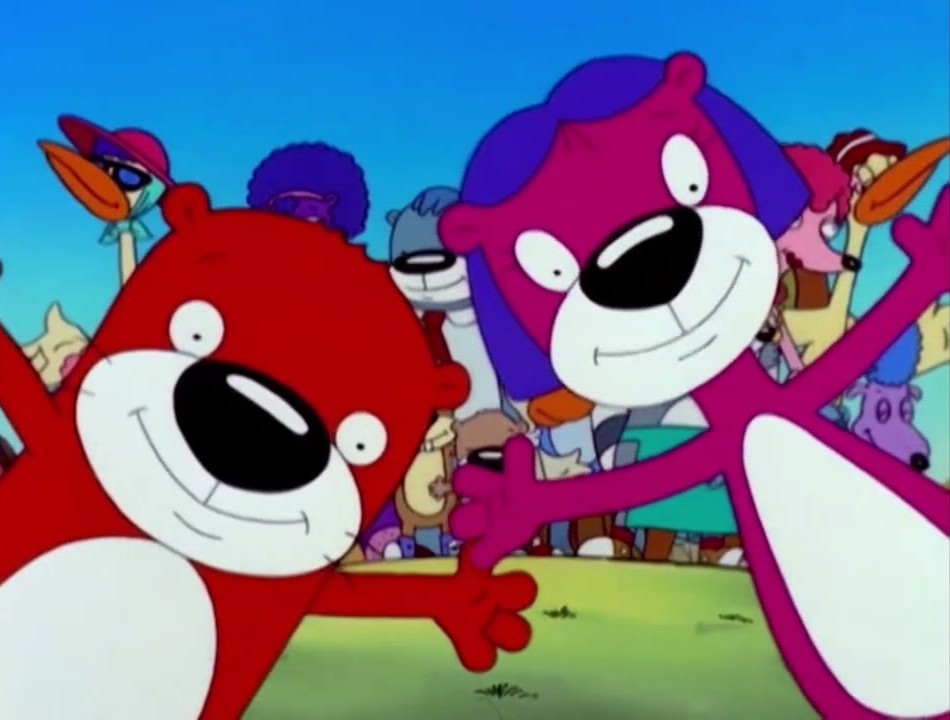
The Snooties and Mr. Bigdog have plans on transforming Lake Hoohaw into a luxury resort. Peanut, Butter, and Jelly are excited to indulge in these lavish amenities. Their first Noodle Dance showcases their ideas for how to make the resort even better. However, their initial excitement turns to worry when they learn that the lake will have to be drained to build the resort.
Determined to save the lake, the otters have another Noodle Dance and come up with the idea to sing and show Mr. Bigdog why Lake Hoohaw is special and irreplaceable. They share memories of the beach, the sky, and special community moments to convince Mr. Bigdog not to change Lake Hoohaw. Everyone celebrates by doing a Noodle Dance together to celebrate the greatness of their local lake.
What Important Lessons “Goodbye Lake Hoohaw” Teaches Children: It’s essential to protect natural spaces and appreciate the local environment. New developments and luxuries can seem exciting, but everyone must consider how this construction will affect nearby natural spaces. A positive change in advocating for the protection of a natural part of the environment can happen through collaboration and teamwork. Memories and time spent outdoors matter more than material possessions.
Age Recommendation: 2 to 6 years
Where To Watch PB&J Otter And “Goodbye Lake Hoohaw”: Disney+
You Otter Know From The Wild Thornberrys (Season 2, Episode 20)
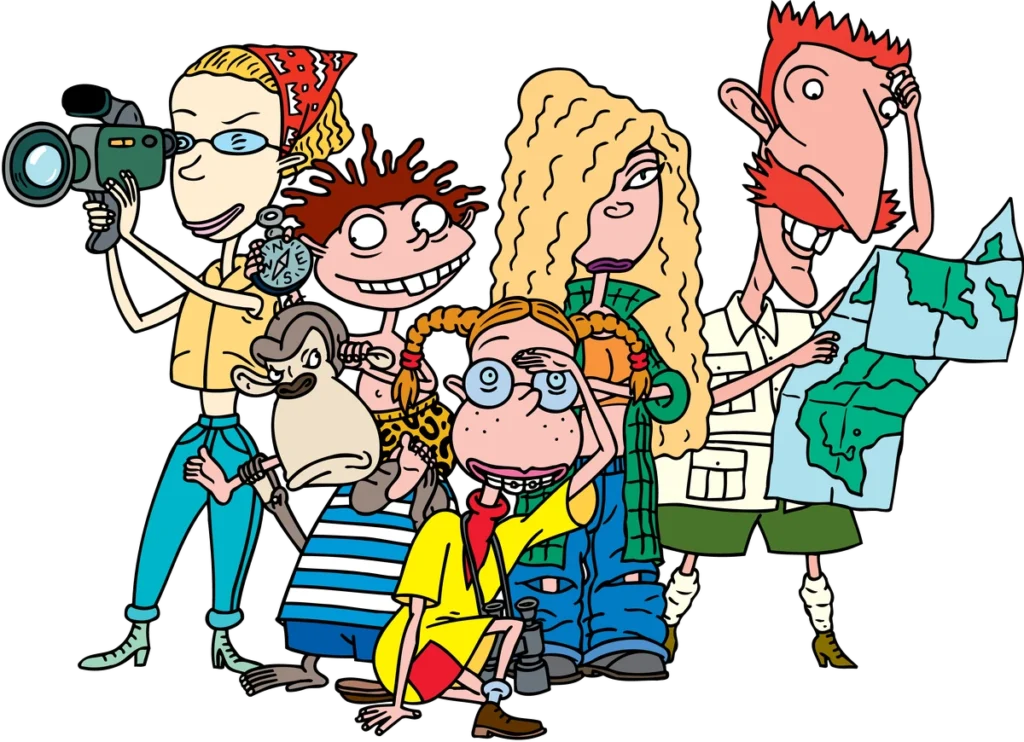
An Earth Cartoons list wouldn’t be complete without throwing in some Millennial nostalgia like The Wild Thornberrys. In this episode, the family visits Kamchatka so Marianne and Nigel can capture footage of the Stellar Sea Eagle. Eliza and Darwin head off to explore the Russian peninsula. They meet a group of sea otters and enjoy playing together. Two people damage an oil tanker in the area, causing an oil spill near the otters’ home.
With no one else around, Eliza takes action to save her new friends. However, when a fire breaks out due to the oil spill, the climax arrives, leaving it uncertain who will come to save her.
What Important Lessons “You Otter Know” Teaches Children: Human activity can adversely affect animals’ ecosystems. Kids learn how otters survive in the wild while witnessing the importance of wildlife conservation to protect natural habitats. Preventing pollution from happening is easier than fixing it later on.
Taking initiative is pivotal for environmental stewardship rather than waiting on someone else to step in. Of course, higher authorities are needed when trying to solve a wildlife conservation issue that could place you in imminent danger.
Age Recommendation: 5 to 12 years
Where To Watch The Wild Thornberrys And “You Otter Know”: Paramount+, Roku Channel, and Amazon Prime Video
Winter Solstice From Little Bear (Season 2, Episode 5b)
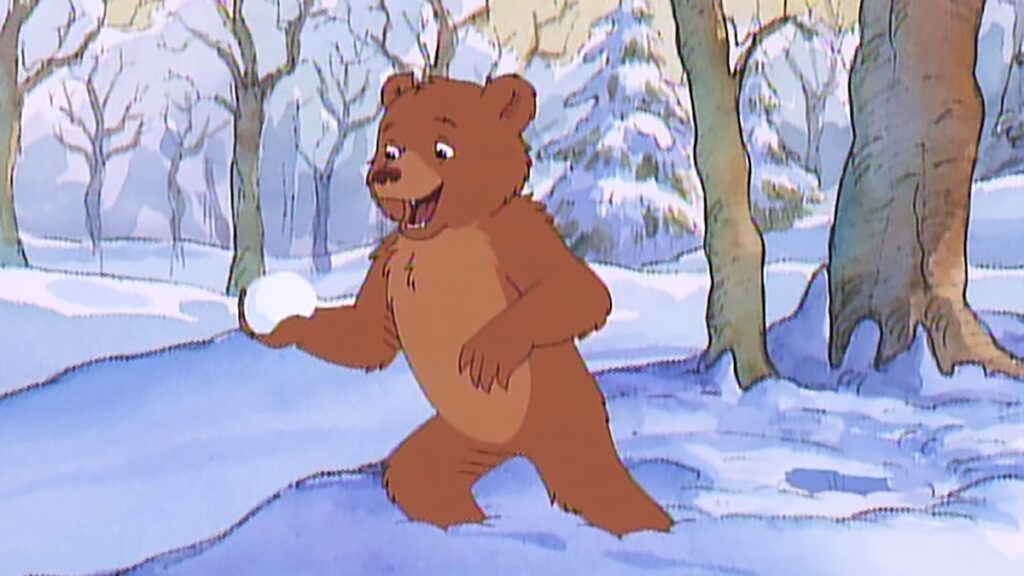
Grandmother Bear and Grandfather Bear come to visit Little Bear and his parents to celebrate the Winter Solstice. All of Little Bear’s friends join the occasion, too. The Bear family dresses the tree outside with food for the winter angels to eat during the longest night of winter. Little Bear and all his friends make snow angels in front of the tree before Mother Bear calls everyone in for a delicious Winter Solstice dinner.
Little Bear goes out to investigate when he realizes that the snow angels must have eaten all the food they left on the tree. He realizes that these angels are actually the winter animals dwelling in the night.
What Important Lessons “Winter Solstice” Teaches Children: The winter solstice marks the end of autumn and the beginning of winter. It’s the longest night of the year. Learning these natural seasonal cycles helps children understand the environment’s rhythm and how it’s affected by the passage of time. Children can notice and appreciate wildlife in different environments, helping them develop a sense of care and connection to the natural world.
Age Recommendation: 2 to 6 years
Where To Watch Little Bear and “Winter Solstice”: Paramount+ and YouTube on the Little Bear-Official channel
In The Rainforest From The Magic School Bus (Season 3, Episode 12)
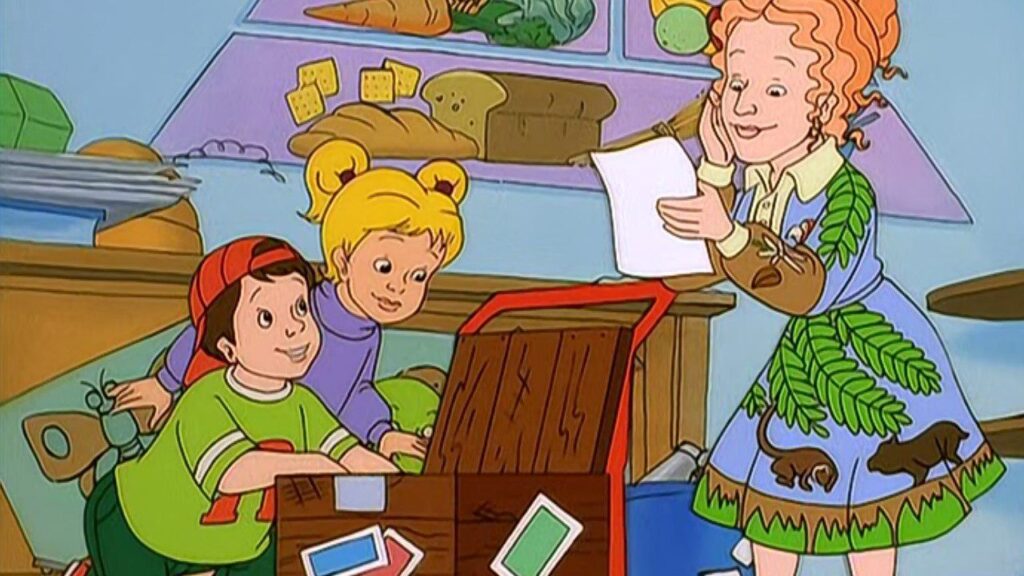
Ms. Frizzle’s students are waiting for a cocoa tree they rented from a rainforest rentals catalog to surprise their teacher for Earth Day. The rental comes with access to cocoa beans from that tree for the entire year. However, one of the letters in the shipment states that the tree is experiencing a cocoa bean shortage.
The class takes the Magic School Bus to the rainforest to discover why the tree isn’t producing an abundance of cocoa beans. The kids are amazed by the variety of trees, animals, and insects in the rainforest habitat. The class learns that midges pollinate the flowers on the cocoa tree, which eventually develop into pods that produce cocoa beans. Everyone works together to discover why the midges disappeared to solve the cocoa bean shortage issue on Ms. Frizzle’s tree.
What Important Lessons “In The Rainforest” Teaches Children: Plants and animals are connected together in the web of life. Organisms, no matter how large or small, contribute to the overall health and balance of ecosystems. Most importantly, youth learn that pollinators are important contributors to food production. Diverse ecosystems enhance biodiversity, as many species rely on one another for survival.
Age Recommendation: 4 to 11 years
Where To Watch The Magic School Bus And “In The Rainforest”: Tubi and The Roku Channel (both for free) or on Peacock (with a subscription)

