


For generations, mothers have been the default primary caregiver for their children, with fathers typically working outside the home as the primary breadwinners. This standard has become less prominent, though, and continues to shift.
These days, dads are much more involved. More of them are managing kids’ extracurriculars, handling doctor visits and diaper changes, and being stay-at-home dads than ever.
The latest survey data shows that they’re starting to take on an increasing portion of parenting pressure, too.
The Big Dad Shift
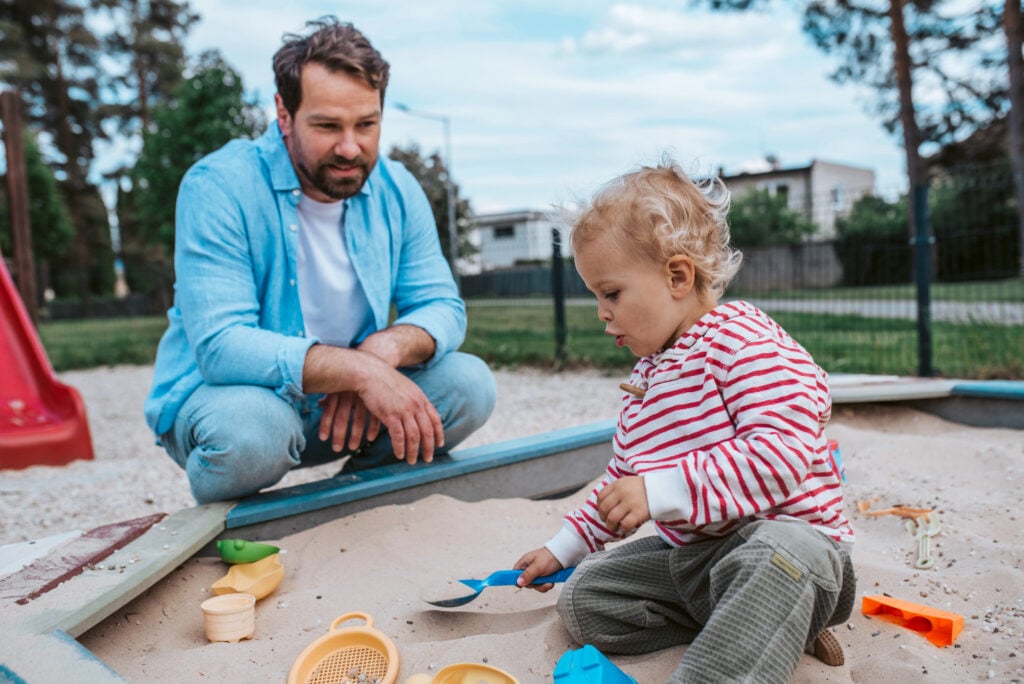
Gen Z dads are changing the parenting norms. They grew up a bit differently. In their childhood, more dads were involved in parenting than in previous generations, so for them, being even more involved can feel like a matter of degree rather than an about-face.
The latest State of Parenting report from Moonbug finds that Gen Z dads are more collaborative, with a higher percentage reporting that household purchase decisions are discussed rather than made unilaterally by one adult than any other group.
They’re also more directly involved in parenting, with the survey noting that previous generations of dads were more likely to indicate that they wanted to be involved but didn’t know how. Gen Z dads are just jumping right in (again, possibly a benefit of more of them having been raised by involved dads themselves).
They’re Feeling More Social Media Pressure Than Moms
This may come as a surprise, but dads are reporting even more parenting pressure from social media than moms are.
Social media can be hard on moms. There’s the influencer culture, specifically the tradwife and other perfect-mommy subsets, that set an unrealistic standard. There are the mommy wars, with the endless sense that every decision (breast or bottle? swaddle or not? is a video monitor a necessity or an invitation to creepy hackers? and so on) is the final determining factor between decent parenting and full-fledged flop.
However, this survey suggests that dads are feeling it even more heavily. Responses showed that 53% of dads felt the need to live up to parenting they saw online, compared to 37% of moms. Dads also responded that most (51%) felt pressured to parent in certain ways, compared to 41% of moms.
Is that because dads, on average, are a bit newer to online parenting content than moms, or possibly that they’re consuming the content less critically? (Though the survey finds that millennial dads are following the most parenting content creators, it also finds that dads of either generation are more likely to take a creator’s words at face value, while moms question more.)
Whatever the reason, dads are clearly feeling the pressure to perform.
However, Dads Are Still More Satisfied With Family Life
While dads are more involved than ever, it’s notable that families still don’t fully agree that the workload is balanced.
The survey still finds that, on the whole, moms are managing more of the daily household grind, like morning and bedtime routines, cooking, cleaning, and scheduling, while dads still handle a majority of the more sporadic tasks, like outdoor maintenance.
It also finds that dads are more likely, on average, to use their personal time for activities separate from family duties, such as exercise or hobbies, while moms use more of their time for basic tasks like running errands alone or attending to their own grooming needs. Similarly, dads are more likely to have set aside time for their own personal time, while moms are still more likely to take it as it comes.
While 85% of dads say they’re happy with the current division of labor, only 65%of moms agree.
What Can Parents Take From These Stats?
While the survey’s primary purpose is marketing, with messages to content creators about what will land with different viewing demographics, it also offers some solid information about parenting in 2026.
Families may not yet agree that the shares of household labor and personal time are in balance, but the younger generation of parents is collaborating more on decisions and working together. We’re seeing dads get more involved, and they seem to be doing it more naturally.
The divide in viewpoints suggests that more conversation and understanding between parenting partners are necessary, but the ongoing shift suggests that each generation is making progress.
Involved dads are a great benefit to children and families, and the data shows it.
