



A growing number of women are progressing further in pregnancy without receiving prenatal care, and the outcomes show the clear risks. In fact, the March of Dimes has given the U.S. a D+ on its preterm birth report card (with many states rating even worse), and the rates of infant and maternal mortality are stunning compared to other similarly developed nations.
It’s clear that early prenatal care matters, and it’s also clear that there are barriers to accessing it for a lot of moms, including maternity care deserts, financial struggles, and insurance complications. However, especially for those who have carried a healthy pregnancy with no complications, it may be hard to see the link between care that can feel routine and repetitive and healthier, safer outcomes.
Here’s what doctors and professional organizations have to say about why early prenatal care matters so much.
Signs That Go Unnoticed When Prenatal Care Is Delayed

ObGyn Dr. L. Joy Baker, who cares for patients in La Grange, Georgia, reports that sometimes she sees a patient for the first time at 39 weeks’ gestation and delivers the baby just a week later. According to KSL, she reports that at least once a week, a patient begins care in the second or third trimester.
This becomes risky when medical conditions, often conditions that are quite treatable and manageable with care, go undetected. Dr. Baker shared one such story, of a patient who arrived for her first appointment at 37 weeks and presented with very high blood sugar. In fact, with a glucose level of 300 mg/dL (above 200 mg/dL is the line for indication of diabetes) , the risk of stillbirth was so high that the patient was immediately moved for an induction.
“Had we seen her early and diagnosed her diabetes prior to pregnancy, we could have treated her, helped her control her sugars and significantly reduce the risk to mom and baby,” Baker said. “Consistent, high-quality care would have been a much better experience for her versus walking into the office one day and then being told to report to the hospital for delivery the next.”
That’s just one condition that can go undetected when prenatal care is delayed.
Dr. Baker also noted that she routinely asks patients what led to their delay in care, and the answers often center on structural barriers: difficulty obtaining Medicaid approval, lack of stable housing, or food insecurity.
Undetected Complications Can Escalate Quickly
According to the World Health Organization, about 27% of maternal deaths are due to hemorrhage during or after childbirth, and another 16% are related to preeclampsia or hypertension.
Without regular monitoring, the heightened blood pressure associated with these outcomes can be overlooked. With monitoring, however, it can be tracked and, in some cases, treated or ameliorated with care, such as bed rest.
A 2025 study by the WHO found that globally, many people struggle to access early maternity care. While not all of their data pertain as strongly to the U.S., much of it is still applicable to contexts in which medical care is delayed.
“In addition to outlining the major direct obstetric causes, it shows that other health conditions, including both infectious and chronic diseases like HIV/AIDS, malaria, anaemias, and diabetes, underpin nearly a quarter (23%) of pregnancy and childbirth-related mortality. These conditions, which often go undetected or untreated until major complications occur, exacerbate risk and complicate pregnancies for millions of women around the world.”
Even in one of the wealthiest nations in the world, a medical condition can go from ignorable to disastrous quickly, especially during pregnancy.
Tracking Prenatal Development Is Fundamental
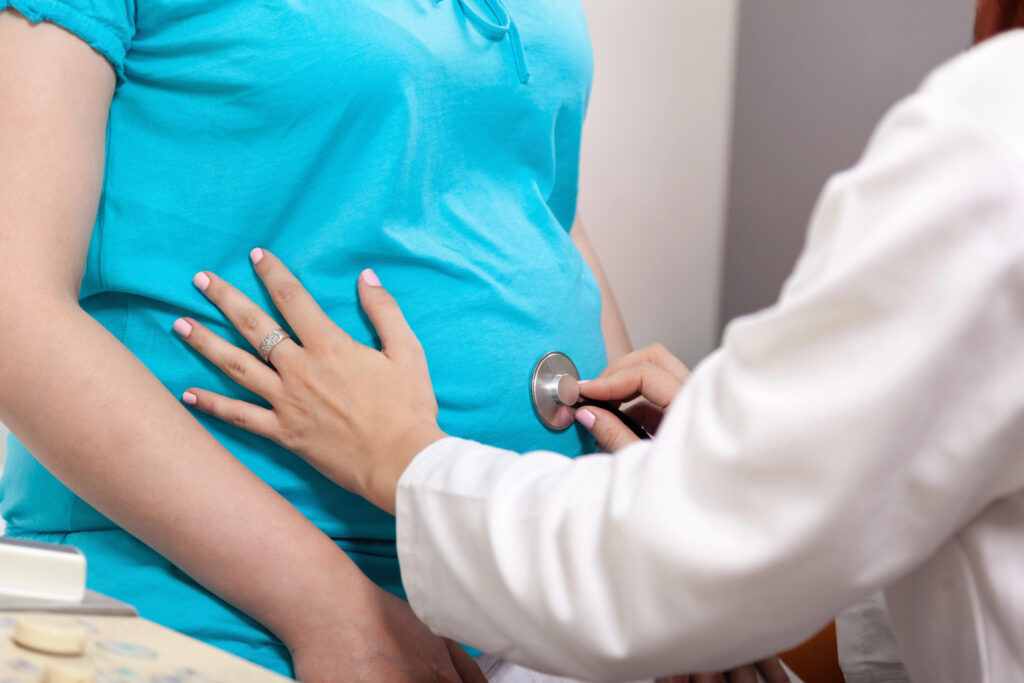
Some of the most routine parts of prenatal care, like being weighed and having fundal height measured, can seem perfunctory, but they’re actually very important for ensuring that the baby’s growth and health is progressing properly.
The American College of Obstetricians and Gynecologists (ACOG) recommends measuring fundal height starting at 24 weeks because it’s the best tool for assessing fetal growth and screening for conditions such as macrosomia.
The organization also calls for regular weight checks because they help assess risk for a number of maternal conditions, including hyperemesis, diabetes, and hypertension. Weight checks can also help assess the likelihood of a C-section becoming necessary,
ACOG warns that lack of access to prenatal care, as well as the experience of bias or discrimination within prenatal care, are all linked to poorer outcomes, including higher risks of maternal mortality.
What Is Adequate Prenatal Care?
ACOG recommends that patients access prenatal care by the 10th week of pregnancy and continue visits every 4 weeks until the 7th month, then every 2 weeks until the 8th month, and weekly thereafter.
However, ACOG’s recommendations do not include only the frequency of visits and a list of required or recommended diagnostic tests and measures. The organization specifically calls for prenatal care to be accessible, and to fight past barriers, including situations like the COVID-19 pandemic that made in-person visits more difficult, transportation struggles, and bias.
“Adjustment may be used to temporarily meet needs (eg, a patient with transportation barriers awaiting ride vouchers), address ongoing social needs (eg, an hourly employee cannot afford to forgo wages), or provide adjustment in light of patient preferences for care delivery. Although there are few studies of care adjustment, models of care that address unmet social needs (eg, group prenatal care) have improved both health and patient-reported outcomes. The National Academy of Medicine supports this approach as part of an overall strategy to address unmet social needs.”
Taken together, the professional recommendations are clear: first, that patients should seek prenatal care early in pregnancy; and second, that providers and institutions must collaborate to make it more accessible, because maternal and infant health depend on it.