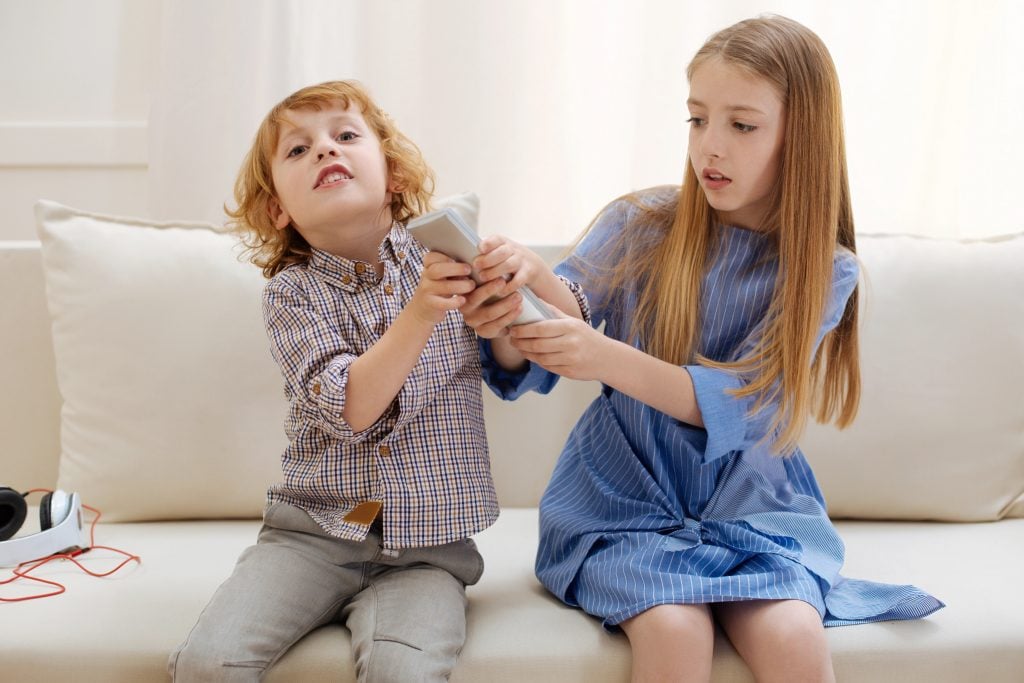
If you talk with any family with more than one child, the issue of favoritism almost always emerges. Often, children feel that one of their siblings is favored by their parents, even though parents typically strive to treat each child fairly. What does science have to say? Is there any research that supports the idea that parents favor one child over another, and if so, what factors might play into it?
A new study from researchers at Brigham Young University sheds some light on this topic. This research analyzed over 87 studies in a meta-analysis (a study of studies) to determine whether favoritism really happens and how it plays out.
In this study, they included research that considered both parent and child reports of favoritism. Researchers also examined factors that may account for any favoritism, such as birth order, gender, and children’s temperament.
The Science Of Parental Favoritism
Birth order, gender, and temperament may all influence favoritism among parents and their children.
Birth Order
The researchers found some evidence that parents tend to favor younger children overall, but the findings were complex. Older siblings tended to receive more freedom and autonomy from parents, which could also be seen as a form of favoritism. In fact, when looking at children’s reports, younger siblings were more likely to report that they felt their older sibling was favored—perhaps because of the greater autonomy they tended to receive.
Of course, the researchers point out that older siblings often receive greater independence, which is largely a developmental process. Since these children are more mature and have more skills, the greater autonomy granted by their parents makes sense.
Gender
Findings from this study showed that parents do tend to slightly favor girls. However, when considering children’s reports of favoritism, there were no differences by gender. Therefore, although parents may slightly favor girls, the children involved do not seem to be aware of this pattern.
Scholars suggest that while parents may be aware of gender differences in treatment, they are not so explicit that children notice.
Temperament
The researchers considered whether a child’s temperament might influence whether or not they are favored in a family. Perhaps not surprisingly, they found that parents tended to slightly favor children who had a more agreeable or conscientious temperament.
These characteristics typically imply that children are easier to get along with, less likely to start conflicts with their parents, and are seen as more responsible. Children with these personality traits tended to be favored slightly by parents.
These temperamental differences highlight an interesting idea: children themselves elicit different responses from parents. This issue is something that’s often overlooked in child development research. Much of the research we see often shows parents influencing children in a very direct way. However, sometimes we fail to consider that children influence how their parents respond to them, based on their personality or other factors.
The parent-child relationship is a dynamic, back-and-forth one that affects both individuals.
Growing Awareness of Favoritism in Families

As the researchers point out, this discussion of favoritism isn’t meant to encourage judgment on parents. Overall, the research is intended to raise parents’ awareness of patterns that may be present in their family.
Children often point out situations where they think there is unfairness in how their parents treat them. This research really encourages us to be open to hearing and understanding children’s feelings about favoritism. Every family is different, and there may not be favoritism, but even if a child feels they’re being treated unfairly, it may change how they react in certain situations.
It’s helpful to be aware of their feelings and discuss them openly. Other research finds that children who feel they are not favored in a family tend to have a greater chance of mental health or behavioral problems. This implies that how children feel about their place in their family has real impacts.
Tips for addressing sibling favoritism:
- Be open to hearing your child’s feelings and their experiences of favoritism. Even if you think it is not happening, understanding your child’s feelings can be helpful.
- If you have real reasons for treating children differently, try to explain those to your child. Some children may have different needs, skills, or behavioral patterns that warrant different treatment than their siblings.
- If you see a pattern of favoritism in your parenting, try to make amends and aim to treat each child fairly. Being aware that favoritism can happen and being open to change are huge steps for any parent.
This research clearly shows that favoritism happens, even if we try hard to avoid it. The key is to be aware of and understand your family’s patterns so you can meet each child’s needs.