


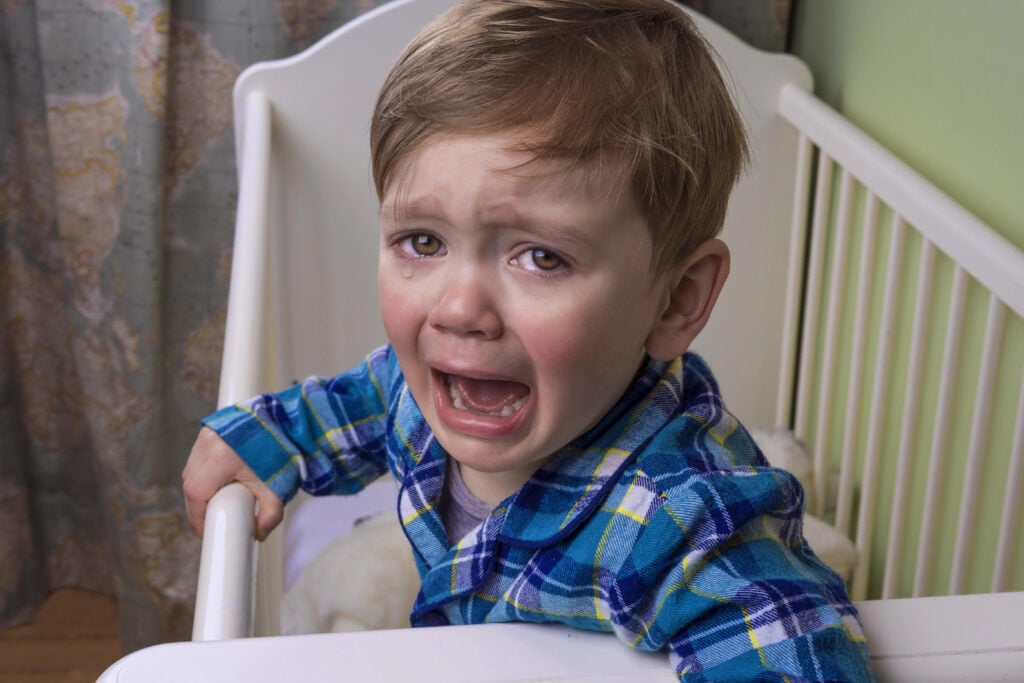
From the outside, it may look like a tantrum, or emotional manipulation, or an early exhibition of untameable rage. For parents, it can trigger panic. What do we do? How do we stop it?
Most of us are not prepared to watch our baby, a little tiny person barely a year old, start slapping himself or banging his head against the wall when he’s upset. We’d step in against anyone hurting our babies, but how do we handle it when the baby is hurting himself?
The good news is that this isn’t as uncommon as you may have thought, and there is good advice available on what to do about it and when to seek outside assistance.
A Pediatrician’s Overview Of Toddler Self-Hitting Behaviors
Dr. Mona Amin explained in a social media post this week that this is very normal behavior between ages 1 and 3.
For parents, this can be scary. You may wonder if your child will be able to harm himself in a serious way, worry about him hurting himself even mildly, and worry about whether this behavior is the start of a long-lasting pattern. Your immediate impulse is to make it stop!
Dr. Mona, however, advises that the first step is to calm your own feelings so you can respond without escalating your toddler’s emotional disregulation. Avoid yelling or demanding, “Stop!”
Instead, make sure your child is safe, narrate what you’re seeing (“You’re very frustrated,” “You wanted the toy,” etc), and if possible, offer a safer alternative, such as squeezing a pillow. If you are afraid your child might injure himself, you can step in with words like, “I’m going to hold your body until your body is calm.”
She reminds us to save the lessons for later, and in the moment, just keep the child safe and offer comfort.
What’s Going On When Your Child Hits Himself?
Why do small children do this? What’s going on? Our adult logic tells us that actions are about results, so either a child hitting himself is having a tantrum to get his way, or he’s doing something entirely illogical – after all, at the end of this, he still won’t have the desired outcome, and his face will also hurt from slapping himself. It makes no sense, right?
Your toddler isn’t thinking about it that way, though. Inside his little body, his nervous system has become dysregulated. Essentially, his body has reacted as though in danger, and despite actually being safe, the nervous system isn’t turning off that stress reaction. Some deep, instinctive, unconscious awareness in your toddler reaches for repetitive, rhythmic motion, which can de-escalate the nervous system. Since it’s not a conscious, rational thought, he doesn’t consider safer substitutes like rhythmic drumming, hugging himself in a pattern, or rocking. Instead, he grasps at the first thing that seems to work, and hitting is often that thing.
The silver lining is that when your child is calm, you can teach safer self-regulation methods, but be aware that they may still not be accessible to him when he’s very upset.
Also, remember that your child cannot learn these methods while his nervous system is overwhelmed. He’s not open to learning right now — save the lessons for later.
When To Seek Outside Support

For typical toddler behaviors such as self-hitting, head-banging, or meltdowns, parents can usually handle them on their own.
Intervene as much as necessary to keep your child safe, while still allowing him to express his frustration. Talk calmly and narrate what you see, so that he knows he’s being heard. When he’s calm, you can practice safer self-regulation strategies.
If your child continues these behaviors past age three, if your child is actually injuring himself, if the behaviors worsen or do not improve despite using the above strategies, Healthline says it’s time to talk to your pediatrician. You will also want to talk to your pediatrician if these behaviors are accompanied by signs of physical illness, like fever, fatigue, or loss of appetite; or if you are also noticing delays in speech or signs that your child cannot hear you.
Even short of those metrics, it’s always a good idea to bring up any concerns at your child’s regular appointments, and to talk to your pediatrician if anything about your child is just triggering your parental instincts, even if you can’t quite identify why.
Key Takeaways For Parents
If your child starts hitting himself or banging his head, don’t panic.
Do take steps to ensure he is safe. This might mean moving him to a softer surface (a pillow rather than the floor, grass rather than a sidewalk), removing objects from his hands that could injure him, or gently holding him to minimize impact.
Talk to him calmly. Avoid saying words like “don’t” or “stop.” Toddlers struggle with these words at the best of times. Instead, let him know you are present and paying attention.
You can narrate what you see him communicating, such as, “I hear that you want another cookie,” or “Yes, you’re sad about the toy,” or “I know the trash truck was scary.”
Later, you can teach alternative ways to calm down, like hugging a pillow, doing a stompy dance, rhythmic patting, and deep breathing. Just don’t be surprised if it takes a while for them to really sink in!
