

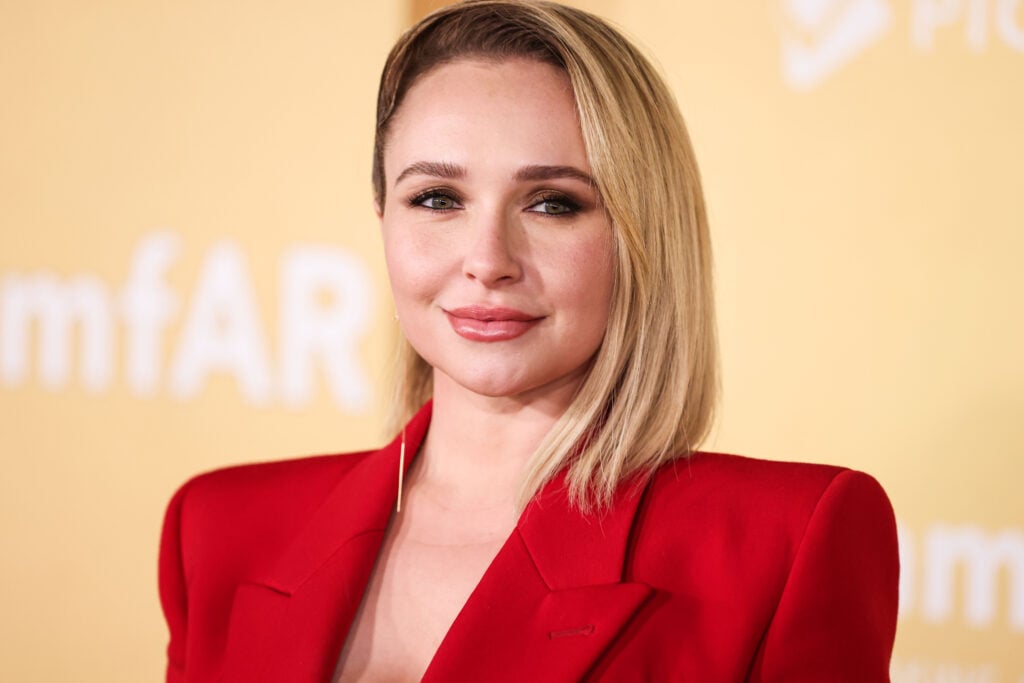
Hayden Panettiere has carried a weight of grief and self-reproach since 2018, when she signed over full custody of her daughter Kaya to former fiance Wladimir Klitschko, and she is now speaking publicly about why that decision was never a simple one.
At a panel held in West Hollywood, California, the actress addressed the emotional pain she has lived with, describing herself as someone who felt deeply unable to provide the parenting her daughter deserved at the time.
The timing of her candor is deliberate. Panettiere, 36, released a memoir titled “This Is Me: A Reckoning” on May 19, and her public appearances have centered on reclaiming her own narrative around mental health, addiction, and motherhood.
Her remarks at the West Hollywood panel on parenting and custody came just days after a wide-ranging conversation with Jay Shetty on his “On Purpose” podcast, recorded May 11.
A Cycle She Could Not Break Alone
Panettiere has been open about her struggles with postpartum depression dating back to 2015, when she sought treatment while starring on the country music drama “Nashville.” What she has clarified more recently is that the treatment she pursued at the time targeted her alcoholism but did not adequately address the postpartum depression running underneath it.
That gap left her feeling as though something was fundamentally wrong with her that no one could fix, and she spent years doing her own research to understand what she was actually experiencing.
She also pushed back on a long-standing misconception: that she was pressured into seeking help by people around her.
Speaking to Shetty, she said the opposite was true. “I have been the one who sought it out, who was saying, ‘I desperately need help. I know this is going to look terrible, but I am. I cannot live like this anymore,'” Panettiere told Jay Shetty on the “On Purpose” podcast.
By the time Klitschko decided that two-year-old Kaya should live with him in Ukraine, Panettiere described herself as someone who was masking her struggles daily while feeling completely lost.
The stigma surrounding postpartum depression, she said, made it difficult even for the people closest to her to grasp what she was going through.
The Custody Decision And What Followed
Panettiere has addressed the custody situation before. In a prior public appearance, she indicated that Klitschko had not viewed her condition as something beyond her control, and that she had signed the papers believing Kaya would eventually return to live with her once she recovered.
That reunion did not happen as she had imagined.
Her initial reaction, she told Shetty, was fierce and protective. “When that first happened, I did not have a good reaction to it. I went like ‘mother lion.’ I would have burnt the world down for my child,” she said in the podcast interview.
Over time, however, she came to see that Kaya had built a stable, happy life in Ukraine, and she made the painful calculation that uprooting her daughter would serve her own needs more than her child’s. “By the time I finally got healthy, I felt like it would have been unfair of me to and selfish of me to try to pull her out,” Panettiere added.
The suggestion that she simply handed her child away without anguish is something she rejects entirely. “The idea that anybody would think that I would just give away my child and be OK with it is heartbreaking,” she told Shetty on the “On Purpose” podcast.
“It couldn’t be further from the truth. It became this horrible cycle for years of battling depression and anxiety and alcoholism and substance abuse, and just me trying to find my way back.”
Where Things Stand With Kaya Today

Kaya, now 11 years old, lives in Ukraine with her father, the Ukrainian former professional boxer Wladimir Klitschko. Panettiere described their current relationship as one built on consistent communication and regular visits.
The two connect frequently over video calls, and Panettiere travels to Ukraine as often as she can manage. She spoke warmly about who her daughter has become, noting that Kaya speaks five languages, rides horses, and carries the knowledge that both of her parents love and support her.
Panettiere’s willingness to speak this plainly about postpartum depression, addiction, and the custody consequences that followed is rare in public life.
Many parents, particularly mothers, carry shame around mental health struggles that affect their ability to care for their children, and that shame often prevents them from seeking help early enough.
Her account is a reminder that the decision to step back from parenting, when it comes from a place of genuine illness rather than indifference, is not the same as abandonment, even if the grief it produces feels identical.
If you or someone you know is struggling with substance use or mental health, the Substance Abuse and Mental Health Services Administration offers a free, confidential helpline at 1-800-662-HELP (4357), available around the clock in English and Spanish.

