

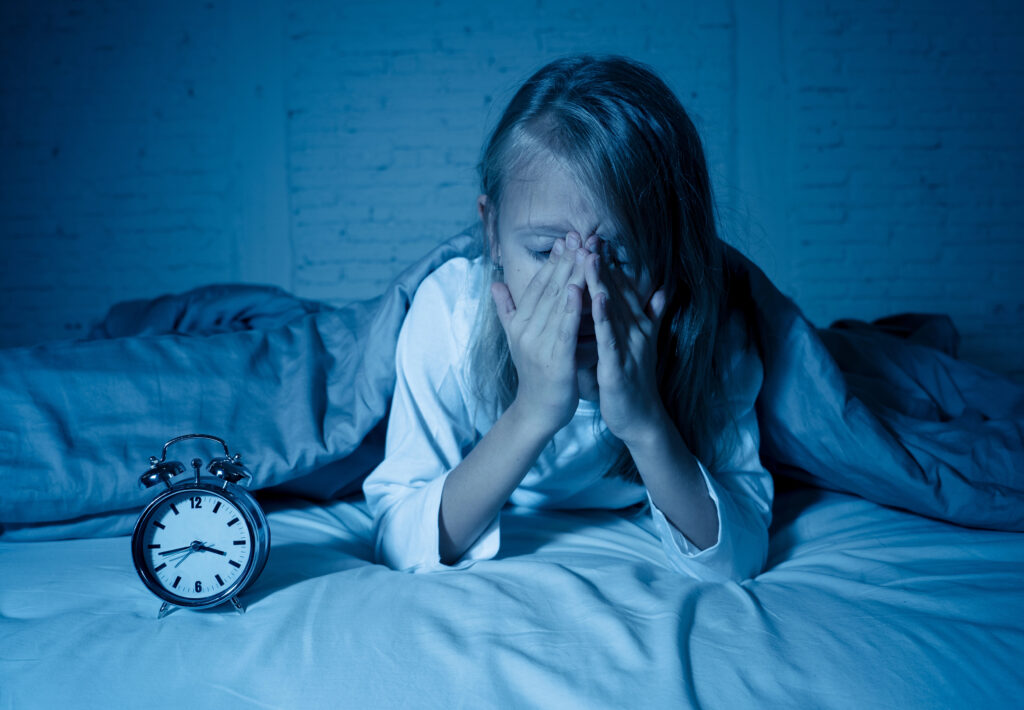
A new cognitive behavioral model called DARC-NESS gives parents and clinicians a personalized roadmap for breaking the nightmare cycle in kids
If your child wakes up screaming in the night more often than you can count, you are far from alone. More than half of children under age six experience frequent, distressing nightmares that chip away at sleep quality, fuel mental health struggles, and, according to emerging research, may even raise the long-term risk of cognitive problems, including dementia. For years, clinicians largely assumed that nightmares would fade once an underlying trauma or anxiety disorder was treated. New evidence suggests that the assumption has been leaving millions of children stuck in a cycle that nobody was directly targeting.
Researchers from the University of Oklahoma and the University of Tulsa have published a groundbreaking framework in the journal Frontiers in Sleep that explains exactly why nightmares keep coming back for children — and lays out a clear, personalized path to stopping them for good.
The Real Reason Nightmares Keep Coming Back
The central insight driving this new research is both surprising and, once you hear it, completely logical: it is not the nightmare itself that causes the problem to repeat. It is what happens after the child wakes up. Fear of going back to sleep after a nightmare creates a feedback loop in which bedtime becomes something to dread, which in turn primes the brain for another frightening dream. Stress, anxiety, and trauma feed into that loop, but the fear response to the nightmare is the engine keeping it running.
“It’s a child’s response to a nightmare that causes the chronic nightmares to happen,” said Lisa Cromer, a professor of psychology at the University of Tulsa and a volunteer child psychiatry faculty member at the OU School of Community Medicine. “Which means if we can learn to respond to nightmares differently, then we can interrupt that cycle. It’s empowering to understand that we can take steps to master our dreams.”
Cromer also offered a clarifying distinction that helps explain why waking up matters so much: “A nightmare is a bad dream that you wake up from. If you don’t wake up, then the brain is doing its job of resolving the fear of the dream. But if a child does wake up, they’re trying to escape the nightmare. And when a child wakes up, they’re not able to resolve the nightmare, which actually exacerbates the problem. That’s why nightmares are so important to treat.”
What the DARC-NESS Model Actually Does
The framework that Cromer and her colleagues developed, called the DARC-NESS model, is a mastery-based cognitive-behavioral approach published in Frontiers in Sleep. The name is a mnemonic that captures the full range of factors clinicians should assess: Dream content, Appraisals of the experience, Resources for emotional regulation, conditioned arousal, Nightmare efficacy, Sleep hygiene, and Sleep quality and quantity.
What makes this model different from older approaches is that it does not treat all children the same way. Rather than zeroing in only on what happened inside the dream, clinicians using DARC-NESS examine how a child interprets the nightmare, how much worry about sleep has built up, what anxiety looks like at bedtime, and what coping strategies the child reaches for after waking. That fuller picture allows for a treatment plan built around what that specific child actually needs.
“The DARC-NESS model looks at the mechanisms of what is maintaining nightmares, as well as the mechanisms that can break the cycle of nightmares,” Cromer told Medical Xpress.
Tara Buck, a child and adolescent psychiatrist at OU Health and an associate professor at the OU School of Community Medicine, emphasized that the model is built around what children can control. “What’s unique about the model is that it’s customizable to what the patient needs, and it focuses on what the patient can control. We look for the potential intervention points and target those in a collaborative way with patients and their families,” Buck explained in the study announcement from the University of Oklahoma.
At the heart of the entire model is a concept called nightmare efficacy — the idea that children can genuinely learn skills to take back control of their sleep. Unlike insomnia, where the fear is that sleep will not come, children with chronic nightmares are afraid that sleep will come. Rebuilding a sense of agency around that fear is what the model is designed to do.
What Treatment Can Look Like For Your Child
Because the DARC-NESS model is modular and flexible, no two treatment plans will look identical. For some children, the priority will be reducing bedtime anxiety through therapeutic techniques. For others, the focus might be on building better pre-sleep routines. Some children benefit from exposure-based work — describing, drawing, or writing about the nightmare, then collaborating with a clinician to rewrite its ending, which helps defuse the fear the dream carries.
Breathing exercises that bring down cortisol levels are another tool in the toolkit, as is addressing nutritional gaps, since deficiencies in key vitamins and minerals can affect how the brain processes fear and stress. The model is designed to be used by a wide range of providers, including pediatricians and therapists, not just specialists.
The payoff extends well beyond a quieter night. “When children feel empowered to do something about the nightmares, they begin to see how things are interconnected — because they’re sleeping better, they have more energy, they go to school more consistently, and their parents report improved behavior,” Buck said.
This connection between sleep and daytime functioning is something many parents already sense intuitively. Research consistently shows that disrupted sleep in a household ripples outward, affecting the mental health of caregivers as well as children, which makes effective nightmare treatment a whole family issue.
When the Brain Itself Is Part Of The Problem
Even with the best psychological intervention, nightmares do not always stop completely — and researchers are candid about why. For some children, the amygdala, the brain region responsible for processing fear, may simply be running in overdrive. When that is the case, the nightmare cycle has a neurological dimension that therapy alone may not fully address.
Deirdre Barrett, an assistant clinical professor of psychology at Boston’s Cambridge Health Alliance, told Harvard Medical School that traumatic nightmares share more in common with waking symptoms than many people realize. “Post-traumatic nightmares are probably not completely different from daytime flashbacks and general daytime anxiety that those experiencing the nightmares are having,” she said.
For children whose nightmares appear rooted in this kind of neurological hyperactivity, lifestyle adjustments can help calm the amygdala over time. Consistent breathing practices, a nutrient-rich diet, and stable sleep routines all help lower baseline physiological arousal, making the brain more vulnerable to fear-based dreaming.
It is also worth noting that nightmares are not the same as sleep terrors, nocturnal panic attacks, or sleep-related breathing problems. Each of those conditions has a distinct underlying mechanism and requires a different response, so accurate identification is essential before any treatment begins.
What This Means For Parents Right Now
Buck noted that for many years, healthcare providers either assumed nightmares could not be treated directly or believed they would resolve on their own once a mental health condition was addressed. “We’ve worked with children who have been in mental health treatment for a long time, and their nightmares are still persistent,” she said. “There is a need for a nightmare treatment model to help children when their nightmares are recurrent and distressing.”
If your child is waking up repeatedly from frightening dreams, the research suggests that waiting it out may not be the right strategy. Bringing it up with your pediatrician — and specifically asking whether a nightmare-focused intervention might be appropriate — is now a conversation backed by published, peer-reviewed science. The DARC-NESS model is designed to be accessible to parents, meaning you do not necessarily need a referral to a sleep specialist to get started.
As researchers continue to refine and test the DARC-NESS framework in clinical settings, the next step will be large-scale trials measuring outcomes across different age groups and trauma histories — work that could eventually make personalized nightmare therapy a standard part of pediatric care.

