

When it comes to autism and other developmental differences, a correlation may not always mean causation.
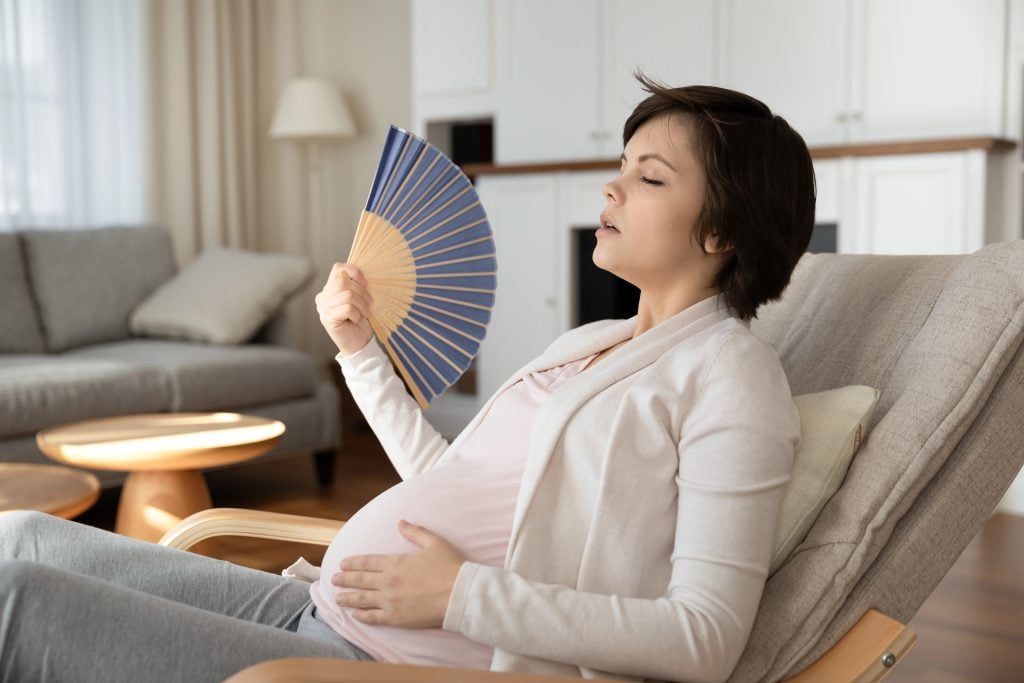
In this case, researchers have found that the rates of autism increase for babies whose mothers endured many hotter-than-typical nights during pregnancy! The increase is particularly noticeable when the hotter nights fall in the first ten weeks of pregnancy or from week 30 on.
For now, these statistics only indicate that there’s good reason for further study, but researchers have some ideas about the possible reasons nighttime heat could affect autism rates, if a causal link is confirmed.
What Exactly Did The Study Find?

The study accounted for other conditions, such as air pollution and vegetation, though, surprisingly, not factors such as air conditioning, housing quality, and indoor temperature. Researchers examined daytime temperatures and found no correlation.
In terms of nighttime temperatures, the relevance wasn’t to a specific temperature level but to temperatures described as “extremes,” defined as several degrees above the expected or typical temperatures for the area and time of year.
“Extreme temperatures that saw an increased associated risk of autism diagnoses among children were classified as above the 90th percentile (3.6° F hotter than the average) and 99th percentile (5.6° F higher than average).”
The study specifically examined almost 300k mother-child pairs in Southern California, where researchers at Tulane University report that nighttime temperatures are noticeably rising.
The study found that there was a significant increase in prevalence when the hotter nights fell in certain parts of the pregnancy, according to Medical Xpress.
“Children of mothers exposed to higher than typical nighttime temperatures during weeks 1–10 of pregnancy had a 15% higher risk of being diagnosed with autism. Exposure during weeks 30–37 was associated with a 13% higher risk.”
Wait, Isn’t Autism Genetic?
Autism, as far as our best research currently understands, is predominantly genetic. The strongest predictor of the likelihood of autism in an individual is family history.
However, the National Institute of Environmental Health Sciences explains that the way a gene is expressed can vary widely depending on environmental factors. Some factors that are known to influence the presentation of autism include the age of the parents at the time of conception, prematurity or low birth weight, exposure to air pollution, pesticides, or heavy metals, and some prenatal conditions.
Specific prenatal conditions cited include fevers during pregnancy and the presence of certain antibodies or proteins in the body that may affect brain development.
In short, genetic differences may already be present, but environmental factors may trigger gene activation or alter how genes affect the individual.
What Do Researchers Think This Study May Mean?
There are theories about why higher nighttime temperatures could increase the presentation of autism.
According to ScienceDirect, one theory is that higher nighttime temperatures lead to greater sleep disruption. Poorer maternal sleep is a known factor in developmental disorders, delays, and differences.
If this is the case, it could be a bit harder to pin down, since there are numerous factors that interfere with sleep during pregnancy, and a number of ways (like climate-controlled environments) that the effects of nighttime heat on sleep could vary.
There’s also the possibility that it’s the heat exposure itself. Prenatal heat exposure, also during specific time windows, has already been linked to the risk of cerebral palsy, language delays, and neural tube defects. Since the study didn’t find links to daytime heat, this theory would need more support, but researchers think that this may relate to a limitation in the study: the fact that the temperature measurement was at the residence of the participants, while people are often away from home during the day.
What Should Parents Take From This?

If your child is autistic, you should not take the results of this or any other study as a blame upon yourself.
If you have an autistic child, there is likely a genetic component, even if neither parent has autism. The environmental components also tend to be beyond our control and, for the most part, remain beyond our understanding, even as research identifies more individual factors.
If you are pregnant, you should feel entirely justified in choosing to avoid extreme temperatures. It’s not just that they make you more uncomfortable than usual; there is documentation that they may affect your growing fetus. However, if you don’t have the option to get out of the heat, don’t beat yourself up about it. Mitigate the discomfort in the ways available to you. Stay hydrated, take breaks when your body requests them, and consult your physician if you have concerns.
Increasing research can help us understand autism better, but should not be twisted to blame, shame, or harm any individual for being autistic, or having an autistic child. Instead, we should use new information to work together and build a society that is more understanding and supportive of the range of human neurotypes.
