
Education has vastly changed over the years. The progression has not only welcomed technology but has also grown through it. Traditional lessons and homework are being supplemented with engaging, curiosity-sparking websites and online resources. The interactive nature draws kids in and provides learning experiences that are relatable to modern-day life.
From space-focused to experiment-heavy to video-based, these websites offer different channels that speak to various learning styles. They span levels of learning and age groups.
Independent of how the material is presented, each resource piques young learners’ interest, offering them the chance to expand their knowledge in areas that interest them. Quizzes, experiments, games, and other interactive experiences give them the opportunity to build confidence as they learn.
National Geographic Kids
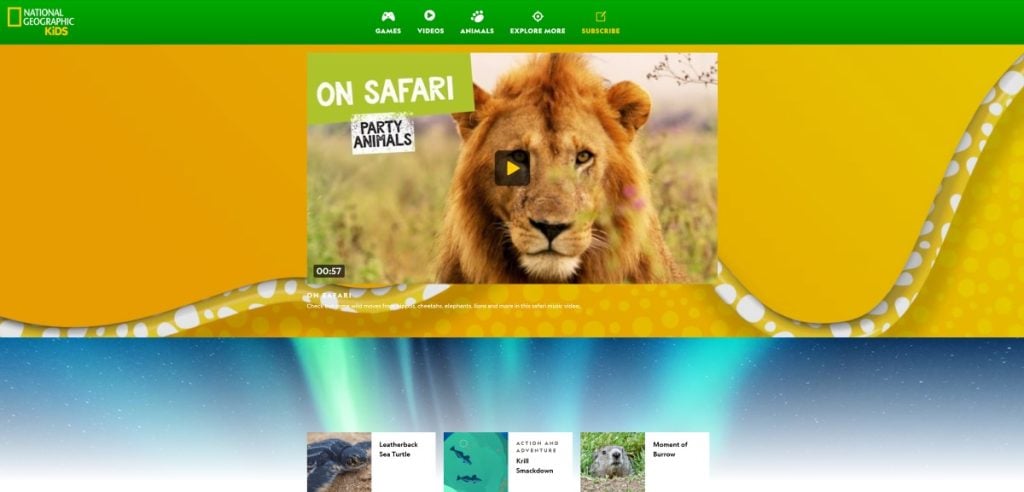
Visually stimulating and engaging, National Geographic Kids offers the chance to learn about the natural world from many angles. Videos, games, and brain boosters are designed to make learning fun. The site is easy to navigate and offers entertaining content with educational integrity.
What National Geographic Teaches Kids: Using the striking photography from National Geographic publications, these photos draw kids in and pique their interest. Written information about different animals follows an easy-to-digest format. Breaking information down into smaller, bite-sized sections allows kids to quickly and easily gain relevant facts.
The games allow kids to explore things such as what chatty animal they are most like, their forest match, and which shark species matches their personality. The funny fill-in section combines learning and humor, playing like a game of Mad Libs. Most kids’ favorite part is the “weird but true” section. Science never disappoints us here and National Geographic Kids includes some wonderful examples.
Recommended Ages: 3-8
Official Website: National Geographic Kids
Science Bob
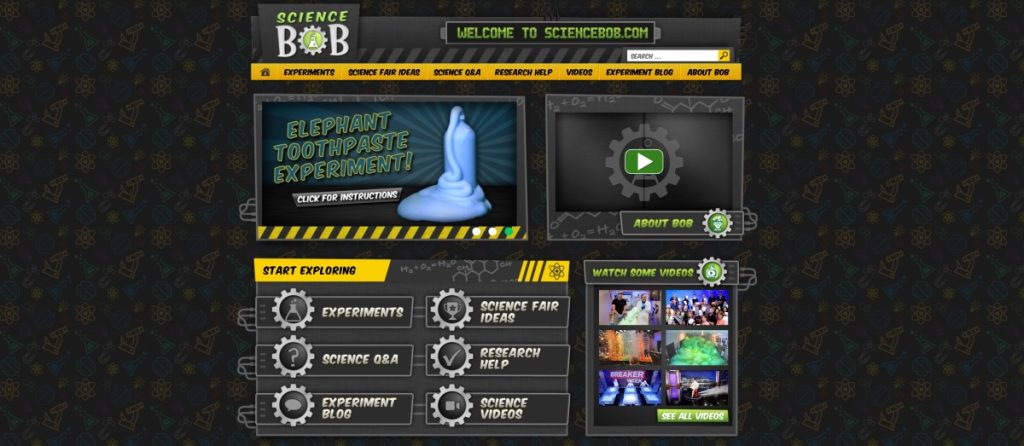
Science Bob is created by Bob Pflugfelder, a science teacher passionate about sharing the world of science. He has been featured on different television shows. His message to parents and teachers is to practice “random acts of science”. He aims to help by providing instructions and videos on the Science Bob website.
What Science Bob Teaches Kids: Like some of the other websites on this list, there are science fair ideas. There is a distinction made between projects and experiments. Although it’s not lengthy, it does a wonderful job of outlining what makes a true experiment. There are structured experiments with instructions, as well as an experiment blog. Spanning everything from dancing popcorn to the exploding lunch bag, they are sure to grab your child’s attention.
Encouraging independent learning, there are the research help and science Q&A tabs. These offer resources for kids who want to explore topics in more depth. The video section features many exciting experiments, Bob’s Tedx talk, and fun with Jimmy Kimmel.
Recommended Ages: 4 and up
Official Website: Science Bob
Little Bins For Little Hands
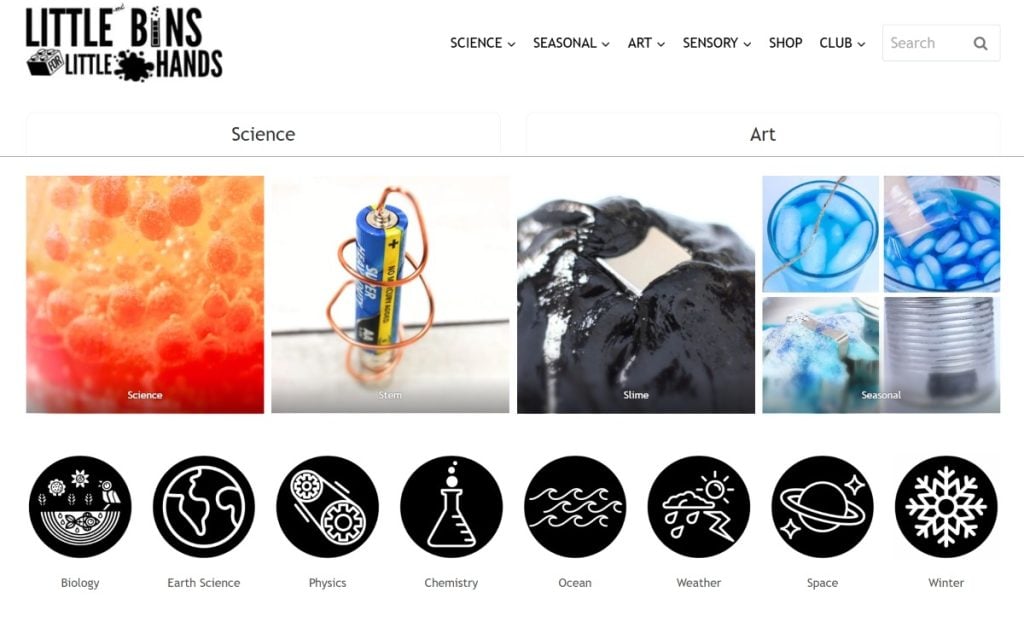
While there are worksheets and quizzes here, the premise of this website is all about hands-on experiences. Science is paired with unforgettable fun, making the learning aspect a wonderful bonus of completing the projects.
What Little Bins For Little Hands Teaches Kids: Hands-on projects and challenges help kids learn about STEM, earth science, biology, physics, and chemistry. Kids can make their own planetarium, grow crystal hearts, and do an oil spill experiment. If your child is interested in coding or Lego building, there are science sections dedicated to that as well.
Providing simple, low-prep activities for elementary through middle school students, this site encourages problem-solving, critical thinkin, and imaginative exploration. There are tons of ideas for projects that combine science and art, seasonal themes, and sensory bins. Many of the projects use items you find around your home, making them easy to do in a snap.
Recommended Ages: 4 – 13
Official Website: Little Bins For Little Hands
NASA Kids’ Club
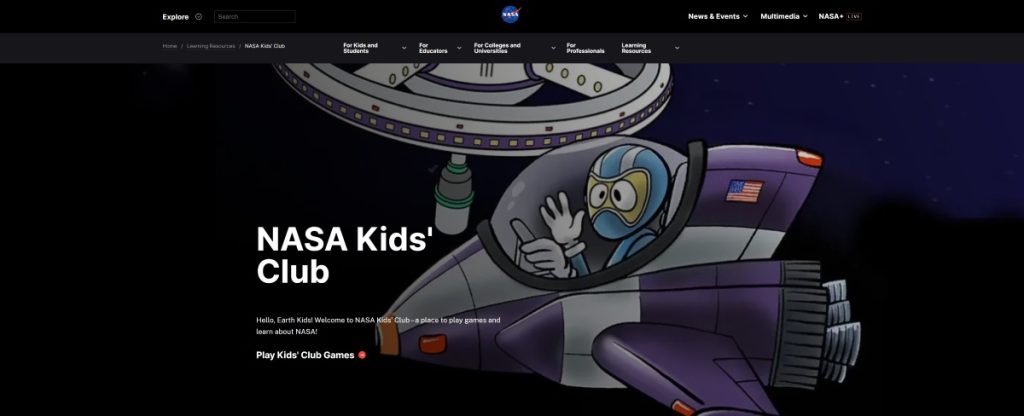
Focused on space and earth science, this site shares real-time news, interactive games, articles, and videos. Designed to teach kids about NASA and its missions while inspiring them to explore STEM topics. The games and activities span different skill levels and age groups. The image gallery includes some of NASA’s most spectacular images, bringing space into the home.
What NASA Kids’ Club Teaches Kids: Following national education standards in science, technology, engineering, and mathematics, kids are exposed to a variety of STEM topics. They can explore how today’s discoveries affect the future of aeronautics and flight. Examining history and the advancements made from what we’ve learned in the past helps kids to see how they can make a difference. There is also a plethora to learn about the Solar System, Earth, and the International Space Station.
While astronauts and space generate a natural enthusiasm in kids, the NASA Kids’ Club does a great job of expanding on different skills and the variety of careers in the STEM field that contribute to space exploration. Kids have the opportunity to learn about astronauts, who they are, what it is like to be on the International Space Station, and what it is like to be part of that operation on Earth.
Recommended Ages: 4 -14
Official Website: NASA Kids’ Club
Science Kids
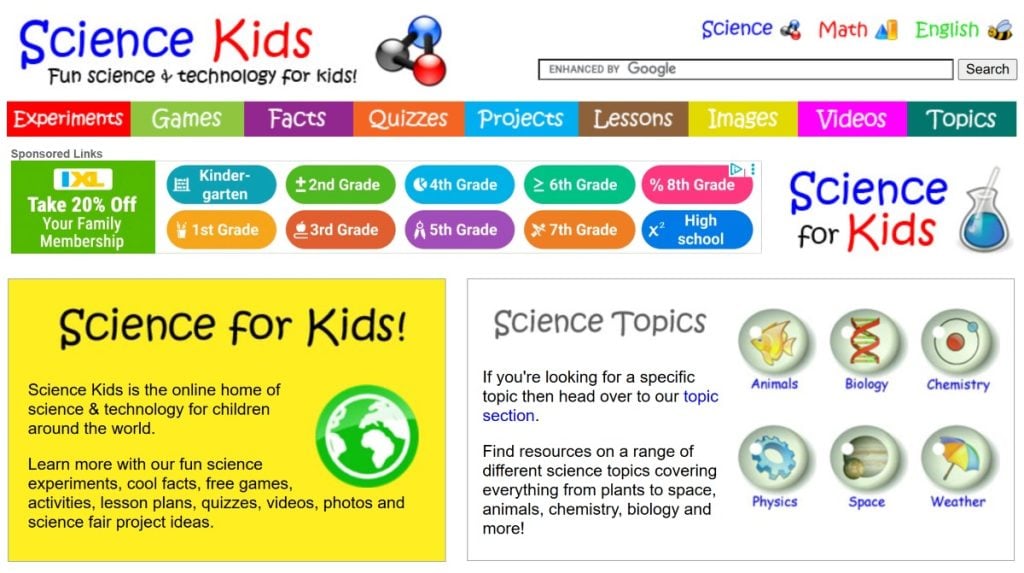
Just as the name suggests, this website is chock full of science experiments, games, facts, quizzes, projects, lessons, images, and videos. Covering a range of topics, the information is available in many different forms, appealing to different learning styles.
What Science Kids Teaches Kids: Kids can learn how to keep themselves healthy, enjoy videos about biology and chemistry, and even find science project ideas. Both written and video formats make it easy for kids to understand and follow along. There are a variety of pictures, drawings, and diagrams that cover everything from chemistry to space, experiments, biology, weather, animals, technology, and more.
Science Kids is great because it includes silly, albeit sometimes gross, jokes, weird science, humor, and experiments. If your child wants to know how to make fake snot, learn about what happens if you place one end of toilet paper in the toilet of a plane and then roll the rest down the aisle, or read funny science facts, this is a great site. In all seriousness, these are wonderful motivational tidbits for the child who may need reinforcement on certain science topics but is resistant. Starting with these less conventional lessons will help to draw them in.
Recommended Ages: 4 -14
Official Website: Science Kids
Easy Science For Kids
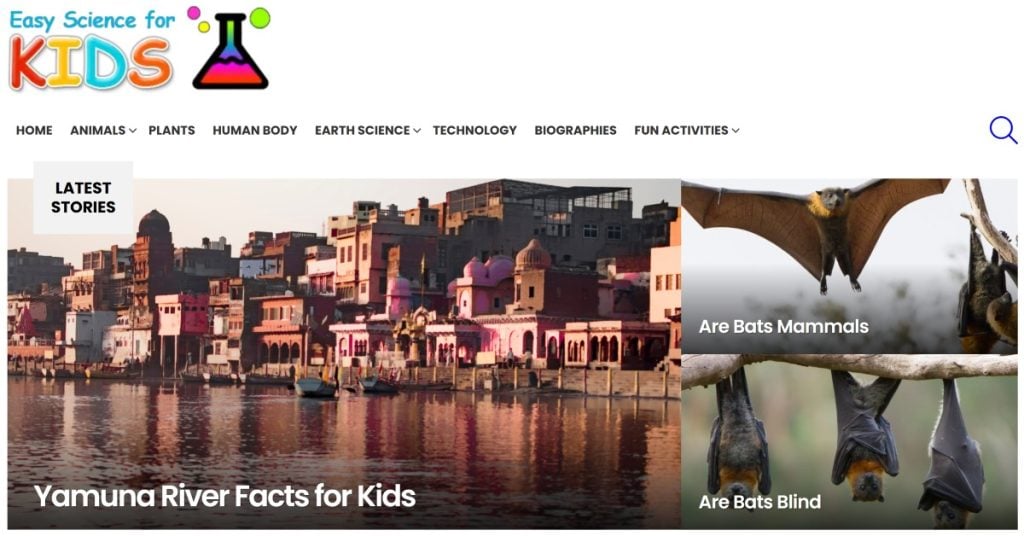
Featuring quizzes, worksheets, experiments, coloring sheets, and videos, this site allows kids to test their knowledge and learn some big words to impress their friends. Covering topics like plants, animals, technology, earth science, and the human body, kids can dive into many different areas.
What Easy Science For Kids Teaches Kids: Kids have the chance to learn about how plants know when to produce fruit, bad breath, how sleep affects us, if mountains affect the weather, and vectors and projectiles. Many of the articles include “fun facts” and “question and answer” sections.
The animals and earth science sections have the most selection of topics. Learning about birds, insects, mammals, reptiles, amphibians, and undersea animals is easy to navigate and includes plenty of interesting facts. The Earth Science tab includes topics such as culture, environmental conservation, geographic regions, natural disasters, natural wonders, the structure of Planet Earth, the Solar System, time, and weather. Blending science and social studies, these tabs are great crossovers between subjects.
Recommended Ages: 4 -14
Official Website: Easy Science For Kids
BrainPOP Jr.
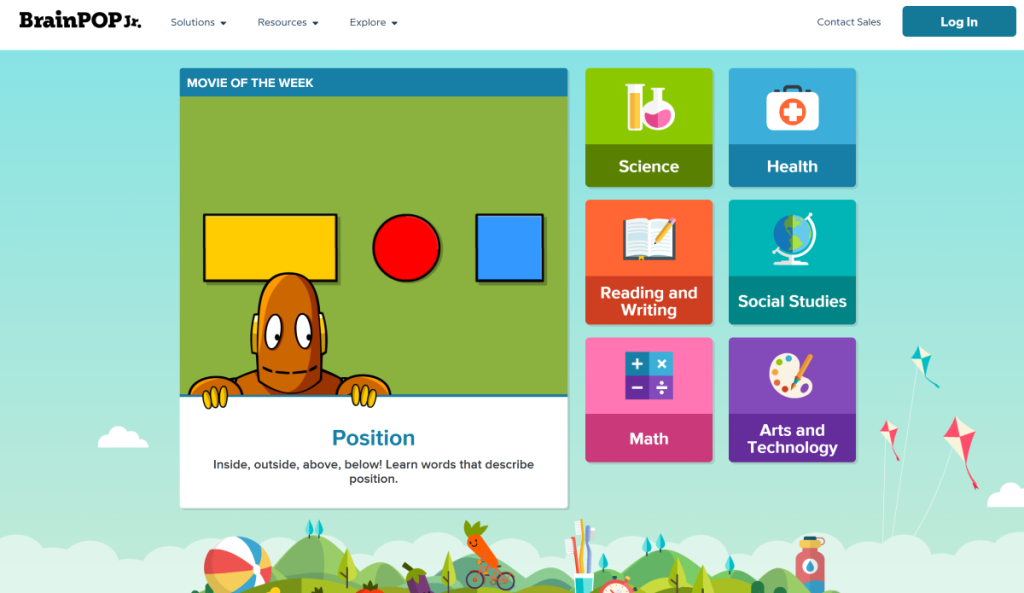
This platform covers a variety of subjects, with science among the most engaging. The topics range from animals to more complex topics such as matter and force. Utilizing bright, fun characters and stimulating videos and sounds, the information is delivered in a storytelling fashion. Complete with games, interactive quizzes, and assessments, teachers and parents can determine the child’s level of comprehension. There is a paid subscription for premium content. But there are 30-day free trials, as well as often a “free movie of the week”, allowing potential subscribers to get a feel for the site.
What BrainPOP Jr Teaches Kids: Catchy songs, videos, and games help students to gain a deeper understanding of the world around them through a scientific lens. For the younger students, critical thinking skills develop as they watch videos and are interactively questioned throughout. Animals, the human body, weather, and energy are explained in depth in an engaging fashion.
At the middle school level, Life, Physical, Earth, and Space Science are explored. Scaffolded investigations, embedded interactive tools, and actionable diagnostics foster understanding of the topics and enable teachers and parents to determine which concepts students have mastered.
Recommended Ages: 5 – 14
Official Website: BrainPOP Jr.
Highlights Kids
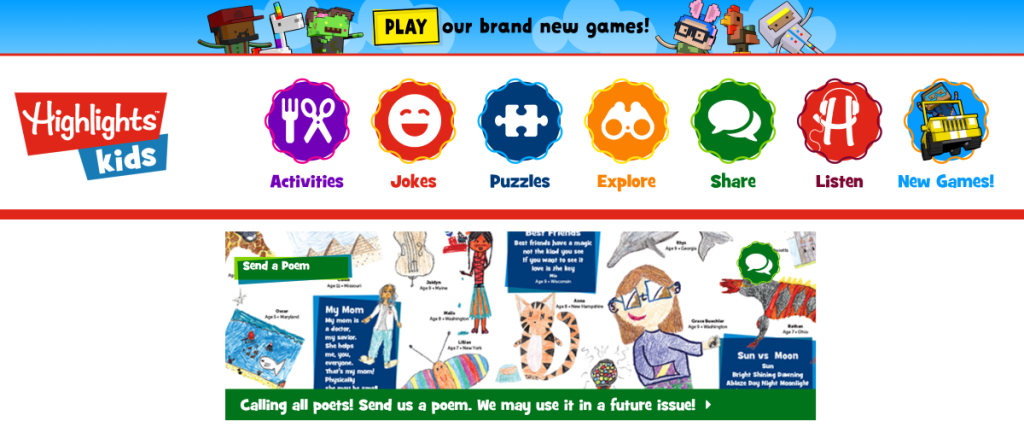
Puzzles and games foster problem-solving and critical thinking skills. One unique feature on this site is the podcasts. Ranging from the sky to surfing, this provides auditory learners with a way to synthesize information rarely found on other websites.
What Highlights Kids Teaches Kids: Answering scientific questions such as “Do insects sneeze, cough, or hiccup?” and “Why do cats lie on paper?” provides kids with answers that satisfy random curiosity and wonder. Kids are also encouraged to send in their own questions to be answered.
Highlights Kids is a great resource for young learners. The platform displays colorful, engaging depictions that jump out and grab the attention of little ones. There are games, puzzles, science questions answered, and music and podcasts. Unfortunately, the site does not arrange information by subject, but it is easy to navigate and find science-based topics.
Recommended Ages: 5 – 10
Official Website: Highlight Kids
SciShow Kids
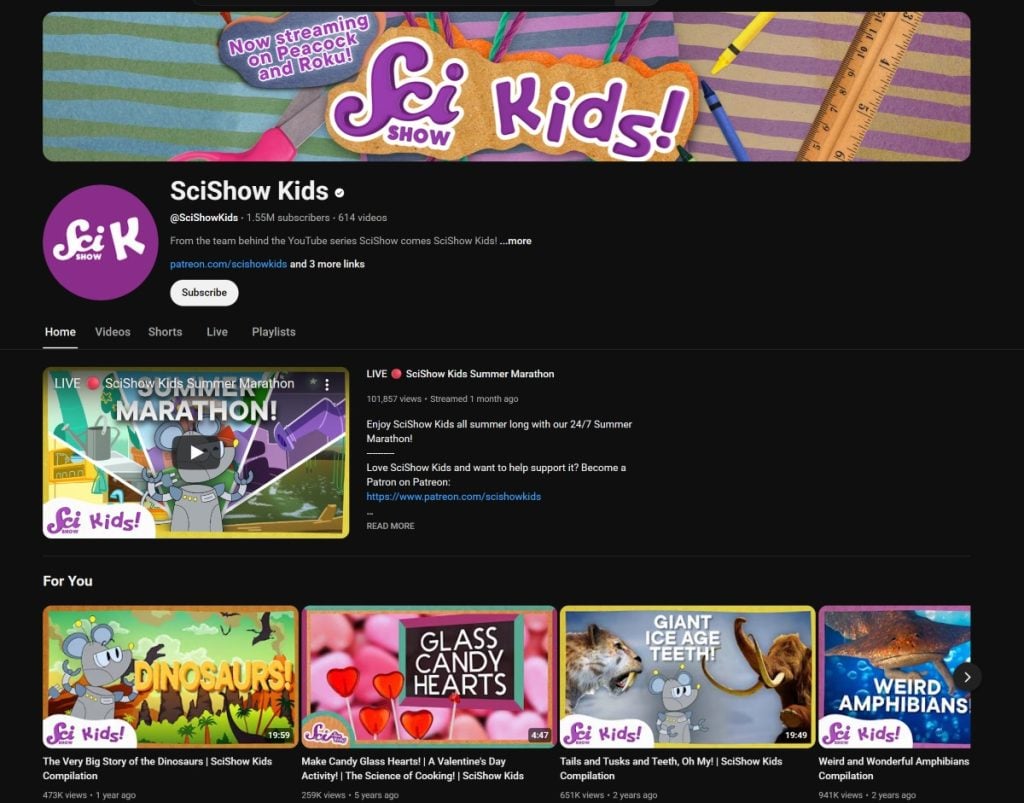
This YouTube channel does a magnificent job of breaking down complex science concepts into bite-sized, engaging videos, ideal for young learners exploring new topics. Some videos feature cartoon characters, while others feature a bubbly young woman, who makes the content interesting and engaging.
What SciShow Teaches Kids: This is a YouTube channel, so the features and lessons are all videos that cover many practical questions kids are curious about. “Why do we have eyebrows?” is just one of those questions that inevitably arise, and this channel is great at breaking it down so younger kids can grasp the concept. The videos are kept short to teach kids what is intended while keeping them actively engaged. Other topics kids can learn about include the garden, weather, animals, flying, space, the beach, and many more.
There are a few experiment videos, but not many. The real takeaway from this site is learning through video and igniting enthusiasm in young scientists. Many of the videos are labeled for grades 1-3, but some, including the YouTube shorts, are appropriate for even younger ages.
Recommended Ages: 6 – 10
Official Website: SciShow Kids
PBS Kids
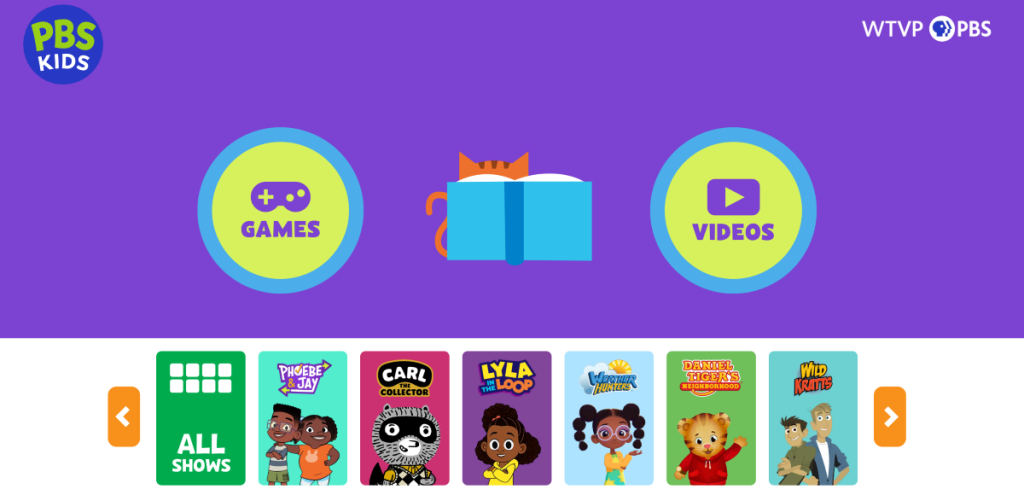
PBS Kids offers lots of interactive games and videos, both tied to their shows and characters, and independent of them. Their cartoon-style characters make this site appealing to younger learners. The familiarity of characters encourages them to jump in and learn new things that may have been challenging without that comfort level.
What PBS Kids Teaches Kids: Kids will learn about physical science, engineering, STEM skills, and natural phenomena. Designed to spark their curiosity and understand the world around them, the games and videos strengthen their age-appropriate skills. Science crafts allow creative kids to learn through that avenue.
As kids become more familiar with the games and the website, they can operate it independently. While parents are encouraged to discuss what their children are watching and playing, it is reassuring to know that screen time can also be educational.
Recommended Ages: 6 – 10
Official Website: PBS Kids
Funology
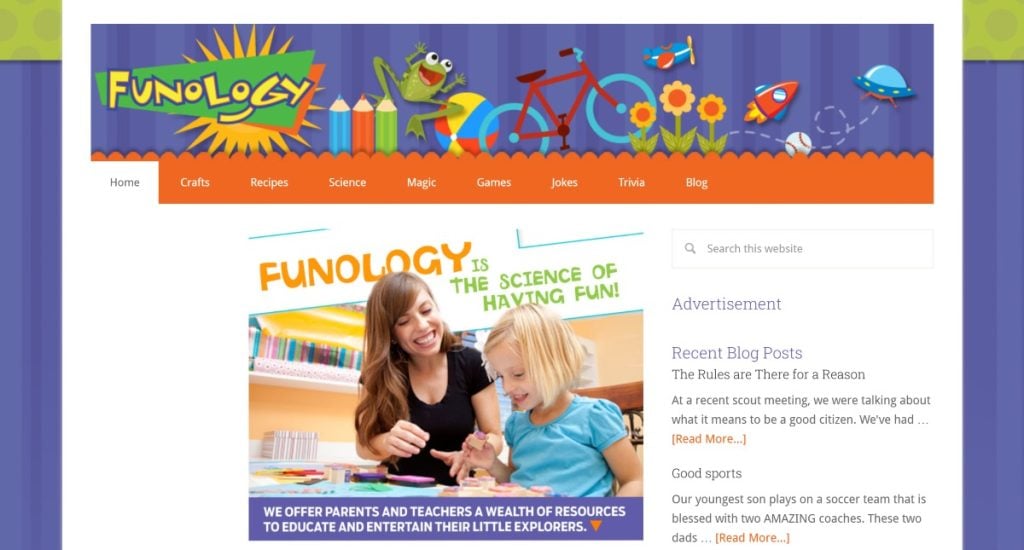
This website is ideal for kids who love building, experimenting, and getting creative. It includes tons of experiments, science trivia, games, and jokes. Funology inspires and entertains kids by focusing on creative ways to explore science at home with simple, everyday materials.
What Funology Teaches Kids: Kids can learn how to make a greenhouse, make raisins dance, make Jello bounce in soda, and create a tornado in a bottle, among other learning experiments. Reusing items to make crafts is another fun activity for kids. In addition, there are crafts made from nature and optical tricks that will shock everyone.
There are entire sections devoted to trivia and jokes, utilizing humor as a teaching tool. Funology aims to make learning science fun and engaging.
Recommended Ages: 6 – 12
Official Website: Funology
OLogy
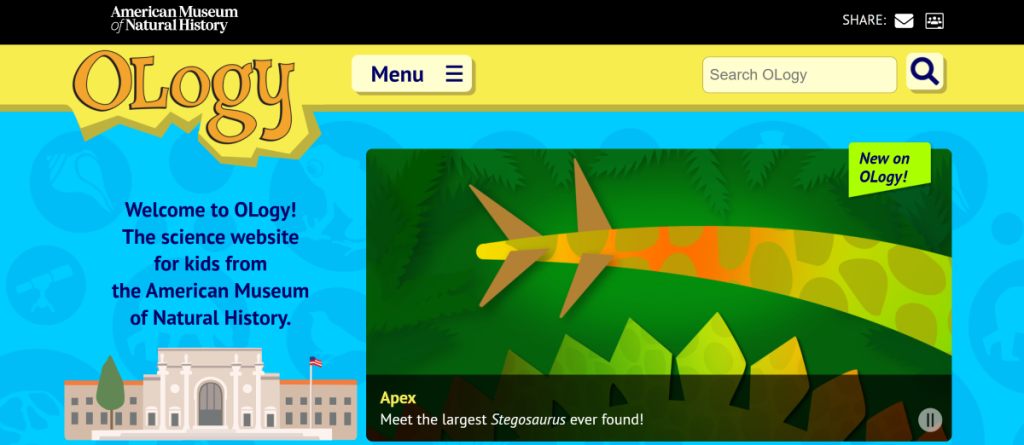
There are almost 75 games, connect-the-dots puzzles, quizzes, and coloring pages, as well as experiments and model-making activities to keep kids interested. The transfer from web to real, in-person life, is the true takeaway here. Kids get to learn online, and whether it’s the American Museum of Natural History or other museums, they can see the crossover.
What OLogy Teaches Kids: With the brain as one of the learning topics, kids explore their nervous system, optical illusions, and how we see color. They also get to be DNA detectives in a game and learn how to be an energy saver. All practical topics that pique interest.
OLogy is the science website for kids from the American Museum of Natural History. It offers a wide range of topics from paleontology and genetics to astronomy, earth science, anthropology, and more. Kids can learn through games, reading, hands-on activities, and/or videos.
Recommended Ages: 6 -12
Official Website: OLogy
Ducksters
Ducksters covers lots of topics, including science. This site includes biology, chemistry, earth science, environment, physics, animals, money, economics, and math, among other science topics. There are games, jokes, and even a fun section.
What Ducksters Teaches Kids: Ducksters is a great website for research on scientific subjects. It offers a straightforward approach and delivery of information. There aren’t many graphics or videos, but there are quizzes at the bottom of most pages. There are also word searches and crosswords for kids to complete.
While there is not an extensive collection of experiments, there are some. There is also a link to learn about scientists and inventors. If you are looking for a simple way to gain information, this is your site. It’s not as overstimulating as some of the others.
Recommended Ages: 6 – 14
Official Website: Ducksters
Science Buddies
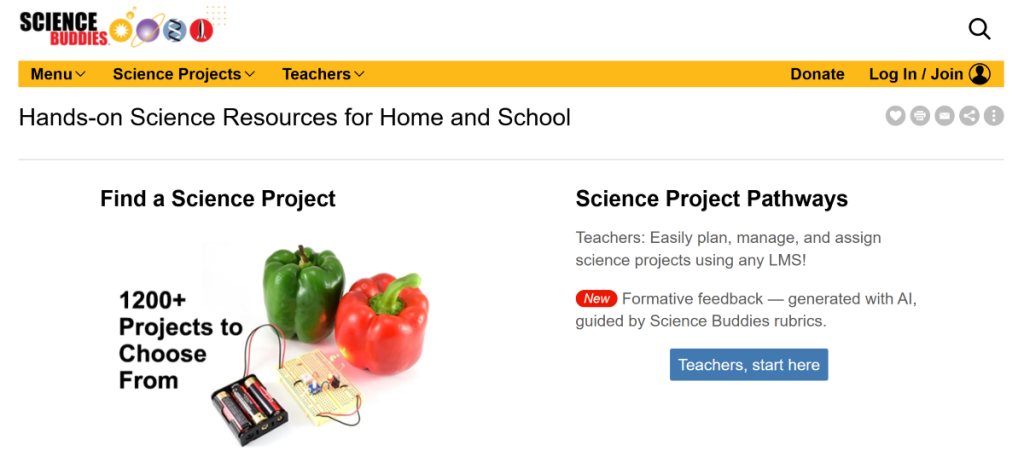
This site is meticulously organized and laid out. The focus here is on science projects, activities, and career exploration. You can search for science projects by area of science, grade level, and global goals. Kids can also search for science careers in different sectors.
What Science Buddies Teaches Kids: At the bottom of the homepage, you can find a science news feed with relevant and timely news. There is also a video of the week on the homepage, along with a place to leave your email to receive science resources. With six subcategories of science, there are many project options. They speak to a wide range of ages and skill levels. From balloon-powered cars to the kinetics of color-changing iodine clock reaction, the choices are vast.
Although the projects and activities are designed for K-12 levels, younger kids will definitely need to execute them with their parents’ help. Some of the videos can be understood by younger students, but this website is generally for kids with a deep passion for science who already have one.
Recommended Ages: 6 – 18
Official Website: Science Buddies
The Kids Should See This
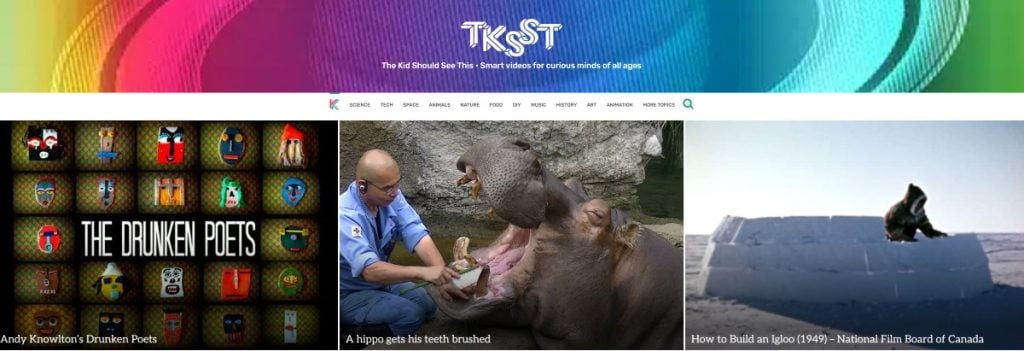
This site is great for visual learners. Kids who retain information after seeing videos will greatly benefit from and enjoy this site. The tagline, “Smart videos for curious minds of all ages”, sums it up. There are over 10 video topic categories, which are further broken down into even more detailed subcategories. They total over 2,700 searchable topics. They also span a wide age range.
What Kids Should See This Teaches Kids: Kids can find engaging videos on everything from science, technology, and space to animals, nature, and food. There is an entire DIY section as well. Although there are no official experiments, there are science activities. Some examples are making biodegradable plastic with crushed egg shells, sweet rainbow science, and how to throw a toilet plunger for science.
There are also lots of recipes and an entire tab with subtopics about the science of animation. This website is for kids who are interested in conventional and less conventional sciences.
Recommended Ages: 6 – 18
Official Website: The Kids Should See This
Minerology4Kids
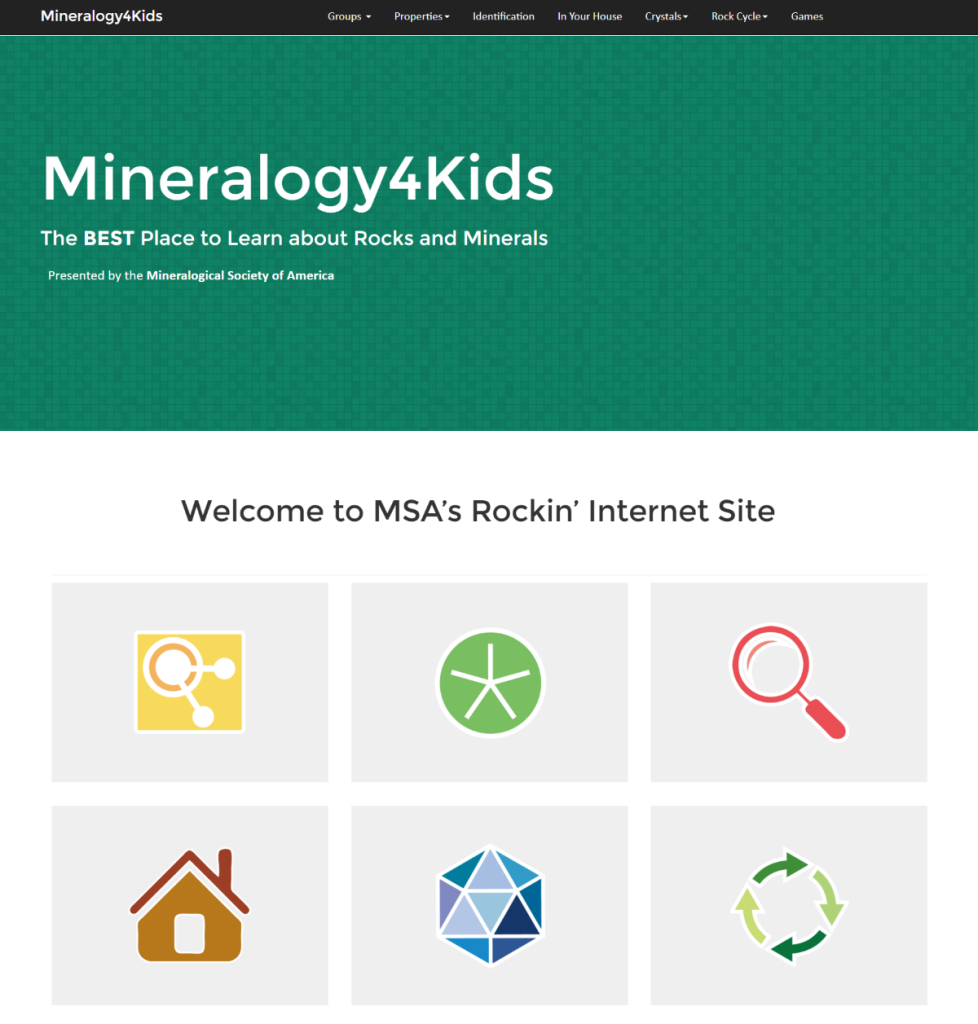
This site has an entire tab dedicated to crystal chemistry, systems, and symmetry, educating on a science subject that is often popular with kids. The “minerals in your house” section breaks down popular household items and details what minerals can be found in them, bringing science right into the home. While this site supports K-12 science curriculum, younger learners will need help exploring information and playing games.
What Minerology4Kids Teaches Kids: Kids have the opportunity learn about the minerals in their house, different mineral groups, mineral properties, and crystals. There is a simple step-by-step guide that helps kids identify minerals. Walking them through different questions about properties. This tool empowers kids to name given minerals.
Are your kids fascinated by rocks and gems? Many are! This website is a comprehensive resource offering activities and educational materials about minerals. Kids can play games and read about different minerals. Lots of valuable tools to support learning about mineralogy can be found on Minerology4Kids.
Recommended Ages: 7 -11
Official Website: Minerology4Kids
Science Max
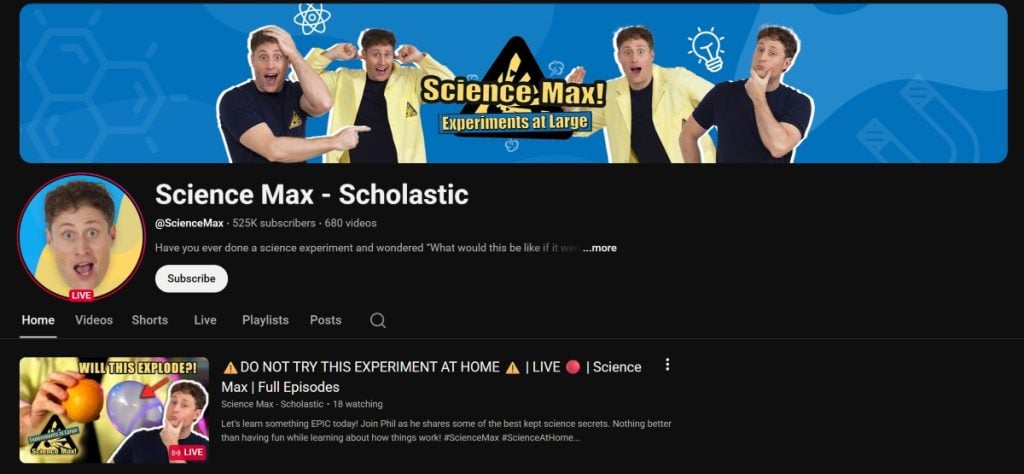
A YouTube series that teaches kids about science through large-scale experiments that demonstrate scientific principles. There are videos ranging from 2 minutes to over an hour, giving kids the opportunity to learn about science in short bursts or to go on deeper dives.
What Science Max Teaches Kids: Over the course of three seasons, the host, Phil McCordic, covers topics like static electricity, DIY phone speakers, and earthquakes. His experiment and “how to” videos show kids’ art made by a virobot, how to make mini hot air balloons, and how to make things levitate.
The topics and lessons are interactive. Engaging kids and motivating them to try their own experiments, Science Max helps build creative thinkers and problem solvers. Running small experiments on a large scale makes learning more memorable and engaging.
Recommended Ages: 12 – 15
Official Website: Science Max