

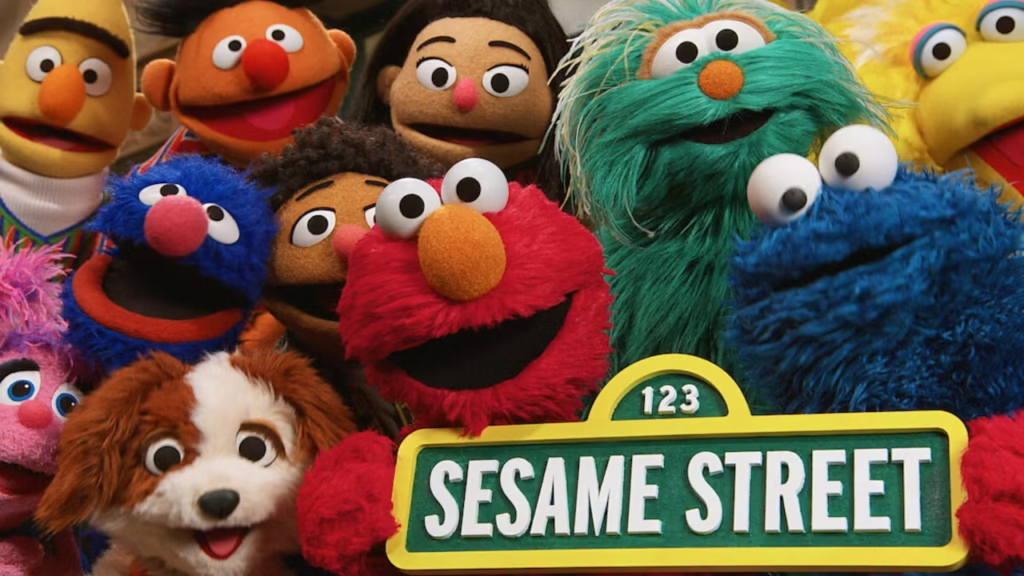
For more than five decades, Sesame Street has helped children learn their ABCs, understand their emotions, and navigate the world around them. But as children’s entertainment habits change, the beloved educational series is finding new ways to reach families while preserving the lessons that have made it a household name.
The world of children’s entertainment looks very different than it did 10 years ago, and Sesame Street has had to evolve to keep up. From embracing streaming platforms to expanding its digital presence, the iconic series is finding new ways to connect with today’s tech-savvy generation.
In 2015, the show entered a major new chapter when HBO began airing first-run episodes, reflecting the changing television landscape. More recently, following uncertainty surrounding its future distribution, Sesame Workshop secured a new streaming agreement with Netflix while maintaining its connection with PBS Kids.
These changes demonstrate that Sesame Street is willing to reinvent how children experience its programming without abandoning its educational mission. Whether families watch through traditional television or streaming services, the goal remains making meaningful learning accessible.
The History and Origins of Sesame Street
First premiering on November 10, 1969, Sesame Street was created by television producer Joan Ganz Cooney and Carnegie Corporation vice president Lloyd Morrisett. Their idea was to use television’s popularity to help preschoolers develop important academic skills before entering school.
Working with Jim Henson and his memorable Muppets, the creators developed a program combining humor, music, animation and educational lessons. Unlike many children’s programs at the time, Sesame Street incorporated research and measurable learning objectives into its production.
The experiment became a worldwide phenomenon. By its 40th anniversary in 2009, the program was broadcast in more than 120 countries, with 20 independently produced international versions. Sesame Street’s history reflects how the series has continually adapted to changing educational needs.
Why Sesame Street Remains Important to Generations of Kids
One reason Sesame Street has endured is its ability to teach children lessons that extend beyond letters and numbers. Its programming also addresses emotional development, self-regulation, kindness, friendship, and understanding others.
The show’s research-based approach helps children develop executive function skills, including attention, impulse control, and managing emotions. PBS describes the program as one of the “largest and least-costly interventions” in early childhood education.
Ultimately, Sesame Street succeeds because it makes learning entertaining while helping children feel understood. Although the platforms and characters may evolve, its commitment to helping children become smarter, stronger, and kinder remains just as important today.

