As a parent, one of the greatest rewards in life is knowing my kids feel safe with me. Isn’t this what every child centers their day around? The love and safety of their parent? When I was growing up, I always felt instantly better and stronger knowing my mom was nearby. It was like a wave of positive energy flooded over me, and everything was going to be okay because she was there. What a dream it would be for my kids to feel such security.
At times, it’s hard to know if your child feels emotionally safe with you. Those with toddlers can attest that each day is a new range of emotions, and it’s hard to keep up with everything that they’re feeling. Luckily, experts have been open about the tell-tale signs that children are more emotionally secure than parents may even realize.
Your Children Have Full-Blown Meltdowns

It may be hard to realize when you’re in the thick of a toddler meltdown, but meltdowns mean your child feels safe with you. They’re content enough to unwind and let loose from what’s bothering them because they know you’re not going to judge them, and most likely, guide them in a better light.
Clinical psychologist Dr. Becky Kennedy shared that kids have meltdowns only in front of those they trust most. Meltdowns after school are, primarily, large moments for young kids. After keeping all of their fears, unknowns, and questions in all day, they can finally let loose in front of those they trust most.
What Experts Say: “Parents do not need to fix a child’s feelings; they just need to make space for them. So challenge that happiness police mentality. Your goal is not to make your kids happy all the time, but to teach them that they can feel safe sitting with this comfort, a lesson that’s super important.”
Kids Learn To Calmly Separate From You (Because They Know Mom And Dad Come Back)
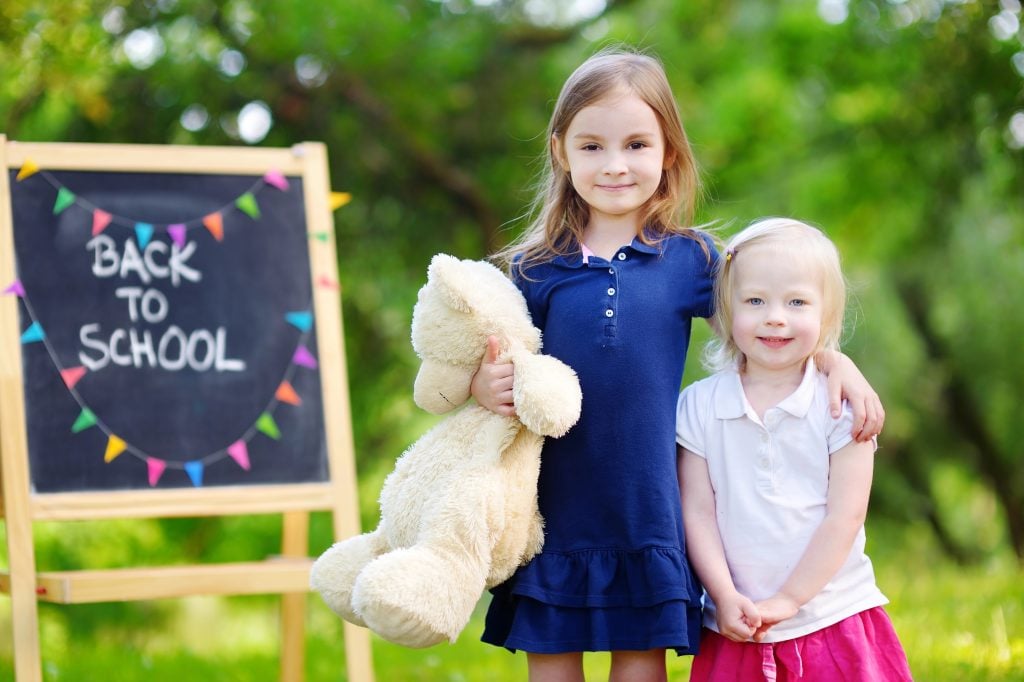
If your child can separate from you for school or activity drop-offs without throwing a fit, it’s because they feel emotionally safe and are confident in your bond. Now, this does not necessarily mean those who cry and scream for their parents at drop-offs don’t feel safe. However, over time, those meltdowns should theoretically lessen.
Separating from your child for the first time can be incredibly challenging, not only for your child but for you, too. It’s an adjustment, and it takes some time to get used to — regardless of whether it’s for a few hours or a weekend.
Eventually, your child realizes that mom or dad always comes back for them and there’s no reason to get upset. They feel safe in their bond with you and trust that they’ll see you again (because you always come back).
What Experts Say: “As they learn how the world works, kids can worry about a lot of things, and these concerns can come and go over the years,” Dr. Elesia Hines shared with Riley Children’s Health. “It’s important for the parent to acknowledge the child’s fears while remaining firm: ‘I hear that you feel nervous getting on the school bus in the morning. We have to go to school. What do you think could make that easier for you?’”
Children Play Independently
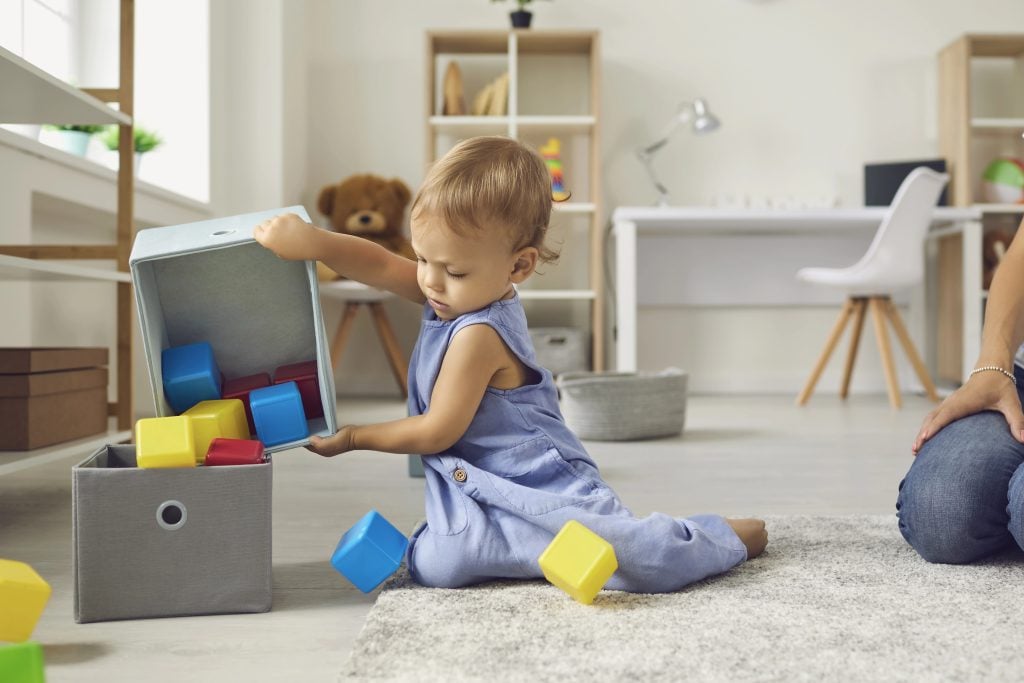
When my oldest daughter turned 2, I quietly wondered when she would begin to play independently. I saw countless videos and read endless stories of kids playing with their dolls or quietly coloring, and I wondered why my child always needed me to play alongside them.
I later realized that playing independently takes time and isn’t just a sign that your child feels emotionally safe; it’s also developmental. The younger the child, the shorter the spans of independent play.
12 Months: Independently plays for (roughly) 15 minutes
18 months: Independently plays for (roughly) 15 to 20 minutes
24 months: Independently plays for (roughly) 30 minutes
Children who play independently (whether it’s for 10 minutes or 40) feel emotionally secure and well-regulated. They feel confident exploring on their own because their parents created a safe and nurturing atmosphere. Psychologist John Bowlby did research on Attachment Theory and discovered the connection between independent play and security.
What Experts Say: “A secure attachment occurs when infants form a healthy emotional bond with a caregiver and feel secure enough to explore the world around them. However, if they feel threatened or require comfort, the infant will return to their caregiver.”
Your Kids Seek Comfort After Something Upsetting Happens
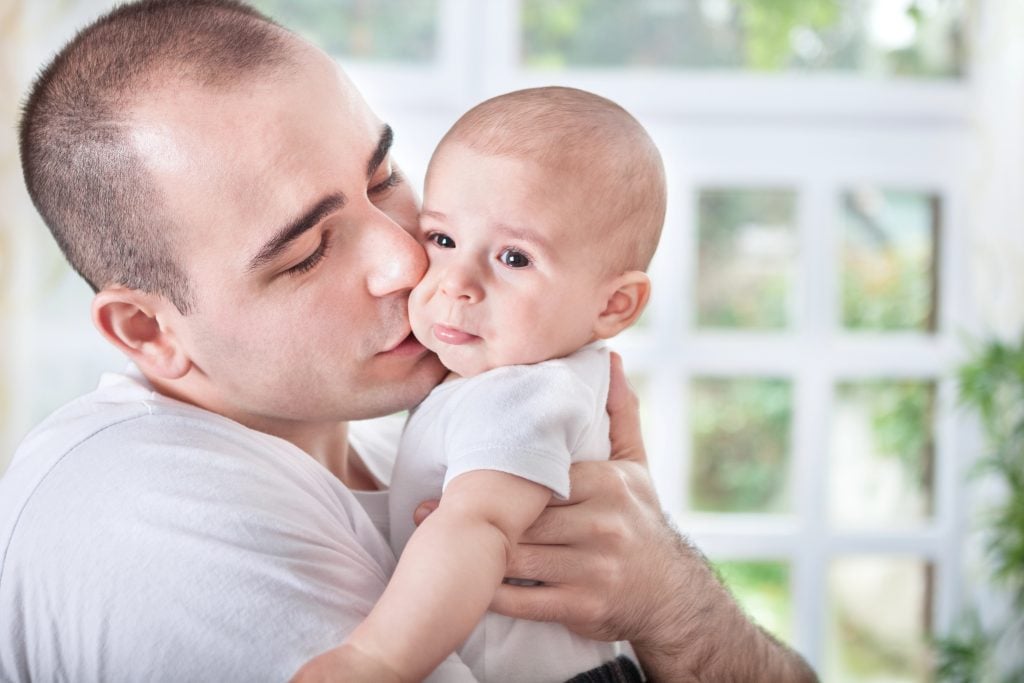
As an adult, it seems obvious that your child would want comfort after falling or being involved in something upsetting. However, some kids get embarrassed or shy about showing big emotions and don’t always feel comfortable running to an adult to express their feelings.
Those who run to their parents after getting upset aren’t weak or thin-skinned; they’re actually emotionally regulated, according to therapist Eli Harwood.
Children who seen reguge in their parents during upsetting times have a “secure base.” The base is a place of trust and emotional health.
What Experts Say: “I would say you’re going to be able to assess the quality of that attachment bond with your children most accurately in moments where they feel scared. Do they see you as a refuge, as a safe place to run? Sometimes kids run away from us when they’re ashamed, which doesn’t mean they’re securely attached to us.
They Can Name Their Emotions
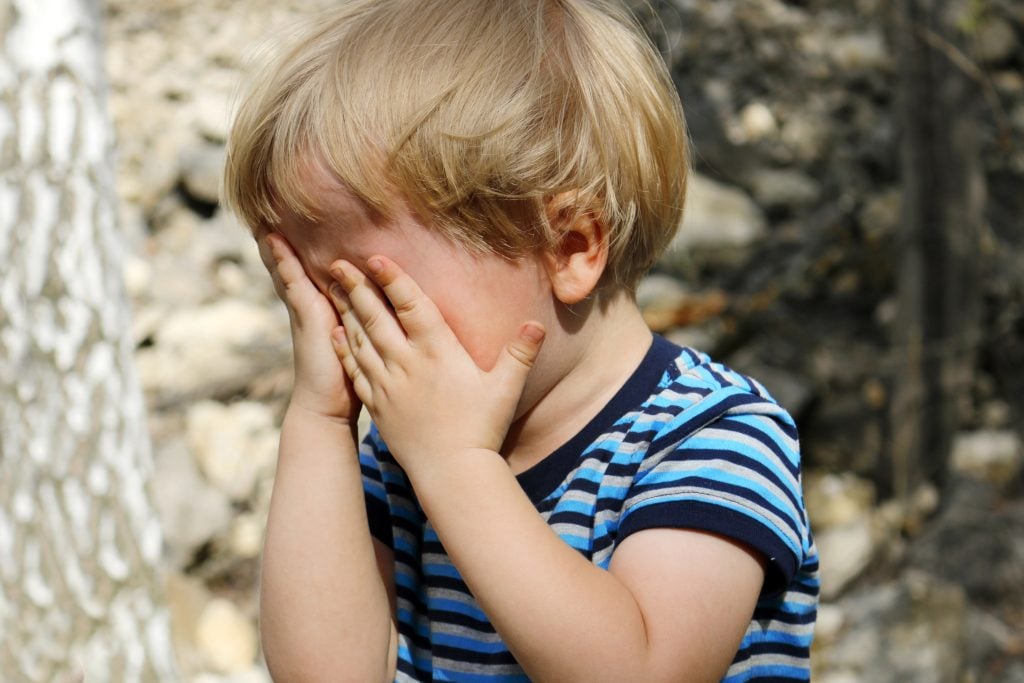
It’s a large developmental step for a child to say what they’re feeling and why. Even adults have a hard time expressing themselves or pinpointing what triggered their emotions. Naming their emotions and explaining what upset them is a sign that they feel emotionally safe.
Clinical psychologist Maya Weir explained how important it was to walk a child through the range of emotions so that they could express themselves when the time came.
What Experts Say: “By the age of 3, many children with secure attachment will be able to name some of their feelings and discuss how they are feeling… This is really important because it means they have internalized what the parents have supported them with. This also supports better mental and physical health later on in life.”
Children Are Confident Expressing Themselves
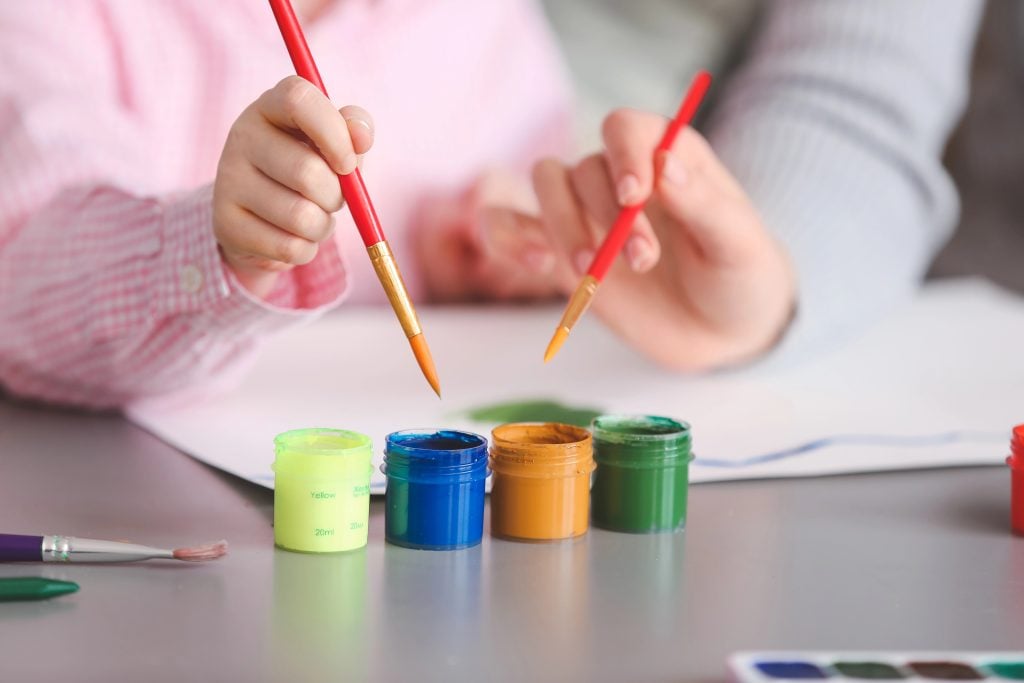
As a parent, is there anything more inspiring and heartwarming than when your child expresses themselves correctly? Whether it’s picking out an outfit, styling their hair in a new way, or hanging up their artwork, your child expresses themselves in different ways, and it’s up to you to see the beauty in those big and small moments.
Experts at Kids First Services noted that children who are confident in expressing themselves feel comfortable doing so because of their loving, trusting home lives. Starting communication with your child at a young age can harness those expressive moments.
What Experts Say: “Open communication plays a crucial role, enabling children to articulate their thoughts and feelings while strengthening their emotional literacy. By recognizing and discussing emotions, children learn to manage their responses, further contributing to their emotional well-being.”
Your Kids Are Responsive To discipline
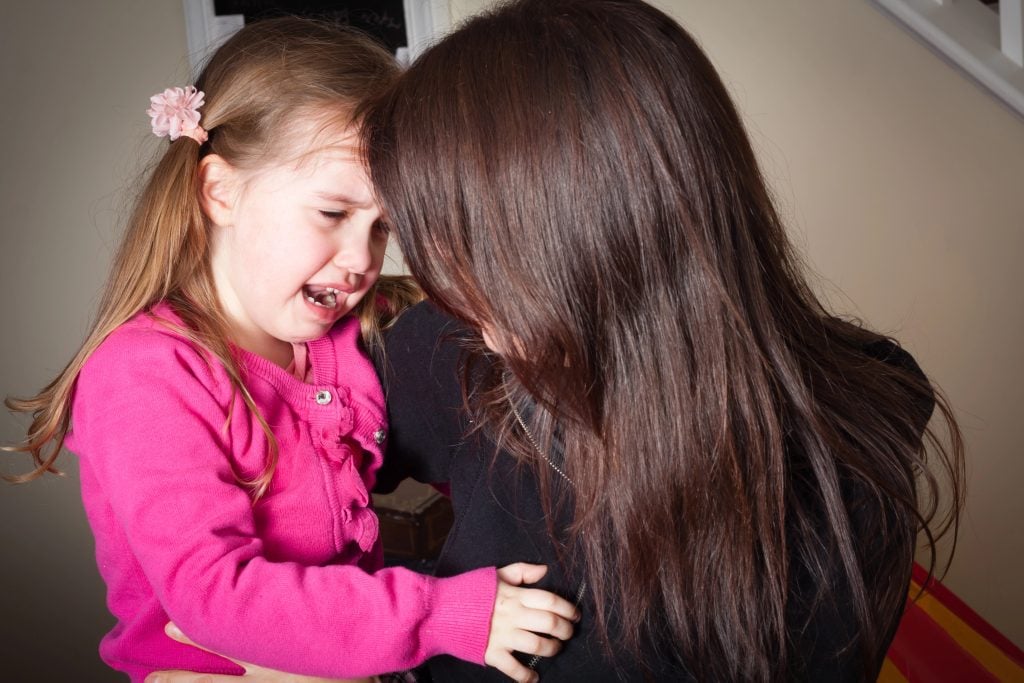
When children feel secure in their bond with their parent, they are more responsive to discipline, according to experts at Circle of Security. While they may be upset when they’re scolded or sent to take a breather in another room, they’re open to guidance and understand they’re loved, despite the tense moment.
The experts’ main point is that children only learn right from wrong when they feel safe, heard, and trusted. Being open to feedback or criticism is easier when they love and respect those being disciplined.
What Experts Say: “Think about the last time someone criticized you. Did you feel more open to feedback and growth, or more focused on protecting yourself? When we feel unsafe, our brains shift into survival mode, not learning mode… When [kids] feel disconnected, threatened, or ashamed, their attachment system activates.
They Share Their Favorite Object With You

It doesn’t matter whether your little one brings you food or their favorite toy; showing you an object or sharing their favorite things with you proves you’re their safety net.
Dr. Gloria Brame, Ph.D., reminded parents of the importance of their child sharing with them and of vocalizing it.
What Experts Say: “If you have any soul at all, you’re going to make them feel it was well worth the effort. You’ll let them know you appreciate their treasure and, by extension, respect and acknowledge them as important too.”
Signs Your Child Does Not Feel Emotionally Fulfilled

Not sure if your child feels emotionally safe and secure at home? Blueberry Pediatrics shared that children show signs when they’re slightly on edge or unsure who to trust.
- Large reactions to small problems. (Behaving irrationally to a spilled glass of water could be a case of undiagnosed anxiety).
- Complaints about non-threatening physical ailments (that could be anxiety-related. This is the body’s “way of expressing emotional distress.”
- They struggle to be independent (more clingy than usual). Or, on the opposing view, become a recluse. These signs can appear at school or among friends.
If you think your child exhibits any of these signs, examine the list and check off which actions your child does or doesn’t do. Focus on communication, attentiveness, and physical expressions of love, such as hugs, hand-holding, and forehead kisses.
Tips For Creating Emotionally Secure Children
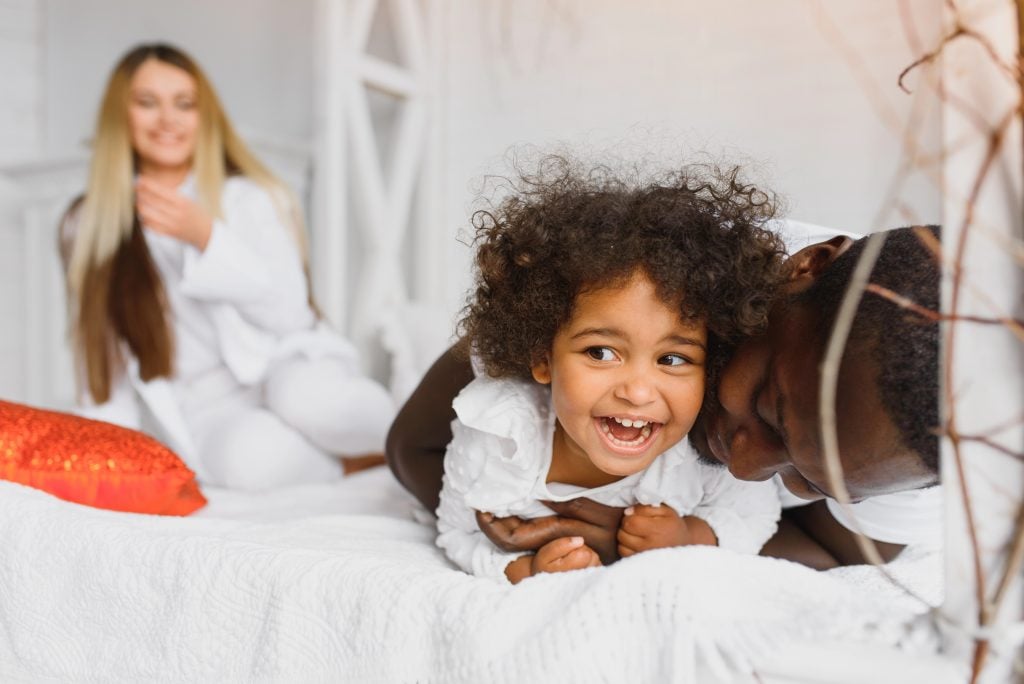
Creating emotionally secure children takes practice, but most importantly, love and patience. You must pay attention to your child’s behavior and recognize that they’re dealing with emotions without the proper tools to express themselves.
- Validate your child’s feelings while staying true to your parenting style’s boundaries and rules.
- Learn about their interests and genuinely engage so you can bond over something that delights them.
- Be present. Have moments together that don’t involve a screen. Talk and listen to your child and pick up on anything that may be bothering them.
Jim Taylor, Ph.D., reminded parents that forming a strong emotional attachment requires trust, understanding, and consistency.
What Experts Say: “When your children see you as consistent in your emotions, behavior, and reactions, you enable them to see you, relationships in general, and the world as predictable and, to a greater degree, controllable.”