


Check the thermometer. Look at the eyes and throat for obvious signs of illness. Watch for lethargy. Ask how he’s feeling.
Then, even after none of those results sound alarm bells, the parent remains confident that something is wrong and that this child needs to be seen by a doctor. The parent can’t quite articulate why they are so sure their baby needed medical care, but it turns out, they’re right.
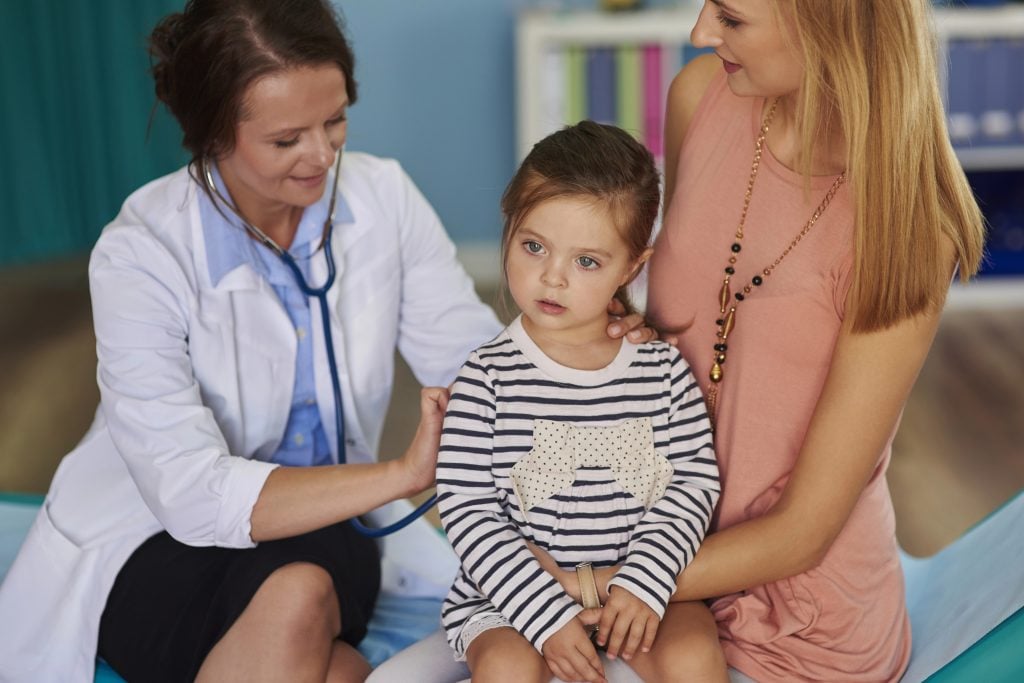
Parental instinct goes a long way, and a new study confirms it. When parents trust their instincts about their child’s well-being, they are more likely than a diagnostic questionnaire to get it right.
Parents Have One Diagnostic Advantage When It Comes To Their Kids

Doctors have years of education in diseases and the different ways they can present, as well as the treatments that work. They have dedicated themselves to learning about the functions of the human body, and its reactions to illness, stress, medicine, and more.
They’re the experts for a reason.
That said, parents have information that doctors don’t. Parents have been around their child from the moment of birth, have observed their child’s habits, growth, and demeanor more or less nonstop, and that means that they pick up on changes, even if they’re so subtle that the awareness is unconscious.
Because of this, parents can sometimes sense that something is just not right in a way that a stranger might not quickly pick up on.
Many good pediatricians, in fact, know to take a parent’s “this isn’t normal for him” very seriously!
Parental Intuition Vs. Symptom Questionnaires
A study published in the Journal of the American Medical Association (JAMA) examined parental concern in a pediatric emergency department. Parents completed a 36-item diagnostic questionnaire about their children’s symptoms, including some that focused on their level of concern about the child’s condition.
The outcome?
Parents showing high levels of worry had about a 90% sensitivity in predicting whether the child would be found to be suffering from what the study defined as severe illness.
“Severe illness was defined as 1 or more of the following: admission to the pediatric intensive care unit, hospital treatment of more than 24 hours, need for intravenous or nasogastric fluids, need for intravenous antibiotics for more than 24 hours, oxygen saturation less than 93% or the need for inhaled medications, anaphylactic shock, intoxication requiring hospital admission, or surgical intervention.”
That means that for most kids who turned out to have severe illness, a parent’s high level of concern was a solid sign.
Here’s Where Intuition Falls Short
However, the parental instinct fell short on specificity.
That means that while most kids who turned out to be severely ill had very worried parents, there were also plenty of very worried parents whose kids turned out not to be quite so ill.
This is where the other diagnostic questions come in. A computer algorithm, it turned out, could predict the likelihood of hospital admission and the likelihood that the child would be admitted to the pediatric ICU pretty well, and that a few specific questions gave the clearest projection.
These included parental worry level and a parent’s assessment of the need for treatment as two of the most important questions, along with a parental assessment of the child’s appearance, the child’s reaction to the environment (lethargy, for example or low response), and the child’s reaction to treatment.
Parental instinct wasn’t enough on its own to determine that a child was truly seriously ill, but when combined with assessments of behavior and appearance, and response to treatment, these reached a relevant degree of accuracy.
Why Does It Matter?
Okay, many parents have experienced the frustration of knowing their child is sick but feeling like a doctor isn’t taking them seriously, only to be proven right by a second opinion or by the condition deteriorating. This study will provide validation for parents who have been in that position.
From a medical perspective, though, there’s an even greater concern.
A shortage of medical providers, especially in rural areas, along with other changes in lifestyle, technology, and access to care, has led more of us to turn to telehealth for at least some of our appointments.
If a child is seen by a doctor remotely, the parental assessment becomes a more significant part of the diagnostic process, since the doctor can’t reach through a screen with a thermometer, stethoscope, or blood pressure cuff.
That raised the question: how reliable is a parental assessment of symptoms and health? If we ask parents the right questions, can a machine accurately assess how ill their child is? Can questionnaires be formulated to minimize both the number of severe illnesses overlooked and the number of unnecessary in-person visits?
This study is a single step towards answering all those questions, but it is a significant data point in favor of parents’ ability to determine how sick their babies are when they’re asked the right questions.
