

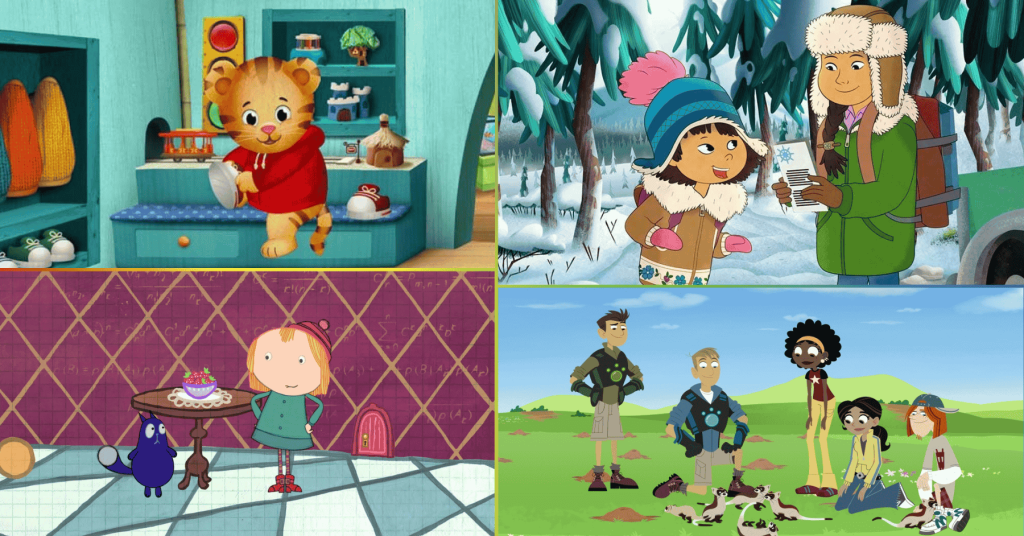
PBS Kids remains one of the best outlets for kids’ entertainment with educational value. PBS Kids is one of the few studios still in operation that works hard to make their shows fun, informative, and relatable to kids, reaching them on their level. These shows aren’t just glorified toy commercials or brightly colored, flashy adventures. There’s real heart and soul in PBS Kids shows, with a dedication to teaching in fun and entertaining ways that the world could use more of.
The 2010s marked a vibrant era for PBS Kids, shifting towards high-energy STEM education, complex social-emotional learning, and diverse cultural representation. Shows like Molly of Denial introduced kids to Indigenous and Native values, Xavier Riddle showed the importance of learning from history, and Daniel Tiger became a relatable hero for kids dealing with big feelings. Throw in a healthy dose of math, critical thinking, and environmental awareness, and it becomes clear the PBS Kids shows were covering all the bases.
Below are the best PBS Kids shows of the 2010s. Each show on this list was released between 2010 and 2019. Most are also available to watch on PBS Kids and on various other streaming services. Getting kids to watch educational shows and movies can be a stretch for parents, but these shows pack enough entertainment that kids absorb the lessons alongside the characters and barely even realize they are learning because it’s so much fun.
SciGirls (2010)
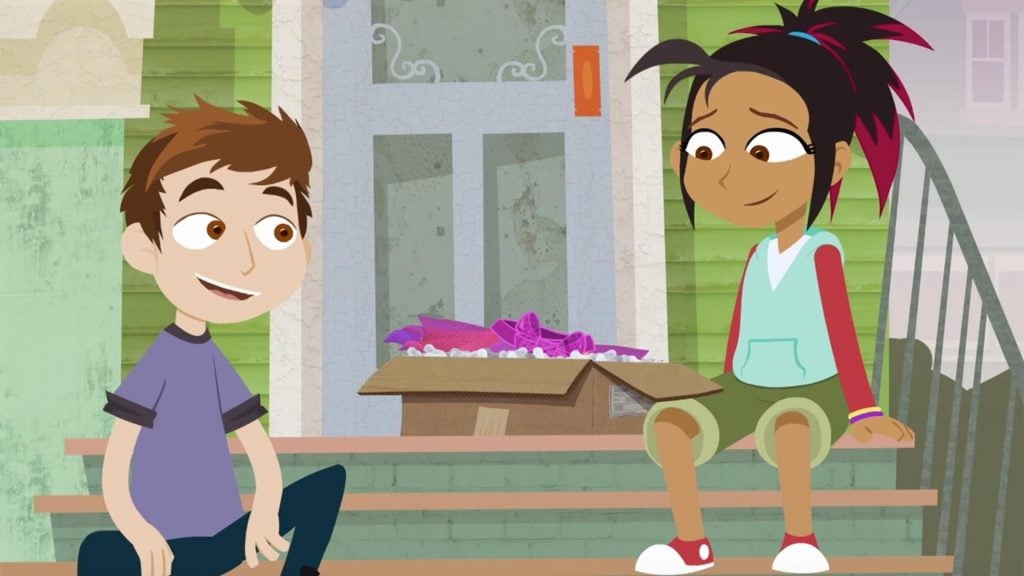
SciGirls is a hybrid live-action/animated series that follows real “girls as they use STEM to solve problems in their everyday lives. The girls tackle real-life projects like engineering a miniature wind farm, creating a turtle habitat, designing an electronic dress, and more. Each episode also features female mentors to help with projects, and animated characters Izzie and Jake guide the narrative, seeking help from the real-life SciGirls groups. The show’s emphasis on ‘real-life’ science and engineering makes a great starting point for young girls looking to explore potential career paths in science and technology
What ‘SciGirls’ Teaches Kids: SciGirls focuses on the process of engineering rather than just the final result. In “Blowin’ in the Wind,” girls design and test wind turbines while using the scientific principles of prediction, observation, and interpretation. SciGirls also encourages friendship and collaboration, with mentors demonstrating how groups can brainstorm and resolve challenges together. SciGirls applies science where kids are, including addressing local ecological issues. The girls learn to apply science in their community, for example, by testing water quality to help restore a local habitat.
Recommended Ages: 8–12
The Cat in the Hat Knows A Lot About That! (2010)
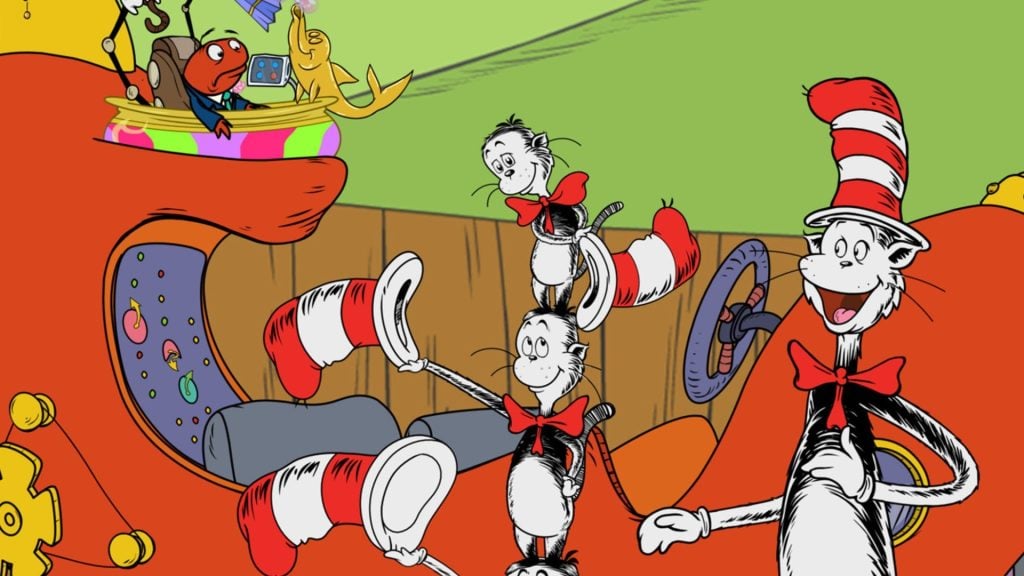
Based on the classic Dr. Seuss books, but with an educational spin, the Cat in the Hat takes neighbors Nick and Sally on fantastical science adventures. Using the very technically named “Thing-a-ma-jigger,” a vehicle that can sprout wings, pontoons, and booster rockets. It can fly, change size, and do just about anything else necessary to take them on adventures all around the Earth. The show uses Seussian rhymes and humor to explain scientific concepts and natural phenomena to preschoolers.
What ‘The Cat in the Hat Knows A Lot About That!’ Teaches Kids: The Cat In The Hat Knows a Lot About That introduces kids to the Earth’s natural world, including animal behaviors and habitats. The episode “Migration Vacation,” for example, explains why birds fly south for the winter. Other episodes, like “A Teeny Weeny Adventure,” teach physics and engineering principles by shrinking objects to illustrate the surface tension of water. The show also helps children understand how different species depend on one another, such as how flowers and bees work together to produce honey. This helps foster a sense of community alongside the fun Cat in the Hat antics.
Recommended Ages: 3–6
Wild Kratts (2011)
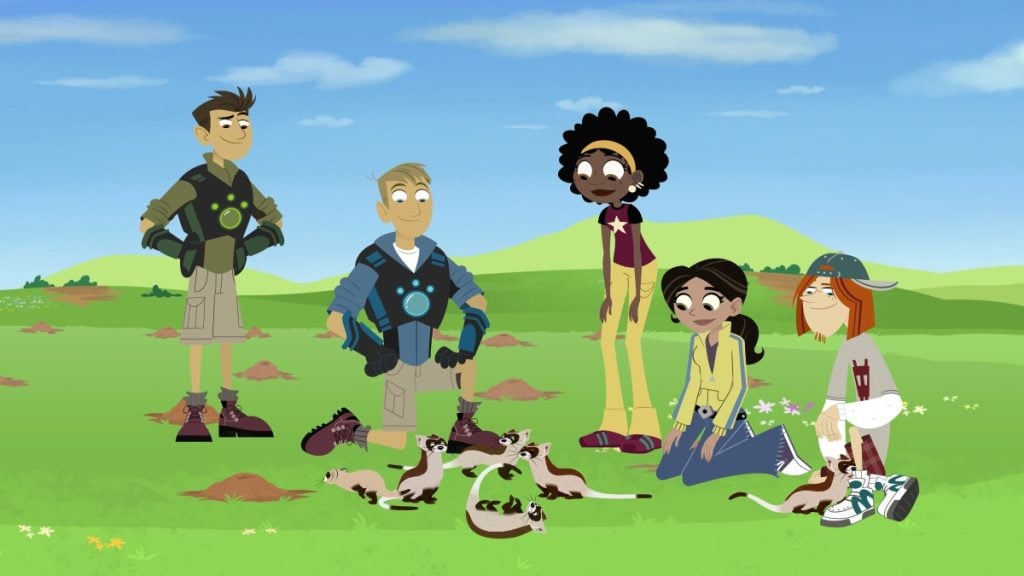
In Wild Kratts, real-life zoologist brothers Chris and Martin Kratt travel the globe in animated form to study rare animals in their natural habitats.
The Krats use their fantastical “Creature Power Suits” to transform into the animals they study, gaining firsthand insight into their biological abilities and lifestyles. The Kratts face off against the villainous Zach Varmitech, who looks to use animals of his own selfish gain, showing kids that conservation isn’t just necessary, but heroic!
What ‘Wild Kratts’ Teaches Kids: First and foremost, Wild Kratts teaches kids detailed facts about animal anatomy and survival strategies. “The Great Froggy Flashback” episode, for example, explores the life cycle of a bullfrog. The Kratts also emphasize the importance of protecting endangered species and their environments, from local animals to saving rhinos, to teach the dangers of poaching. Even though the brothers use their Creature Power Suits to observe wildlife, they teach kids to do so respectfully and to use the data they collect to solve problems.
Recommended Ages: 6–10
Daniel Tiger’s Neighborhood (2012)
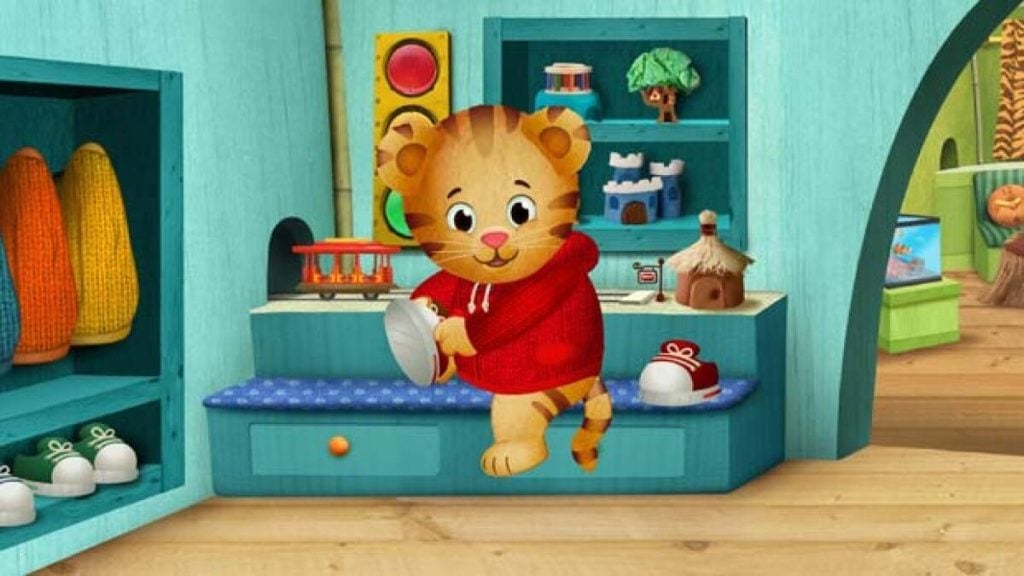
Daniel Tiger’s Neighborhood is a soft, gentle animated spin-off of Mister Rogers’ Neighborhood starring 4-year-old Daniel Tiger and his friends. The show follows Daniel as he and his pals Katerina Kittycat, Miss Elaina, O the Owl, Prince Wednesday, and Jodi Platypus go about their daily lives, encountering questions, problems, and social-emotional challenges faced by real preschoolers. Every episode features a “strategy song” that provides a practical tool for children and parents. Daniel and his friends often break the fourth wall and ask the viewers questions about what’s happening in the episodes.
What ‘Daniel Tiger’s Neighborhood’ Teaches Kids: Daniel Tiger’s Neighborhood teaches young kids how to manage their big feelings. Throughout the show, Daniel learns to manage emotions such as anger, jealousy, and sadness. He works through these with strategies and simple phrases for children, such as “When you feel so mad that you want to roar, take a deep breath and count to four.” The show helps preschoolers understand the importance of respecting others’ feelings, as when Daniel learns to be quiet while his baby sister, Margaret, is sleeping.
Preschoolers can easily relate to Daniel and his friends as they navigate new experiences and routines.
Recommended Ages: 2–5
Peg + Cat (2013)
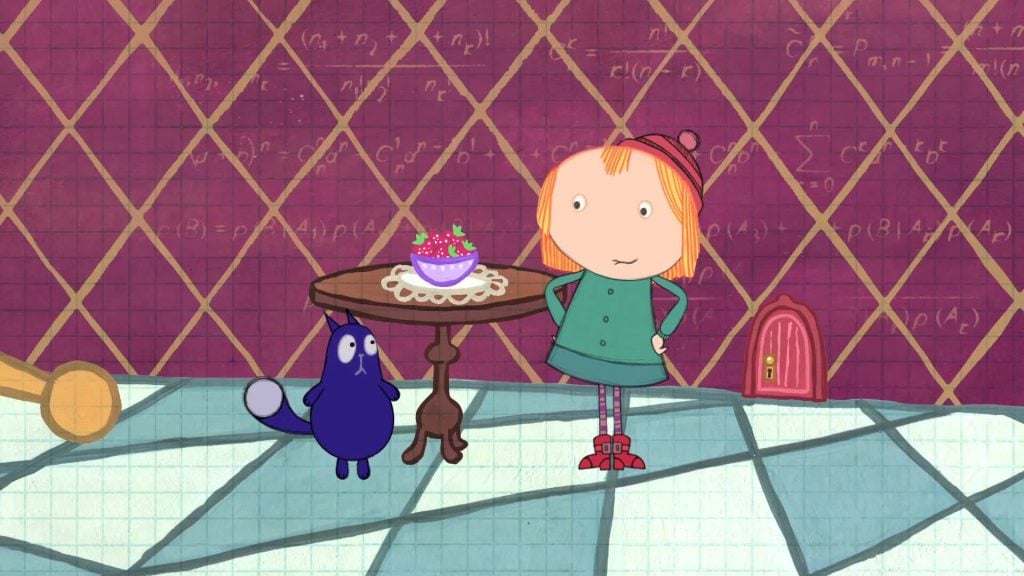
The stars of Peg + Cat are not surprisingly a spirited girl named Peg and her sidekick Cat. Together, they encounter “REALLY BIG PROBLEMS” in their daily lives that require math to solve. In a typical episode, Peg explains a problem or situation directly to the camera and viewers. She and Cat then work out the calculations to determine the solution. In keeping with the math theme, the animation is presented as if it were drawn on graph paper, giving the show a very unique look. Peg + Cat also uses catchy musical numbers and humor to make math approachable and fun.
What ‘Peg + Cat’ Teaches Kids: As a preschool show, Peg + Cat teaches basic math concepts, but it does it very well. The show touches on geometry, counting, and simple equations, giving it an easy-to-understand tone and flow. In the episode “The Pirate Problem,” Peg + Cat simply have to sort treasure into equal groups of two, making counting and grouping simple and fun. The show also uses math to show kids how not to get overwhelmed by a problem. Peg often counts down from five to one to “de-freak” herself.
Recommended Ages: 3–5
Odd Squad (2014)
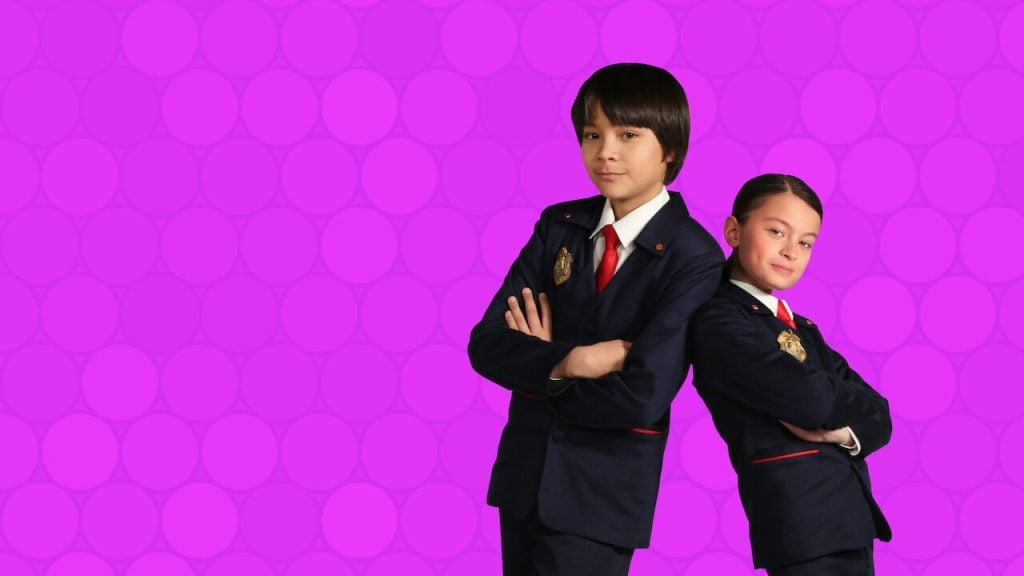
The Odd Squad is a live-action series that follows kid agents who solve “odd” occurrences using high-tech gadgets and math. The cast is large and individual episodes usually feature one or two of them at a time, but the “main” kids, Agents Olive, Otto, Olympia, and Otis, work for “The Big O” and use math to keep their city normal. Often, the Agents can’t immediately solve the problem and head to the “Mathroom”, a sentient space that helpsthem through large paper fortune tellers who display information to help the agents see connections and better solve their case. The show has a deadpan, mockumentary style that blends science fiction with comedy.
What ‘Odd Squad’ Teaches Kids: The short answer to this is Math, Math, and more Math. Odd Squad covers multiplication, division, data analysis, and algebraic thinking to track down suspects and solve the case. The Agents apply logic and collect data for analysis to identify the cause of unusual phenomena. For example, in one episode, the agents are working in a room where everything is doubled, communicating multiplication concepts using “times two.” Odd Squad also teaches kids that different skills (scientific vs. fieldwork) are necessary for success and reinforces that listening and co-operation are key to solving cases.
Recommended Ages: 5–8
Nature Cat (2015)
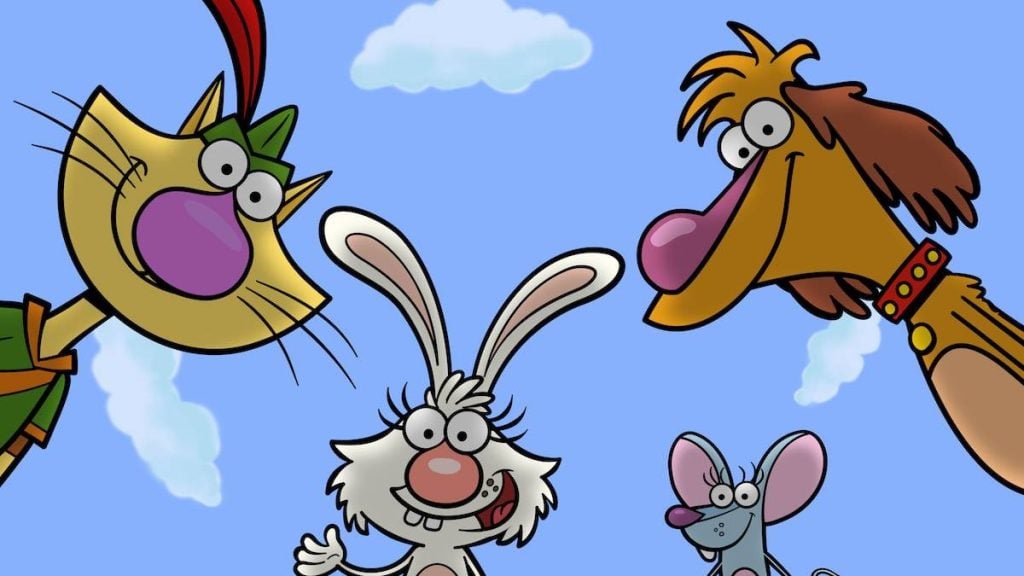
Fred is a lazy, lazy house cat who dreams of being an explorer. So, when his owners leave, he becomes “Nature Cat” and uses this alter-ego to explore the world around him along with his friends, Hal the Dog, Daisy the Bunny, and Squeaks the Mouse. Throughout the series, the crew goes on backyard adventures, encouraging children to similarly engage with and develop an understanding of nature, right where they live. The show features voice performances by SNL alumni such as Bobby Moynihan, Kate McKinnon, and Kenan Thompson, and focuses on “backyard conservation.”
What ‘Nature Cat ‘ Teaches Kids: Nature Cat teaches kids that they can learn about and enjoy nature right where they are. Episodes like “The Great Grasshopper Race” teach about insect behavior in the backyard, encouraging kids to explore their immediate surroundings. The show also explores sustainability, offering practical lessons in composting, recycling, and water conservation. Nature Cat also models resiliency for kids. In one episode, Nature Cat must overcome his fear of water to help save a stream, showing kids that it’s all right to try again after a “nature fail.”
Recommended Ages: 3–8
Ready Jet Go! (2016)
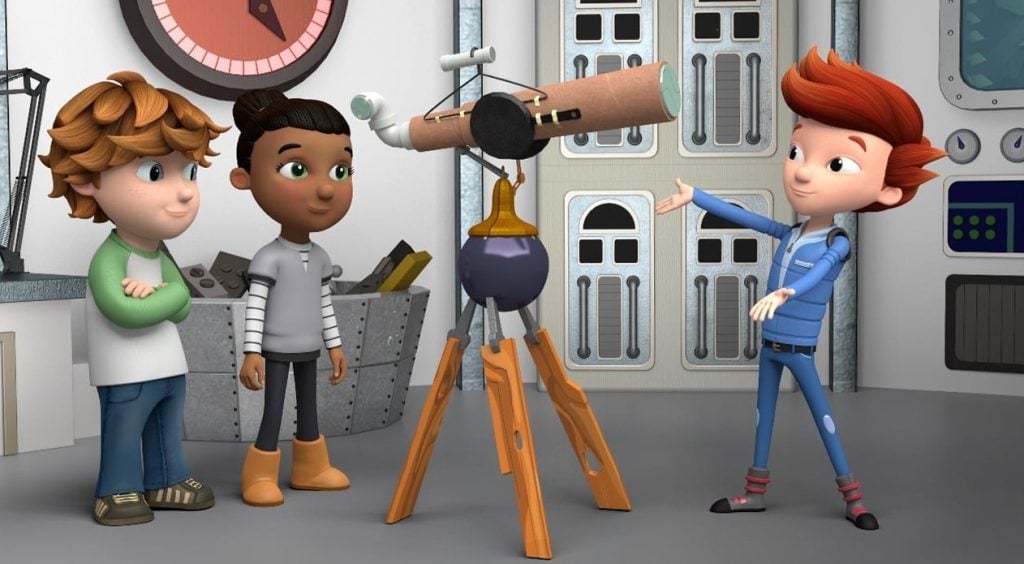
Ready Jet Go! stars a young alien named Jet Propulsion and his family, humanoid aliens from the planet Bortron 7. Jet and his family move to Earth, where they study human behaviour and environments for an intergalactic travel guide. Jet befriends kids Sydney, Mindy, and Sean and takes them on adventures in his parents’ car, which doubles as a flying saucer. ar turns into a flying saucer, which they frequently use to take the older children into space. Jet tries to keep his alien identity a secret, but his next-door neighbour, Mitchell, tries to uncover the truth.
At the end of each episode, scientist Amy Mainzer (also called Astronomer Amy, aka real-life scientist Amy Mainzer) hosts educational segments to go over some of the science of the episode.
What ‘Ready Jet Go!’ Teaches Kids: Ready Jet Go! introduces kids to basic astronomy and space science. In the episode “Mindy Turns 5,” Jet and friends take a trip to the moon to see Earth from a new perspective and learn about the planets, stars, and moon phases. Episodes often emphasize the scientific method and the importance of asking questions and testing hypotheses. The show uses real-life scenarios, such as testing rover wheels and learning how gravity affects everything from a soccer ball to a planet. Ready Jet Go! presents space travel and planetary bodies as beautiful and fragile, fostering kids’ interest in learning all they can about space.
Recommended Ages: 3–8
Pinkalicious & Peterrific (2018)
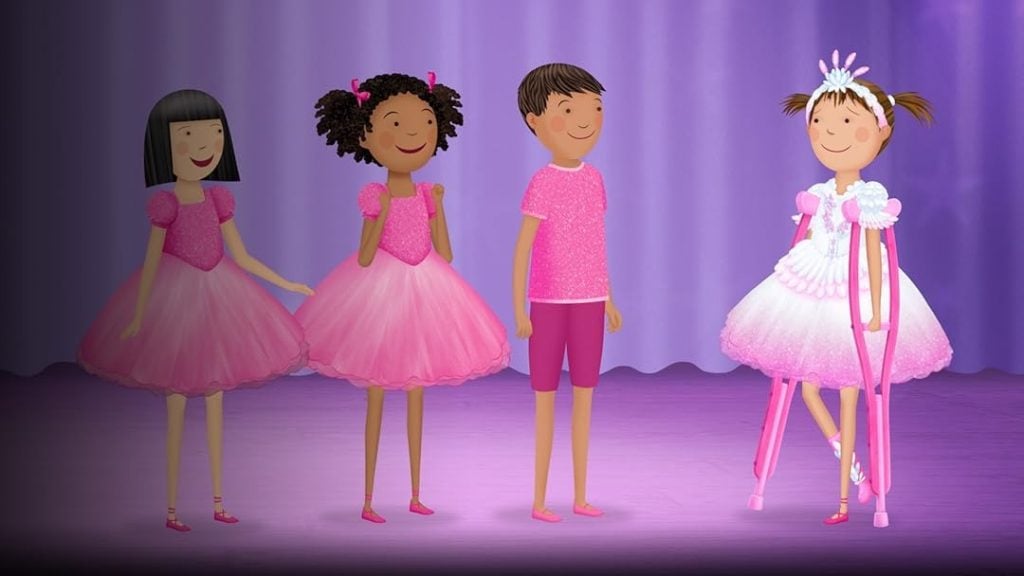
Based on the Pinkalicious book series by Victoria and Elizabeth Kann, Pinkalicious & Peterrific follows Pinkalicious and her brother Peter in the whimsical town of Pinkville. The siblings work through everyday situations with an artful eye and a nod to “STEAM” principles, adding Art to Science, Tech, Engineering, and Math. Stories often involve solving a typical neighborhood problem through music, dance, or visual arts. Each episode features two 11-minute stories, interstitial live-action segments, and an original song to reinforce the episode’s themes.
What ‘Pinkalicious & Peterrific’ Teaches Kids: By focusing on art, the show shows that art is fun and can also be a tool for understanding. In the episode “Fairy House,” the siblings must build structures using natural found objects. This encourages kids to use their imagination and explore the world around them. The show also teaches kids how art can be used to solve practical problems and encourages creative thinking to develop solutions. Pinkalicious & Peterrific teaches kids that a “mistake” in a painting can actually be a “happy accident” and that creativity takes practice and patience.
Recommended Ages: 3–7
Let’s Go Luna! (2018)
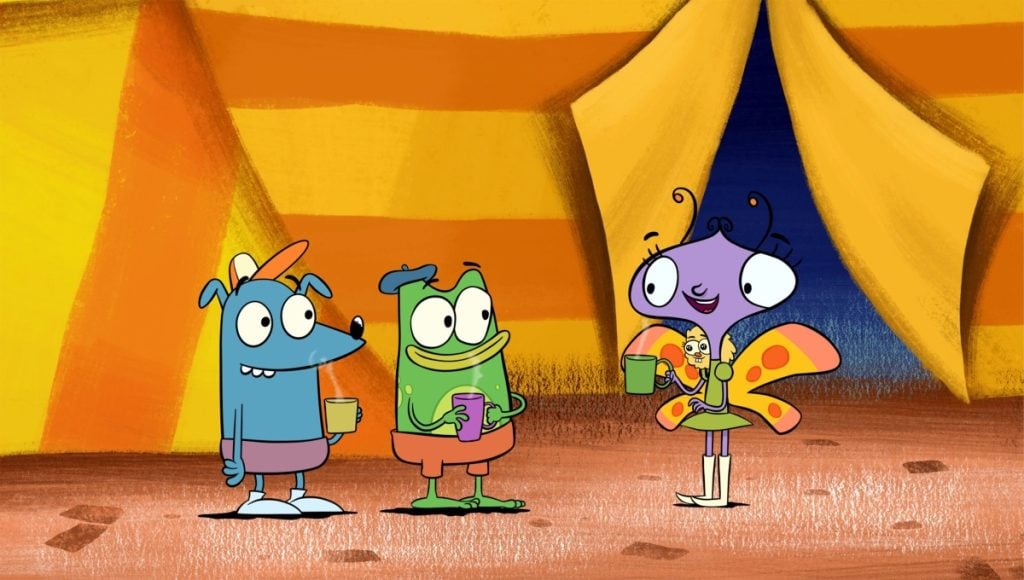
Let’s Go Luna! focuses on three anthropomorphic animal kids. Leo is a wombat, Andy is a frog, and Carmen is a butterfly. The friends travel around the world with their parents’ circus troupe “Circo Fabuloso”. Along their stops, Luna, the Moon, comes down to Earth to teach them about local languages, music, food, and other customs. In each episode, they visit a new city like London, Cairo, or Tokyo, and learn about the people and traditions of each location.
What ‘Let’s Go Luna!’ Teaches Kids: Let’s Go Luna! teaches kids the important concepts of diversity and acceptance of others’ cultures. The children and characters learn about world landmarks and customs, such as how people in Cairo use the Nile River for daily life. The show fosters a sense of global citizenship and respect by teaching how different cultures celebrate holidays such as Diwali and Carnival. The episode “Bohemian Rhapsody” introduces kids to the music and history of Prague while illustrating the differences and similarities between world communities
Recommended Ages: 4–7
Molly of Denali (2019)
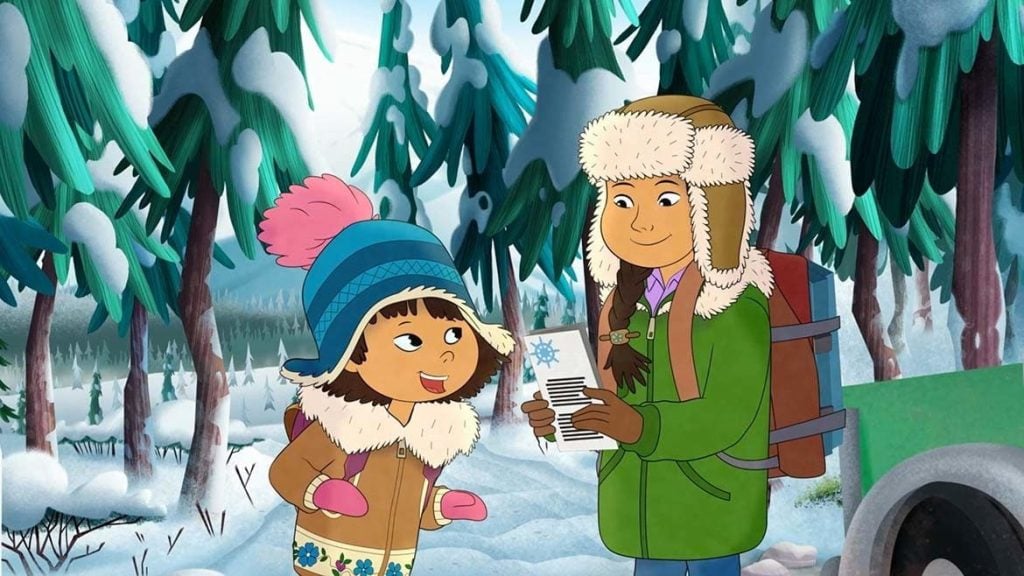
Molly of Denali stars Molly Mabray, a resourceful 10-year-old Alaska Native girl who works at her parents’ trading post. Molly learns about her Native heritage with her friends, Tooey Ookami and Trini Mumford, and her Malamute Suki. The show features Alaska Native values and offers an authentic look at modern Indigenous life, with over 80 Indigenous creators contributing to the stories. The series also maintains a focus on teaching children literacy skills through the informational texts and communications that Molly and her friends encounter.
What “Molly of Denali’ Teaches Kids: The lessons learned from Molly of Denali are both educational and social. The show underscores the importance of literacy by exploring Indigenous culture. For example, in “Grandpa’s Drum,” children learn the importance of honoring ancestors and traditional songs, and develop respect for elders, nature, and community. The show also teaches kids how to read maps, manuals, and books to solve problems. For example, Molly uses a field guide to identify a rare bird and help a scientist. The show models the importance of a clear understanding of literacy and of being an active, helpful member of a community.
Recommended Ages: 4–8
Xavier Riddle and the Secret Museum (2019)
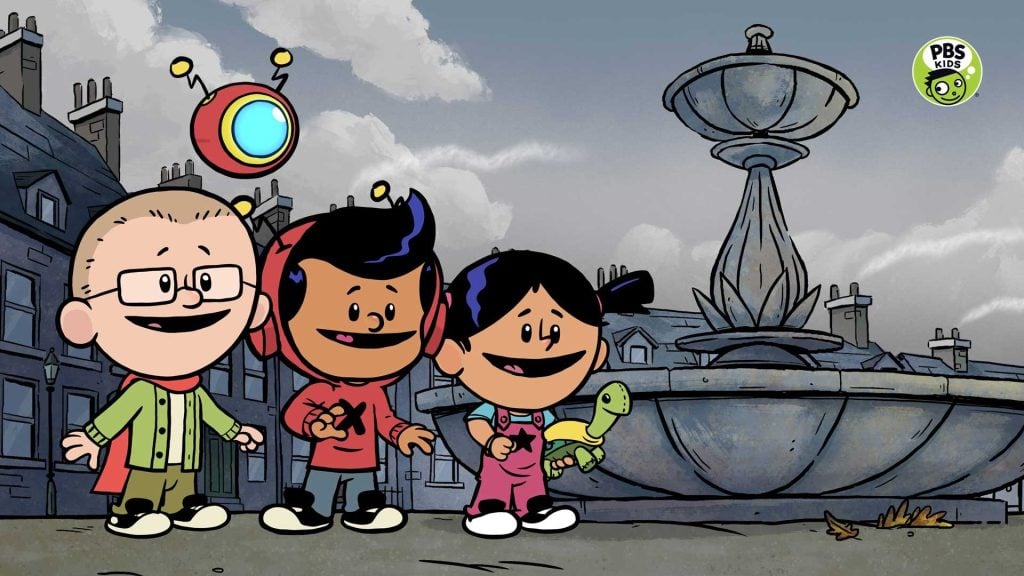
Xavier Riddle and the Secret Museum is based on the excellent book series “I Am…” In the animated show, Xavier, his sister Yadina, and their friend Brad travel through time using a “Secret Museum” to meet historical heroes when they were kids. Through them, Xavier and friends learn about their time period, cultures, and historical events. The kids meet historical figures like Rosa Parks, Leonardo da Vinci, and Amelia Earhart, and learn about their “traits” and views. They then return to their own time with information and strategies that help the kids solve problems in the present.
What Xavier Riddle and the Secret Museum Teaches Kids: Xavier Riddle and the Secret Museum opens kids’ eyes to history by showing them often-legendary figures as relatable kids with kid problems. The show applies lessons from the past to modern dilemmas, such as learning from Marie Curie that curiosity and asking “why” are the first steps to discovery, and from George Washington Carver that scientific curiosity is essential. The episode “I am Rosa Parks” teaches children about quiet courage and standing up for what is right, emphasizing traits such as courage, curiosity, and perseverance. Xavier Riddle and the Secret Museum sparks kids’ interest in historical figures and opens doors to learning from history.
Recommended Ages: 4–7

