

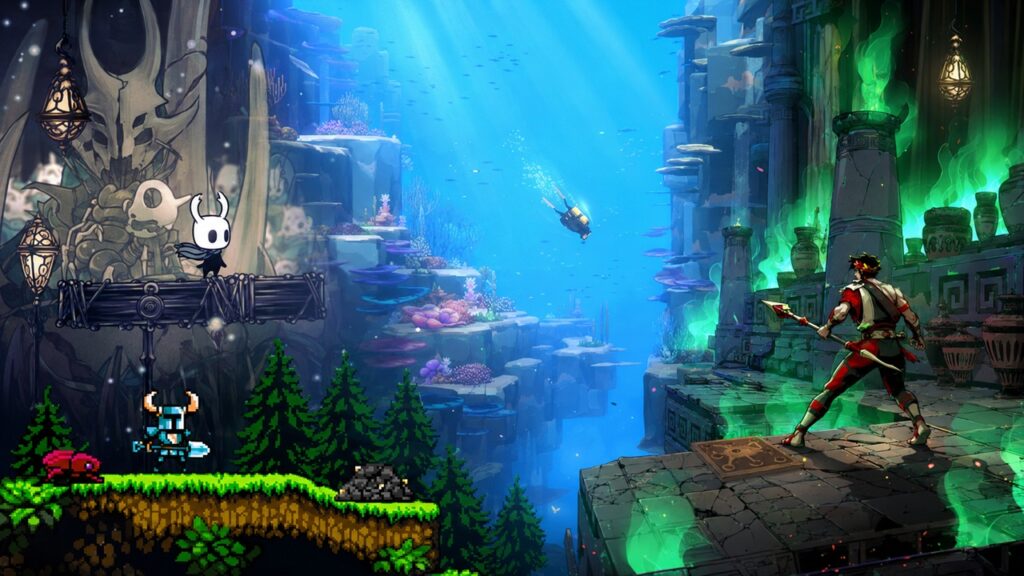
The Steam Deck brings an enormous PC game library into a handheld format, giving kids and teens far more options to choose from than the usual selection of portable games. Every title on this list has earned an Overwhelmingly Positive overall rating on Steam, the platform’s highest user-review category. In other words, an exceptionally large share of the people who bought and reviewed these amazing PC games would recommend them to others.
All 20 games found on this list are also Steam Deck Verified. Valve awards this green checkmark to games that work well on the handheld right out of the box, with suitable controller support, readable text, appropriate display settings, and no compatibility problems that interfere with play. Parents shouldn’t need to download community control layouts or spend time troubleshooting before their kids can get started.
Together, those two qualifications narrow Steam’s massive catalog to games that players genuinely love and the Deck can run without unnecessary fuss. The recommendations ahead include titles across a wide variety of genres, from puzzle games to farming sims and everything in between. Each game offers something that makes it especially comfortable to play away from a desk, whether that’s a compact session structure, simple controls, modest storage needs, or an experience that feels naturally suited to a handheld device.
Portal 2 Turns The Steam Deck Into A Portable Puzzle Lab
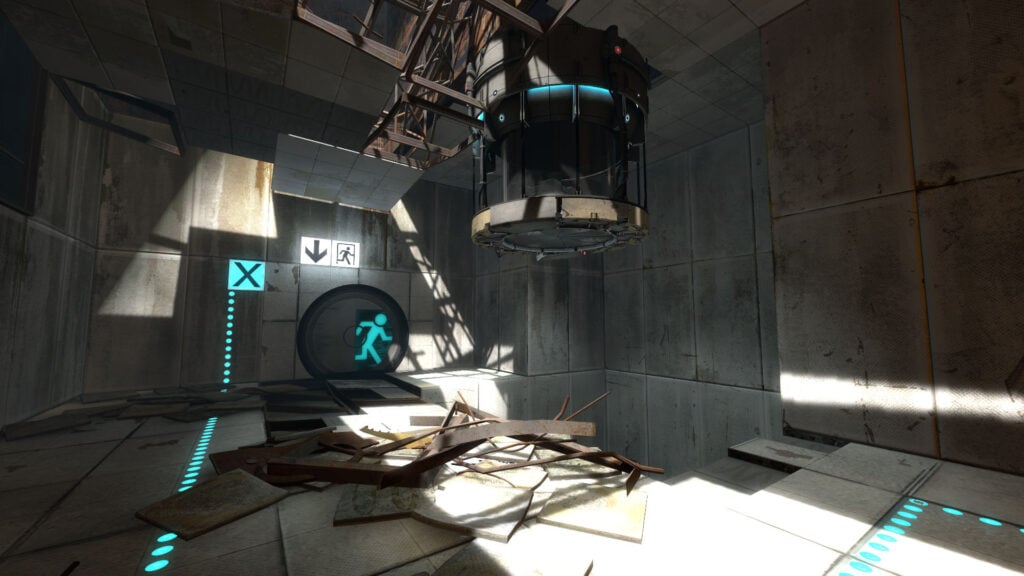
Portal 2 returns players to the enormous Aperture Science facility, where Chell must escape another series of experiments overseen by the dangerously sarcastic GLaDOS. The portal gun connects two surfaces, allowing players to redirect lasers, launch themselves across gaps, and manipulate the environment in ways that initially seem impossible. The entire game can be played solo, but the big selling point here is the separate two-player co-op campaign featuring Atlas and P-body.
Aperture’s test chambers work especially well as self-contained handheld sessions. Portal 2 also has modest hardware requirements and a native Linux version, allowing the Steam Deck to run this PC classic with no hiccups. Twin-stick controls suit the portal gun, while the right trackpad offers a more mouse-like option for aiming. Shared-screen co-op lets players dock the Deck, connect another controller, and tackle the cooperative campaign on a larger display.
Why Kids Will Love Portal 2: Few games make solving a difficult puzzle feel this satisfying. Older kids and teens can expect a steady supply of “aha!” moments, memorable characters, and cooperative challenges that can only be overcome through teamwork and communication.
ESRB Rating: E10+ for Everyone 10+
Content Descriptors: Fantasy Violence, Mild Language
Players: Single-player; 2-player local split-screen or online co-op
Stardew Valley Makes Farm Life Easy To Take Anywhere
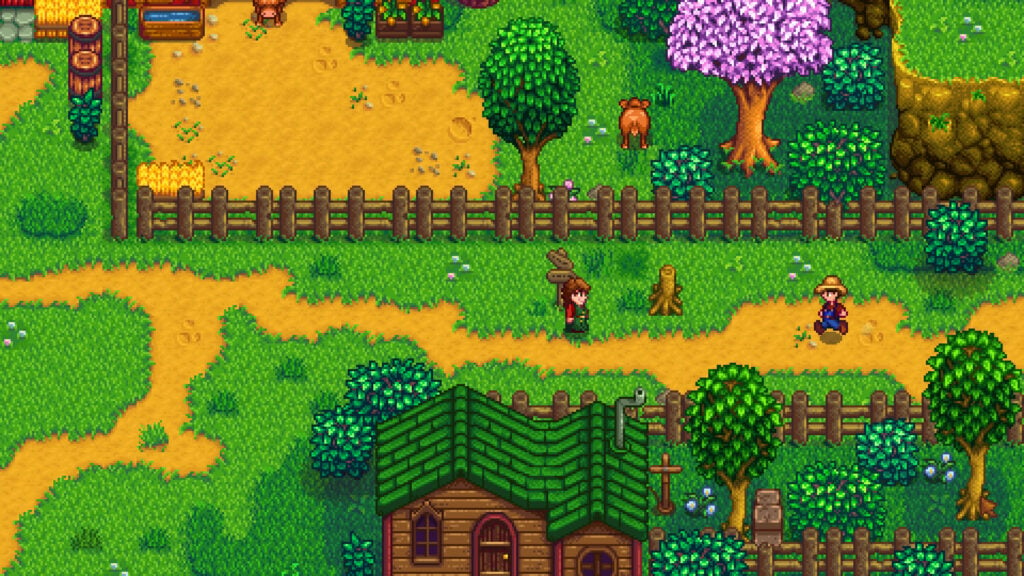
Stardew Valley starts players off with just a plot of land and enough freedom to decide what sort of life to build there. Players can restore the farm, get to know the residents of Pelican Town, investigate the nearby mines, and engage in a variety of other interesting activities. Progress unfolds across seasons, giving young players room to develop their own routines. Some dialogue and locations reference alcohol, smoking, gambling, and personal struggles, although these subjects are handled fairly mildly.
Each in-game day creates a natural portable session, making Stardew Valley easy to play for a few minutes without losing sight of the next goal. SteamOS suspend can hold a solo game in place when a player needs to stop before bedtime, while Steam Cloud allows players to continue where they left off on another PC. The Steam version requires only 500 MB of storage and its established gamepad controls feel at home on the Deck without requiring constant use of the touchscreen or trackpads.
Why Kids Will Love Stardew Valley: Every farm gradually becomes a record of the player’s choices. Kids can watch empty fields turn into a busy home, form friendships with their favorite villagers, and share the work with family members or friends in co-op.
ESRB Rating: E10+ for Everyone 10+
Content Descriptors: Fantasy Violence, Mild Blood, Mild Language, Simulated Gambling, Use of Alcohol and Tobacco
Players: Single-player; local split-screen co-op; online co-op for up to 8 players on PC
Terraria Condenses A Massive Sandbox Into A Small Package
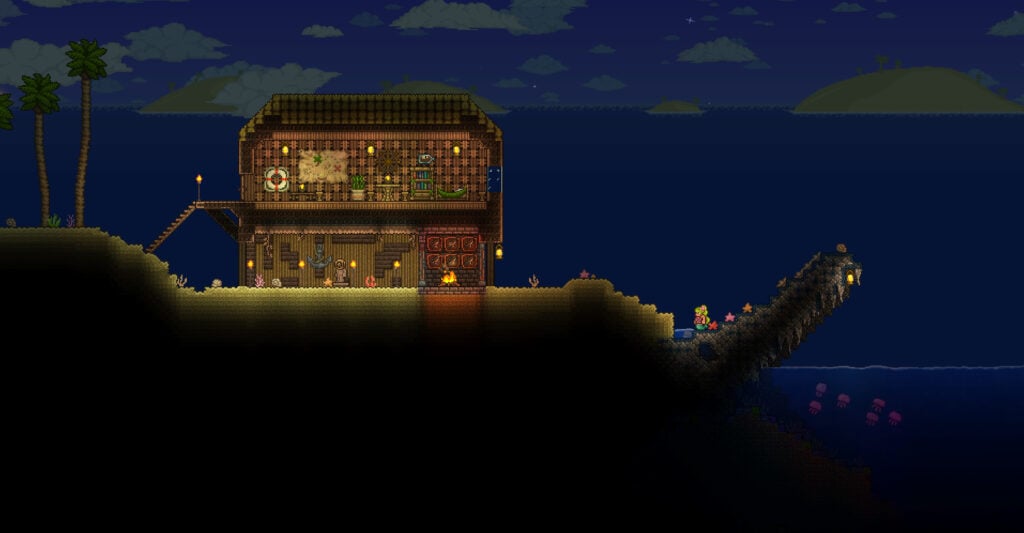
Terraria is an action-adventure game that offers an enormous amount of possibility. Players start the game with only a few basic tools at their disposal but will quickly find themselves building settlements, acquiring powerful equipment, and battling dangerous foes. Despite their obvious visual similarities, Terraria plays quite differently than Minecraft, with combat playing a much more prominent role here. Pixelated blood and gore, alcohol references, and suggestive jokes all contribute to the game’s Teen rating.
Terraria only takes up around 200 MB and has extremely modest system requirements, leaving plenty of Steam Deck storage available for larger games. The 2D movement and combat map comfortably to the built-in controls, while players who spend more time building or organizing items can assign a trackpad to provide finer cursor movement. Steam Cloud and online co-op allow teens to move their characters and worlds between the Deck and another computer or continue exploring alongside friends.
Why Teens Will Love Terraria: There’s always something new to discover in this game. Pretty much any routine mining trip may lead to players uncovering a new biome, valuable material, hidden structure, or enormous monster. Meanwhile, the flexible building system gives creative players a reason to reshape the world between battles.
ESRB Rating: T for Teen
Content Descriptors: Alcohol Reference, Blood and Gore, Cartoon Violence, Mild Suggestive Themes
Players: Single-player; online competitive multiplayer and co-op
Two Point Museum Lets Kids Manage Exhibits From Anywhere
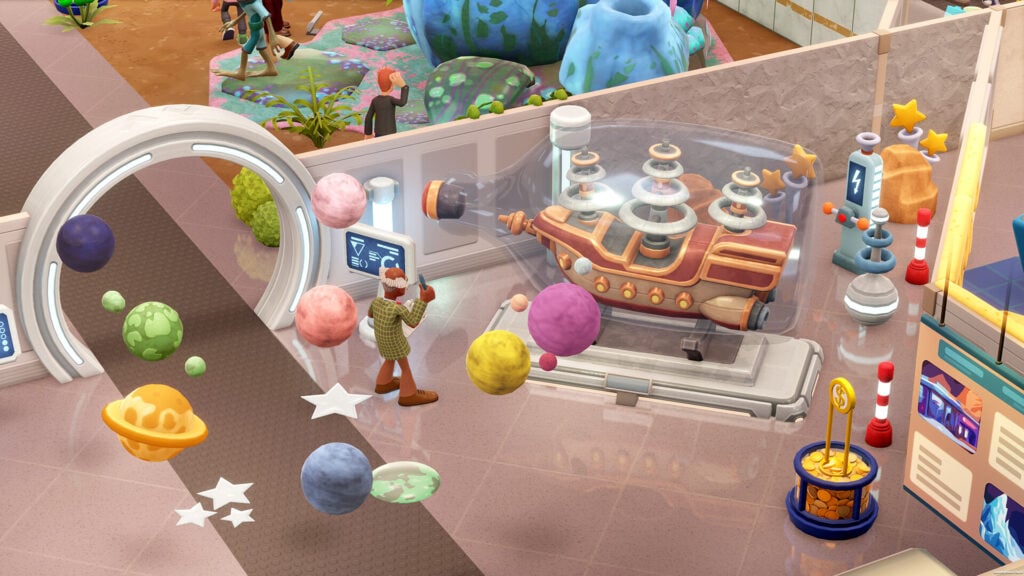
Two Point Museum puts players in charge of museums where ancient fossils, aquatic creatures, and supernatural curiosities all require different forms of care. Experts must be sent on expeditions to retrieve new discoveries, while the museum itself needs suitable galleries, trained employees, effective security, and enough amenities to keep visitors happy. The management systems become increasingly involved as the collection expands, yet the absurd exhibits and slapstick behavior keep the experience lighthearted.
The game’s interface has received some welcome handheld attention. Two Point Museum’s 2.0 update added a very large UI option that makes menus and management information easier to read on the Steam Deck’s smaller display. Players can also pause whenever they need time to inspect a problem, so players don’t have to worry about needing to use rapid inputs to manage even the busiest museums.
Why Kids Will Love Two Point Museum: Building the collection provides a visible reward for every successful decision. Kids interested in dinosaurs, science, history, or unusual creatures can create personalized exhibits and let visitors admire their discoveries.
ESRB Rating: E for Everyone
Content Descriptors: Crude Humor, Mild Language, In-Game Purchases
Players: Single-player only
A Short Hike Feels Almost Made For Handheld Play
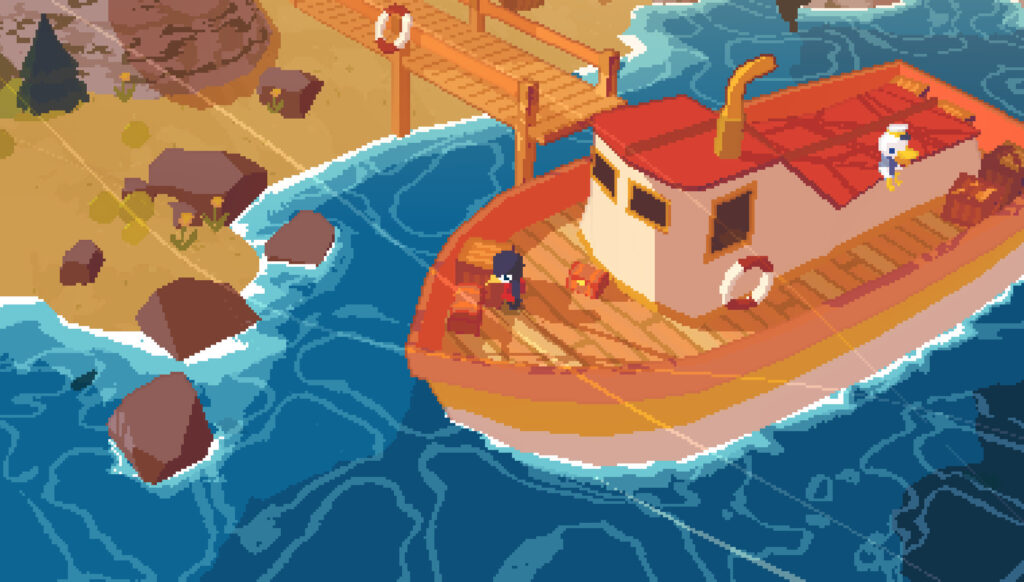
Claire visits Hawk Peak Provincial Park expecting an important phone call, just to discover that reception is only available near the mountaintop. Reaching the summit involves collecting Golden Feathers that increase her climbing and gliding stamina, enabling players to reach the summit faster. Alternatively, players can engage in all sorts of fun side activities and mini quests by exploring off the beaten path. There’s no health meter or conventional game over, giving children plenty of freedom to wander around and experiment with Claire’s movement.
Few games fit the Deck’s portable nature as naturally as A Short Hike. The entire installation takes up only around 400 MB while the simple controller inputs handle running, climbing, and gliding without filling the screen with complicated prompts. The compact island supports both brief outings and longer attempts to reach the summit, as suspend and resume lets players stop wherever their latest detour has taken them.
Why Kids Will Love A Short Hike: Gaining more feathers gradually changes how Claire moves through the park. Eventually, cliffs that once seemed unreachable become launching points, and a simple hike soon turns into the freedom to glide across nearly the entire island.
ESRB Rating: E for Everyone
Content Descriptors: No Descriptors
Players: Single-player only
Tinykin Brings Ant-Sized Platforming To The Steam Deck
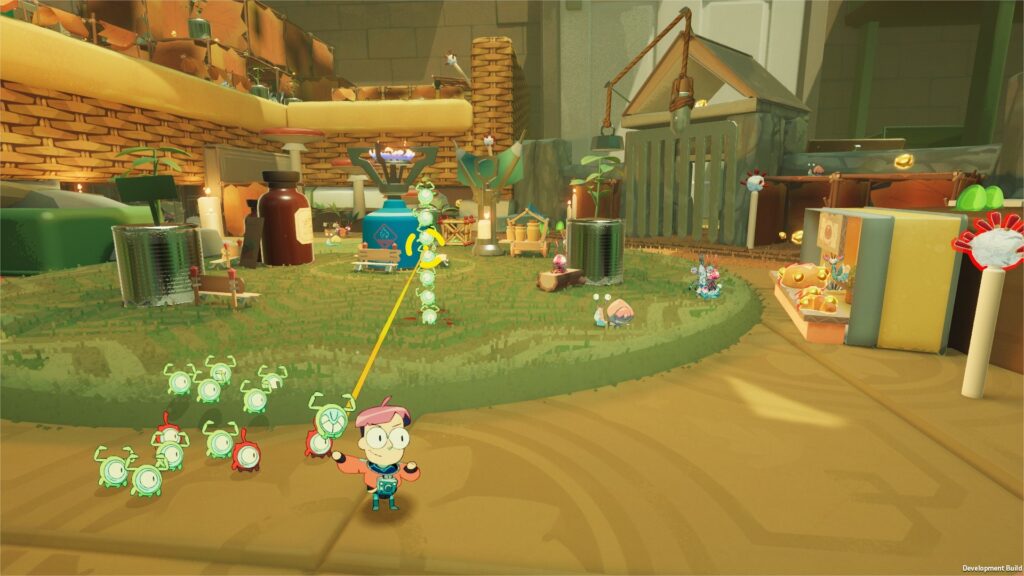
Tinykin follows Milo, a spacefaring researcher who reaches Earth only to find himself the size of an insect. Humans have mysteriously disappeared, and the oversized house around him appears to be frozen in 1991. Milo recruits groups of colorful creatures known as tinykin, each with an ability that helps him carry objects, form ladders, trigger machinery, or clear obstacles. There’s no conventional combat, leaving players free to concentrate on platforming, environmental puzzles, and the many collectibles hidden around each room.
The game’s movement feels particularly natural on a handheld. Milo can surf along surfaces on a soap bar, glide inside a bubble, and quickly direct groups of tinykin with the built-in controls. Each room functions as a distinct area that can be explored in manageable stretches, while the bright tinykin remain easy to identify on the smaller display. Tinykin requires only around 2 GB of storage, making it easy to keep installed alongside much larger Steam Deck games.
Why Kids Will Love Tinykin: Exploring an ordinary house from Milo’s perspective turns furniture, countertops, and household clutter into enormous playgrounds. Finding the right tinykin for each problem gives kids plenty of satisfying discoveries without interrupting the experience with punishing battles.
ESRB Rating: E10+ for Everyone 10+
Content Descriptors: Comic Mischief, Fantasy Violence, Mild Language
Players: Single-player only
Wobbly Life Packs A Goofy Open World Into A Handheld
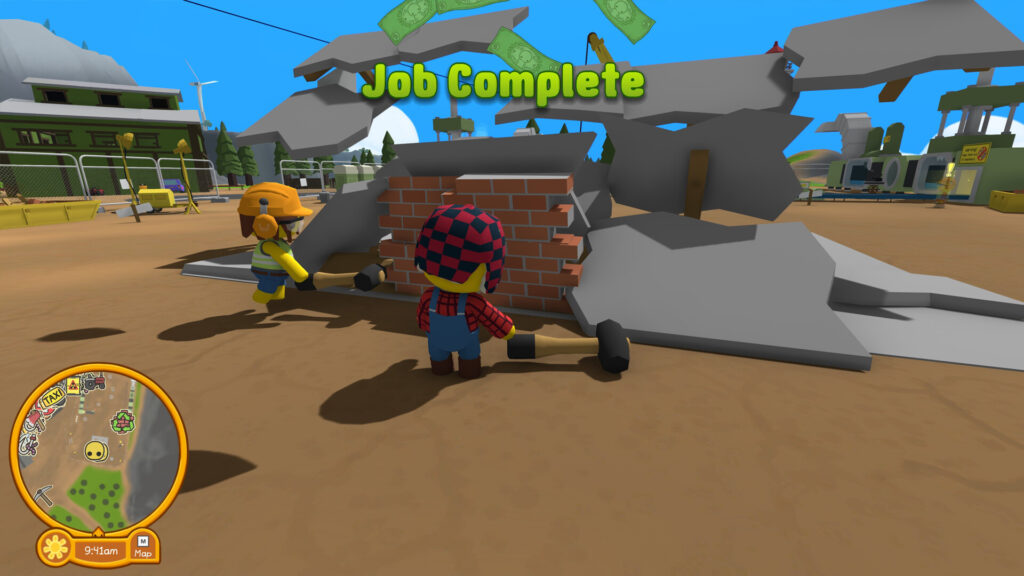
Wobbly Life begins with Grandma ordering the player’s floppy yellow character to leave home and find a job. Earning money opens the door to houses, pets, clothing, and a huge assortment of vehicles, but players are also welcome to ignore responsibility and explore Wobbly Island at their own pace. Jobs range from delivering pizzas to fighting fires, while story missions, minigames, hidden treasures, and physics-based accidents provide plenty of reasons to wander away from the main objective.
Many of those activities can be completed in short sessions, which makes Wobbly Life an easy game to pick up when kids have a little free time. Vehicles and physical interactions are built around gamepad controls, so the experience translates comfortably to the Deck without relying on touchscreen inputs. Both solo and online play work well in handheld form. The local split-screen option supports up to four players, although players will get a clearer view of what’s happening on the screen by docking the Deck and connecting controllers to a television or monitor.
Why Kids Will Love Wobbly Life: The island treats nearly every mishap as part of the fun. Kids can experiment with strange vehicles, attempt ridiculous jobs, customize their Wobbly character, and team up with friends without being pushed toward one rigid objective.
ESRB Rating: E for Everyone
Content Descriptors: Crude Humor, Mild Fantasy Violence
Players: Single-player; local split-screen and online co-op for up to 4 players
Bugsnax Makes Every Creature Hunt A Portable Puzzle
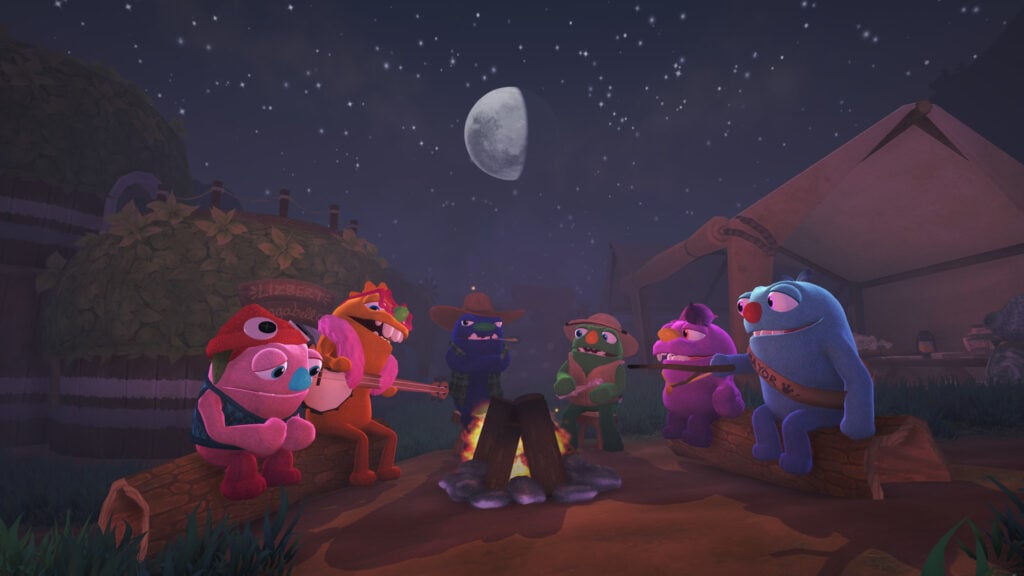
Bugsnax sends an aspiring journalist to Snaktooth Island in search of explorer Elizabert Megafig. Elizabert is missing when the journalist arrives, leaving behind a scattered community and an island populated by creatures that are part insect and part snack. Catching them requires more thought than speed. Players study their habits and combine traps, bait, launchers, and other tools to lure each Bugsnak into reach. The game gradually develops into a stranger and occasionally unsettling mystery, giving older kids more to uncover beneath the seemingly cheerful surface.
Individual hunts and character quests provide convenient goals for a handheld session. Bugsnax already supports a gamepad-style control scheme for switching tools, positioning traps, and scanning creatures. Players who want more cursor-like camera movement can simply configure the right trackpad through Steam Input. Most assignments take place within compact sections of the island, so returning after suspending the game is as easy as picking up where you left off.
Why Kids Will Love Bugsnax: Each new species behaves like a small puzzle with its own personality. Discovering how to capture a shy Strabby or an aggressive Bunger makes completing the collection far more entertaining than simply chasing creatures around the island.
ESRB Rating: E10+ for Everyone 10+
Content Descriptors: Animated Blood, Crude Humor, Fantasy Violence, Suggestive Themes
Players: Single-player only
Lil Gator Game Keeps Handheld Exploration Lighthearted
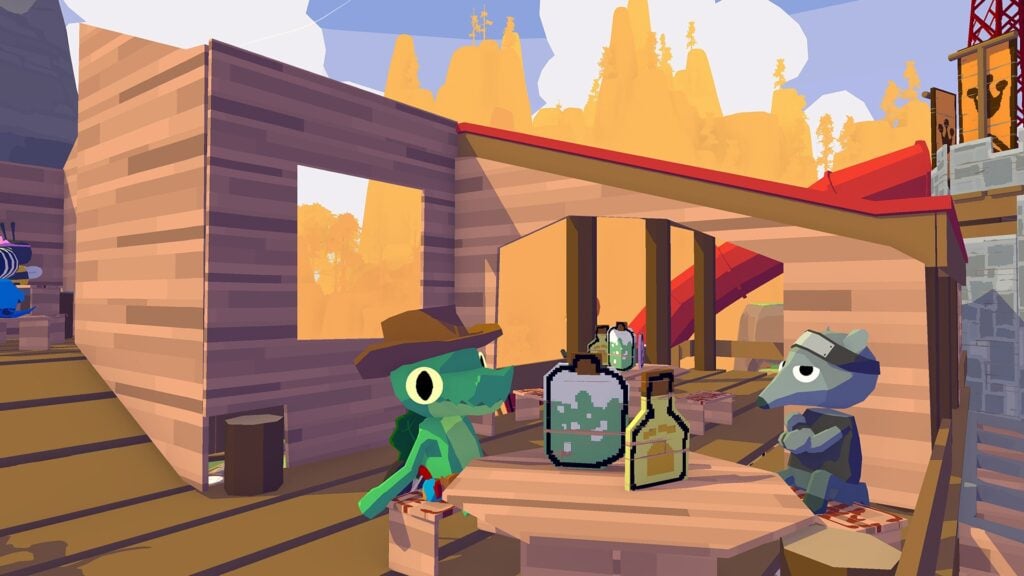
Lil Gator Game centers on a young alligator trying to recreate the imaginative games once shared with an older sister. To build the perfect island playground, Lil Gator makes new friends, completes their requests, and collects crafting materials by knocking apart cardboard enemies. Climbing, swimming, gliding, and sliding make the island enjoyable to cross even when there’s no specific destination in mind. Since the cardboard battles don’t involve a health bar, children can experiment without worrying about losing progress.
At only around 500 MB, Lil Gator Game takes up very little space on the Steam Deck. The simple movement controls and uncluttered presentation perfectly fit the handheld screen, while short quests and collectible hunts create frequent stopping points. The absence of health management also helps when play is interrupted, as kids can suspend the system during an outing and return without finding their character in immediate danger. Even a brief session usually leaves enough time to meet another island resident or uncover a new route across the landscape.
Why Kids Will Love Lil Gator Game: The island feels like an enormous playground created by children for children. New friends gradually gather around Lil Gator’s project, allowing players to see their small acts of kindness turn an empty space into a lively community.
ESRB Rating: E for Everyone
Content Descriptors: No Descriptors
Players: Single-player only
Dorfromantik Builds A Serene Landscape One Tile At A Time
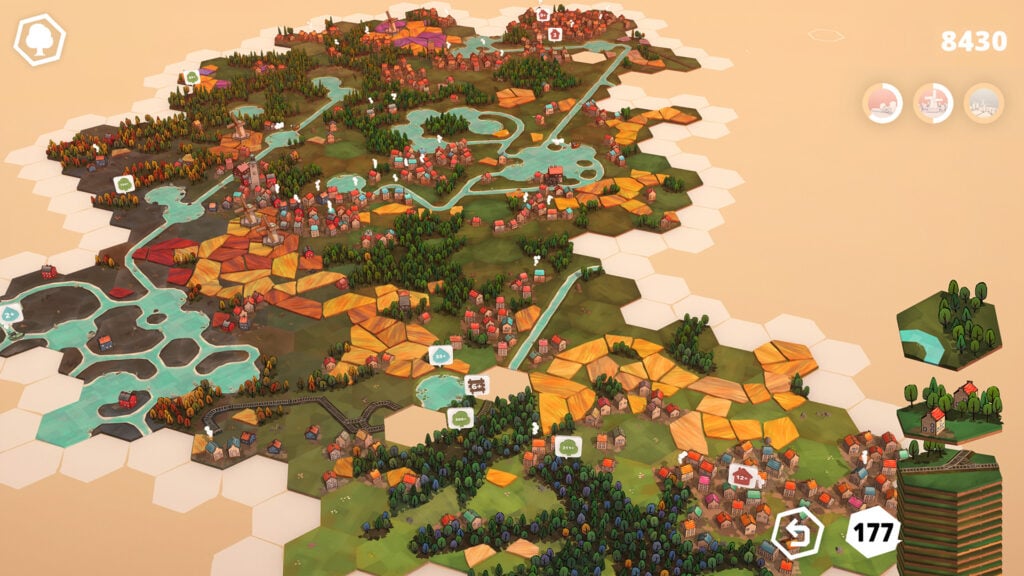
Dorfromantik gives players a stack of hexagonal tiles containing forests, villages, fields, rivers, and railway tracks. Every tile can be rotated before it’s added to the growing landscape, with points awarded for connecting matching features neatly. Some tiles introduce objectives such as extending a railway or building a forest of a certain size. Completing them adds more pieces to the stack, allowing the countryside to spread farther before the supply runs out. The basic rules are easy to grasp, but earning high scores calls for careful planning several moves ahead.
Turn-based play makes Dorfromantik exceptionally forgiving on the Steam Deck because nothing changes while the player considers the next tile. Quick Mode is available for shorter sessions, and Creative Mode removes the limited stack for kids who would rather build freely. Controller inputs handle rotating and placing pieces without requiring rapid movements, while the 650 MB storage requirement leaves a minimal footprint. Players can suspend a landscape after practically any turn and resume it later without losing track of a complicated action sequence.
Why Kids Will Love Dorfromantik: Every round creates a miniature world that belongs entirely to the player. Younger children can enjoy fitting together beautiful scenery, while older kids and teens can chase higher scores by planning elaborate forests, villages, and transportation networks.
ESRB Rating: E for Everyone
Content Descriptors: No Descriptors
Players: Single-player only
Chicory: A Colorful Tale Turns The Trackpad Into A Paintbrush

Chicory: A Colorful Tale takes place inside a coloring-book world that has mysteriously lost all of its color. Players take control of a small dog who inherits a magical paintbrush from Chicory, the celebrated artist responsible for keeping the land vibrant. Painting opens blocked paths, restores plants, and helps solve environmental puzzles, while conversations with local residents gradually reveal a thoughtful story about creativity and self-doubt. A second player can join locally and control another brush, making it possible to decorate the world together.
The Steam Deck’s right trackpad provides a cursor-like way to aim the brush, giving players more precision than they’d typically get from an analog stick. Most objectives unfold within compact areas, so children can finish a puzzle, help a resident, or decorate a location during a short session. Chicory’s bold outlines and mostly uncluttered environments also remain clear on the handheld display. Local co-op is available directly on the Deck, although docking it and connecting another controller gives both artists more room to see their work.
Why Kids Will Love Chicory: A Colorful Tale: Nearly every location becomes a blank canvas. Kids can paint carefully, cover everything in chaotic splashes, or redraw the same area whenever inspiration strikes, and the game frequently finds playful ways to make those artistic choices part of its puzzles.
ESRB Rating: E10+ for Everyone 10+
Content Descriptors: Comic Mischief, Mild Fantasy Violence, Mild Suggestive Themes
Players: Single-player; 2-player local co-op
TOEM: A Photo Adventure Captures Small Wonders On The Go
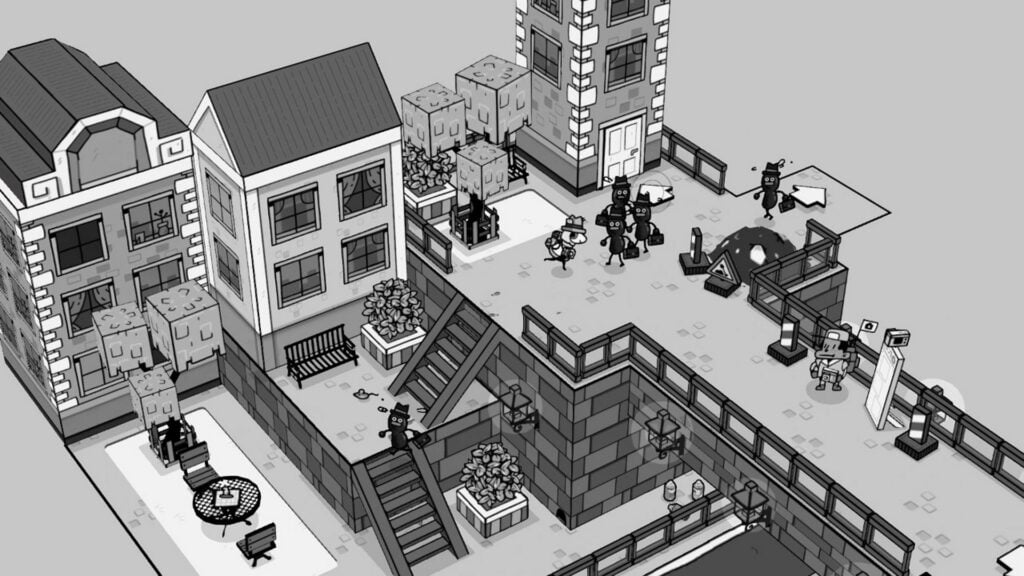
TOEM: A Photo Adventure follows a young photographer traveling through a hand-drawn world in search of a mysterious natural phenomenon. Reaching the destination requires helping people encountered along the way, usually by photographing something they’ve lost, overlooked, or only vaguely described. The camera encourages players to study each location from different angles, uncovering hidden animals and amusing background details that would otherwise be easy to walk past. There’s no combat or time pressure, allowing children to investigate every assignment at their own pace.
Compact locations and self-contained photography requests make TOEM easy to enjoy in short handheld sessions. The high-contrast black-and-white artwork remains unusually readable on the Steam Deck’s display, while the built-in controls handle walking, framing, and taking pictures without complicated inputs. Players can suspend the game between assignments and return later without needing to recall a complicated objective or lengthy sequence of events.
Why Kids Will Love TOEM: A Photo Adventure: The camera turns observation into a game. Kids are rewarded for noticing odd characters, hidden creatures, and visual jokes, while filling the photo album gives every successful snapshot a permanent place in the journey.
ESRB Rating: E for Everyone
Content Descriptors: No Descriptors
Players: Single-player only
Shovel Knight: Treasure Trove Feels At Home On A Handheld
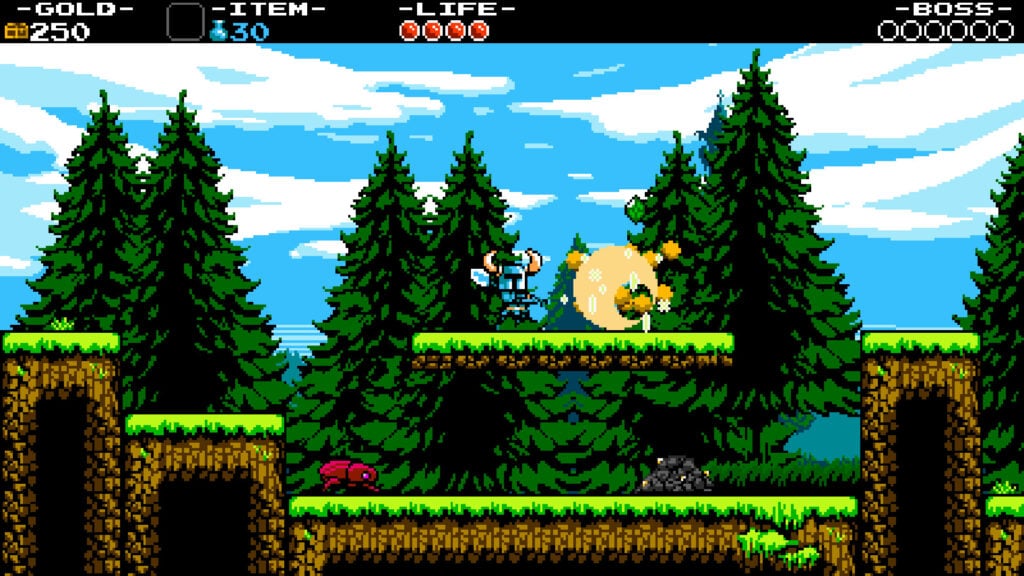
Shovel Knight: Treasure Trove collects several connected platforming campaigns starring different heroes and villains. The original Shovel of Hope follows a blue-armored knight who battles enemies, uncovers treasure, and uses a shovel to bounce across hazards. Later campaigns transform familiar locations with new characters and movement abilities, including Plague Knight’s explosive jumps and Specter Knight’s wall runs. Precise controls and thoughtfully designed stages capture the appeal of classic platformers while offering more responsive movement and forgiving checkpoints than many older games.
The crisp pixel artwork, fixed side-view stages, and directional controls suit the Steam Deck particularly well. Individual levels provide clear objectives and natural stopping points, while the game’s modest hardware requirements keep the experience lightweight. Players can use the built-in directional pad for more traditional movement or choose the analog stick if that feels more comfortable. Docked play opens the door to Shovel of Hope’s local co-op and the separate Showdown mode, which lets several characters compete in arena battles.
Why Kids Will Love Shovel Knight: Treasure Trove: Every campaign introduces a hero who moves and fights in a completely different way. Mastering those abilities makes previously familiar stages feel new, and finding hidden treasure gives adventurous players a reason to inspect every suspicious wall.
ESRB Rating: E for Everyone
Content Descriptors: Mild Fantasy Violence, Use of Alcohol
Players: Single-player; 2-player local co-op in Shovel of Hope; local competitive multiplayer in Shovel Knight Showdown
Cuphead Makes Quick Boss Attempts Hard To Put Down
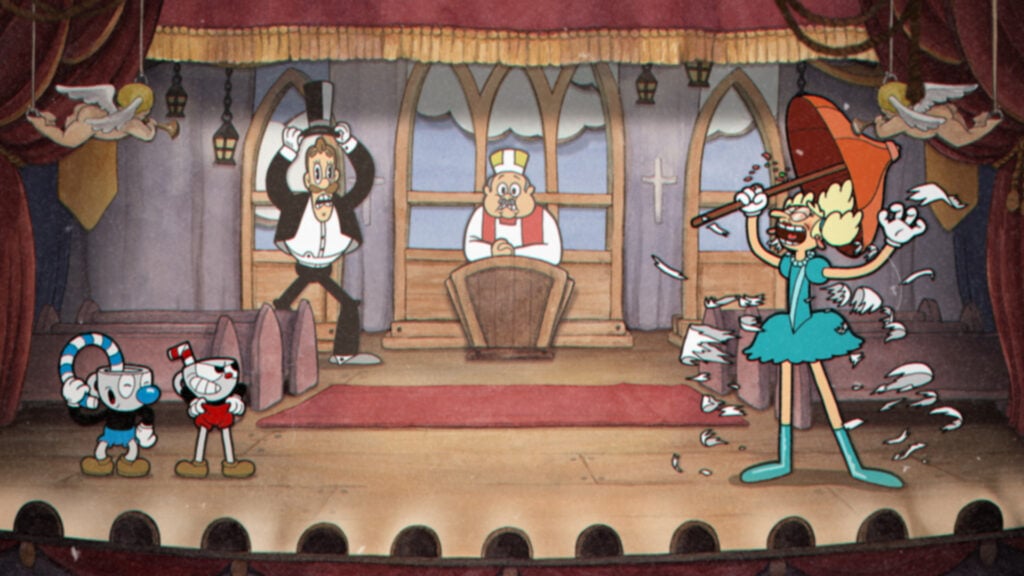
Cuphead follows two brothers who lose a reckless wager against the Devil and must collect the contracts of other debtors to save themselves. Most of the journey consists of elaborate boss battles in which enemies transform through several increasingly chaotic phases. Traditional run-and-gun stages provide a change of pace, while coins unlock new weapons and charms that can make difficult encounters more manageable. The hand-painted animation recreates the look of a 1930s cartoon, complete with surreal characters, expressive movement, and a lively jazz soundtrack.
Boss attempts often last only a few minutes, making Cuphead convenient to practice on the Steam Deck even when there isn’t time for a longer session. Restarts are nearly immediate, and the gamepad-focused controls map naturally to the built-in buttons and triggers. Suspend and resume can preserve a break between attempts, although players will still need patience to overcome the game’s demanding timing. Local co-op works on the handheld, but a docked display gives both players a better view of the action when the screen becomes crowded.
Why Older Kids And Teens Will Love Cuphead: Beating a boss that initially seemed impossible creates an enormous sense of accomplishment. Every encounter brings another strange transformation to learn, and the spectacular animation makes discovering the next opponent almost as rewarding as defeating the last one.
ESRB Rating: E10+ for Everyone 10+
Content Descriptors: Fantasy Violence, Mild Language, Use of Alcohol and Tobacco
Players: Single-player; 2-player local co-op
Dave The Diver Balances Underwater Exploration With Sushi Shifts
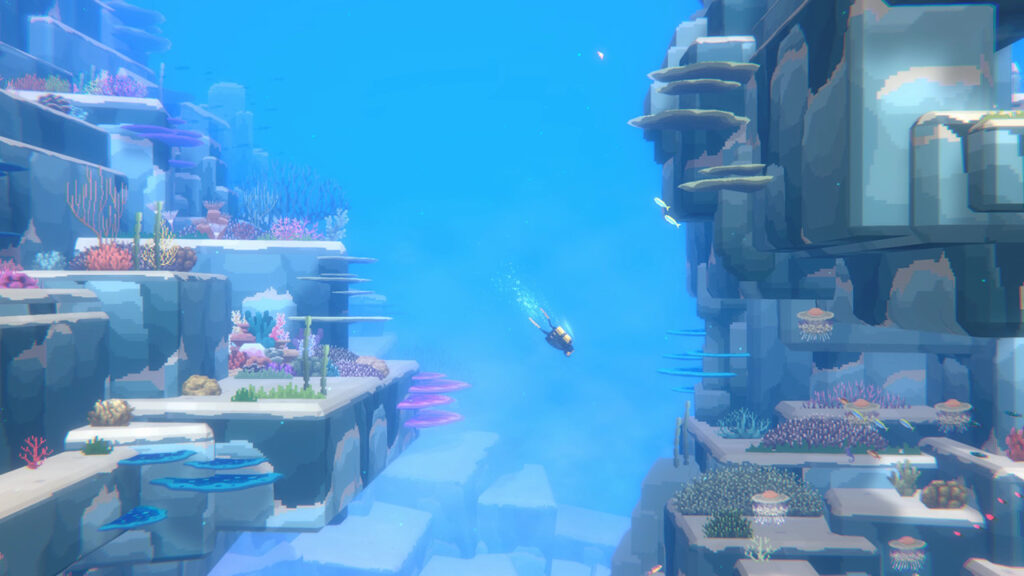
Dave the Diver divides its days between exploring the Blue Hole and helping operate a seaside sushi restaurant. During each dive, Dave catches fish, gathers materials, and searches for clues connected to the constantly changing underwater environment. In the evening, those catches become menu items as players serve customers and improve the restaurant. New characters and unexpected missions keep expanding the game, gradually turning a relaxed fishing trip into an eccentric adventure involving ancient mysteries, unusual sea creatures, and increasingly dangerous depths.
The game’s daily routine system creates several convenient places to stop while playing on Steam Deck. A quick session can cover a dive or an evening at the restaurant, while suspend and resume helps when an underwater expedition needs to be interrupted. Diving, aiming the harpoon, and serving customers all work comfortably with the built-in controls. The distinctive pixel characters and clearly separated environments also translate well to the handheld display, making it easy to follow the action both above or below the surface.
Why Older Kids And Teens Will Love Dave The Diver: The game constantly finds new ways to surprise players without abandoning its satisfying daily rhythm. A successful dive supplies ingredients for the restaurant, the restaurant funds better equipment, and each improvement allows Dave to venture deeper into the Blue Hole.
ESRB Rating: E10+ for Everyone 10+
Content Descriptors: Mild Blood, Mild Language, Mild Suggestive Themes, Mild Violence, Simulated Gambling, Use of Alcohol
Players: Single-player only
Celeste Transforms Every Screen Into A Handheld Challenge
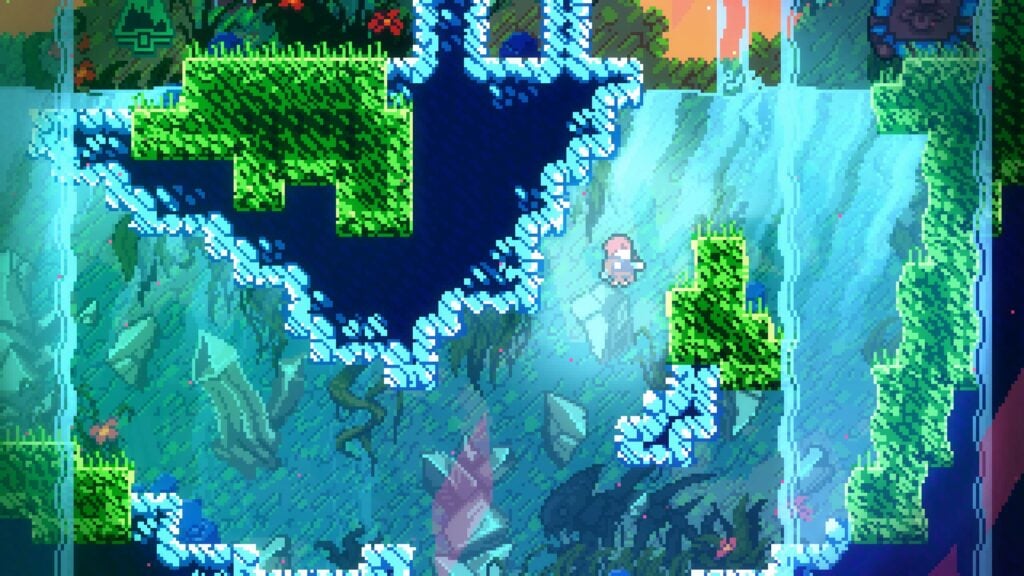
Celeste follows Madeline as she attempts to climb a mysterious mountain while struggling with anxiety and self-doubt. Reaching the summit means dashing through spikes, strong winds, moving platforms, and rooms that demand increasingly precise timing. Mistakes revive Madeline almost immediately, allowing players to study what went wrong and try a different approach. Optional strawberries and hidden challenge levels provide tougher goals, while Assist Mode can alter the speed or difficulty for anyone who wants to experience the story with less frustration.
Most challenges occupy a single screen and take only seconds to attempt, making Celeste unusually easy to play in short bursts. The game’s responsive directional controls feel natural on the Steam Deck’s built-in directional pad, and the modest presentation places little strain on the hardware. Players can clear a few rooms during a spare moment or suspend the game midway through a longer chapter. Fast restarts also mean that loading screens rarely interrupt the rhythm of practicing a difficult jump.
Why Older Kids And Teens Will Love Celeste: Completing a room feels like a genuine achievement, especially after several failed attempts. The climb rewards patience and persistence, as Madeline’s personal story gives the challenge an emotional purpose beyond simply reaching the top.
ESRB Rating: E10+ for Everyone 10+
Content Descriptors: Alcohol Reference, Fantasy Violence, Mild Language
Players: Single-player only
Hollow Knight Brings A Vast Insect Kingdom On The Go
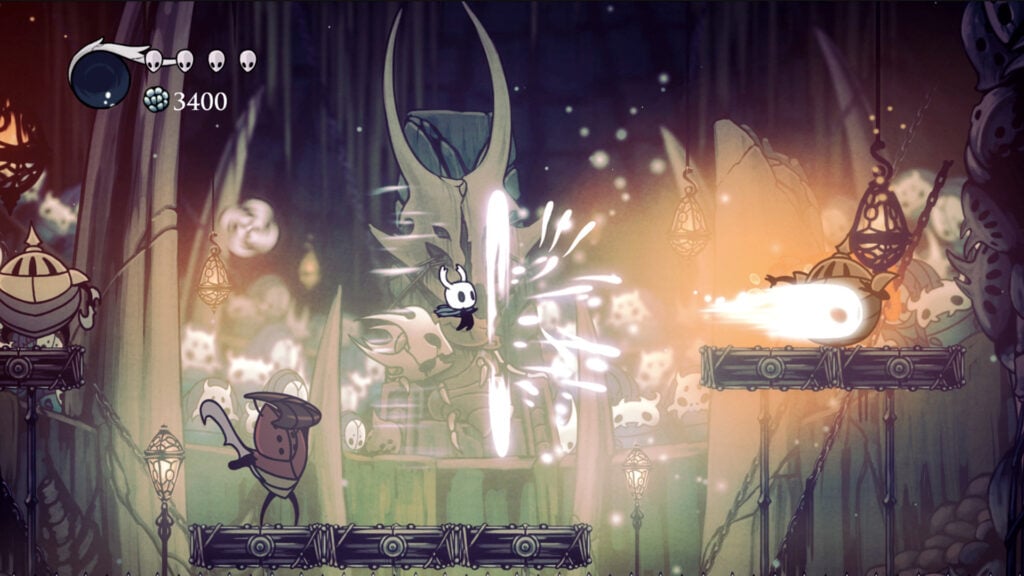
Hollow Knight sends a silent traveler into Hallownest, a ruined underground kingdom populated by insects. Armed with nothing but a nail, players explore interconnected caverns, battle infected creatures, and unlock abilities that open previously unreachable paths. The world offers little direct guidance, encouraging players to piece together its history through abandoned locations and unusual characters. The somber tone, demanding bosses, and occasional mild blood make Hollow Knight better suited to older kids who enjoy atmospheric games and don’t mind getting lost in a vast and strange world.
Controller-based movement and combat translate comfortably to the Steam Deck, while the hand-drawn environments remain striking on its display. Hallownest can be explored one area at a time, giving players room to make progress even when they can’t commit to a lengthy session. Save benches are sometimes separated by dangerous stretches, so the Deck’s suspend function becomes particularly helpful when someone needs to stop before reaching the next one. Modest hardware requirements allow the game to deliver smooth, responsive action without demanding much storage.
Why Older Kids And Teens Will Love Hollow Knight: Hallownest constantly hints at secrets waiting just beyond the current route. New abilities transform how the knight moves through familiar areas, while overcoming a difficult boss brings the satisfaction of mastering its attack patterns.
ESRB Rating: E10+ for Everyone 10+
Content Descriptors: Fantasy Violence, Mild Blood
Players: Single-player only
Hades Makes Every Escape Attempt Feel Handheld-Friendly
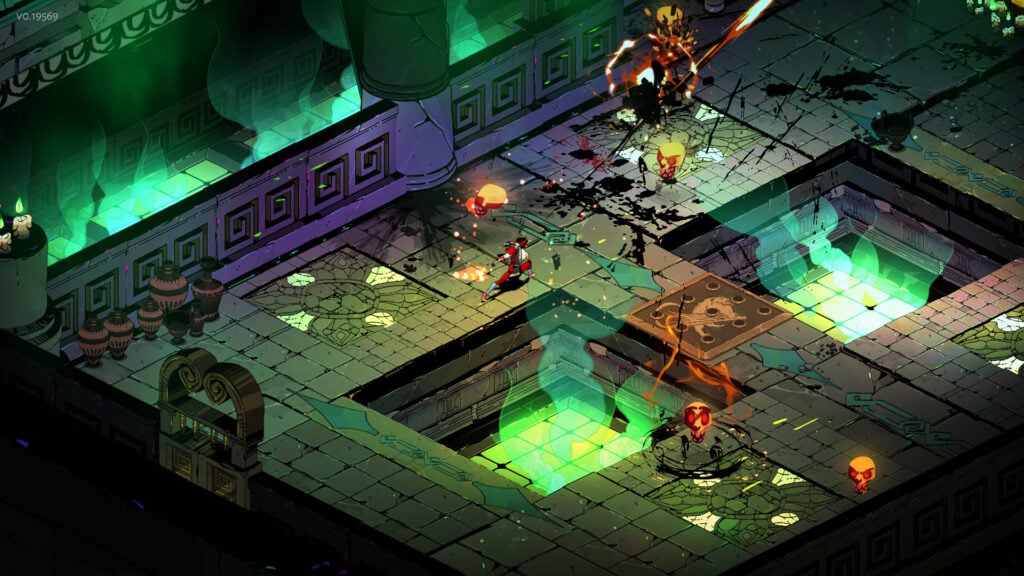
Hades stars Zagreus, the rebellious son of Hades, as he repeatedly tries to escape the Greek underworld. Each attempt rearranges its chambers and offers new blessings from the Olympian gods, allowing players to combine weapons and supernatural powers in different ways. Death returns Zagreus to the House of Hades, where conversations develop the story and unlock further opportunities for the next run. The Teen rating reflects the game’s inclusion of blood, violence, suggestive material, mild language, and alcohol references.
Combat was designed around a controller, making rapid dashes and attacks feel well suited to the Steam Deck’s buttons and sticks. Individual chambers usually only last a few minutes and end with a clear reward, creating frequent places to pause before entering the next encounter. Quick restarts keep a failed run from becoming a lengthy interruption, while suspend and resume can preserve an attempt that has already gathered a strong combination of powers. Hades works equally well for one brief escape attempt or a longer evening spent advancing its many character stories.
Why Teens Will Love Hades: Failure rarely feels like wasted time as every time players return home they reveal new conversations, relationships, and upgrades. Meanwhile, the changing combinations of weapons and divine powers keep repeated journeys through the underworld from feeling identical.
ESRB Rating: T for Teen
Content Descriptors: Alcohol Reference, Blood, Mild Language, Suggestive Themes, Violence
Players: Single-player only
Vampire Survivors Turns One-Stick Movement Into Total Chaos

Vampire Survivors places a lone character in an arena that gradually fills with thousands of monsters. Weapons activate automatically, leaving players to concentrate on movement, collecting experience gems, and choosing upgrades whenever they gain a level. Seemingly minor bonuses can eventually create enormous screen-filling attacks, but each run ends when the character falls or survives the stage’s time limit. Persistent unlocks steadily introduce new characters, weapons, and combinations for future attempts.
The basic controls are almost perfectly suited to handheld play. Most of a run requires only one analog stick, allowing players to focus on weaving through crowds rather than remembering complicated button combinations. Standard stages have predictable time limits, while shorter modes provide alternatives when half an hour isn’t available. Suspend and resume is especially convenient when a successful run has already grown too powerful to abandon.
Why Teens Will Love Vampire Survivors: Each run builds from a vulnerable character into an absurdly powerful force surrounded by flashing weapons and collapsing enemies. Discovering which upgrades interact with one another gives teens a strong reason to experiment long after their first successful survival.
ESRB Rating: T for Teen
Content Descriptors: Blood, Violence
Players: Single-player; local co-op for up to 4 players
Balatro Deals Out Strategy In Portable Sessions
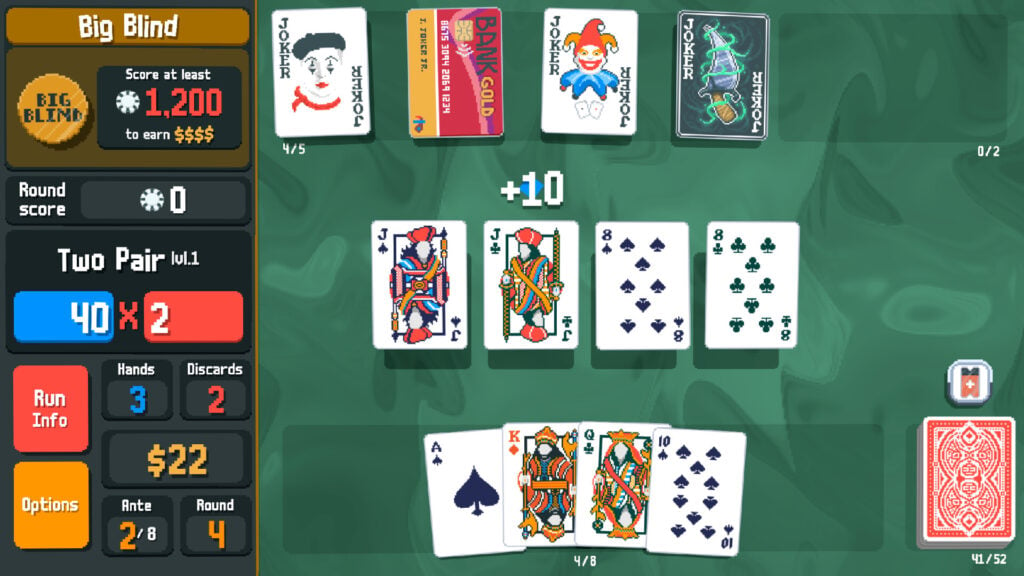
Balatro combines familiar poker hands with the escalating structure of a roguelike deck-building game. Players earn chips by creating pairs, straights, flushes, and other combinations, then spend their winnings on Jokers that dramatically alter how the deck scores. Each run introduces different opportunities to modify cards and develop unusual strategies before facing increasingly demanding blinds. Although the imagery includes playing cards, chips, and gambling terminology, Balatro contains no real-money wagering.
Turn-based play makes Balatro particularly comfortable on the Steam Deck because there’s never any pressure to select a card quickly. The built-in controls handle arranging and playing hands, while the touchscreen provides another direct way to manage cards and menus. Runs can be suspended between hands with virtually no context lost upon returning, and the compact installation leaves plenty of room for larger games. A session might last a few rounds or continue through an entire winning run, depending on how much time the player has available.
Why Older Kids And Teens Will Love Balatro: A single Joker can completely change which cards become valuable, encouraging players to rethink their strategy during every run. The rules are easy to grasp, yet the huge number of possible combinations gives mathematically minded players plenty to master.
ESRB Rating: E10+ for Everyone 10+
Content Descriptors: Gambling Themes
Players: Single-player only

