

One of the absolutely lovely things about TikTok is that there are so many actual experts on the app (always remember to check credentials, though) who are happy to infodump about the most useful things they know.
For me, the best of these are therapists, pediatric healthcare providers, and child development experts who share general information, such as when an emergency room visit is warranted, how to handle common behavioral problems, and what developmental patterns to expect. (Full disclosure, my degree is in child development, and it’s a subject I never tire of hearing more about.)
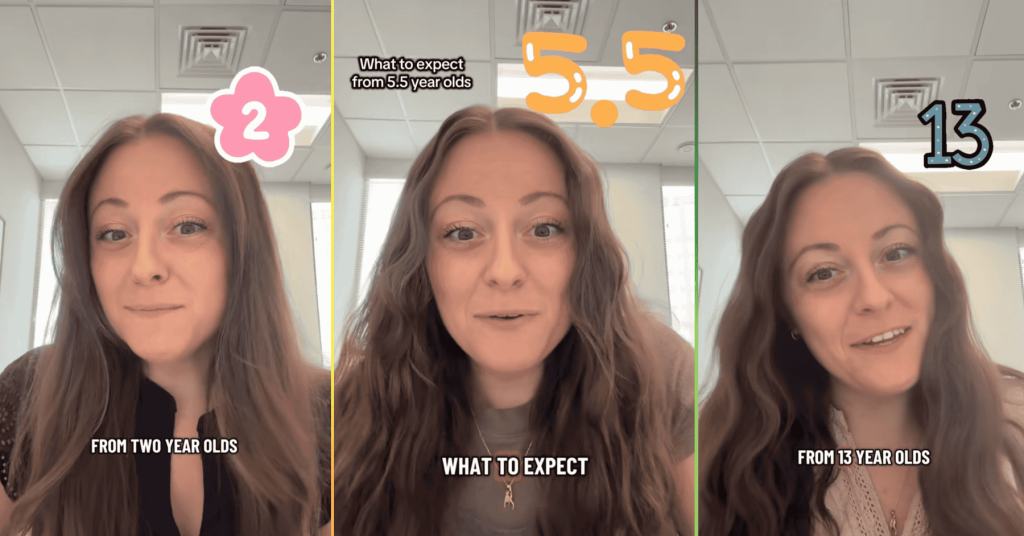
So, when I tell you I stumbled across the account of a child therapist and started binge-watching her videos, I’m telling you, she has great material to share. Honestly, I have thought pretty much everything on her page was valuable, but her series on what to expect from your child at each age (from 2 through 16) is just too good not to share here.
She Starts With 2-Year-Olds
The therapist we’re following is Amanda Capriato, who has a background in elementary education and social work. She offers a disclaimer on each video that this is general information and every child, especially those with neurodivergencies or developmental delays, develops differently, so this isn’t a prescription; it’s just information about some common norms for kids of these ages.
That said, listening to her describe typical developmental behaviors can be a huge relief, especially for parents who wonder if they are the only ones dealing with this. So let’s dive in.
One thing I love is that, at the youngest ages, she separates expectations into 6-month increments rather than a year, so there’s a separate video for 2-year-olds, 2.5-year-olds, 3-year-olds, 3.5-year-olds, etc. Kids change so fast when they’re that young that it’s really necessary.
So, what behaviors does she say to expect from your two-year-old?
An expanding sense of self that drives a desire for independence. (Yes, you can read that as learning to reject parental requests.) Improving balance and control for more climbing on furniture and stairs. Better fine motor skills, supporting valuable skills like coloring on walls and turning door knobs. The language skills are developing, along with the ability to mimic others.
Check out the video below for the rest, including how two-year-olds handle words like “no” and “don’t” and what parents can do about it.
Early School Ages
I would recommend that any parent go straight to Amanda’s page and watch the video for your child’s current age, and the ones immediately before and after (and then go further in either direction as you deem relevant for the individual development you’re witnessing), but here, I’m going to just share a few videos for different stages.
I’m jumping to the 5.5-years-old video now, because my youngest just turned 6, and I can verify that she’s describing things that are definitely timely and relevant.
Some of the major points include that kids this age are curious and asking “even more questions than before.” I’m not sure this stage really ends, although based on my older kids, I can tell you they do learn to Google.) They’re also really starting to understand the difference between right and wrong (and whether they live by those rules themselves; they love to let you know when someone else doesn’t.
She also warns about some anxiety that can arise at this age, and some signs to watch for, including some of the more extreme behaviors that might surface, and a recommendation to support kids in problem-solving with their peers to limit tattling.
Her Teen Videos Are Also Great
Jumping again to another age stage, you’ll definitely want to check out Amanda’s videos that match your teen’s age.
Teens can often look and sound so much like adults that we can set high expectations for them. Conversely, we sometimes forget they are growing up and fail to give them the room they need.
The video for 13-year-olds is an example of a reminder of this delicate balance. Even though the therapist describes these kids as much more capable of complex tasks and with a stronger sense of responsibility to their community, she also points out that many executive functioning skills aren’t fully developed yet (and won’t be for a while).
So, even though your child may feel ready for and devoted to big responsibilities, they may not yet have the skills to always follow through.
She also shares a bit about how circadian rhythms are changing at this age — remember that toddler who woke you up at sunrise for cereal and a banana? Gone. Now you have a teen who would like to sleep in until noon and stay up playing video games into the night.
She even delves into the physical changes you can expect, and some of the typical self-image issues that come with puberty, as well as the moodiness, and warns to expect challenges to authority.
Every Kid Is Different
Every kid is different, and again, I echo Amanda’s disclaimer that none of this is universal. She has hinted that she might add videos later, addressing some of the differences in expectations for kids with ADHD or autism, but again, even within those diagnoses, kids can vary widely.
Your child might hit some milestones earlier and some later. You might have a teen who never balks at taking out the trash, or a kindergartner who can always sit still for a story.
The information that clicks perfectly for you might also be miles off for your best friend’s child of the same age.
What we can all take from these videos, though, is that some of the most befuddling and frustrating behaviors are extremely normal responses to developmental changes, and that some can be handled well with a little information, while others can be endured and will pass.
