
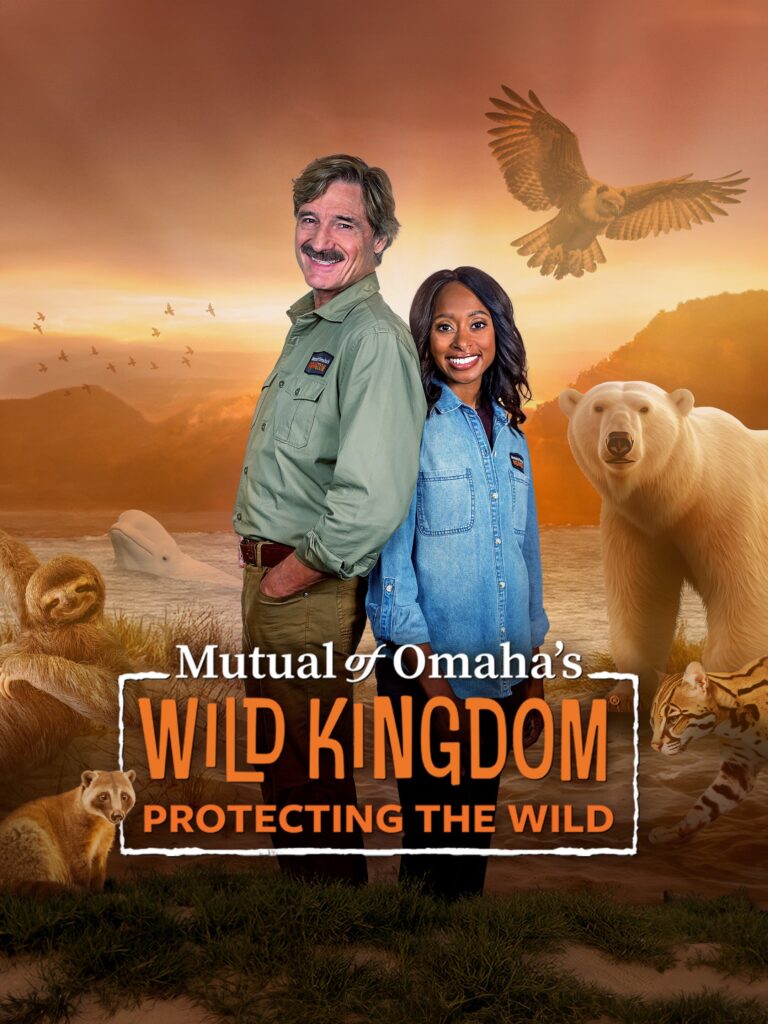
Mutual of Omaha's Wild Kingdom Protecting the Wild - America's Rarest (S1E23)
| Runtime (min) | — |
|---|---|
| Air Date | 2024-07-05 |
| Genres | Documentary, Family |
Where To Watch
Streaming information unavailable.
Storyline
In this episode of "Mutual of Omaha's Wild Kingdom Protecting the Wild," titled "America's Rarest," the focus shifts to some of the most endangered species in the United States. The team ventures into various habitats, showcasing the unique challenges faced by these animals due to habitat loss and climate change. Viewers witness firsthand the efforts made by wildlife conservationists to protect these rare creatures, highlighting their significance to the ecosystem.
Throughout the episode, stunning visuals of these elusive animals are paired with insightful commentary about their behaviors and environments. The team not only educates the audience about these species but also emphasizes the importance of conservation efforts. The narrative inspires viewers to consider their role in protecting wildlife, making it a compelling watch for families interested in nature and environmental stewardship.
What Children Can Learn
Children watching this episode will learn about the importance of biodiversity and the role of conservation in protecting endangered species. They will be introduced to specific animals that are on the brink of extinction and understand the various factors contributing to their decline. The episode provides a critical opportunity for kids to connect with wildlife and appreciate the natural world around them.
Additionally, young viewers will gain insights into the efforts of conservationists and what actions can be taken to help protect these rare animals. By showcasing real-life examples of habitat restoration and species protection, the episode encourages kids to think about how they can contribute to environmental efforts in their own communities.
Five Most Asked Questions
| Question | Answer |
|---|---|
| What endangered species are highlighted in this episode? | The episode features several endangered species native to the United States, showcasing their habitats and discussing the specific threats they face. Viewers will learn about animals such as the California condor and the red wolf, among others, and the unique challenges each species encounters in their fight for survival. |
| How does the episode address conservation efforts? | The episode emphasizes the importance of conservation efforts by highlighting the work of various organizations dedicated to protecting endangered species. It showcases real-life initiatives, such as habitat restoration and breeding programs, demonstrating how these actions can help prevent extinction and support biodiversity. |
| Are there any emotional moments in the episode? | Yes, the episode includes emotional moments as it portrays the struggles of endangered species and the dedicated individuals working to save them. Viewers may find themselves feeling a connection to the animals and a deeper understanding of the urgency of conservation efforts, fostering empathy for wildlife. |
| What visual elements make the episode engaging for kids? | The episode features stunning visuals of wildlife in their natural habitats, which captivate young viewers. The cinematography showcases the beauty and uniqueness of each species, helping to maintain children's interest while educating them about the environment and the importance of protecting it. |
| What lessons can children take away from this episode? | Children can learn valuable lessons about environmental stewardship and the impact of human activity on wildlife. The episode encourages them to think critically about conservation and inspires them to take action, whether through supporting local wildlife initiatives or simply being more mindful of their own ecological footprint. |
Cast
Writing
Directing
| Season # | Episode # | Episode Name |
|---|---|---|
| 1 | 1 | Peter and Rae travel to the Mojave Desert, North America’s driest region, to help conservationists save the Mojave desert tortoise. They explore a groundbreaking program that helps baby tortoises and ensures the survival of the entire species. |
| 1 | 2 | Peter and Rae travel to the coast of Maine to witness the conservation program fighting to save puffins. While Peter travels to puffin habitats on remote coastal islands, Rae visits the original conservationist who brought this species back to Maine. |
| 1 | 3 | Peter ventures to Florida with naturalist David Mizejewski, where they meet the experts battling to protect endangered sea turtles and at-risk manatees, collect valuable data from sea turtle nests, help track down two vulnerable manatees, and more. |
| 1 | 4 | Peter and Rae witness the nightly emergence of 20 million Mexican free-tailed bats and help release rehabilitated bats on Austin’s Congress Bridge. Peter joins bat rescue experts; Rae helps vaccinate bats against a disease wreaking havoc on the species. |
| 1 | 5 | Peter and Rae join forces with conservationists in St. Louis trying to help save a local indicator species in dire need: the Ozark hellbender. Rae meets the scientists who are breeding these solitary salamanders with the hopes of saving the species. |
| 1 | 6 | Peter and Rae sail to California’s Channel Islands to unravel the secrets of one of the smallest foxes on Earth and learn about the modern-day challenges to fox survival and the critical role that the bald eagle plays in their evolution. |
| 1 | 7 | Peter and Dr. Rae visit Washington state, where conservationists work with beavers to restore spawning grounds for endangered salmon. They learn how native tribes relocate beavers from dangerous situations and help build artificial beaver dams. |
| 1 | 8 | Peter and Dr. Rae discover that North American birds and bats are flying in the face of danger. They meet conservationists fighting to save the North Atlantic puffin, spot a bald eagle nest in California and witness millions of wild bats in Texas. |
| 1 | 9 | Peter and Dr. Rae join conservationists in a desperate race to save kelp forests. Home to countless species, kelp forests form the biological backbone of the ocean food chain, but climate change has unbalanced this ecosystem. |
| 1 | 10 | Peter and Dr. Rae explore triumphant stories of wildlife conservation with some of Earth’s newest, tiniest baby animals, including Florida sea turtle hatchlings, an adorable puffin off Maine’s coast, desert tortoises in the Mojave Desert and more. |
| 1 | 11 | Peter and Dr. Rae visit a remarkable animal rehabilitation center in the Pacific Northwest and meet with the veterinarians, animal rescuers and residents dedicated to saving amazing creatures, including orphaned bear cubs and an injured bald eagle. |
| 1 | 12 | Dr. Rae and Peter demystify a misunderstood canine, the wolf. Peter spots an endangered red wolf in the wild and helps with a health checkup for a new litter. Dr. Rae learns about gray wolves during a visit to Minnesota’s Wildlife Science Center. |
| 1 | 13 | Peter and Dr. Rae adventure through Florida to discover the results of a new wildlife corridor protecting animal migration and endangered species recovery, learning how vital it is to species like the Florida panther, black bear, alligator and more. |
| 1 | 14 | Peter and Dr. Rae explore the many challenges facing the endangered sea otters off California’s coast. Peter cruises Monterey Bay to survey white sharks invading otter territory and Dr. Rae helps feed sea otter super moms at the Aquarium of the Pacific. |
| 1 | 15 | Peter and Dr. Rae explore an issue that hits close to home — protecting urban wildlife whose natural habitat puts them in conflict with humans, often in harm’s way. Peter learns the story of P-22, a Los Angeles mountain lion. |
| 1 | 16 | Peter and Dr. Rae meet real-life superheroes of science who are developing cutting-edge tools for protecting the wild. Dr. Rae visits a California marine laboratory growing an army of giant sea stars to try to save the giant kelp forests. |
| 1 | 17 | Peter and Dr. Rae see firsthand how forward-thinkers are using innovation for wildlife restoration. In Washington, Peter helps install artificial beaver dams designed to kick-start a ravaged ecosystem through a natural partnership with wild beavers. |
| 1 | 18 | Peter and Dr. Rae travel to California’s Death Valley to see one of the most endangered fish species on Earth. Only a few hundred of these pupfish exist in Devils Hole, a deep-water cavern where conservationists carefully guard their population. |
| 1 | 19 | Dr. Rae and Peter head to the California coast to get up close and personal with one of the wild’s most prolific predators, the great white shark. In Santa Barbara, they paddle out for a face-to-face meeting with a young great white. |
| 1 | 20 | Peter and Dr. Rae explore the Gulf Coast to learn about one of North America’s rarest birds, Attwater’s prairie chicken. Peter meets with wildlife refuge specialists in Texas and Dr. Rae visits a wildlife center working to rejuvenate the population. |
| 1 | 21 | |
| 1 | 22 | |
| 1 | 23 | |
| 1 | 24 | |
| 1 | 25 | |
| 1 | 26 |
| Season # | Episode # | Episode Name |
|---|---|---|
| 2 | 1 | |
| 2 | 2 | |
| 2 | 3 | |
| 2 | 4 | |
| 2 | 5 | |
| 2 | 6 | |
| 2 | 7 | |
| 2 | 8 | |
| 2 | 9 | |
| 2 | 10 | |
| 2 | 11 | |
| 2 | 12 |
This product uses the TMDB API but is not endorsed or certified by TMDB.