

The hit Netflix gives parents an easy way to talk with kids about persistence, problem-solving and learning from mistakes.
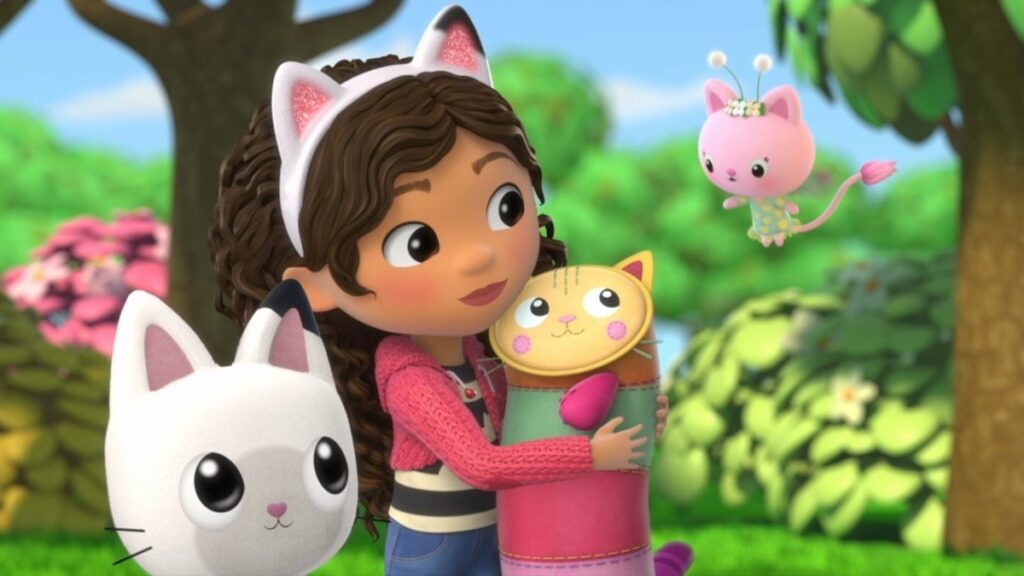
Gabby’s Dollhouse has become a major kids’ entertainment hit, following Gabby and her collection of quirky cat friends as they tackle problems inside the magical Dollhouse. The show’s adventures regularly put characters in situations where something goes wrong and they have to figure out what to do next.
As Parents points out, that makes the series useful for introducing two important skills: resilience and resourcefulness. Rather than giving up when a plan fails, Gabby and the Gabby Cats experiment, collaborate and search for another solution.
Parents can reinforce that message by asking children what they noticed when something went wrong in an episode. Questions such as “What could they try next?” turn passive viewing into an opportunity to practice problem-solving.
The show’s approach also normalizes mistakes as part of the process. As Parents puts it, the series can help children “build resilience and resourcefulness”—skills that become increasingly important as kids encounter challenges independently.
The Power of “Yet”
One of the most useful concepts parents can pull from this kind of storytelling is the “power of yet.” Instead of telling a child, “I can’t do this,” the idea encourages them to add one small but important word: “yet.”
That distinction changes failure from a final judgment into a temporary stage of learning. A child who says, “I don’t know how to ride a bike,” can begin thinking, “I don’t know how to ride a bike yet.”
Parents can use “yet” during everyday frustrations, whether a child is struggling with homework, sports, friendships or learning a new skill. The goal isn’t to pretend something is easy, but to remind kids that difficulty doesn’t necessarily mean they can’t eventually succeed.
Turning Growth Mindset Into a Parenting Tool
Stanford’s teaching resources describe growth mindset as the belief that abilities can be developed rather than being permanently fixed. That philosophy gives parents another way to encourage resilience: praise the process, not simply the result.
Instead of saying, “You’re so smart,” parents might say, “You kept trying different ways to solve that.” This focuses children’s attention on effort, strategy and persistence—things they can actually control.
Parents can also model the behavior themselves by talking openly about their own mistakes and showing how they respond. Saying, “That didn’t work, so I’m going to try something different,” demonstrates resourcefulness rather than simply explaining it.
Ultimately, Gabby’s Dollhouse gives families a kid-friendly launching point for a much bigger lesson. Problems aren’t proof that you can’t succeed; they’re opportunities to figure out what to try next.

