
“If I jumped down from here, would I break my legs?”
That’s the kind of question I seem to get more and more from my middle-aged child. He is curious about what his body is capable of. I try my hardest to give him opportunities to test out his abilities.
More often than not, I hear myself saying something along the lines of, “Stop”, “What might happen if you do that?” and “Is that a safe choice?” He tells me I am too cautious.
So, where is the balance when our kids want to take risks and we (unfortunately!) know too much about the possibility of harmful consequences?
Modern Parenting Expectations
I think about my childhood as a time when I took a lot of risks. It was the 80s!
Staying out until (or after!) dark. Riding bikes everywhere. No ability to communicate with parents, other than an agreement to be home at a certain time.
Fast forward to now. The changing world, safety concerns, and cultural shifts have begun to emphasize parenting practices that include more supervision, safety lessons, and injury prevention.
Don’t get me wrong: these are all good parenting practices. Many of them developed from necessity out of a lack of supervision and support in our childhood.
But I learned so many lessons from the various risks I took in my youth. I can’t help but ask myself: Could protecting children from all risks interfere with their healthy development?
What Is Risky Play
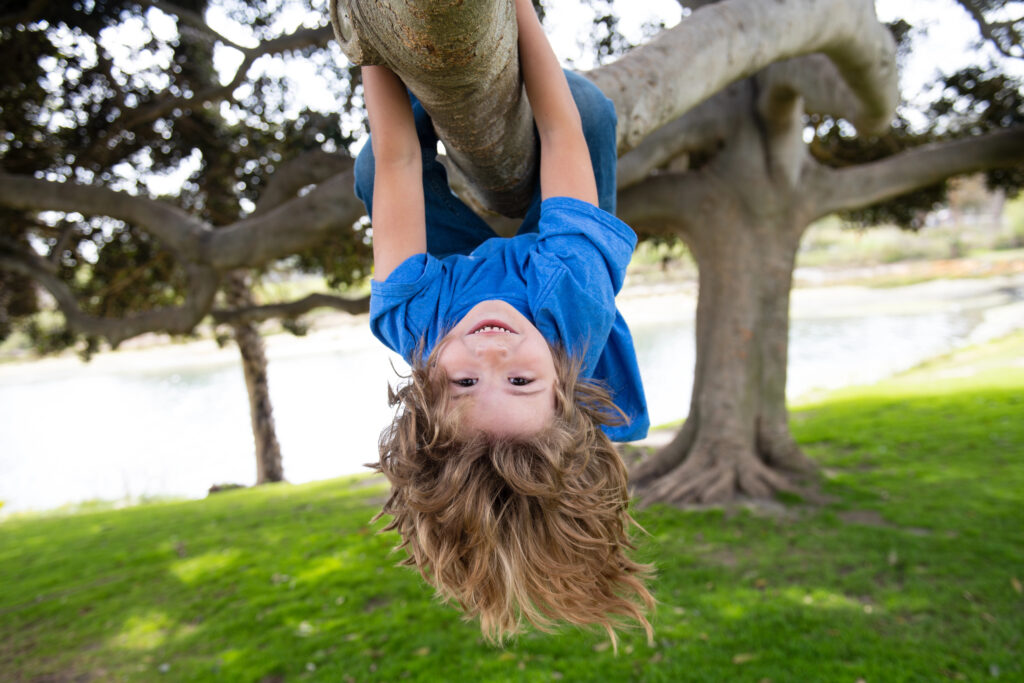
When I say “risky play”, I am not referring to activities that would actually be harmful to kids. I am thinking about exciting activities that provide a challenge, a thrill, some uncertainty, and age-appropriate risk-taking.
Typical “risky play” may look like rough-housing, riding a bike, exploring independently, skateboarding, using tools (hammers and child-safe knives included!), high-speed physical play, navigating through nature, climbing structures, and jumping off high points.
We may notice some children organically being drawn to these activities, which makes sense! It’s the primary way a child learns about their body and the world. Let’s look at all the ways this type of play can support our kids’ development.
Risky Play Encourages Healthy Development
Research shows that risky play helps kids build confidence, resilience, motor skills, independence, emotional regulation, executive functioning, and risk assessment abilities (Beaulieu et al. 2024). Important developmental milestones are supported by risky play.
Risky Play Builds Confidence
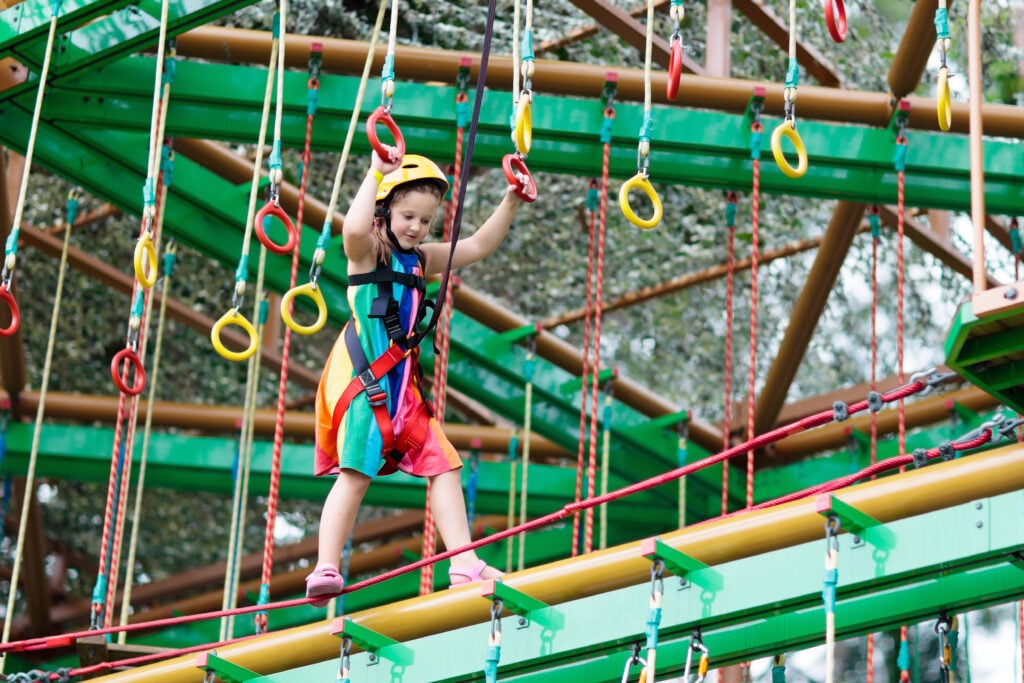
A child who can control and manage their body in physically challenging situations is a kid who develops the belief, “I can do hard things.”
Talk about a confidence boost. Climbing, running, jumping, exploring, and overcoming physical barriers are among the most important physical AND psychological life lessons (Bauer et al. 2025).
Children who are confident in their body’s ability to engage in challenges, also can become an encouraging leader. You might see this child tell others, “You can do it!” Because they learned they could do it too.
Risky Play Builds Risk Assessment
Learning risk assessment comes down to the general understanding, “As safe as necessary, but not as safe as possible”. Determining the difference between a “risk” and a “hazard” is part of this assessment strategy.
We can help kids distinguish between a risk (a challenge a child can assess or manage) and a hazard (a hidden danger beyond a child’s ability to recognize). Pointing out differences between risks and hazards to our children is a good first step to developing risk assessment.
For example, you might point out that jumping off a structure onto a concrete surface would be more of a “safety hazard” and explain why. We can then determine that jumping onto grass or a softer surface would be a “reasonable risk”.
Helping children use critical thinking skills and make their own risk assessments is the goal.
Risky Play Build Physical Strength
Along with confidence, the most obvious way risky play benefits children’s development is through increased physical strength. Motor skill development, or the development of the body’s major muscle groups and joints, occurs only through physical challenge.
As highlighted by the American Academy of Pediatrics, balance, coordination, and spatial awareness are all important aspects of child development. Children will learn these skills by engaging with the world, but these skills will develop at a faster pace when they engage in reasonably risky play.
Risky Play Builds Executive Functioning
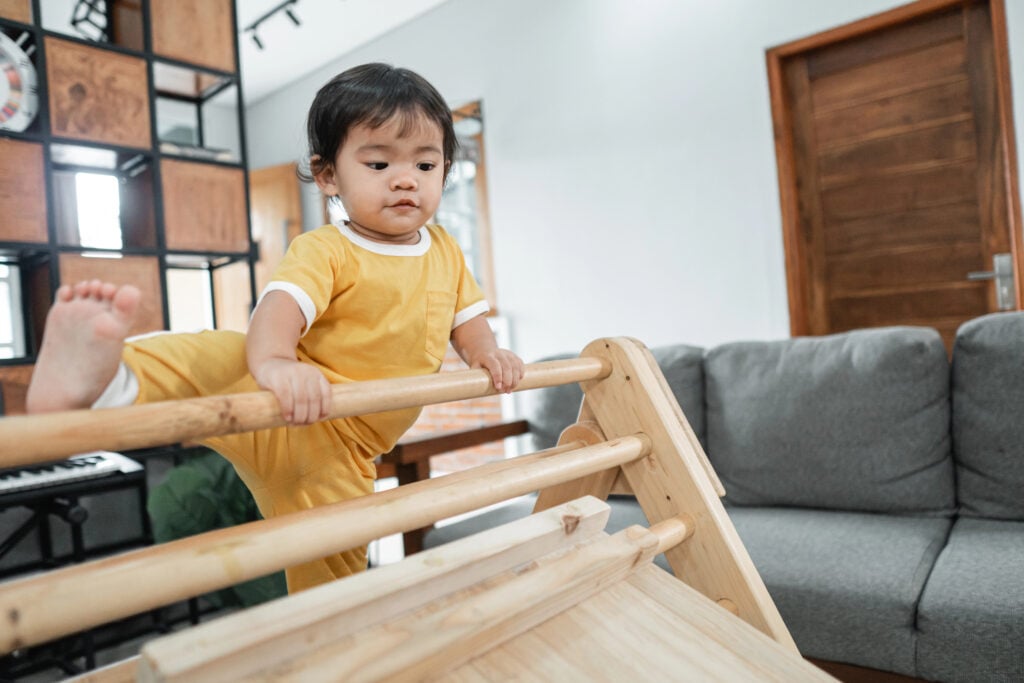
Executive functioning refers to the skills you use to manage everyday tasks such as making plans, solving problems, and adapting to new situations. This mental skill develops through age 25, but most foundational skills are built in childhood.
Risky play allows children to begin thinking ahead, understand the consequences of their behavior, make decisions, and adapt to circumstances.
Risky Play Improves Mental Health and Emotional Regulation
A child not exposed to uncertainty will not develop the ever-important experience of tolerating stress and tension. Risky play helps support a child in exploring this emotional task safely.
For example, a child may feel anxiety about trying a new physical activity. Once completed, they gain tolerance to anxiety towards new experiences. They may even want to experiment more with new activities, given their increased ability to regulate challenging sensations.
The 2021 “Risky Play Research Report” conducted by Becky Gates Children’s Center at Texas A&M University has confirmed these findings. In research, they found that emotional regulation improves with rough-and-tumble play.
Shifting Expectations of Safety
The benefits of risky play cannot be denied, but how can we prevent serious injury to our children? While we do not want our children to get hurt, research has demonstrated that serious injuries are rare in age-appropriate environments (Beaulieu et al. 2024).
We can begin to normalize more minor injuries, such as minor scrapes or bruises that occur with everyday activities.
Learning New Responses
Next, we need to slow down our reaction to a potentially risky situation. I have found the following “template” helpful in maintaining safety awareness without hindering my child’s opportunities to experiment.
- Pause (easier said than done, but an important first step!)
- Assess the environment (risks vs. hazards)
- Watch the child problem solve for 15 seconds before stepping in
This allows us to slow down and build our own tolerance for our children’s anxiety when they try new things!
Support Age-Appropriate Independence
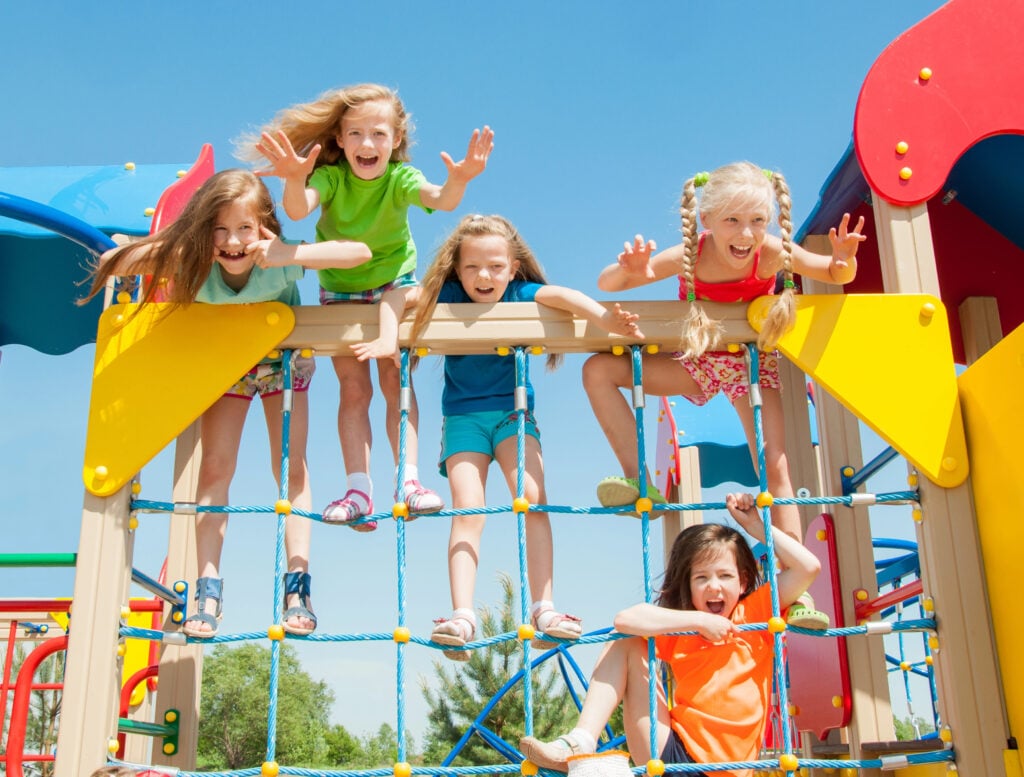
Allowing children to explore independent tasks can be a gentle segway into incorporating more “risky play” into their lives. For example, a child may want to walk ahead of us, explore on their own, play outside with neighborhood children, and problem-solve on their own.
We can gradually help children develop independence. This allows parents an opportunity to discuss risk vs. hazard with children. This can also help parents build confidence that their children can manage challenges on their own!
Risky Play Prepares Children For Life Challenges
Modern parenting emphasizes the removal of discomfort and risk for children. However, research has clearly demonstrated that risky play supports multiple aspects of physical, emotional, and cognitive development in childhood.
When children have the opportunity to take risks, challenge themselves, and tolerate uncertainty, they are not just playing but also building confidence and preparing for life’s challenges.