


Parentification is a harmful pattern of expecting a child to take on adult roles, including that of caregiver to siblings, the household, or even parents.
However, there’s a lot of debate about how much responsibility is appropriate for children, and the correct amount may vary for each kid. The uncertainty means that parents may realize, in retrospect, that they’ve engaged in parentification without meaning to, and that parents doling out chores may worry about whether they’re hurting their kids.
However, there are ways to check in in the moment to ensure that what you’re doing is for your child’s benefit and to maintain balance.
Check That Chores Are Age-Appropriate

The American Academy of Child & Adolescent Psychiatry says that chores are important to child development and are beneficial as early as age 3. Responsibilities like feeding a pet, putting away laundry, or washing the car help develop important skills that will benefit them throughout their lives, including time management and organization.
The tasks the AACAP recommends for younger kids lean more towards caring for their own bodies and belongings (dressing themselves, cleaning up toys), and as they get older, kids can take on a few tasks that help the household, like wiping tables (age 6-7), yard work (age 10-11) or helping with younger siblings (age 12+).
If you’re not sure about a particular chore, you can always check in with your pediatrician or speak to friends and other parents about when their kids were able to do that particular task. Or, help your child with the task a few times, and see how it goes!
Consider Your Child’s Time Investment

Your child likely spends 7-8 hours per day in school and needs 8-10 hours of rest per day. That leaves a few hours for all their other needs, including eating, bathing, and any chores.
Chores are a healthy part of childhood, but shouldn’t take up so much time that they can’t relax. Kids also need downtime, when nothing is expected of them. While chores are key to developing self-esteem, responsibility, and executive functioning skills, free play is also a necessary component of child development.
This also helps to ensure that your kids have time to be kids, not being forced to take on the role of an adult before their time.
Assign Chores, Not Job Titles

Rotating chores is an effective way to ensure that your kids learn the skills they need to take care of themselves and their homes one day. It can also help ensure that your child doesn’t become too bogged down with a specific responsibility.
Even if one child is assigned a specific chore for the long term, make sure that you’re assigning a chore, not an identity. Sally isn’t the dishwasher; Sally does wash the dishes after supper.
Ensuring that a given task is a child’s chore, not her role in the household, helps to reduce the risk that she begins to feel burdened with an excess of responsibility.
Check In Regularly
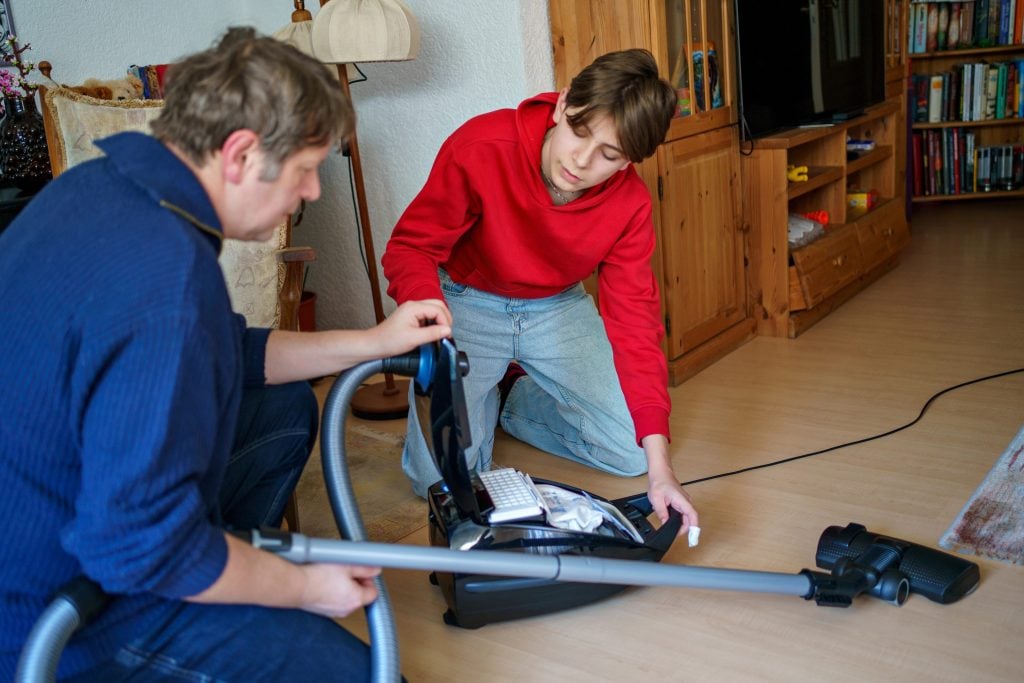
Ask your kids how they feel about their chores. They should understand that a task — such as taking out the trash or weeding the garden — benefits the household, but should also know that it benefits the individual, such as by teaching him the value of a clean space, or the necessity of contributing to community resources.
If your child is feeling overwhelmed, you can discuss the amount of free time they have and how they use it, and determine whether chores need to be reduced, rearranged, or swapped out for a different chore.
Don’t make the mistake of thinking that changing your child’s tasks is ‘backing down’ or ‘giving in’; make your decisions based on your child’s needs.
Limit Childcare Responsibilities

A major concern of parentification, especially in bigger families, is childcare.
Older kids are often very interested in the care younger kids need, and may offer to do tasks like dressing a younger sibling, entertaining a younger sibling while a parent cooks, or feeding a younger sibling. Exhausted and overburdened parents appreciate the extra pair of hands and eyes, but where is the line between accepting help and parentifying?
The answer may vary from household to household, but it will always center around responsibility. Your older kids can have a chore involving younger siblings, but they shouldn’t feel like they are the ones responsible for the younger kids. There can be reasonable periods of age-appropriate babysitting, but a child shouldn’t feel like an extra parent to a younger sibling.
Don’t Vent To Your Kids About Adult Problems

It can be really hard not to explode about grown-up problems in front of, or even to, your kids, especially if they’re expressing interest or curiosity. Making this even harder is that your kids are likely present when many of these stresses pile up, and venting that might otherwise have been into the void happens while they’re around.
However, parents should remember not to put the burden of grown-up problems (including work stress, financial struggles, and relationship hurdles) on their children. Kids shouldn’t be the arbiters of parental battles, and while it’s reasonable for kids to know the household has a budget, they shouldn’t be carrying the money worries.
If you’re realizing you’ve already done this, you can still issue a course correction. Reset boundaries, explain to your kids that some topics should be kept for adults, and stick to it going forward.
Protect Free Time

Your kids need free time to explore and grow. This is when they relax, develop creative skills, and process all they’ve learned and experienced.
Opinions on exactly how much free time kids need vary, but experts widely agree that kids need unstructured time every single day. That means it doesn’t count the time your kids spend at school, in organized sports, or in a structured class, no matter how much your child may enjoy those activities.
If your child is spending enough time on chores and other responsibilities that there are days when they have no unstructured time, it may be time to consider whether their need for downtime is being met.
Focus Tasks On Your Child’s Needs, Not Your Own

You’ve assigned your son the nightly chore of doing dishes. Is this because you hate doing dishes, or because it’s important for your son, who will one day live in a college dorm, or on his own, or with roommates, or with a spouse and family, to have the skill of washing dishes?
It’s okay to apply for both reasons, but your child’s need to learn the skill should be the focus. Make sure your child is doing chores that build the skills he’ll need as an adult, not just busywork or household service.
This is also a reason that changing chores as your child grows, or rotating them regularly, is important. It ensures that your child grows into an adult who can do his own laundry and dishes, clean his own space, and cook his own food, rather than developing only one of those skills.
Avoid Household Dependence On Children’s Labor

If your child went to camp for two weeks, had the flu for a week, or took a month off from chores to focus on studying ahead of grade tests, would your house fall apart?
If your child couldn’t sit with her younger siblings during supper prep, would meals still be made? Could your household still handle having a pet if your child were unable to care for it for a few days or weeks?
These questions can help you determine whether your home is relying too heavily on your children’s labor. Remember, chores should be mostly about your child developing skills and learning responsibility.
Encourage Self-Care (Including Asking For Breaks)

Part of learning responsibility is learning when you’re carrying too much. There are many adults who have learned the skills of being responsible for themselves and others, but never learned that it’s okay to back away from the work when it’s too much.
If we hope to raise a generation of kids who know how to say “no” and “I’m at my limit already,” we have to be part of their early practice with those skills. That means we have to let them be honest with us if the chores they’re doing are too heavy or overwhelming, or if they’re cutting into the time they need for sleep, study, or other needs.
Whether you do this by giving your child a once-weekly opt-out to be used on a day of their choice, by reducing their overall chore list, or by letting them swap a heavier chore for a lighter one or just take days off as they need, make sure your kid knows they can (and should) take breaks.
Watch For Signs Your Child Is Overburdened
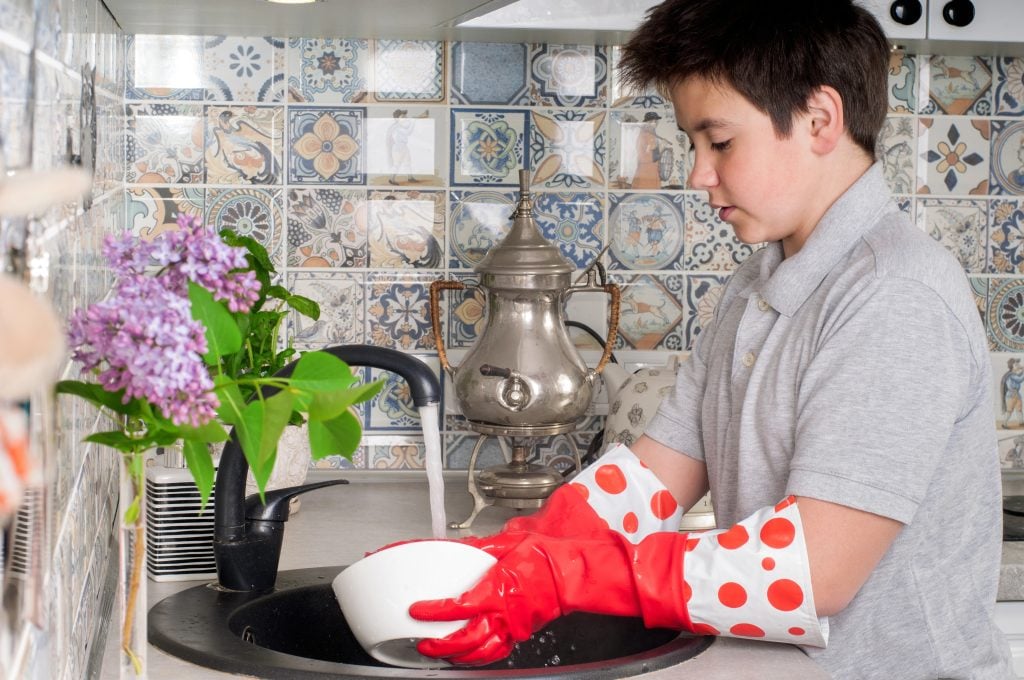
Your child may not tell you when they are overwhelmed. Like adults, they may not even realize that they’re doing more than their capacity.
Part of teaching them to recognize the need for a break is watching them for signs. Notice if your child seems to develop anxiety about a chore, or if she seems to feel too responsible for the household, her siblings, or the well-being and needs of adults.
Caring for others is great, but your child shouldn’t be carrying the responsibility of others’ needs, so watch for signs that your kids are taking on adult responsibilities.
Give Yourself Grace & Freedom To Change

Every parent gets things wrong, and stressed, overwhelmed, overburdened parents may not realize that their kids are taking on too much when they’re so relieved to have one responsibility or stressor of their own lightened.
If you realize that your kids are being parentified, beating yourself up for it isn’t going to reduce anyone’s burden (including your own). Talk to your child, acknowledge your error, and reset boundaries to create a healthier and safer atmosphere.
This may mean rearranging chores, changing schedules, hiring help, or accepting that some tasks may be done less frequently. It might mean seeking therapy (individual or family) and a lot of ongoing work to keep responsibility on the parents, rather than the children.
