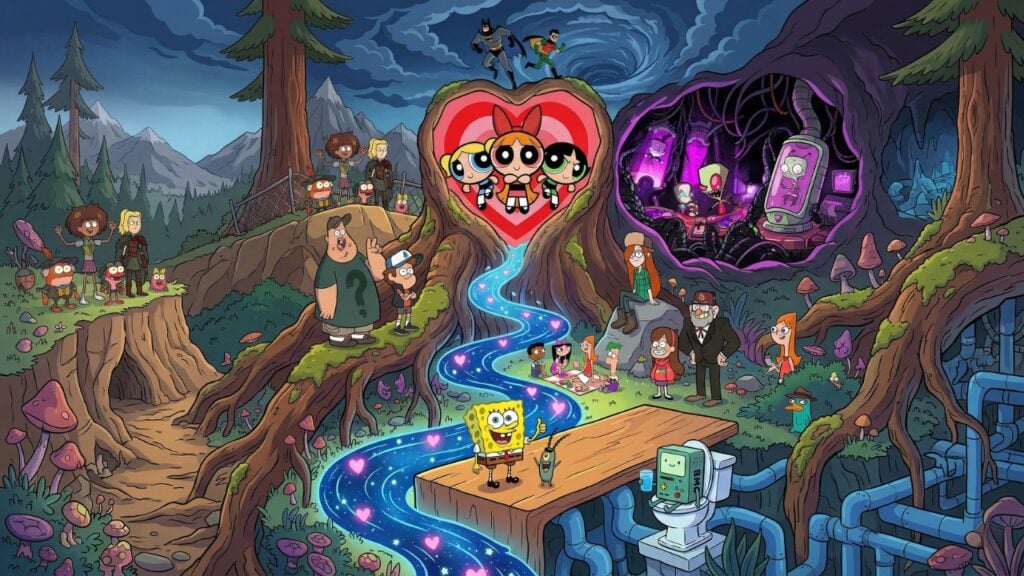
Some of the best television of the last three decades wasn’t made for adults at all. It was made for kids. Yet somehow, these animated series transcended their target demographic, pulling in millions of adult viewers who weren’t just watching alongside their children but were genuinely hooked. From existential storytelling to layered humor that flies over kids’ heads, these shows proved that “children’s television” is no longer a limitation. It’s a launchpad.
As a dad of four kids, I’ve introduced them to many of the shows on this list over the past 14 years. And while they each have their favorites, I found myself more engaged with many of them than they were. The one exception where we all meet in the middle? Phineas & Ferb. That one is an all-around family favorite, no debate, no negotiation. It’s the rare show where a five-year-old and a thirty-something laugh at the same joke for completely different reasons, and both reactions are valid.
But aside from that shared obsession, the rest of this list surprised me a little at times. I’d sit down to watch (or re-watch) a show with one or more of my kids and end up watching three more episodes after the kids went to bed. If you’re a parent, an animation fan, or just someone looking for genuinely great storytelling, these 16 shows deserve your attention. I’m sure you’ve heard of or watched many of them, but are you also a Sarah & Duck superfan? Because you definitely should be! Or what about the genuinely weird and exciting world of Invader Zim? It’s soooo good!
Editor's Note: Good TV is good TV. It can be argued that some of these kids' cartoons were written to transcend their young audience; still, they were often marketed directly towards children before quickly gaining a more mature viewership. Every show on this list aired on a kids' network or in a kids' programming block when they intially debuted.
Avatar: The Last Airbender (2005–2008)
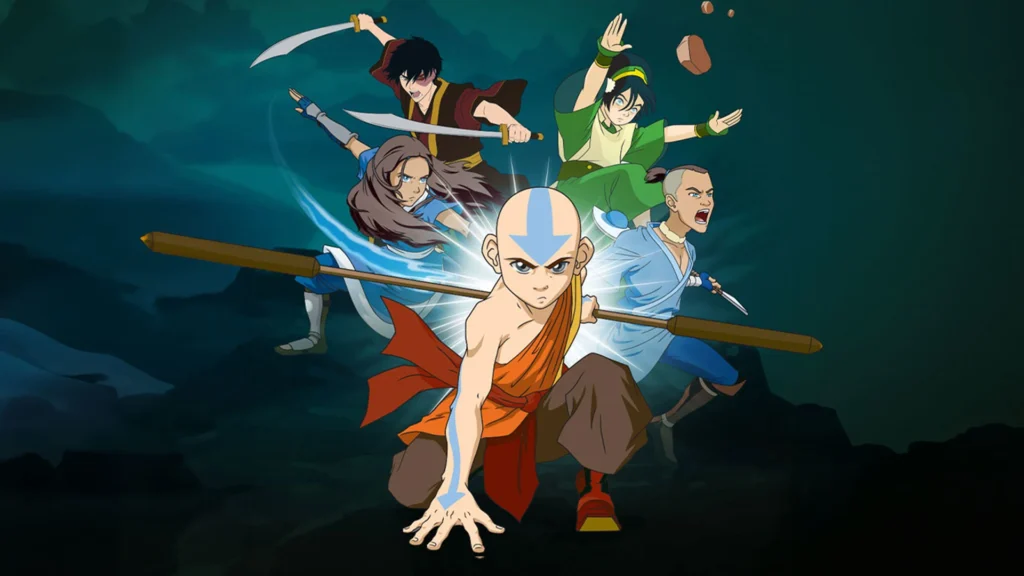
A boy frozen in ice for 100 years awakens to find his world ravaged by a century of war waged by the Fire Nation. As the Avatar, the only person capable of mastering all four elements of water, earth, fire, and air, twelve-year-old Aang must journey across a war-torn world with his new friends Katara and Sokka to learn the elements and confront Fire Lord Ozai before a looming comet grants the Fire Nation unstoppable power. Along the way, he’s pursued relentlessly by Prince Zuko, a banished Fire Nation royal on a desperate quest to restore his own honor, setting up one of the richest character dynamics in animated television.
Why Adults Love Avatar: The Last Airbender: The worldbuilding alone puts most live-action fantasy to shame. Each of the four nations draws from distinct real-world cultures with a level of care and specificity that rewards adult viewers who pick up on the influences, from the martial arts styles tied to each bending discipline to the political structures governing each society. But what truly hooks adults is the character writing. Prince Zuko’s redemption arc is frequently cited as one of the greatest in all of television, animated or otherwise. The show doesn’t shy away from genocide, imperialism, grief, or moral ambiguity, yet handles each with a maturity that never feels heavy-handed. Episodes like “The Tales of Ba Sing Se” and “Zuko Alone” hit with an emotional weight that most prestige dramas aspire to.
Beyond the themes, the show is structurally brilliant. It’s a tightly plotted three-season arc with no filler fat where every episode serves the larger narrative. Adults who grew up on sprawling, meandering series appreciate the discipline of the storytelling. The humor lands for all ages, the action sequences are genuinely thrilling, and the finale remains one of the most satisfying conclusions in TV history. It’s the show that proved, once and for all, that Western animation could stand shoulder to shoulder with any medium.
Age Recommendation: 8+ Years Old
Phineas & Ferb (2007–2015)
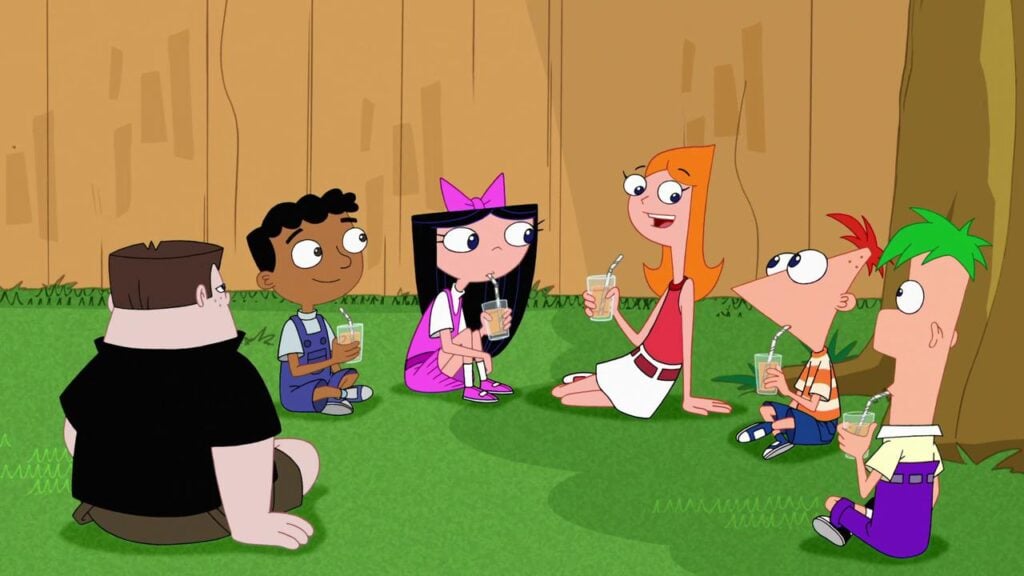
Two stepbrothers refuse to waste a single day of summer vacation and pour their boundless creativity into building increasingly absurd mega-projects in their suburban backyard, from roller coasters that loop through downtown Danville to time machines and portals to Mars. Their sister Candace is perpetually obsessed with busting them by showing their mom what they’ve built, but the evidence always vanishes just before she arrives. Meanwhile, unbeknownst to the family, their pet platypus, Perry, leads a double life as a fedora-wearing secret agent who reports to a covert animal spy organization and spends each episode thwarting the schemes of Dr. Heinz Doofenshmirtz, a bumbling, evil scientist whose tragic backstories are somehow both absurd and deeply sympathetic.
Why Adults Love Phineas & Ferb: The genius of this show is its formula. Every episode follows the same structure, and yet it never gets old because the writing is so self-aware about its own repetition that the formula itself becomes the joke. Adults catch the meta-humor immediately as characters literally acknowledge running gags, fourth walls are nudged rather than broken, and the comedic timing is razor-sharp. The songs alone are worth the watch. Tracks like “Busted,” “S.I.M.P.,” and “Gitchee Gitchee Goo” are legitimately catchy, well-produced numbers that parody everything from boy bands to Broadway with genuine musical chops.
Then there’s Dr. Doofenshmirtz. For kids, he’s a silly villain with goofy inventions. For adults, he’s a deeply relatable portrait of mediocrity, failed ambition, and surprisingly tragic backstory delivered entirely through comedy. His rivalry with Perry the Platypus is essentially a workplace sitcom buried inside a kids’ show. The writing team, led by Dan Povenmire and Jeff “Swampy” Marsh, both veterans of Rocko’s Modern Life who also cut their teeth on shows like The Simpsons and Family Guy, understood that the fastest way to entertain kids is to first entertain their parents. Every joke works on two levels, and neither level is the lesser version.
Age Recommendation: 5+ Years Old
Adventure Time (2010–2018)
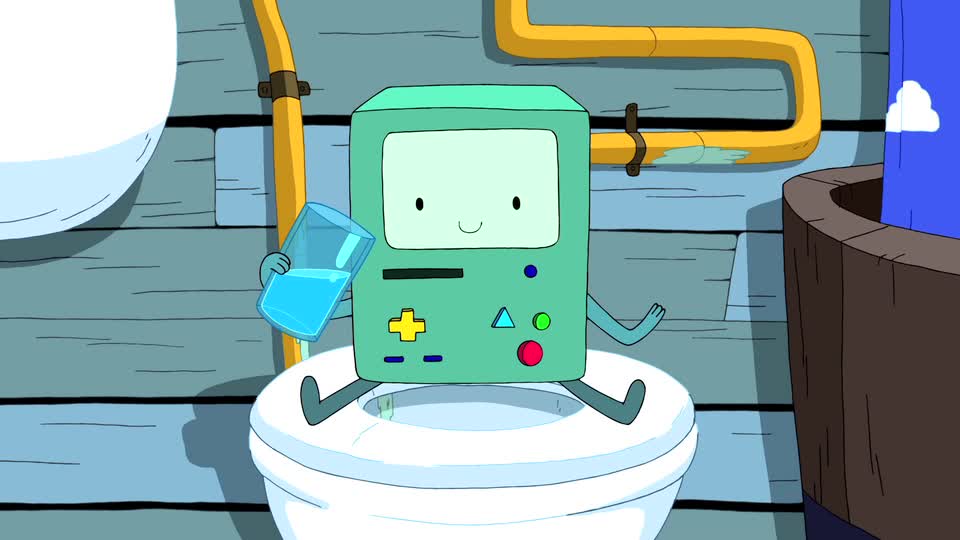
In the Land of Ooo, a strange and colorful continent built on the ruins of a civilization destroyed by nuclear war, a human boy named Finn and his magical, shape-shifting dog and adoptive brother, Jake, spend their days adventuring through candy kingdoms, haunted dungeons, and ancient ruins. What begins as a lighthearted romp through a whimsical fantasy world gradually reveals darker layers as Finn grows up on screen, encountering characters like Marceline the Vampire Queen, who carries a thousand years of grief, and the Ice King, a tragic figure who was once a loving man named Simon Petrikov before a cursed crown stole his mind and drove away everyone he cared about. Beneath the bright colors and silly voices lies a world shaped by loss, and the show takes its time letting you feel that.
Why Adults Love Adventure Time: What starts as a goofy, randomness-for-randomness’-sake cartoon slowly reveals itself to be one of the most emotionally complex animated series ever produced. The show’s world is built on the bones of a nuclear apocalypse, a detail that’s hinted at early and gradually becomes central to the mythology. Adults pick up on this immediately, and it reframes every cheerful landscape as something more haunting. Characters like Marceline and the Ice King carry backstories that are genuinely devastating when you understand the full picture. The Ice King’s arc in particular, a man who lost his mind and the people he loved most to a cursed crown, is handled with a depth that sneaks up on you over seasons.
The show also matured alongside its audience in a way few series manage. Early seasons are light and episodic while later seasons tackle loneliness, identity, the fear of irrelevance, and the nature of consciousness. Episodes like “I Remember You” and “The Hall of Egress” are experimental, emotionally raw pieces of storytelling that stand up against anything in adult animation. The art style evolved, the music, much of it performed by the cast, became a character of its own, and the show’s willingness to sit in uncomfortable silence gave it a texture that adults crave. It never talked down to its audience. It trusted them to keep up.
Age Recommendation: 8+ Years Old
Gravity Falls (2012–2016)
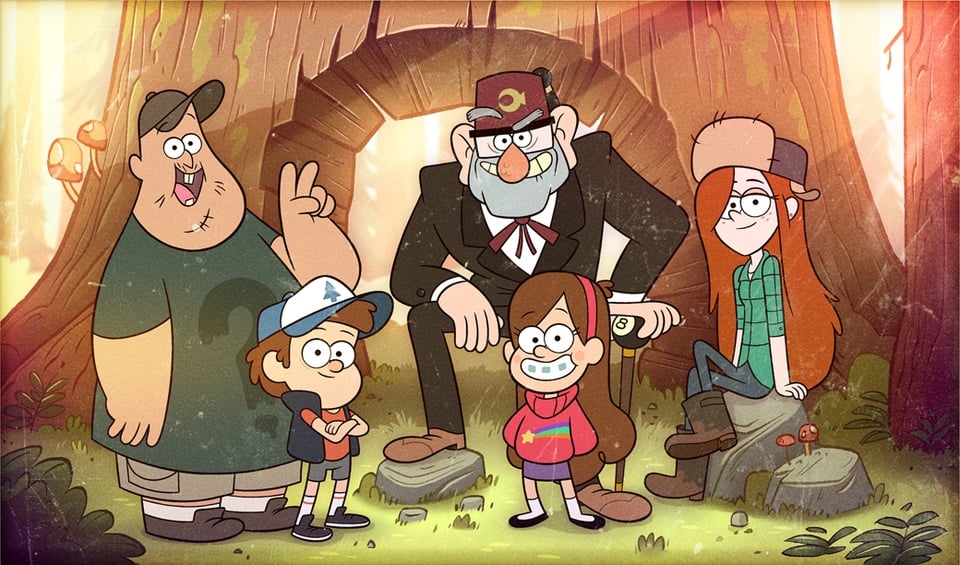
Twins Dipper and Mabel Pines are shipped off to spend the summer with their great-uncle Stan, a lovable con man who runs a tourist trap called the Mystery Shack in the small town of Gravity Falls, Oregon. When Dipper discovers a mysterious journal hidden in the woods, filled with notes about the supernatural creatures lurking in and around the town, the twins are pulled into a web of mysteries that grow more complex and more dangerous with every episode. Gnomes, time travelers, a dream demon named Bill Cipher, and the question of who wrote the journal all build toward a mythology that rewards obsessive attention to detail and keeps viewers theorizing long after the credits roll.
Why Adults Love Gravity Falls: Creator Alex Hirsch built a show that is essentially a love letter to conspiracy culture, Twin Peaks, and The X-Files wrapped in a package bright enough to air on Disney Channel. The overarching mystery of the Author and the secrets of Gravity Falls reward attentive viewing in a way that’s practically designed for adults who love to theorize. Codes, ciphers, and hidden messages are embedded in every episode, and the end credits alone contain encrypted messages that fans spent weeks cracking. For adults who enjoy shows that respect their intelligence, Gravity Falls is a goldmine.
But underneath the mystery box is a show about family, specifically the bond between siblings and the complicated love of flawed parental figures. Stan Pines is one of the best-written characters in modern animation: a con man with a heart of gold whose full backstory, when finally revealed, recontextualizes the entire series. The humor is sharp and fast, leaning on wordplay and absurdist gags that land differently for adults and kids. And at only 40 episodes, the show never overstays its welcome. Hirsch ended it on his own terms, which gives the whole series a rare sense of completeness. Adults appreciate a story that knows when to stop.
Age Recommendation: 8+ Years Old
Steven Universe (2013–2019)
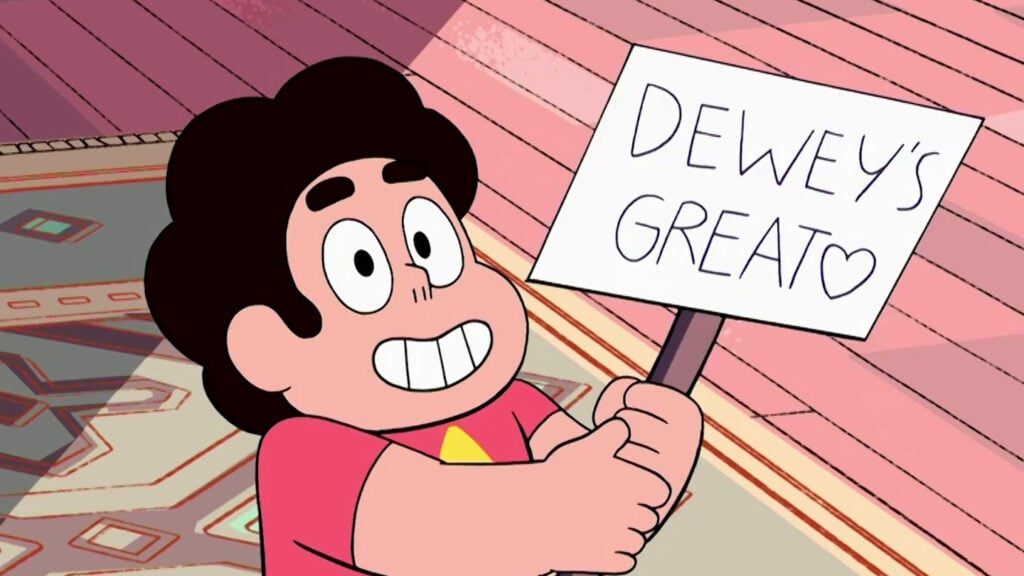
Steven is a half-human, half-Gem boy growing up in the small beach town of Beach City under the care of the Crystal Gems, a group of alien warriors who once fought a rebellion to protect Earth from their own Homeworld empire. As Steven grows into his powers, inheriting his mother Rose Quartz’s gemstone, he begins to unravel the truth about her complicated legacy and the war she waged thousands of years ago. What starts as a gentle coming-of-age story about a sweet kid learning to summon a magic shield gradually expands into an epic about colonialism, cycles of abuse, chosen family, and the radical idea that empathy and communication can be more powerful than violence.
Why Adults Love Steven Universe: Rebecca Sugar created a show that uses its sci-fi premise to explore emotional intelligence with a sincerity that’s almost radical in modern media. The show treats feelings, including fear, jealousy, self-worth, and love in all its forms, as things worthy of serious examination, not as punchlines or obstacles to action. For adults, especially those who grew up being told to suppress emotions, it can be genuinely cathartic. The show’s depiction of relationships, including its groundbreaking LGBTQ+ representation, is handled with a normalcy and warmth that resonated deeply with adult audiences who never saw themselves reflected in the cartoons they grew up with.
Musically, the show is extraordinary. Sugar, a songwriter herself, filled the series with original songs that range from playful ukulele numbers to sweeping, emotional ballads. “It’s Over, Isn’t It?” performed by a grieving character processing unrequited love, could hold its own on any Broadway stage. The show’s visual storytelling is equally ambitious, with fusion as a metaphor for relationships and the physical cracking and reforming of Gems as a metaphor for trauma and healing. It’s layered in a way that gives adults more to unpack with each rewatch. The show isn’t without its pacing issues, but when it hits, it hits with a force that most “adult” dramas can’t match.
Age Recommendation: 8+ Years Old
Teen Titans (2003–2006)
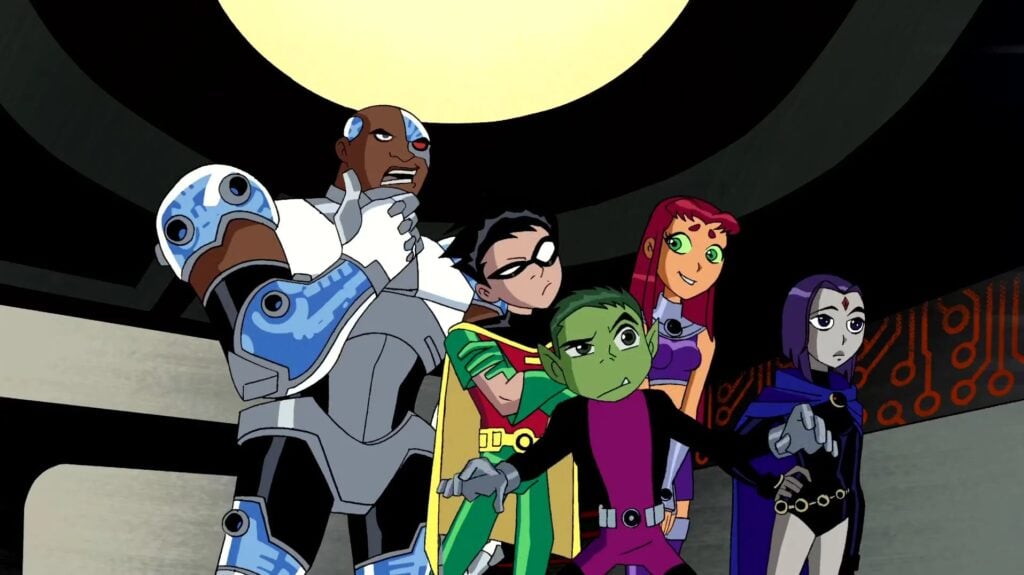
Five young superheroes, Robin, Starfire, Beast Boy, Cyborg, and Raven, live together in a giant T-shaped tower on the edge of Jump City and spend their days battling villains who range from comically absurd to genuinely terrifying. Robin is a driven, sometimes dangerously obsessive leader still stepping out of Batman’s shadow. Raven is a half-demon trying to suppress the darkness inside her. Starfire is an alien princess learning to navigate Earth culture with joyful sincerity. Together they face threats like Slade, a masked mastermind who manipulates from the shadows, and Trigon, an interdimensional demon with apocalyptic ambitions, while still finding time for pizza arguments and stankball tournaments in the hallway.
Why Adults Love Teen Titans: The 2003 series struck a balance that shouldn’t work but absolutely does. One episode is a goofy comedy about tofu versus meat, and the next is a psychologically intense dive into Raven’s demonic heritage or Robin’s obsessive spiral chasing a masked villain. Adults appreciate the tonal range because the show earns its shifts. When it goes dark, and it goes genuinely dark, it doesn’t feel like whiplash because the characters are developed enough to carry the weight. Slade remains one of the most menacing antagonists in animated TV, largely because the show lets him be a genuine psychological threat rather than a cartoon bad guy.
The anime-influenced animation style gave the action sequences a kinetic energy that was rare in Western animation at the time, and the show used it to tell stories about control, manipulation, trust, and trauma that hit harder as an adult. The Terra arc in particular is a masterclass in betrayal storytelling that many adult viewers point to as formative. Most of the Titans get dedicated season-long arcs, with Robin’s obsession with Slade driving the first two seasons, Cyborg stepping into the spotlight in season three, Raven’s demonic prophecy consuming season four, and Beast Boy leading the charge against the Brotherhood of Evil in season five. That structural depth rewards binge-watching in a way the show was never originally designed for. For millennials who watched it as kids, revisiting it as adults reveals layers they missed entirely, which is the mark of a show built to last.
Age Recommendation: 8+ Years Old
The Powerpuff Girls (1998–2005)
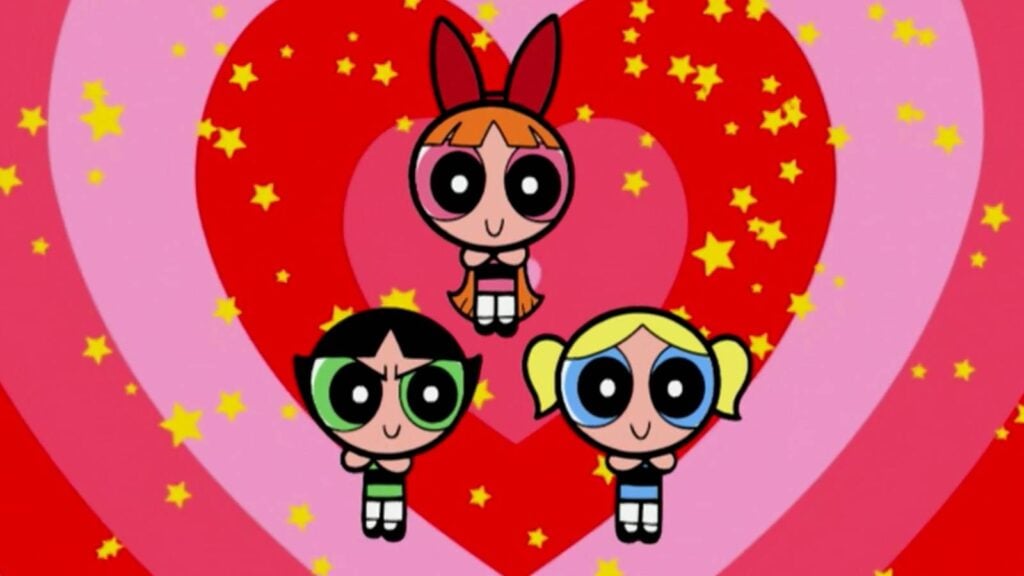
Three little girls, Blossom, Bubbles, and Buttercup, were created in a lab by Professor Utonium when he accidentally added Chemical X to a mixture of sugar, spice, and everything nice. Now they live with him in the city of Townsville and spend their days splitting time between kindergarten and saving the world from a rotating gallery of villains including Mojo Jojo, a megalomaniacal chimpanzee with an enormous brain and an even more enormous ego, HIM, a sinister and effeminate devil figure who speaks in an echoing falsetto, and Fuzzy Lumpkins, a backwoods creature with a shotgun and a temper. The show balances sugary-cute visuals with an edge that’s sharper than it has any right to be.
Why Adults Love The Powerpuff Girls: Creator Craig McCracken packed this show with references that no five-year-old was catching. Episodes riff on The Beatles, Scorsese films, political satire, and horror tropes with a winking cleverness that made it appointment viewing for college students when it first aired. The villains alone are a study in adult-oriented comedy. Mojo Jojo’s overwrought monologues are a parody of supervillain tropes taken to absurdist extremes, while HIM is a genuinely unsettling creation whose menace operates on a level most kids simply register as “scary,” while adults recognize the deeper, more psychologically disturbing implications.
The show’s visual style, a deliberate clash between cute, rounded character design and explosive, angular action, was groundbreaking and influenced a generation of animators. But the real hook for adults is the writing’s willingness to go places you don’t expect from a show about kindergarteners. Episodes deal with loneliness, existential dread, and the limits of good intentions. The Narrator’s dry commentary functions almost as a separate layer of humor aimed squarely at parents. It’s a show that never once condescended to its audience, regardless of their age, and it holds up remarkably well two decades later.
Age Recommendation: 6+ Years Old
Bluey (2018–Present)
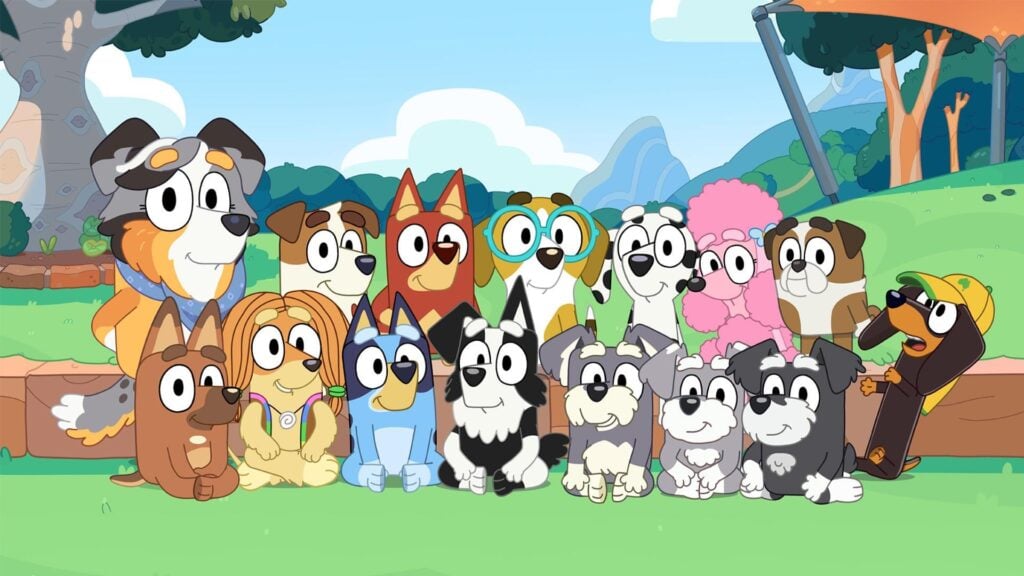
Bluey is a six-year-old Blue Heeler puppy living in Brisbane, Australia with her younger sister Bingo, her dad Bandit, and her mum Chilli. Each seven-minute episode follows Bluey and Bingo as they invent imaginative games that transform their house, backyard, and neighborhood into elaborate worlds of pretend, from running a hairdressers that processes real emotional breakthroughs to playing a game called “Takeaway” that turns a simple restaurant wait into a full-blown adventure. What makes the show quietly revolutionary is that the parents aren’t side characters. Bandit and Chilli are active participants in their kids’ play, sometimes enthusiastically and sometimes while visibly exhausted, and the show is just as interested in what parenthood costs and gives them as it is in the children’s experience.
Why Adults Love Bluey: Let’s be honest. Bluey is a parenting show disguised as a kids’ show. Bandit and Chilli aren’t background characters or bumbling sitcom parents. They’re fully realized adults dealing with the exhaustion, self-doubt, and quiet joy of raising kids, and they do it with a patience and creativity that makes adult viewers both inspired and slightly called out. Episodes like “Baby Race,” about comparing your child’s development to others, and “Sleepytime,” a breathtaking episode driven almost entirely by a sweeping orchestral score adapted from Holst’s “The Planets” that follows Bingo learning to sleep in her own bed, have made grown adults openly weep. The show understands that the emotional lives of parents are just as valid a subject as the imaginative lives of children.
What makes it work is the specificity. Every seven-minute episode captures some tiny, universal truth about family life, the way kids process grief, the guilt of a parent who needs five minutes alone, the unspoken negotiation between partners about who handles bedtime. The animation is gorgeous, the music is thoughtful, and the show trusts silence and subtlety in a way that most children’s television doesn’t. Adult viewers often describe it as therapeutic. It’s the rare show that doesn’t just entertain parents who are watching with their kids. It actively makes them feel seen.
Age Recommendation: 3+ Years Old
Sarah & Duck (2013–2017)
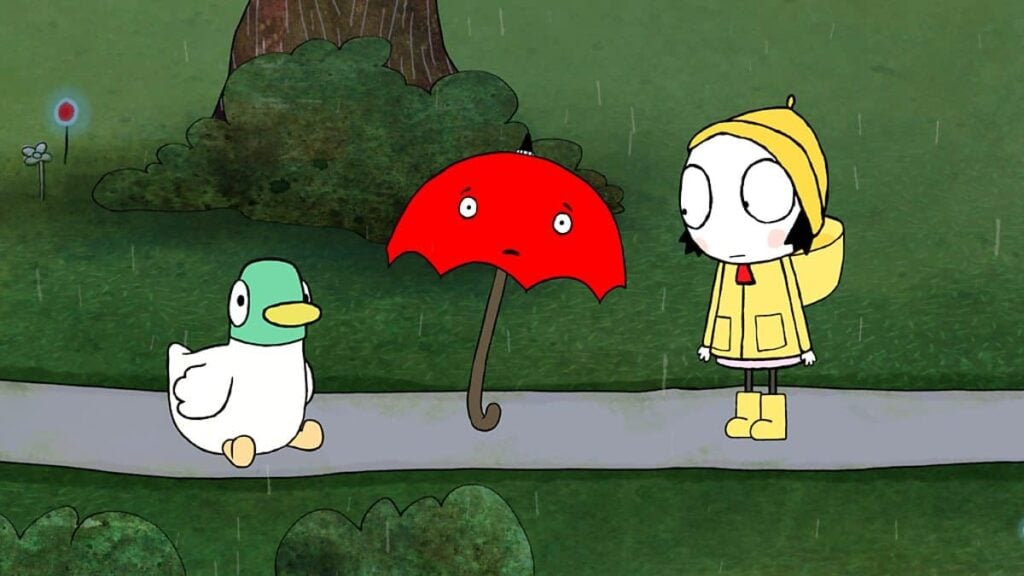
Sarah is a seven-year-old girl with a green hat and a calm, curious disposition. Her best friend is Duck, who is, quite simply, a duck. Together they navigate a gently surreal world populated by characters like Scarf Lady, a woman so bundled up she can barely move, the Shallots, a group of sentient vegetables with strong opinions about gardening, and Plate Girl, a quiet friend who communicates primarily through baked goods. There are no villains, no high stakes, and no frantic pacing. Instead, each episode follows Sarah and Duck as they solve small, odd problems, like helping the moon feel less lonely or figuring out how to return a borrowed umbrella to the rain, with the quiet determination of two people who take the small things in life very seriously.
Why Adults Love Sarah & Duck: In an era of loud, fast, high-stimulus children’s television, Sarah & Duck is a deep breath. The show operates at a pace and volume that’s almost meditative. There’s no conflict-driven plot structure, no villain, no stakes in the traditional sense. And yet it’s completely absorbing. Adults who discover it often describe it as the most relaxing thing on television. The humor is bone-dry and distinctly British, delivered through Roger Allam’s gentle, understated narration and absurd situations played completely straight. A bag of shallots has feelings. The moon has opinions about bedtime. A plate of scones is treated with the gravity of a diplomatic event. None of it is explained or justified, and that commitment to its own internal logic is what makes it brilliant.
For adults, the appeal is partly aesthetic. The muted color palette and simple digital animation have a warmth that feels handmade in an age of visual excess. But it’s also the show’s quiet emotional intelligence. Sarah navigates social situations, disappointment, and uncertainty with a gentle resilience that genuinely models emotional regulation without ever being didactic. Duck is a duck. He doesn’t talk but communicates everything through quacks and body language, and somehow, he’s one of the most expressive characters in modern animation. It’s a show that trusts children and adults to appreciate small, quiet, beautiful things.
Age Recommendation: 3+ Years Old
SpongeBob SquarePants (1999–Present)
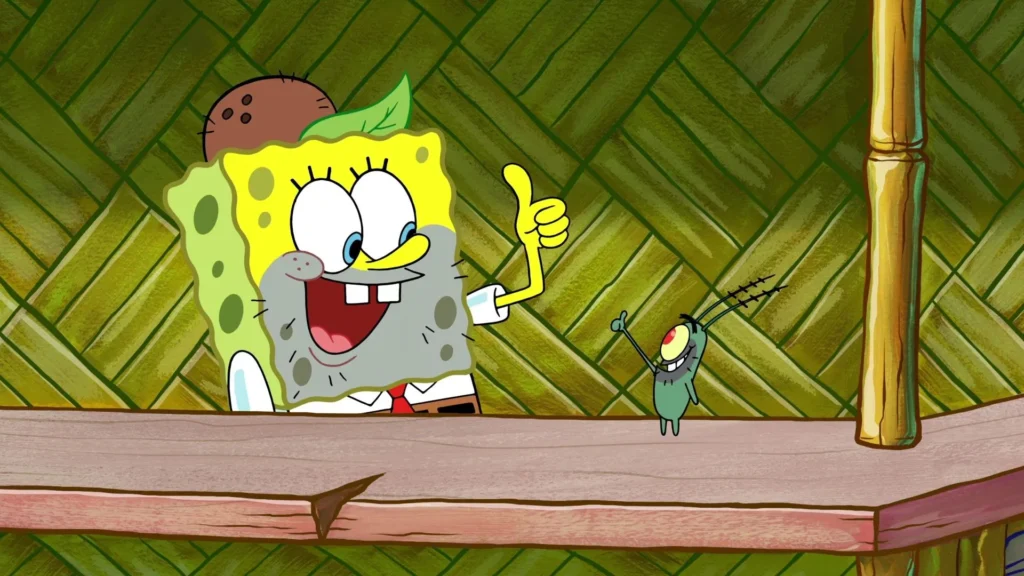
SpongeBob is an endlessly optimistic sea sponge who lives in a pineapple under the sea and works as a fry cook at the Krusty Krab, a fast food restaurant run by the money-obsessed Mr. Krabs. His best friend, Patrick Star, is a starfish of spectacularly low intelligence and high enthusiasm. His neighbor Squidward is a self-serious clarinet player who despises them both. His friend Sandy is a karate-chopping squirrel from Texas who lives in an underwater dome. Together, and often against Squidward’s will, they navigate life in Bikini Bottom through episodes that range from workplace comedy to surrealist nightmare to genuine emotional storytelling, all set against one of the most visually inventive and quotable animated universes ever created.
Why Adults Love SpongeBob SquarePants: The first three seasons of SpongeBob aren’t just good children’s television. They’re some of the sharpest comedy writing of the early 2000s, full stop. Creator Stephen Hillenburg, a marine biologist turned animator, built a show where every frame could be a meme, and eventually thousands of them were. The humor operates on a rapid-fire, almost vaudeville rhythm, with visual gags, wordplay, and absurdist escalation layered so densely that adults catch new jokes on rewatches years later. Episodes like “Band Geeks,” “Chocolate with Nuts,” and “Graveyard Shift” are studied by comedy writers for their structure and timing.
The show’s cultural footprint among adults is arguably larger than its footprint among children at this point. SpongeBob became the lingua franca of internet humor for millennials and Gen Z, a shared visual language for expressing everything from existential dread to petty workplace frustration. Squidward, once the show’s grumpy foil, became a generational icon as viewers aged into his worldview. The irony is that Hillenburg never intended to create a cultural monument. He just wanted to make a funny show about sea creatures. But the craftsmanship of those early seasons created something that transcended its format entirely. Adults return to it not out of nostalgia, but because it’s genuinely, reliably funny.
Age Recommendation: 5+ Years Old
Star Wars: The Clone Wars (2008–2020) & Rebels (2014–2018)
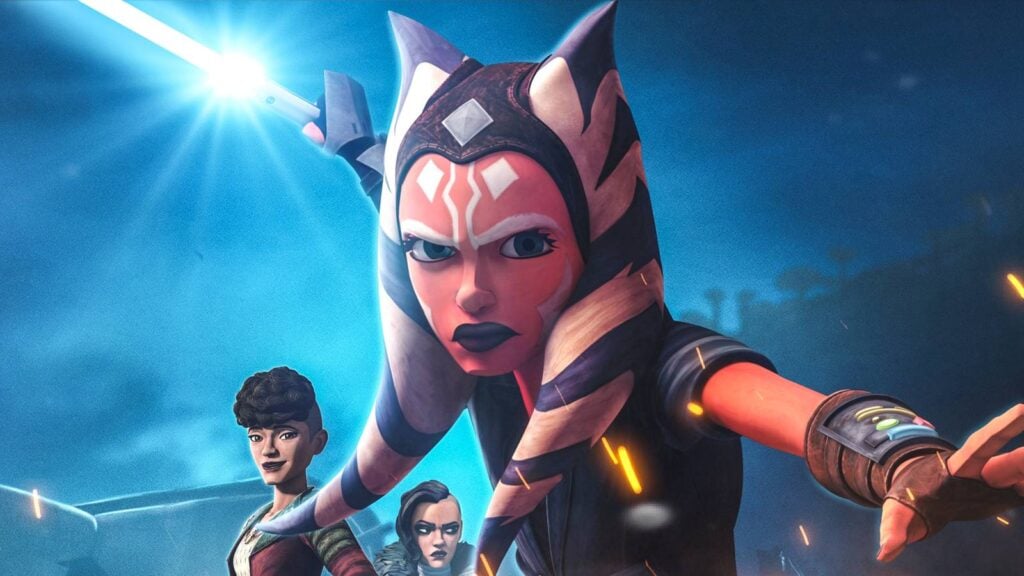
The Clone Wars is set between the events of Attack of the Clones and Revenge of the Sith, following Anakin Skywalker, Obi-Wan Kenobi, and a bold new character named Ahsoka Tano, Anakin’s young Padawan, as they lead Republic forces through the galaxy-spanning war against the Separatist army. What begins as an episodic war anthology gradually builds into a sprawling, interconnected saga that transforms the prequel era from a trilogy many fans struggled with into the most emotionally rich chapter of the entire Star Wars timeline. Rebels picks up roughly fifteen years later, following a small crew of misfits aboard the starship Ghost as they carry out guerrilla missions against the growing Galactic Empire, connecting the dots between the fall of the Republic and the rise of the Rebellion in ways that deepen everything that came before and after.
Why Adults Love The Clone Wars & Rebels: Dave Filoni did something remarkable with these shows. He took the most criticized era of Star Wars and turned it into the emotional backbone of the entire franchise. The Clone Wars, in particular, transforms Anakin’s fall to the dark side from a narrative that felt rushed in the films into a slow, tragic, deeply human descent. His relationship with Ahsoka Tano, a character invented for the show who became one of the most beloved in all of Star Wars, gives his story the emotional anchor it was missing. Adults who were disappointed by the prequels found in The Clone Wars the versions of those stories they’d been wanting.
Both shows also have a willingness to go places that a theatrical Star Wars release never would. Clone troopers grapple with their own personhood. War crimes are committed on screen. Characters die, not in heroic, sweeping sacrifice, but in the ugly, senseless way that war actually takes people. The Mandalore arcs, the Siege of Mandalore, and Rebels’ exploration of Thrawn all operate at a storytelling level that assumes an audience mature enough to handle complexity. The animation quality, particularly in later Clone Wars seasons, is stunning. For adult Star Wars fans, these shows aren’t supplementary material. They’re essential.
Age Recommendation: 9+ Years Old
Batman: The Animated Series (1992–1995)
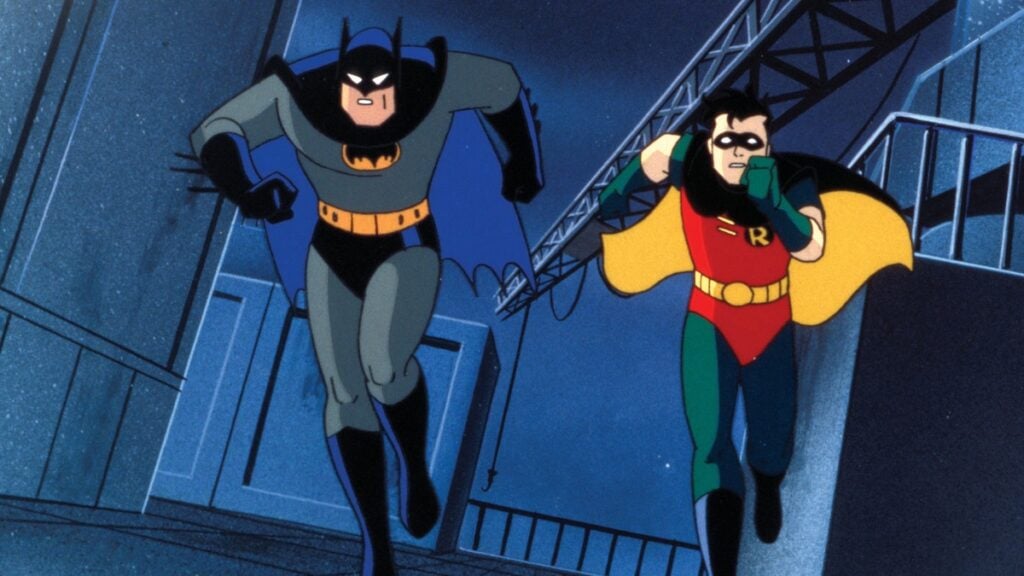
Bruce Wayne prowls the rooftops of a Gotham City that exists outside of time, a shadowy Art Deco metropolis where zeppelins drift through smog-filled skies and the criminal underworld operates out of jazz clubs and crumbling warehouses. By day, he’s a billionaire philanthropist. By night, he’s Batman, waging a one-man war on crime that brings him face to face with a rogues’ gallery of villains who are as psychologically complex as they are dangerous. Mr. Freeze is a grieving scientist willing to destroy everything to save his dying wife. Harley Quinn is a former psychiatrist who fell in love with her most dangerous patient. Two-Face is Bruce Wayne’s closest friend, destroyed by the duality he could never reconcile. And the Joker, voiced with manic brilliance by Mark Hamill, is chaos made flesh. This isn’t a show about punching bad guys. It’s a noir drama about broken people in a broken city.
Why Adults Love Batman: The Animated Series: This is the show that redefined what American animation could be. Produced on dark-painted backgrounds, with the team drawing on black paper, adding light rather than shadow, BTAS had a visual identity so distinct and cinematic that it still looks stunning thirty years later. The show’s Gotham feels lived-in, dangerous, and beautiful, a noir city that owes as much to Fritz Lang as to DC Comics. For adults, the aesthetic alone is enough to elevate it above nearly everything else in the genre. But the writing matches the visuals beat for beat. Episodes like “Heart of Ice,” which reinvented Mr. Freeze as a tragic figure driven by love, won an Emmy and fundamentally changed how the character was written across all media.
Kevin Conroy’s Batman and Mark Hamill’s Joker became the definitive versions of those characters for an entire generation, and arguably remain so. The show treated its villains as people first and antagonists second. Harley Quinn, created entirely for this series, became a cultural icon precisely because the show gave her a complex, sympathetic interiority. For adults, BTAS functions as a detective noir anthology that happens to feature a man in a cape. It never dumbs anything down, never rushes its emotional beats, and never assumes that animation is a lesser form of storytelling. It set a standard that the entire DC Animated Universe was built on, and most adult animation still hasn’t caught up.
A Special Note For Parents: Batman: The Animated Series aired on the Fox Kids afternoon block and is formally categorized as children's television (TV-Y7, retroactively applied since the rating system didn't exist until 1997). However, the creators deliberately aimed for a more sophisticated, mature tone, and it premiered with a primetime special intended to attract a wider audience. It's a kids' show by classification, but it was designed to punch above its weight more than most on this list.
Age Recommendation: 8+ Years Old
Samurai Jack (2001–2017)
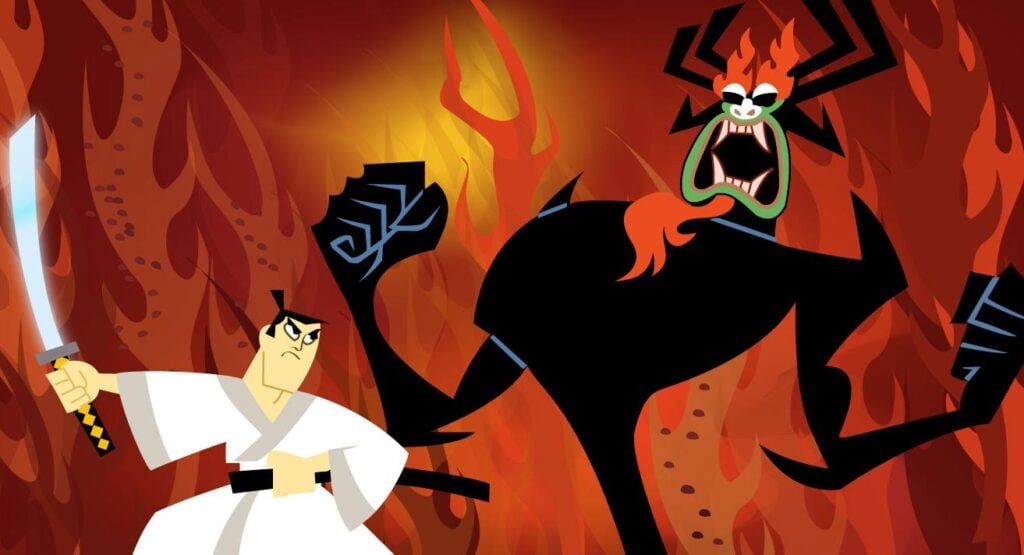
A young prince trained in the fighting arts of cultures across the globe confronts Aku, a shape-shifting master of darkness who has terrorized humanity for millennia. Just as the samurai is about to deliver the final blow, Aku tears open a portal in time and flings him into the distant future, a dystopian world where Aku rules unchallenged and alien species, robots, and bounty hunters roam a landscape that blends cyberpunk cityscapes with ancient ruins. Now known only as Jack, the samurai wanders this hostile future searching for a way back to his own time to undo Aku’s evil, helping the oppressed and fighting the impossible along the way. The show tells this story with long stretches of silence, sweeping landscapes, and action sequences that are more visual poetry than cartoon violence.
Why Adults Love Samurai Jack: Genndy Tartakovsky created a show that communicates primarily through visuals in a medium that typically relies on dialogue. Entire episodes pass with barely a word spoken. The storytelling lives in the composition, the color, the movement, and the silence between moments. Adults who appreciate film as a visual art form find in Samurai Jack something closer to Kurosawa than to Saturday morning cartoons. The show draws from a vast well of visual traditions, from Japanese cinema to classic comic art to mythological iconography, creating an aesthetic experience that is genuinely unique in Western television.
The action is extraordinary, fluid, inventive, and paced with a patience that builds tension the way live-action rarely achieves. But the show’s adult appeal runs deeper than spectacle. Jack is a fundamentally lonely character, displaced from everyone and everything he’s ever known, and the show sits in that loneliness without rushing to fix it. The original run aired on Cartoon Network from 2001 to 2004 before going off the air for over a decade. When Adult Swim revived the series in 2017 for a final season, Tartakovsky leaned fully into the show’s darker undertones, depicting the psychological toll of decades of failure and isolation. That final season confirmed what adult fans always knew. Samurai Jack was never really a kids’ show, wearing a kids’ show costume. It was an art piece that happened to air on Cartoon Network.
A Special Note For Parents: Samurai Jack Season 5 (2017) deserves special attention if watching with children. Seasons 1-4 aired on Cartoon Network and were rated TV-Y7, firmly a kids' show. But the 2017 revival season aired on Adult Swim, was rated TV-14, and featured explicitly mature content including graphic violence and PTSD themes. That final season was not made for kids.
Age Recommendation: 10+ Years Old
Invader Zim (2001–2006)
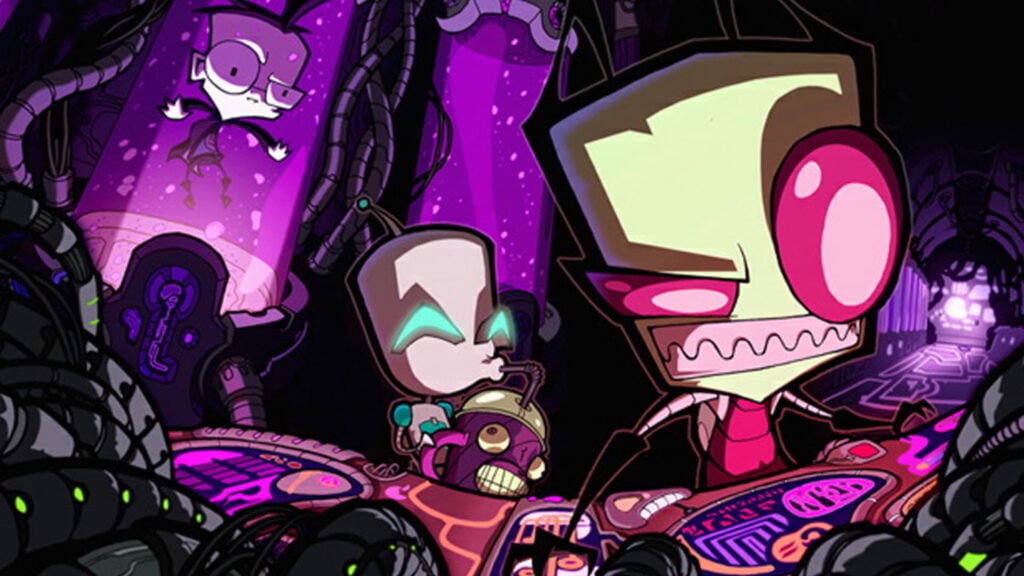
Zim is an Irken invader, a small, loud, green-skinned alien from a species obsessed with galactic conquest. The problem is that Zim is terrible at his job. After ruining a previous invasion, his leaders, the Almighty Tallest, send him on a fake mission to a planet so obscure they don’t even bother checking if it exists. That planet turns out to be Earth. Accompanied by GIR, a malfunctioning robot cobbled together from spare parts and whatever junk the Tallest had in their pockets, Zim sets up a hilariously unconvincing disguise and enrolls in elementary school to begin his conquest. The only person who sees through the charade is Dib, a paranormal-obsessed classmate whom nobody believes. What follows is a war between two equally unhinged individuals, set against a world so apathetic and dim that an alien invasion is genuinely the least of its problems.
Why Adults Love Invader Zim: Jhonen Vasquez, a comic book creator known for the darkly comedic Johnny the Homicidal Maniac, brought a sensibility to Nickelodeon that the network frankly didn’t know what to do with. The humor in Invader Zim is bleak, absurdist, and relentlessly weird. Organs are harvested, a kid gets his eyes sewn shut in a nightmare sequence, and the entire show operates on the premise that humanity is too stupid to notice an alien invasion happening in plain sight. Adults love it because it’s genuinely subversive in a way that most “edgy” cartoons only pretend to be. It doesn’t try to shock. It just has a deeply cynical worldview that it fully commits to.
GIR, Zim’s broken robot sidekick, became a cultural phenomenon in his own right. His non-sequiturs and cheerful chaos became the mascot of a certain strain of mid-2000s internet humor. But the show’s lasting appeal to adults lies in its design and atmosphere. Every frame is angular, claustrophobic, and drenched in dark reds, blacks, and sickly alien greens. The world of Invader Zim feels genuinely hostile, and the comedy is inseparable from that hostility. Nickelodeon canceled the show before it could finish its second season, but it developed a cult following that only grew over the years and eventually earned a movie, Invader Zim: Enter the Florpus, in 2019. For adults who found mainstream cartoons too safe, Invader Zim was and remains the antidote.
Age Recommendation: 10+ Years Old
The Owl House (2020–2023)
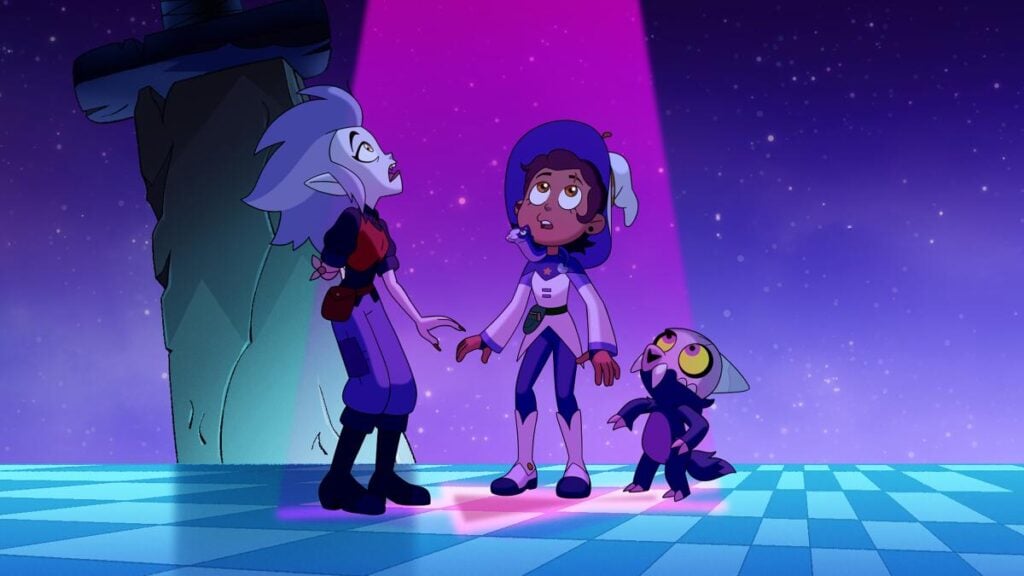
Luz Noceda is a creative, fantasy-obsessed Dominican-American teenager who accidentally stumbles through a portal into the Boiling Isles, a magical realm built on the remains of a dead titan where witches, demons, and all manner of strange creatures coexist under the strict rule of Emperor Belos. Rather than returning home, Luz apprentices herself to Eda Clawthorne, a rebellious outlaw witch known as the Owl Lady, and befriends King, a tiny, self-proclaimed King of Demons whose true nature turns out to be far more significant than anyone, including himself, initially realizes. As Luz builds a life in this strange world, attends the local magic school, and develops a relationship with a former rival named Amity, she uncovers a conspiracy at the heart of the Emperor’s coven system that threatens both the Boiling Isles and the human world she left behind.
Why Adults Love The Owl House: Creator Dana Terrace built a show that takes serialized fantasy storytelling seriously in a way that Disney Channel animation rarely had before. The Boiling Isles isn’t a whimsical backdrop. It’s a fully realized world with its own history, political systems, and magic taxonomy that adult fantasy fans find genuinely compelling. The show’s central mystery unfolds with the pacing and payoff of a well-plotted novel, and it trusts its audience to track details across episodes rather than resetting to a status quo each week. For adults who love worldbuilding, it scratches the same itch as a good fantasy series.
The show also made television history with its openly queer lead. Luz’s relationship with Amity is central to the story, not a subplot or a finale reveal, and it’s written with the same care and attention as any great onscreen romance. Adult viewers responded powerfully to seeing a same-sex relationship in a kids’ show treated as simply normal. Beyond representation, the show’s themes of questioning authority, finding family outside of tradition, and the danger of charismatic leaders resonate with adults navigating their own versions of those struggles. The truncated final season, a result of Disney’s decision and not the creators’, is a sore point, but even with that constraint, The Owl House delivered a complete, emotionally satisfying story.
Age Recommendation: 9+ Years Old
Amphibia (2019–2022)
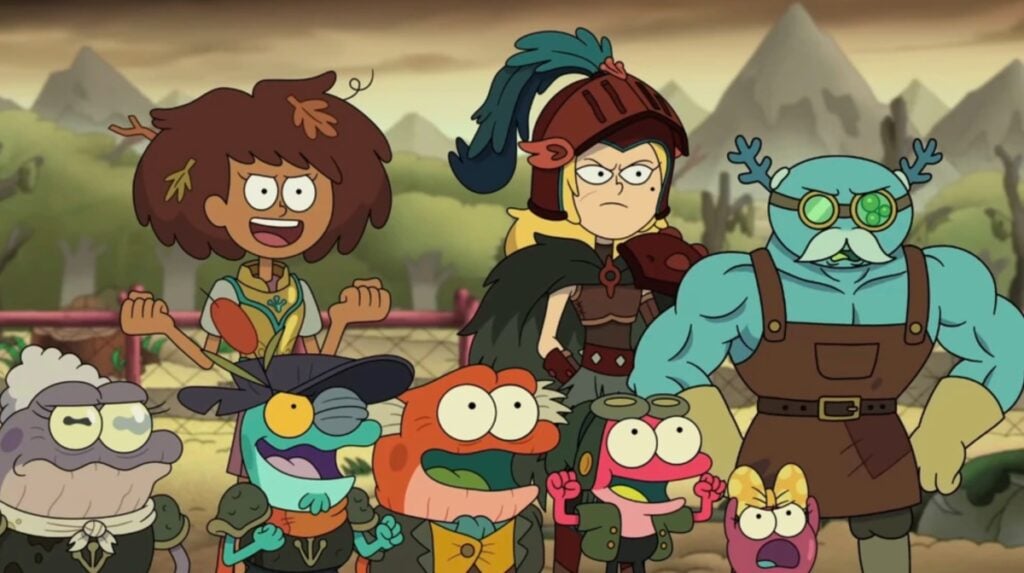
Three best friends, Anne, Sasha, and Marcy, are transported to a world of sentient frogs, toads, and newts after opening a mysterious music box on Anne’s birthday. Separated across the continent of Amphibia, each girl lands in a different region and begins a journey that forces her to confront uncomfortable truths about herself and the dynamics of their friendship. Anne ends up in Wartwood, a small swamp town where she’s taken in by the Plantar family, a household of frogs who teach her self-reliance and genuine connection. Sasha falls in with the militant toads of Toad Tower and leans into her controlling instincts. Marcy finds the newt scholars of Newtopia and buries herself in adventure to avoid the secret she’s been keeping. What looks like a cute fish-out-of-water comedy is actually a carefully constructed story about power, codependency, and what happens when a friendship built on imbalance is finally tested.
Why Adults Love Amphibia: Creator Matt Braly pulled off one of the most effective bait-and-switches in recent animation. The first season presents itself as a lighthearted fish-out-of-water comedy, a human girl living with a family of frogs, learning to catch bugs, and navigating a swamp town. It’s fun, it’s charming, and it gives adults almost no indication of what’s coming. Then the show begins pulling threads. Relationships that seemed simple reveal fault lines. The mythology deepens. And by the time the show hits its midseason climaxes, it’s delivering gut-punch moments that rival anything in prestige animation. The “True Colors” season two finale in particular left adult fans stunned. It went places that felt genuinely dangerous for a Disney Channel show.
At its core, Amphibia is a show about the difference between toxic and healthy friendships, and it examines that theme with more nuance than most adult dramas bother with. Marcy, Sasha, and Anne each represent a different response to the power dynamics that can quietly poison a close relationship, and the show doesn’t offer easy forgiveness or clean resolutions. Adults who’ve navigated complicated friendships, especially ones rooted in adolescence, find it uncomfortably accurate. The animation escalates beautifully across three seasons, the comedy stays sharp even as the stakes rise, and the finale earns every emotional beat it reaches for. It’s the show that most people haven’t seen yet, but absolutely should.
Age Recommendation: 8+ Years Old