
You may have seen a lot of media coverage in recent years about the ongoing teen mental health crisis, and for good reason.
Even before the pandemic, teen mental health problems were on the rise. Rates of depression rose from 8% to almost 16% from 2009 to 2019. Since the onset of the pandemic in 2020, high percentages of high school students (40%) have reported feelings of persistent sadness or hopelessness.
There are many hypotheses about why this might be happening, but new research is showing that at least one simple habit may aid teens in preventing depression.
A new study just released shows that teens who use the weekend to catch up on sleep are much less likely to show signs of depression compared to those who don’t. In fact, teens who slept in on the weekends showed a 41% less risk of depressive symptoms.
Why? It seems that sleep is a simple preventive measure for teens’ mental health. However, it’s often a challenge for them to get enough sleep.
Sleep Changes During The Teen Years

There are many stereotypes about teens being lazy and sleeping at odd hours. Research on what’s happening in teens’ brains actually shows that these sleep habits likely stem from changes in their circadian rhythm during adolescence.
At this stage of development, there’s a shift in circadian rhythm, making it harder for teens to fall asleep earlier in the evening. Researchers say that the sleep window for teens usually starts around 11 pm.
This doesn’t seem that late until you consider the fact that many teens have to wake up very early for school, with start times sometimes even before 8 am. This is combined with the fact that many teens are juggling numerous responsibilities, including extracurricular activities, part-time jobs, and homework.
Altogether, this often makes it very challenging for teens to fall asleep early enough to get the recommended 8 to 10 hours of sleep.
Weekend Catch-Up Sleep And Teen Mental Health
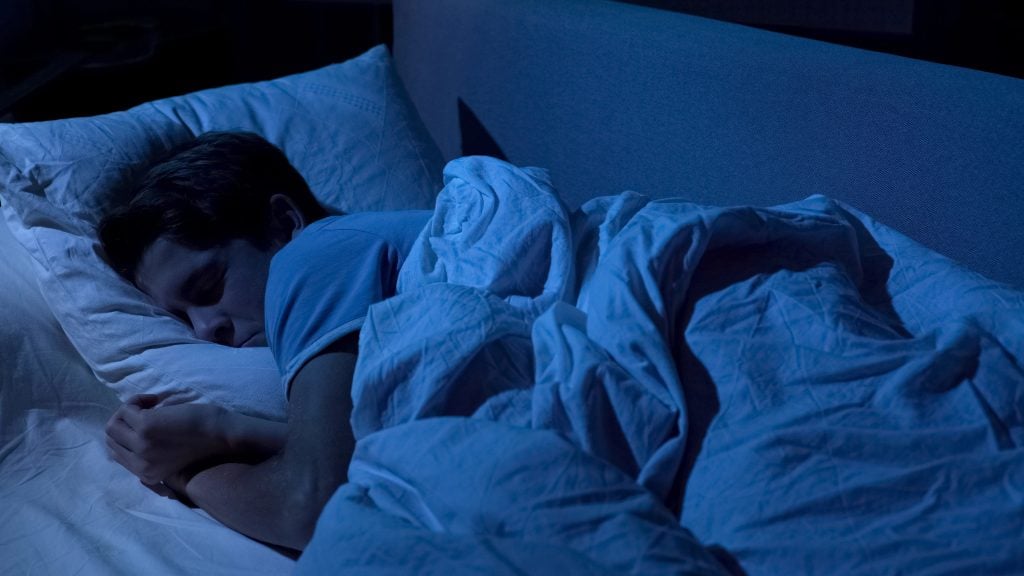
This research shows that although adolescents may accrue sleep debt during the week, the weekend can significantly help them recover that sleep and protect their mental health. However, there is a caveat to this story.
Other research suggests that too much weekend sleep may also be problematic. One study showed that small amounts of weekend oversleeping helped compensate for weekday sleep loss, but longer weekend catch-up sleep was associated with worse mental health among adolescents.
This may be because extensive oversleeping (e.g., sleeping until noon) may disrupt a teen’s natural sleep rhythm. As with many aspects of life, balance is key.
Teen Sleep Tips

In general, protecting your teen’s sleep should be a high priority for their overall health, both physical and mental. Here are a few more tips for helping your teen get enough sleep at the right times:
Establish a device curfew. If your teen has a phone or other electronic device, ensure that it is put away well before bedtime. Set up a charging station outside their bedroom. Studies show that even having a device in a teen’s bedroom can disrupt sleep. Having the phone within arm’s reach makes it tempting for them to text friends or watch online content until late into the night.
Encourage physical activity. Although most teens are very busy, some may not get enough physical activity. Adequate physical activity may help them wind down sooner in the evening and fall asleep more easily. Try to encourage your teen to be physically active, either through sports, walking, biking, or hiking with friends.
Allow weekend catch-up sleep…to a point. Catching up on sleep on the weekends can be a helpful habit, within limits. If you find your teen sleeping more than 2-3 hours later than their usual waking time, consider waking them up, even on weekends. This will allow their body to maintain a consistent circadian rhythm so they can sleep well at night.
Let in the light. Once your teen is awake, encouraging them to be in the sunlight in the morning can also help reset their circadian rhythm. Early light exposure signals to their body that it’s time to wake up.
Helping your teen establish healthy sleep habits often means setting firm boundaries, which may provoke some complaints, but it’s worth the effort. Like all of us, teens need adequate sleep not only to protect their mental health, but to study, work, and play well throughout the day.