


The actor’s four-instrument musical journey with his 9-year-old reveals why parent-child music making is so much more powerful than lessons alone
Jesse Eisenberg and his 9-year-old son, Banner, have been learning the same song on four different musical instruments together, the actor revealed to People magazine. What sounds like a sweet family hobby turns out to be one of the most developmentally powerful things a parent can do for a child.
Eisenberg, 42, shares Banner with wife Anna Strout. The story is an adorable glimpse into their family life, but it also points to something much bigger: a growing body of research showing that when parents engage in music alongside their children rather than simply enrolling them in lessons and stepping back, the benefits multiply in ways that extend far beyond the ability to carry a tune.
Why The Parent Learning Too Changes Everything
Most parents think of music education as something that happens between a child and a teacher. But researchers have found that the social context of music learning is one of the most overlooked variables in whether those lessons actually stick and pay off.
Studies have found that sharing music together at home is linked to stronger social skills in children, and that parents who attend or participate in their children’s music activities report measurably improved moods, particularly among those who tend toward anxiety.
What Eisenberg is doing with Banner goes even further than attending a recital. By sitting down and learning the same piece himself, he is modeling something children rarely see from adults: the willingness to be a beginner.
That shift in dynamic, from authority figure to fellow student, removes much of the pressure that turns music into a chore. When a child watches a parent struggle through a chord and keep going anyway, it reframes effort and imperfection as normal parts of the process rather than signs of failure.
Music educators have long understood this intuitively. The guidance published by Pure Ocarinas notes that children learn a great deal through observing their environment, and that seeing music being played by someone close to them elevates it from something abstract to something achievable. “Exposure to instruments, such as through a parent who plays, will also help,” the site notes.
“Children learn a lot from observing their environment, and seeing music being played elevates it from ‘something that magically exists’ to ‘something that I can learn how to do.'”
Start With a Song They Love, Not Scales They Dread
The specific approach Eisenberg and Banner are taking. returning to a single beloved piece across multiple instruments also aligns closely with what music educators recommend for keeping young learners engaged. The instinct to drill children on scales and technical exercises before letting them play real music is one of the most common ways parents and teachers accidentally kill enthusiasm early.
Pure Ocarinas puts it plainly: “Often, someone wants to learn music because they have heard a song or tune that resonates with them. They want to learn how to play it. Build on this and show them how to play it; don’t bog them down with technical exercises.”
The site adds that even a loose, simplified version of a favorite song builds genuine confidence because, from the child’s perspective, they are already playing something real and meaningful.
Choosing The Right Instrument
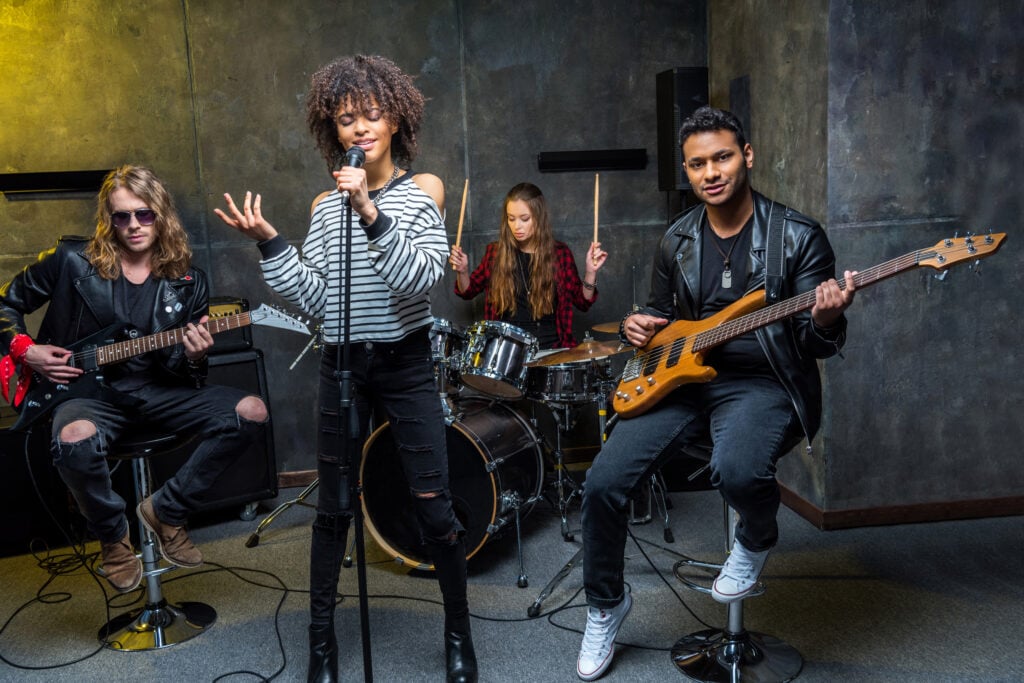
Not every instrument is equally suited to every child, and matching the instrument to the child’s temperament and physical development is a critical factor in whether they stick with it.
Dan Cropper of Jammin With You frames it this way: “The key to helping kids choose the right instrument is to best match their personality, dexterity, and physical abilities to an instrument that won’t leave them wanting to quit because it’s too difficult to play.”
His site highlights beginner-friendly options such as the Loog guitar, percussion instruments, and the piano as particularly well-suited to younger children.
The piano is especially valuable because it lays out music theory visually and linearly in a way young children can grasp intuitively, with melody, harmony, and rhythm all visible at once.
Percussion instruments offer immediate gratification and help children internalize rhythm, which researchers identify as the foundational skill on which all other musical learning is built. The Loog guitar, with three strings instead of six, reduces the physical and cognitive barrier enough that children experience early wins rather than early frustration.
For energetic children, percussion can be a natural entry point. For more contemplative kids, a piano or a simple string instrument may resonate better. The goal is to find the path of least resistance into music, because once a child is genuinely hooked, the harder work of technique tends to follow naturally.
Music Starts Earlier Than Most Parents Realize
Parents sometimes assume music education begins when a child is old enough for formal lessons. But the groundwork is laid much earlier. Babies respond to rhythm before they can walk, and mothers across cultures instinctively sing to their infants in ways that babies clearly prefer over recordings of the same songs sung without them present.
By six months, infants already show preferences for consonant over dissonant music, suggesting that musical perception develops in parallel with language acquisition.
This means that singing to a baby, dancing with a toddler, or banging on pots together with a preschooler are not just playful diversions. They are the earliest form of music education, and they lay neural groundwork that formal lessons later build upon. Parents do not need instruments or training to begin. They just need to show up and participate.
The cognitive case for getting children into music early is remarkably strong. A landmark review published in Frontiers in Neuroscience concluded that “children who undergo musical training have better verbal memory, second language pronunciation accuracy, reading ability, and executive functions” and that learning to play an instrument as a child may even predict academic performance and IQ in young adulthood. The researchers, Miendlarzewska and Trost, also noted that the degree of benefit correlates with how long and how young a child trains — meaning earlier and more sustained engagement produces greater gains.
The timing of when a child begins matters in ways that go beyond just getting a head start. Research cited by Psychology Today found that musical training before age 7 produces measurable increases in motor area connectivity in the brain, changes that do not occur when training begins later.
At 9, Banner is still within the window in which musical engagement yields meaningful cognitive benefits, particularly in language processing, reading, and executive function. And for children who start even younger, the advantages compound over time.
Why It Matters
Eisenberg’s four-instrument experiment with Banner is easy to read as a celebrity curiosity, but it is actually a model worth taking seriously. The research is clear that parental involvement in music, not just financial investment in lessons, is one of the strongest predictors of whether a child develops a lasting relationship with music and reaps its cognitive rewards.
You do not need to be a musician to do what Eisenberg is doing. You just need to be willing to learn something alongside your child, imperfectly and enthusiastically, and let them see that the process itself is the point.
As Banner grows and his musical vocabulary expands, the foundation being built now, one song across four instruments with one very committed dad, may shape far more than his ability to play a melody. The habits of mind that music builds, patience, attention, and the willingness to practice something difficult until it becomes easy, tend to travel well beyond the instrument.

