

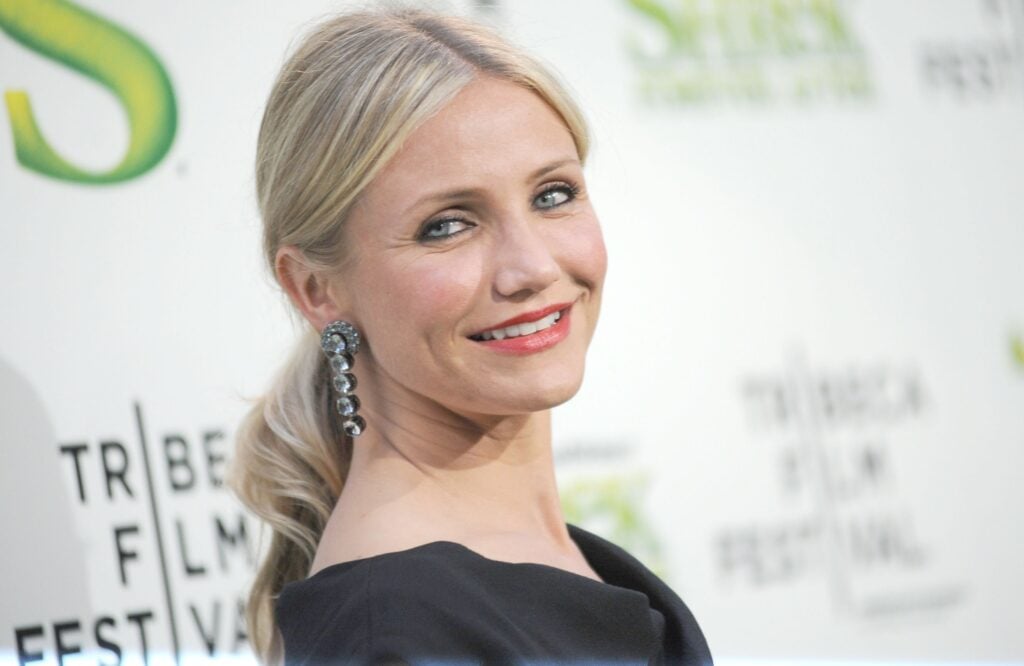
Cameron Diaz says the decade she spent away from Hollywood cameras was not a sacrifice — it was a choice she would make again without hesitation. Speaking to Ok! Magazine ahead of her return to screens, the 52-year-old actress described motherhood as the defining chapter of her life, one she built deliberately and on her own terms alongside husband Benji Madden.
A Career Pause With No Apologies
Diaz and Madden share two children: daughter Raddix, 6, and son Cardinal, 2. Welcoming Raddix at age 47 meant stepping away from one of the most recognizable careers in Hollywood, and Diaz has been candid about exactly why she did it. In her Ok! Magazine interview, as reported by Hello Magazine, she described the decision in deeply personal terms: “It felt like the right thing for me to reclaim my own life, and I just really didn’t care about anything else. Nobody’s opinion, nobody’s success, no one’s offer, no one’s anything could change my mind about my decision of taking care of myself and building the life that I really wanted to have. I think it really comes to what are you passionate about? For me, it was to build my family.”
That clarity of purpose did not mean the daily reality of parenting was simple or easy. Diaz told Ok! Magazine, as covered by Hello Magazine, “I’m just trying to stay alive just like every other mother” — a line that will resonate with parents everywhere, regardless of age or fame.
Back on Screen and Loving It
After roughly ten years out of the spotlight, Diaz is starring in Outcome, an Apple TV+ dark comedy directed by Jonah Hill that also features Keanu Reeves and Matt Bomer. The film, which premiered globally on April 10, 2026, and marks Diaz’s first on-screen collaboration with Reeves since their 1996 film together, has brought her back into the public conversation in a major way. She told Ok! Magazine, as reported by Hello Magazine, “To be able to still do this at such a high level with people like Keanu Reeves is a thrill for me.”
She has also made clear that the time away was not something she regrets. Diaz told Ok! Magazine, as covered by Hello Magazine, “I’m glad I took a break and I was able to focus on family and a part of my life that means so much to me but I still love doing this. It’s the best job in the world.” The return feels earned rather than rushed — the product of someone who left on her own terms and came back the same way.
The Career Cost Women Still Face
Diaz’s story plays out against a backdrop that many working women will recognize. Research from Toronto Metropolitan University found that women in professional and executive roles are among the most likely to anticipate negative career consequences from having children, with women overall twice as likely to expect a negative career impact as a positive one, 30 percent compared to 15 percent.
Women with university degrees showed similarly elevated concern. For someone at Diaz’s level of professional achievement, the perceived stakes of stepping away were real, which makes her willingness to do so all the more striking.
Notably, the same research found that among people who are already parents, one in three say having children actually had a positive impact on their career — a finding that complicates the assumption that motherhood is purely a professional liability.
What Science Says About Having Children Later in Life
Diaz is part of a broader global pattern. Across the UK, the US, Europe, and the Asia Pacific, the average age at which people become parents for the first time has been rising steadily. A University of Cambridge Centre for Family Research mini review of the psychosocial literature concluded that despite the risks associated with advanced parental age, families headed by older parents generally show good psychosocial functioning.
The review noted that contemporary older mothers tend to have higher education levels, greater financial stability, and fewer children — factors that can meaningfully shape the quality of the home environment a child grows up in.
A large-scale Swedish study drawing on data from more than 3.6 million offspring added important nuance to this picture. The researchers found that children born to older mothers showed higher intelligence scores, stronger non-cognitive abilities, and greater socioeconomic attainment in adulthood, though the intra-uterine environment of older mothers may carry some cardiovascular health considerations.
As the study authors wrote in Scientific Reports, the results suggest that the intra-uterine and early-life environments provided by older mothers may be detrimental to offspring cardiovascular health, but that their greater life experience and social position may confer intellectual and social advantages to their offspring.
In other words, the picture of older parenthood is genuinely mixed — not a simple story of risk or advantage, but a layered reality that researchers are still working to fully understand.
Why This Matters For Families
Diaz’s candor matters because the conversation around later-in-life parenthood is often dominated by medical warnings and career anxiety, with very little space given to the lived experience of parents who made that choice and found it deeply fulfilling. Her willingness to say plainly that building her family was the priority, and that no professional offer could have changed her mind, gives language to something many parents feel but rarely hear reflected back to them by someone at her level of public visibility.
As more women delay parenthood for professional, financial, or personal reasons, stories like Diaz’s offer a counterweight to the narrative that later motherhood is purely a compromise. For many families, it is a considered, confident decision, one made with exactly the kind of life experience the research suggests can benefit children in the long run.
With Outcome now streaming and Diaz back in the public eye, the next chapter of her story will play out on both fronts: as a working actress and as a mother of two young children navigating the same daily chaos every parent knows. Her own words may be the most honest summary of where she stands: grateful for the break, glad to be back, and just trying to stay alive like every other mom.

