

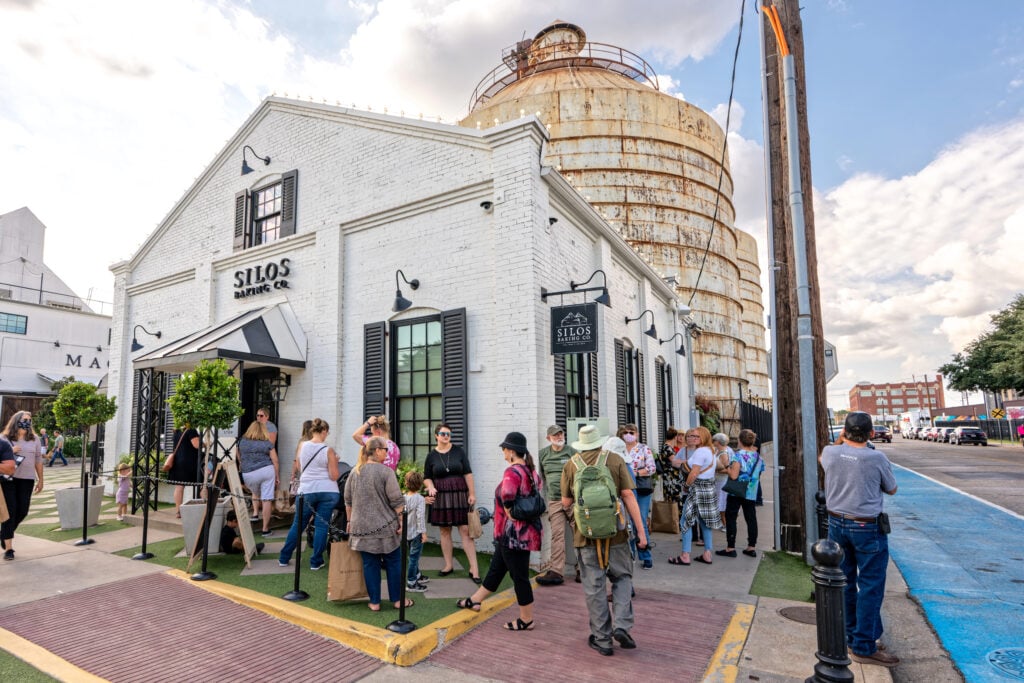
With Mother’s Day just around the corner, HGTV star and mother of five Joanna Gaines says her dream celebration skips the grand gestures entirely. What she actually wants is her family gathered around a beautifully set table, fully present and engaged with one another.
In an exclusive interview, Gaines told People her ideal Mother’s Day comes down to three things: gathering loved ones for an intentional meal centered on togetherness and shared memories. The piece is headlined with her own words: “Laughing, Listening, and Swapping Stories.”
Why Connection Beats Celebration
Gaines’ vision taps into something many mothers quietly feel but rarely say out loud: the holiday matters most when it feels genuine rather than performative. For a lot of moms, the day can blur into the same domestic rhythm as every other Sunday — laundry, errands, meals — with a card tucked in somewhere. The gap between the idealized version of Mother’s Day and the lived reality is something many families navigate every year.
A personal essay published in Psychology Today captures this tension honestly. The author writes that the invisible, unnoticed labor that fills most mothers’ actual days rarely pauses for a single holiday — and argues that the real work of motherhood is finding appreciation woven into ordinary moments. As the author puts it for Psychology Today, “part of being a mom is turning every day into Mother’s Day.”
What Research Says About the Pressures on Modern Mothers
The desire for simple connection that Gaines describes makes even more sense when you look at what academic research reveals about the weight mothers carry year round. A scoping review covering 115 peer reviewed papers published between 2001 and 2021, conducted by Eva Maria Schmidt and colleagues at the University of Vienna, identified five dominant social norms shaping how society judges mothers today: being present, being future oriented, balancing paid work, maintaining public composure, and projecting happiness.
The findings are striking. According to the University of Vienna study examining two decades of motherhood research across Western industrialized countries, for most of the preceding decades family life in Western industrialized countries was structured by clear norms of mothers being primarily responsible for performing unpaid care work — norms the researchers found have persisted and intensified under neoliberal pressures even as women’s roles in the workforce have expanded. The result is a persistent double standard: mothers are expected to be fully present at home and fully productive at work, with little structural support for either.
Against that backdrop, a Mother’s Day built around a table where someone else does the hosting — where a mother gets to simply sit, laugh, and be heard — is not a small thing. It is a direct counterweight to the invisible labor that defines the other 364 days.
A Holiday With a Complicated History
Mother’s Day itself has roots that are both moving and surprisingly bittersweet. According to the Winnipeg Free Press, the holiday traces back to May 10, 1908, when Philadelphia activist Anna Jarvis sent 500 carnations to a West Virginia church to honor her late mother, who had died three years earlier at age 72. For Jarvis, the white carnation carried deep symbolic meaning. She described it this way: “Its whiteness is to symbolize the truth, purity and broad-charity of mother love; its fragrance, her memory, and her prayers. The carnation does not drop its petals, but hugs them to its heart as it dies, and so, too, mothers hug their children to their hearts, their mother love never dying.”
The holiday became official when President Woodrow Wilson signed a proclamation on May 9, 1914, designating the second Sunday in May as a national day of recognition. But Jarvis herself grew to resent what the occasion became. As commercial interests turned her tribute into a retail event, she spent her later years fighting to have the day rescinded. She died childless at 82, buried beside her mother. It is a history that adds a layer of meaning to any conversation about what the day should actually look like.
Making The Day Work Fr Every Kind of Family
One of the most useful reframes for modern families is the idea that Mother’s Day need not follow a single script. Blended families, stepparents, grandmothers, aunts, and chosen family figures all play roles that deserve acknowledgment. The columnist behind the Winnipeg Free Press piece notes that her own family celebrates the mothers, grandmothers, and women who serve as mother figures, adapting the occasion to fit their actual lives rather than a greeting-card template.
That flexibility aligns with what the University of Vienna research describes as growing heterogeneity in mothering practices, a recognition that the traditional nuclear family model no longer captures how most people actually live and love.
What stands out about Joanna Gaines putting her vision into words is how ordinary and how radical it sounds at the same time. A famous, accomplished woman saying she just wants her family around a table, talking and laughing, cuts through a lot of noise. It is a reminder that the most meaningful thing you can give a mother is not a product — it is your full attention. In a culture that constantly measures mothers against impossible standards, that kind of presence is genuinely rare. If you are planning how to mark the day for someone you love, Gaines’ instinct is worth borrowing: set the table, put the phones away, and let the conversation run long.

