

The Sleep Under party can build friendships and independence—but safely and with less stress on Parents.
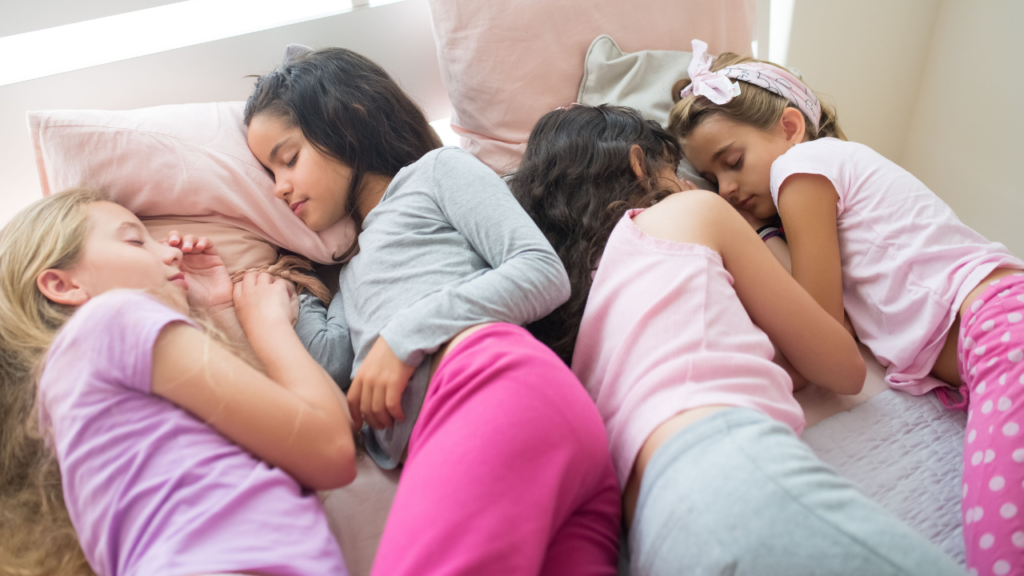
For kids, sleepovers can feel like a major childhood milestone: staying up late, eating snacks and spending hours with friends. Parents, however, may be thinking about everything that could happen once the lights go out, from inappropriate content and bullying to concerns about abuse.
However, there are genuine benefits to sleepovers. Developmental psychologist Dona Matthews writes that sleepovers can support “social development, independence, creativity, and fun,” while giving children more time for friendship-building and unstructured play.
Sleepovers can also give children a chance to experience how another family lives and practice independence away from home. For parents, though, hosting can mean extra planning, supervision and the possibility of disrupted sleep for everyone.
The “Sleep-Under” Offers a Middle Ground
For families who aren’t ready for an overnight, a ‘Sleep-Under’ offers many of the same thrills without the actual sleeping. Parents magazine describes it as a “faux sleepover party” where children participate in evening activities before their parents pick them up for bedtime.
The format can include pajamas, sleeping bags, pizza or breakfast-for-dinner, games and a movie. Parents magazine suggests planning for roughly three or four hours, with children arriving around dinner and heading home around their normal bedtime.
A sleep-under may be particularly appealing for younger children who still rely heavily on familiar bedtime routines or aren’t comfortable sleeping away from home. It can also let parents test the waters before committing to an actual overnight.
Are Sleepovers Actually Dangerous?
There isn’t a simple yes-or-no answer. Psychology Today notes that concerns commonly involve sexual abuse, bullying, social media, inappropriate content and insufficient sleep, but argues that those risks don’t automatically mean sleepovers should be prohibited.
The strongest approach may be preparation rather than an automatic ban. Parents can make sure children know they can call for a pickup at any time, establish an escape plan, discuss body-safety boundaries and confirm that a responsible adult will be supervising.
Matthews ultimately concludes that “for most kids, sleepovers have more benefits than drawbacks, as long as they’re well supervised.” For parents who aren’t comfortable with an overnight, however, a sleep-under can provide much of the fun while keeping bedtime—and peace of mind—at home.

