

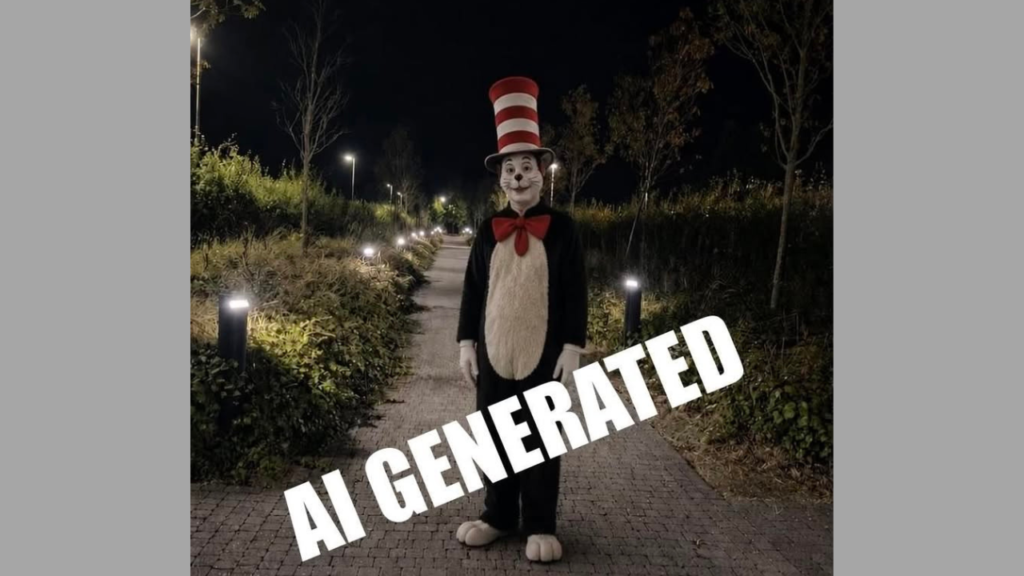
A creepy new social-media trend is turning one of children’s most recognizable characters into something decidedly less innocent. The so-called “Cat in the Hat” trend features AI-generated or edited images and videos showing a sinister-looking version of the Dr. Seuss character appearing outside homes, neighborhoods and schools.
What makes the trend particularly troubling is that some posts go beyond spooky entertainment. According to authorities cited by ABC News, videos and messages have identified specific schools, communities and students, sometimes suggesting that the Cat in the Hat is “coming for” particular people.
The concern has already moved from social media into the real world. In Colorado, a 14-year-old student was arrested after a post suggested someone dressed as the character would appear at a middle school and other locations, although police ultimately determined there was no credible threat.
For parents, that distinction is important: a frightening viral post isn’t automatically a genuine threat, but threatening content involving real schools or children should never simply be dismissed as a joke.
What Parents Should Watch For
Parents may notice children suddenly talking about the trend, sharing videos or images, creating accounts devoted to the character or becoming unusually anxious about something supposedly happening at school. The most important thing is to ask questions without immediately assuming the child has done something wrong.
Officials are encouraging students and parents not to share concerning posts, since reposting can help a hoax spread while making it harder for authorities to determine where a threat originated. Instead, save relevant information and report threatening content to the school, platform or law enforcement when appropriate.
The Tennessee Office of Homeland Security’s Threat Assessment Center said it was tracking the trend because of “unsettling AI-generated videos and images” targeting schools and students.
Parents should also remind kids that creating a frightening fake isn’t necessarily harmless if it causes people to fear for their safety. A prank can cross a serious line when it names real people or locations, implies violence or triggers a police or school response.
The Latest in a Long Line of Viral Worries
The Cat in the Hat phenomenon is part of a much larger pattern in which seemingly silly online challenges can take unexpected turns. Parents have previously dealt with viral trends involving dangerous stunts, harassment, vandalism and other behavior that encouraged children to chase views and attention.
The added complication in 2026 is artificial intelligence. AI tools make it increasingly easy for young people to create convincing images and videos that appear to show something happening when it never actually occurred.
That means parents may need to teach a new digital-safety skill: don’t automatically believe what you see online. A disturbing image can be fake, but a threatening message still deserves attention when it references a real child, school or location.
The best response isn’t panic or a blanket ban on social media. It’s an ongoing conversation about what kids see, what they share, when a joke becomes threatening and—perhaps most importantly—when they should immediately get an adult involved.

