

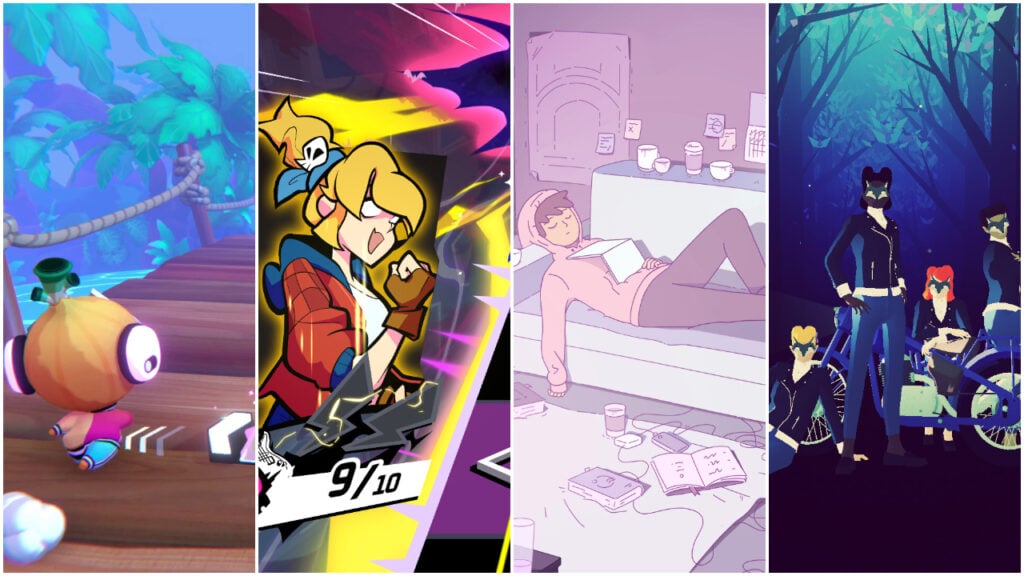
Rhythm and music games can be a lot of fun for kids, whether they enjoy dancing, playing instruments, or just listening to their favorite songs. Many have straightforward controls and teach players the basics as they go. Following a beat is often enough to get started, though the harder songs can give even experienced players a challenge.
There’s more variety here than parents might expect. Alongside dancing and drumming games, there are games where players fight enemies to the beat, solve musical puzzles, or create their own tracks. Some are great for playing with siblings and friends, while others offer a story or a series of challenges to work through alone.
For this list, we’ve selected 20 of the best rhythm and music games for kids and teens, covering different ages, interests, and skill levels. Each entry includes a breakdown of the game, why younger players might enjoy it, and information about ratings, platforms, and multiplayer options to help parents choose.
Just Dance 2026 Edition Gets The Whole Family Moving
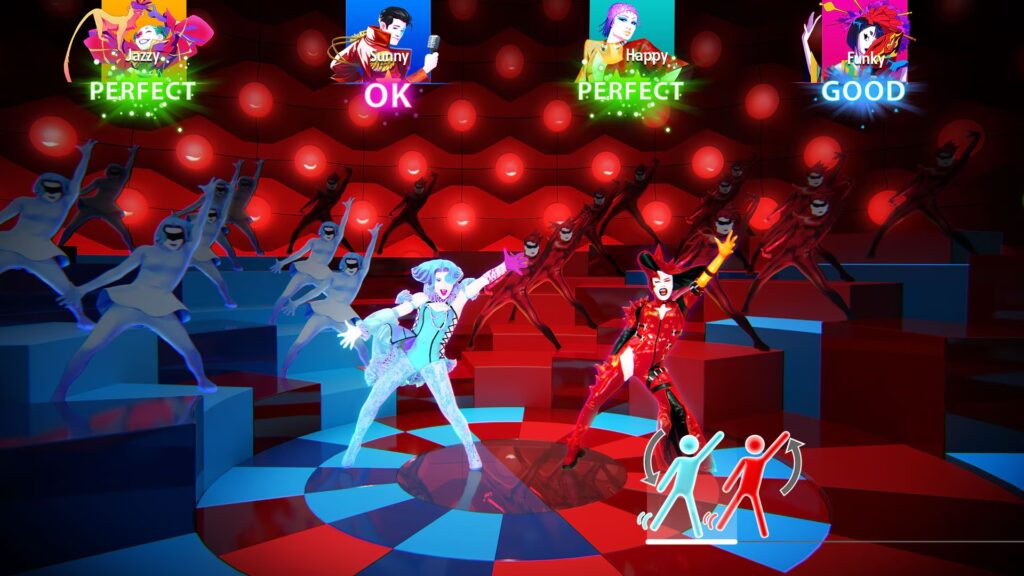
The living room becomes a dance floor in Just Dance 2026 Edition, with players following an on-screen coach through routines set to popular music hits. From Smash Mouth’s “All Star” to songs from Bluey and Bingo, the song selection leaves plenty of room for different generations. Each routine has its own choreography and presentation, so swapping between songs can feel like stepping into a completely different music video.
Up to six people can dance together locally, with Party Mode throwing unexpected challenges into the routines. Following along is enough to get started, but once everyone knows a song, the competition over who dances it best can take over. Families will need the appropriate controls for their console, such as a Joy-Con or compatible smartphone. The included songs provide a starting selection, with a larger catalog available through the separate Just Dance+ subscription.
Why Kids Will Love Just Dance 2026 Edition: Getting to perform a favorite song is an easy invitation to play, even for children who rarely pick up a controller. Learning the choreography together gives siblings and parents something to laugh about long before anyone earns a perfect score.
ESRB Rating: E for Everyone
Content Descriptors: Mild Lyrics. Online music is not rated by the ESRB.
Players: Single-player; up to 6 players in local multiplayer
Platforms: Nintendo Switch, PlayStation 5, Xbox Series X/S
Rhythm Heaven Groove Finds A Beat In The Strangest Of Places
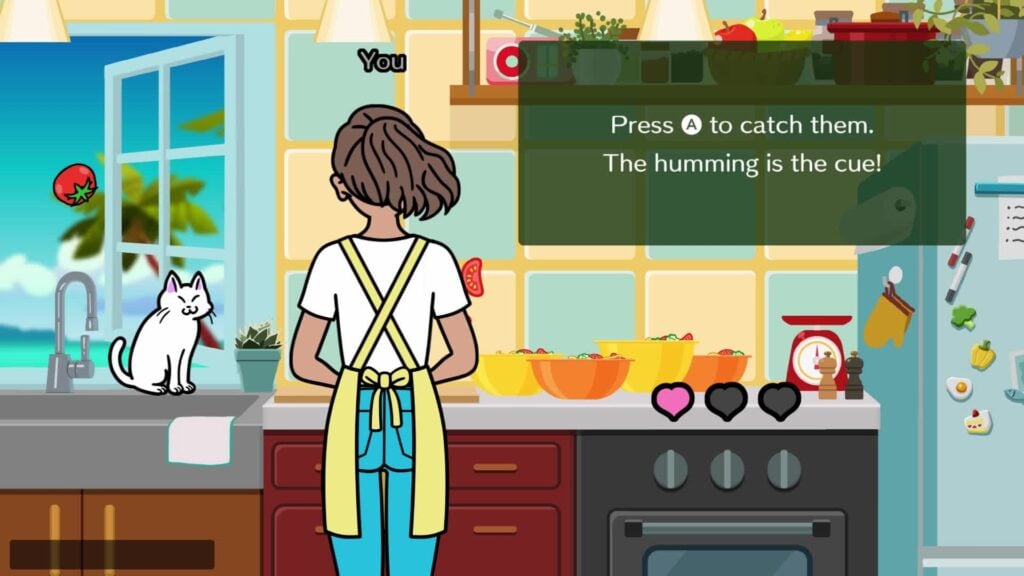
Catching vegetables and bouncing fruit off enormous biceps probably aren’t the first activities that come to mind when someone mentions music games. But these are perfectly normal assignments in Rhythm Heaven Groove, where each short minigame turns an absurd situation into a test of timing. Players just need to listen for a cue, learn when to press a button, and keep the pattern going as the scene unfolds around them. Hitting the button at just the right moment completes the action and delivers the punchline.
Some scenes deliberately distract the eyes, so learning to trust the sound is part of the challenge. That gives the silliness a purpose beyond making a failed attempt funny to watch. Alongside the solo games, separate multiplayer challenges let up to four people cooperate or compete on one console, giving families another way to enjoy the game’s peculiar sense of humor.
Why Kids Will Love Rhythm Heaven Groove: There’s always another ridiculous job to try. The visual jokes make it fun to watch someone else try, and multiplayer lets children challenge the rest of the family to keep up.
ESRB Rating: E for Everyone
Content Descriptors: Mild Fantasy Violence
Players: Single-player; up to 4 players in local multiplayer
Platforms: Nintendo Switch
Taiko No Tatsujin: Rhythm Festival Makes Everyone A Drummer
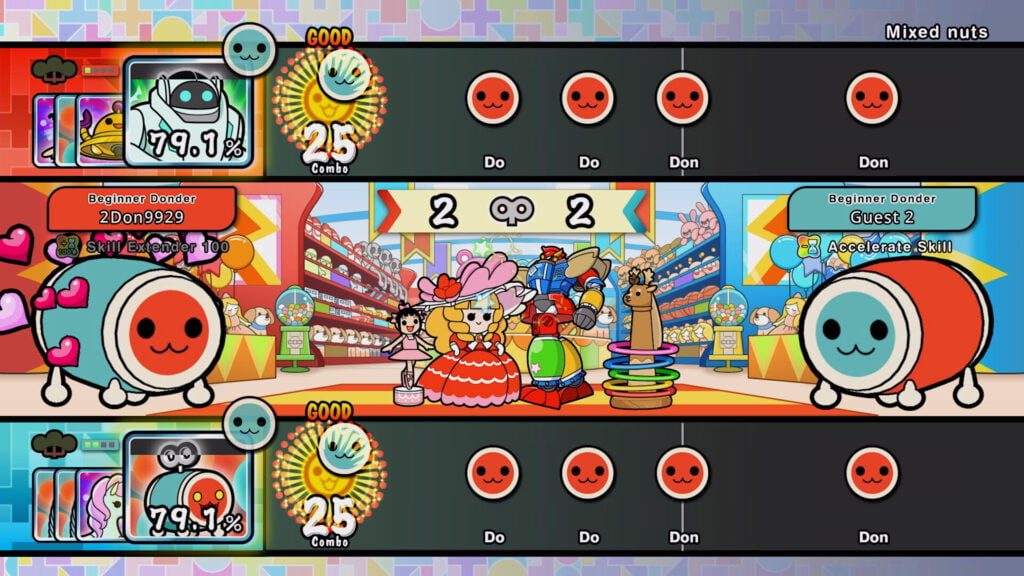
The drumming in Taiko no Tatsujin: Rhythm Festival kicks off with two kinds of notes, one calling for hitting the drum’s center, the other its rim. As those notes scroll toward the target, players tap out a song while Don-chan and the surrounding characters cheer them on. Anime themes sit alongside pop songs and video game music, making it easy to get started with a tune player already know.
The drum controller gives performances a satisfying physical element, although ordinary controls work too. Slower arrangements establish the basics before harder versions fill the screen with rapid combinations of hits. Because songs have different difficulty settings, siblings can enjoy the same music at their own level, then use the multiplayer modes to compete or play together. The included soundtrack and optional Taiko Music Pass subscription are separate, so there’s no need to sign up for the pass to start drumming.
Why Kids Will Love Taiko No Tatsujin: Rhythm Festival: Children who tap along to music have an obvious place to start here. The game’s lively drumming and familiar tunes make it a particularly good pick for kids interested in learning how to play an instrument.
ESRB Rating: E for Everyone
Content Descriptors: None listed
Players: Single-player; 2-player drumming and competitive modes; selected local party modes support up to 4 players; online play available
Platforms: Windows PC, Nintendo Switch, PlayStation 5, Xbox Series X/S
Beat Saber Turns A Song Into A Physical Challenge
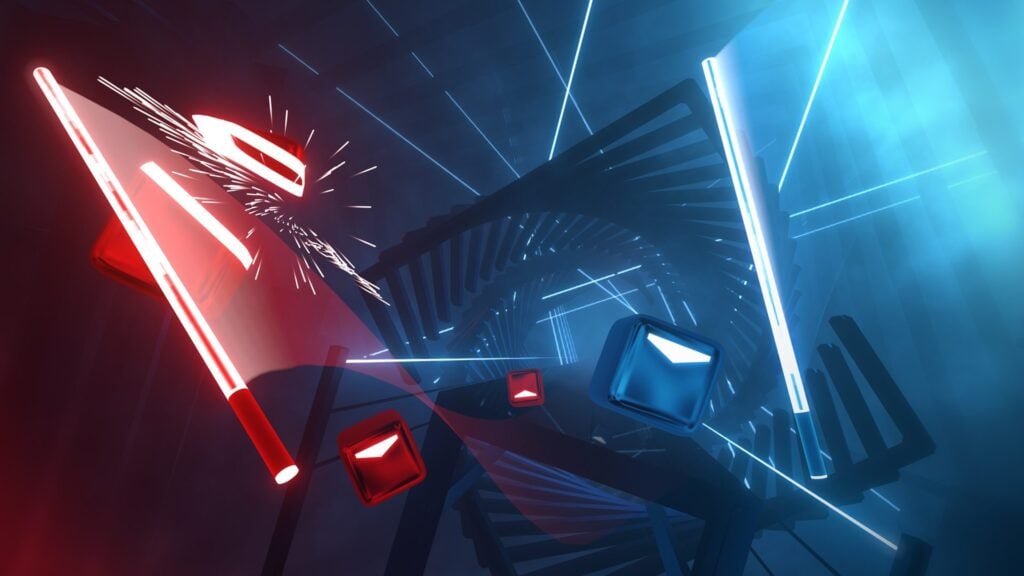
With a glowing saber in each hand, players slice through blocks flying toward them in Beat Saber. The blocks indicate which way to swing, and following a sequence sends their arms moving in time with the music. Ducking beneath an obstacle or leaning aside is required to get past certain sections, turning a song into something players need to perform with their whole body.
Easier settings leave enough space between swings to get comfortable, while harder songs demand coordination between both hands and the rest of the body. Finishing a tricky passage can be exhilarating, particularly once separate movements start flowing together. A compatible VR headset is needed to play the game, so this recommendation makes the most sense for families who already own one or plan to use it for other games. Parents should follow the headset’s age requirements and check additional song packs, some of which contain explicit lyrics.
Why Teens Will Love Beat Saber: Slicing through a song with two glowing blades is a compelling reason to get moving. Once they’ve learned a song, the challenge becomes performing it cleanly from beginning to end in an attempt to get the best score.
ESRB Rating: E for Everyone, base game
Content Descriptors: None for the base game
Players: Single-player; online multiplayer for up to 5 players on supported Quest and PC versions; PlayStation versions are now single-player
Platforms: Meta Quest, Windows PC with compatible VR hardware, PlayStation 4 with PS VR, PlayStation 5 with PS VR2
Parent Notes: VR hardware is required; follow the headset’s age requirements. Additional music may contain explicit lyrics and is not covered by the base game’s rating. PlayStation versions stopped receiving new content in June 2025; online multiplayer ended in January 2026.
Trombone Champ Incorporates The Wrong Notes Into The Fun
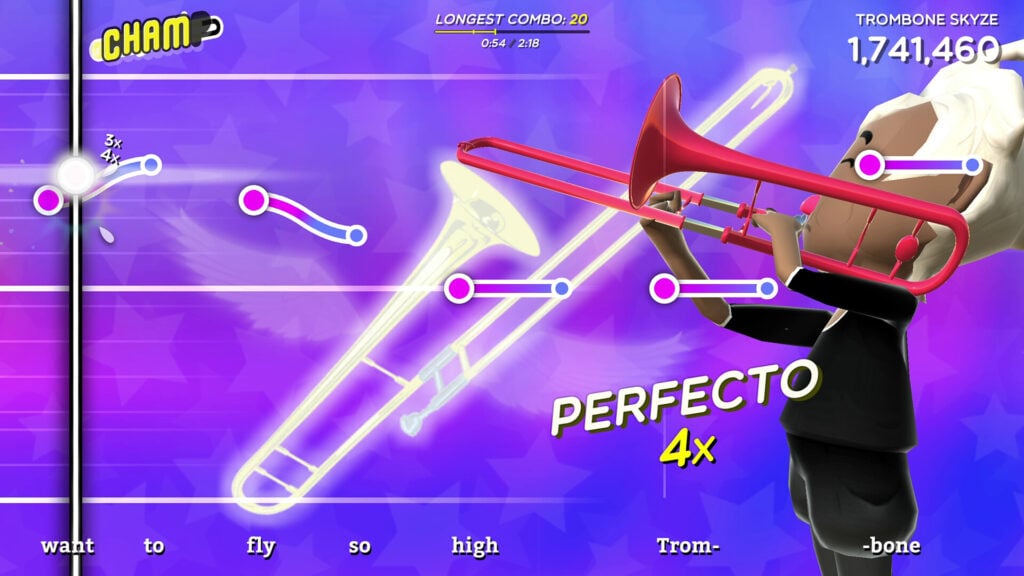
A grand musical performance can become an impressive collection of honks in Trombone Champ. Players control both when to blow and the pitch of their instrument, trying to follow notes as they scroll across the screen. Because the trombone actually plays the notes they’re producing, a mistake is immediately audible. Thanks to that, even a well-known classical piece can become almost unrecognizable in the hands of an enthusiastic beginner.
There’s plenty to unlock through better performances, but simply attempting a song can provide enough amusement for everyone watching. Players who want to experiment can use the Freeplay mode to make their own noise without following a chart. The Switch version adds local multiplayer for up to four people, giving the whole family the opportunity to discover whether four enthusiastic trombonists sound any better than a single one. They probably won’t at first.
Why Kids Will Love Trombone Champ: Making a mistake can be just as funny as getting a section right. This is a good choice for kids who enjoy making people laugh, especially with siblings joining the musical chaos on Switch.
ESRB Rating: E10+ for Everyone 10+
Content Descriptors: Crude Humor
Players: Single-player on computers; up to 4 players locally on Nintendo Switch
Platforms: Windows PC, macOS, Nintendo Switch
Incredibox Lets Kids Put Together Their Own Music
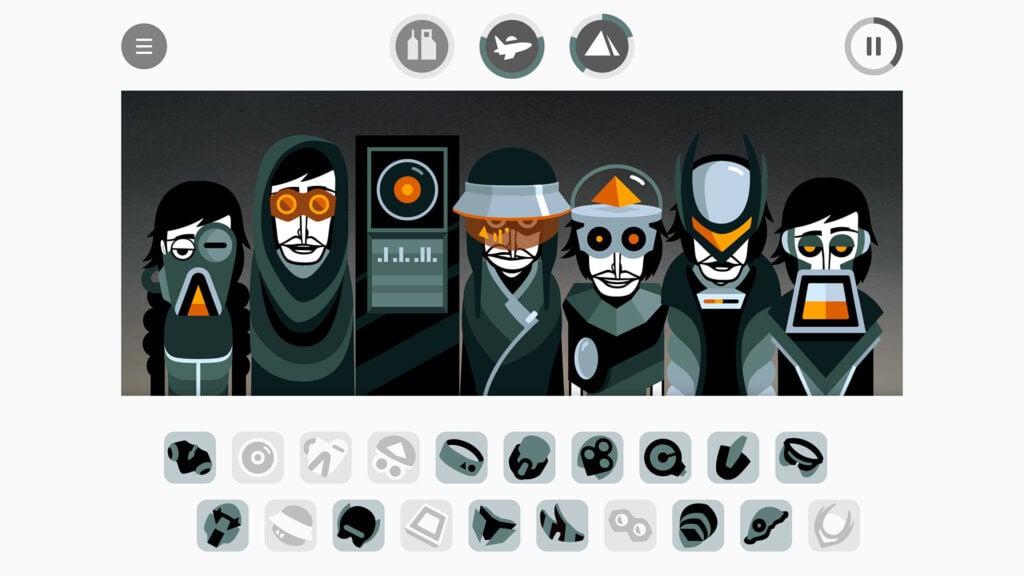
An Incredibox song begins with a group of animated performers waiting for something to do. Dragging an icon onto one gives them a sound, and adding more performers builds a mix of percussion, melodies, and voices. The parts fit together automatically, so there’s no need to worry about keeping the performers in time. Certain arrangements unlock animated bonuses, providing another reason to experiment with the available sounds.
Removing a singer or changing the percussion alters the track, allowing players to immediately hear the effect of each decision. Players can build around a favorite vocal, strip everything back to a beat, then bring the other performers in again. Incredibox provides an approachable way to explore arranging music, especially for kids who have ideas but haven’t learned an instrument. The paid app has no ads or microtransactions, and there are also a Steam version and even a free web version available, albeit with limited functionality.
Why Kids Will Love Incredibox: Kids get to make the musical decisions and save a finished recording to play for someone else. Incredibox suits children who enjoy experimenting with sounds without having to keep up with a moving note chart.
ESRB Rating: E for Everyone on the US Google Play listing
Content Descriptors: None listed for the standard app
Players: Single-player
Platforms: Windows PC, macOS, iOS, Android; a limited browser version is available
Melatonin Builds Rhythm Challenges Out Of Everyday Dreams
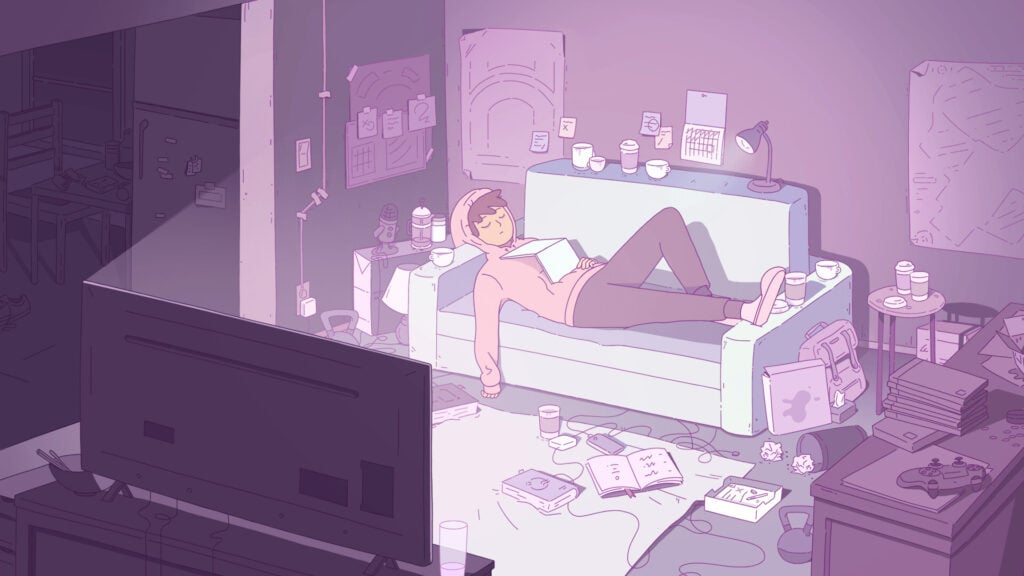
Food, shopping, and technology follow a sleeping character into Melatonin, where everyday preoccupations become musical dreams. Each level turns one of those dreams into an animated scene that players help carry out through timed button presses. The characters’ movements and sound cues tell them when to act, making careful listening just as important as watching the screen.
Across the game’s five chapters, the separate scenes gradually reveal more about the person doing the dreaming. That connection gives curious players something to piece together between rhythm challenges. Later mashups combine ideas from different levels, asking kids to switch between familiar cues within the same performance. Players interested in how the challenges are built can experiment with the level editor themselves.
Why Kids Will Love Melatonin: The dreams reward kids who pay attention to small visual and musical details. The game is a good match for animation fans who would love to discover how an ordinary activity can become a rhythm game.
ESRB Rating: E for Everyone
Content Descriptors: Mild Fantasy Violence
Players: Single-player
Platforms: Windows PC, macOS, Nintendo Switch, PlayStation 5
Bits & Bops Gives Every Minigame Its Own Musical Personality
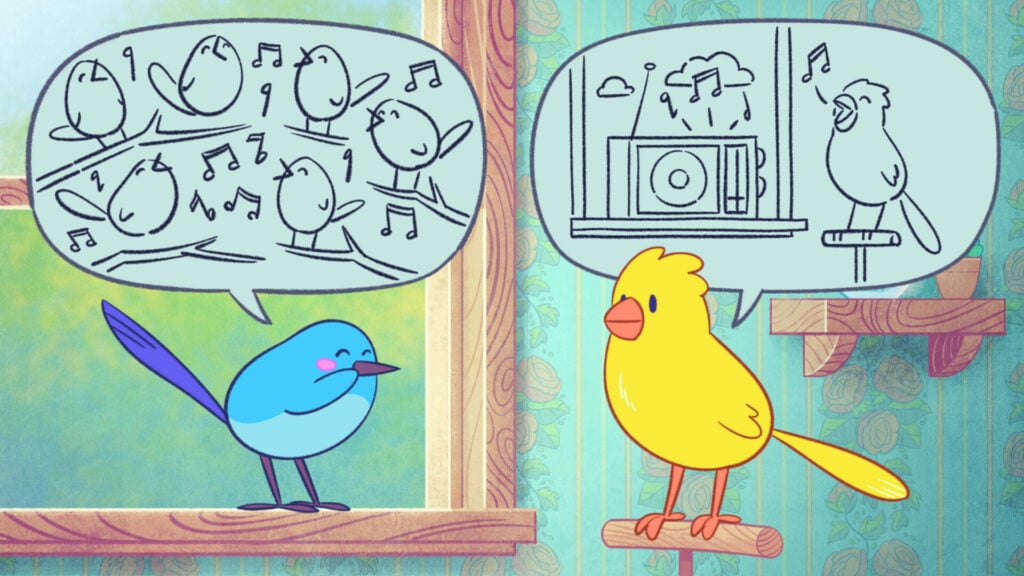
A hammering job or a seaside photo opportunity can become musical challenges in Bits & Bops. The collection contains more than 20 minigames, each with its own characters, rules, and original tune. Players use simple inputs to respond to sound cues, while the hand-drawn animation gives the actions the timing and exaggerated reactions of a cartoon. When the whole scene follows a beat, even everyday tasks become amusing to watch.
Each minigame explores an idea before moving on to the next, giving curious kids a new situation to figure out every few minutes. The controls stay simple enough that they can concentrate on the sound cues and the characters’ reactions. Bop, the dog-bear companion, provides a friendly face between the changing scenarios. For players trying rhythm games for the first time, the free demo offers a chance to find out whether this style of play clicks with them.
Why Kids Will Love Bits & Bops: Timing a button press to complete a cartoon action puts kids in charge of the entertainment. Short minigames give them a chance to try something new or squeeze in another attempt at a favorite.
ESRB Rating: No ESRB rating listed on the official pages consulted
Content Notes: Community-created levels may vary in content; these are separate from the developer’s minigames.
Players: Single-player; local co-op
Platforms: Windows PC, macOS, Linux
Hi-Fi Rush Makes Every Fight Part Of The Soundtrack
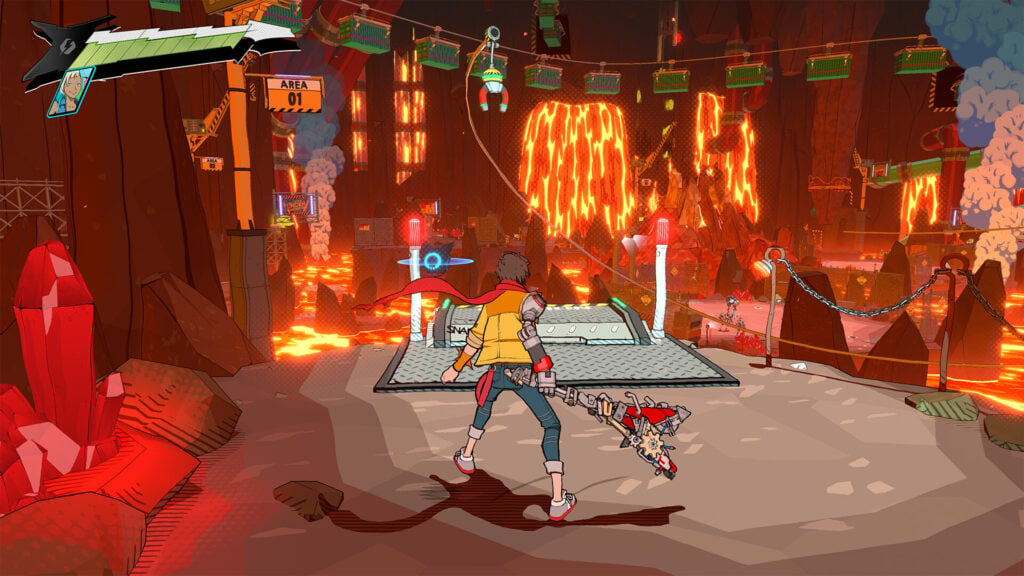
Chai, the protagonist of Hi-Fi Rush, is an aspiring rock star who undergoes an experimental procedure that fuses a music player to his heart. As a result of the procedure, everything around him suddenly starts moving to a beat. Escaping the evil megacorp that did this to him means fighting its robotic workforce with a guitar-shaped weapon. Machinery pulses and enemies move in time, giving players cues to follow throughout each encounter.
Chai’s attacks stay in sync with the soundtrack, even when the player’s timing slips, but pressing the buttons on the beat makes those attacks more effective. Once a combination locks in, the next enemy becomes an opportunity to play it again. Chai’s allies add plenty of banter to the campaign, and the animated boss battles carry his unlikely rock-star ambitions into increasingly elaborate showdowns. Hi-Fi Rush is a strong choice for teens who want music woven into a full action game.
Why Teens Will Love Hi-Fi Rush: The comedy and robot-smashing give action fans plenty to enjoy from the get-go. Getting comfortable with the rhythm then lets them pull off fights that look and sound as stylish as the surrounding animation.
ESRB Rating: T for Teen
Content Descriptors: Fantasy Violence, Language
Players: Single-player
Platforms: Windows PC, PlayStation 5, Xbox Series X/S
Cadence Of Hyrule Gives Zelda A Musical Twist
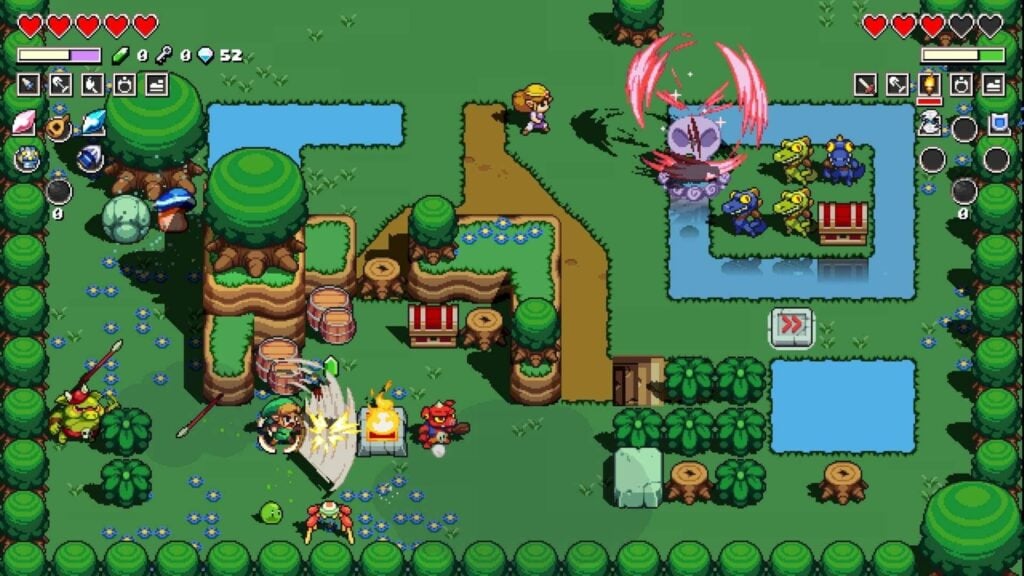
Exploring Hyrule takes on a different pace in Cadence of Hyrule, a crossover between The Legend of Zelda and Crypt of the NecroDancer. Link, Zelda, and other playable characters move and attack to the beat as they travel across the overworld and into dungeons. Enemies follow certain patterns, so getting past them means working out where to stand and when to strike as the soundtrack keeps everyone moving.
Players need to judge where an enemy will move next and position themselves to land a hit. Once they recognize the pattern, a dangerous room becomes a sequence of steps they can gradually work through. children who need more thinking time, Fixed Beat Mode makes enemies move when they do, allowing them to plan each action without keeping pace with the song. Thanks to the co-op mode, two players can tackle this unique version of Hyrule together.
Why Kids Will Love Cadence Of Hyrule: This is a great pick for kids who enjoy puzzle-solving as much as fighting monsters. Zelda fans can look forward to iconic and music, plus a new way to think about every step through a dungeon.
ESRB Rating: E for Everyone
Content Descriptors: Mild Fantasy Violence
Players: Single-player; 2-player local co-op
Platforms: Nintendo Switch
Theatrhythm Final Bar Line Turns Game Music Into A Team Effort
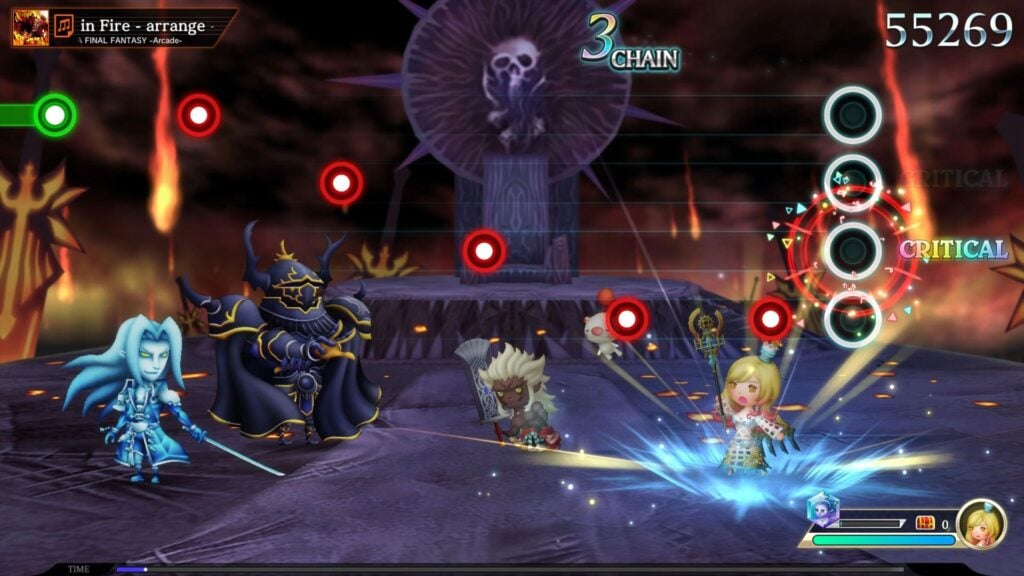
With 385 tracks in the base game, Theatrhythm Final Bar Line offers a grand introduction to the music of Final Fantasy. Players follow musical prompts while miniature versions of iconic heroes travel through fields or fight monsters. Building a party gives those performances a second layer, as characters gain experience and bring abilities that influence how the team handles a stage.
The role-playing elements give teens a reason to explore beyond the songs they already recognize. Trying another stage can help develop the team while introducing a piece from an installment they’ve never played. The soundtrack ranges from sweeping orchestral themes to urgent battle music, with difficulty options that accommodate different skill levels. Local Pair Style lets two people split the inputs during a song.
Why Teens Will Love Theatrhythm Final Bar Line: Collecting characters and strengthening a party gives each musical session a sense of progress. Teens who already listen to game soundtracks will appreciate having a reason to return to favorite compositions and discover ones they’ve missed.
ESRB Rating: T for Teen
Content Descriptors: Blood, Fantasy Violence, Mild Language, Mild Suggestive Themes
Players: Single-player; 2-player local co-op; online competitive multiplayer
Platforms: Nintendo Switch, PlayStation 4
Kingdom Hearts: Melody Of Memory Revisits Disney Worlds Through Music
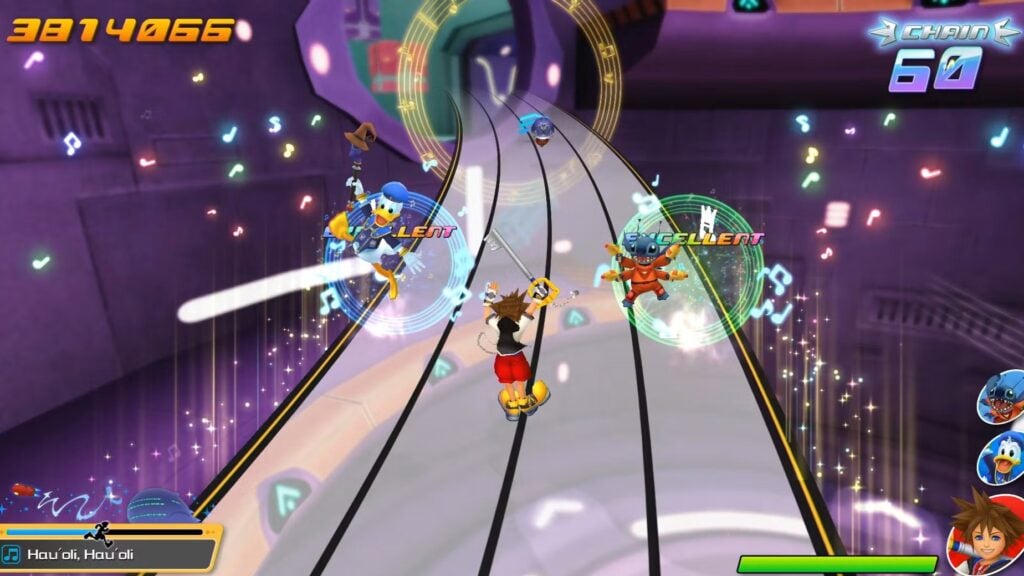
Sora, Donald, and Goofy have spent plenty of time fighting the Heartless, but Kingdom Hearts: Melody of Memory organizes those encounters around musical timing. Characters run along tracks as enemies and other prompts approach, and players press the appropriate buttons to attack, jump, and glide through each performance. The selection includes more than 140 tracks drawn from Kingdom Hearts and Disney, with familiar worlds providing the backdrop.
Different difficulty settings and play styles help players find a manageable starting point, while more demanding arrangements give experienced fans room to improve. The Disney characters make the game recognizable even without extensive knowledge of the series, although its story recap and later developments mean more to those who’ve been following Kingdom Hearts for years. Players interested primarily in the music can focus on performances, gradually learning passages that initially seemed too difficult to follow.
Why Kids Will Love Kingdom Hearts: Melody Of Memory: Seeing recognizable characters respond to their timing makes practicing a song feel more involving. Older kids who enjoy Disney or already follow Sora’s story will have plenty of interesting places and melodies to look forward to.
ESRB Rating: E10+ for Everyone 10+
Content Descriptors: Fantasy Violence, Mild Language
Players: Single-player; 2-player local co-op and versus modes; Switch supports local wireless Free-for-All for up to 8 players
Platforms: Windows PC via Epic Games Store, Nintendo Switch, PlayStation 4, Xbox One
Patapon 1+2 Replay Puts An Army Under The Player’s Musical Command
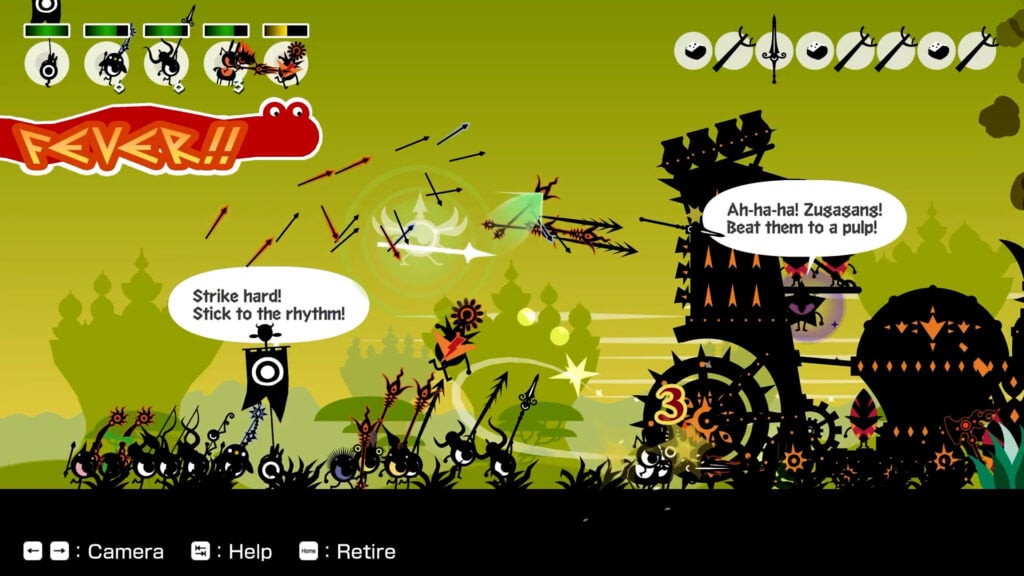
The little warriors in Patapon 1+2 Replay take their orders through drum patterns. Players enter a short rhythmic command, then watch their troops march, attack, or defend while answering with a chant. Keeping that exchange going gives battles a very distinctive pace. A successful advance relies on choosing the right order for the situation and delivering it with enough accuracy for the army to respond.
This remastered collection includes the first two Patapon games, with troops to develop and equipment to collect across their campaigns. Deciding how to assemble an army gives older kids something to consider between performances, especially when an enemy calls for a different approach. The added difficulty options and timing adjustments make these versions more accommodating than their age might suggest. Even so, players need patience to learn the commands and recognize when a confident attack should become a retreat instead.
Why Kids Will Love Patapon 1+2 Replay: Hearing an entire army chant back a command makes every correctly played pattern feel consequential. Children who like organizing a team can enjoy the planning, then put their decisions into action via a simple set of beats.
ESRB Rating: E for Everyone
Content Descriptors: Comic Mischief, Mild Fantasy Violence, Mild Language
Players: Single-player; Patapon 2’s multiplayer missions support up to 4 players through local wireless on Switch, using separate systems
Platforms: Windows PC, Nintendo Switch, PlayStation 5
Sayonara Wild Hearts Plays Like A Pop Album Come To Life
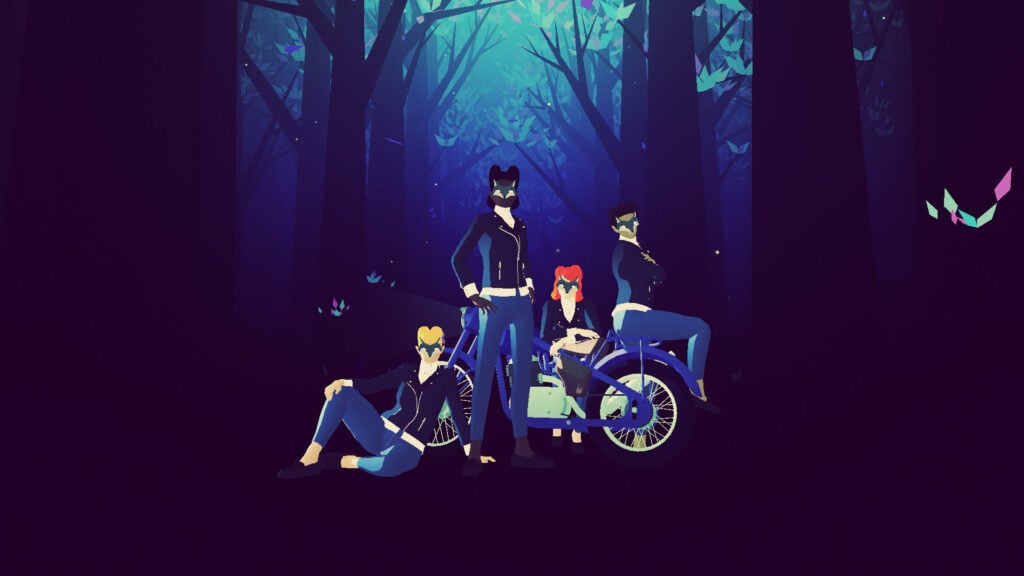
Sayonara Wild Hearts carries players from motorcycle rides along glowing highways into airborne pursuits and fantastical confrontations. The game’s original pop soundtrack drives those changes, with steering, dodging, and timed actions all becoming part of musical sequences. The game follows a young woman dealing with heartbreak, translating her emotions into masked rivals, impossible roads, and a world that keeps transforming around her.
The short stages make the changing activities easy to sample, while returning for better scores gives dedicated players more to work toward. Music holds the whole thing together even when the perspective or controls change. The story is compact enough to feel like a complete musical work, making it appealing to older kids and teens who enjoy striking imagery and songs with a strong sense of momentum.
Why Teens Will Love Sayonara Wild Hearts: The soundtrack and shifting scenes make a strong first impression, then score chasing reveals the precision beneath the spectacle. Pop fans can enjoy replaying a favorite stage as much as they’d replay a favorite song.
ESRB Rating: E10+ for Everyone 10+
Content Descriptors: Fantasy Violence
Players: Single-player
Platforms: Windows PC, Nintendo Switch, Nintendo Switch 2, PlayStation 4, PlayStation 5, Xbox One
Wandersong Gives A Singing Bard A World To Save
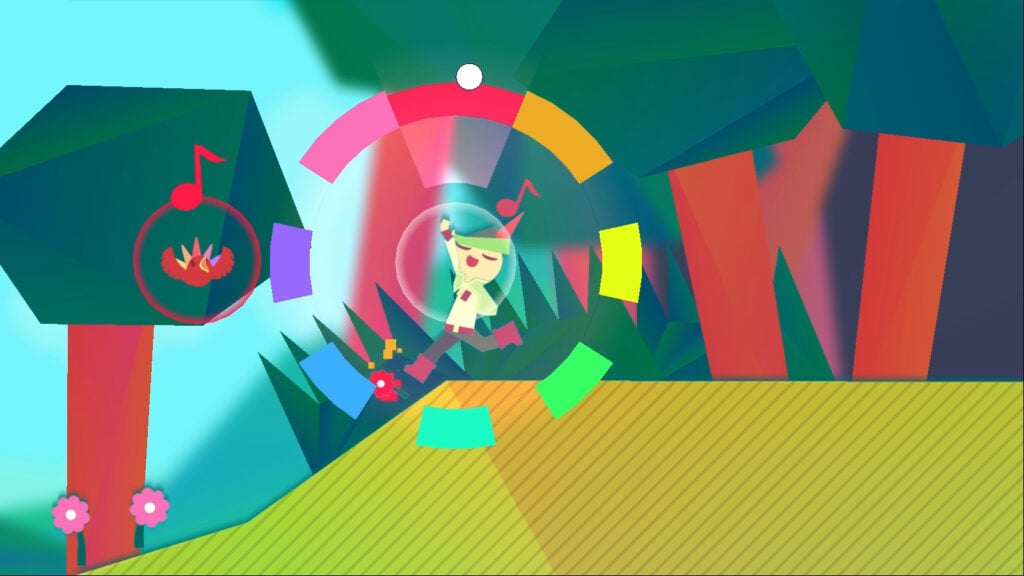
The bard in Wandersong believes singing can help save a world that’s coming to an end. Players choose notes from a wheel to interact with people and the environment, using the bard’s voice to solve puzzles and work through obstacles. There’s no microphone requirement, so children can concentrate on choosing what to sing while the character supplies the vocals. Each new encounter gives that ability a different role.
The bard’s determination to keep trying carries the story through humor, setbacks, and difficult emotions, giving kids a hero whose optimism is sometimes tested. Conversations and exploration take up a substantial part of the game, making it a particularly good choice for children who enjoy reading dialogue and getting to know characters. The musical puzzles provide changes of pace as the story builds toward its larger questions about helping others and finding a purpose.
Why Kids Will Love Wandersong: Story-loving kids get a hero who approaches problems with enthusiasm and a song. The expressive cast gives them people to care about, while singing lets them participate directly in the bard’s efforts to help.
ESRB Rating: E10+ for Everyone 10+
Content Descriptors: Fantasy Violence
Players: Single-player
Platforms: Windows PC, macOS, Nintendo Switch, PlayStation 4, Xbox One
Rhythm Doctor Turns One Button Into A Serious Musical Test

Counting to seven sounds simple enough. In Rhythm Doctor, players press a button on the seventh beat to deliver a precisely timed shock to a patient in a fictional hospital. Once they’ve learned that pattern, the game starts interfering with it through strange rhythms and distractions. Keeping the count going becomes a test of how well they can follow the sound when the presentation tries to throw them off.
That inventiveness makes a single button do an impressive amount of work. Each patient’s heartbeat introduces a musical conundrum, while their story gives the treatment a personal context. The doctors have lives and concerns of their own, too, so there’s a cast to get to know between songs. Local co-op lets two people share the challenge, but both still need concentration and patience. The combination of tricky rhythms and hospital drama will best suit teens who enjoy working through a difficult game.
Why Teens Will Love Rhythm Doctor: Teens curious about how rhythm works can discover musical ideas by playing them. Unpredictable stages keep that process surprising, and the hospital’s ongoing stories keep giving players a reason to see the next patient.
ESRB Rating: E10+ for Everyone 10+
Content Descriptors: Use of Tobacco
Players: Single-player; 2-player local co-op
Platforms: Windows PC, macOS, Linux, Xbox One, Xbox Series X/S
A Dance Of Fire And Ice Makes Rhythm Visible
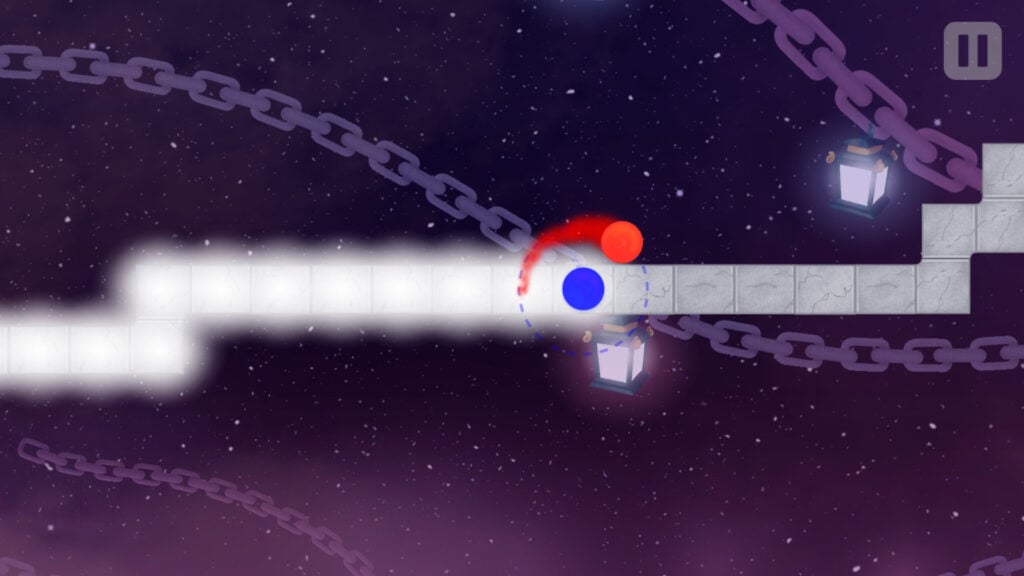
Two orbiting planets trace a narrow path in A Dance of Fire and Ice. A button press moves them forward when they’re correctly aligned, and each bend changes the timing needed for the next step. Straight stretches establish a steady pulse before corners introduce more complicated rhythms. The path draws a pattern that players can see and hear, making its shape part of understanding the music.
There are very few controls to learn, but completing a level can still take considerable persistence. Expect to repeat difficult passages while learning their rhythms. The Switch edition offers another way in with local co-op for up to four players and the included Neo Cosmos expansion. Surviving teammates can bring others back into the song, allowing a group to help each other through difficult sections.
Why Teens Will Love A Dance Of Fire And Ice: Seeing a winding route become a rhythm they can follow gives persistent players a satisfying breakthrough. Getting within a few turns of the finish makes another attempt particularly tempting.
ESRB Rating: E for Everyone on Nintendo Switch
Content Descriptors: Alcohol Reference on Nintendo Switch
Players: Single-player; Nintendo Switch supports up to 4 players in local co-op
Platforms: Windows PC, macOS, Linux, Nintendo Switch, iOS, Android
Just Shapes & Beats Makes Surviving A Song A Team Sport
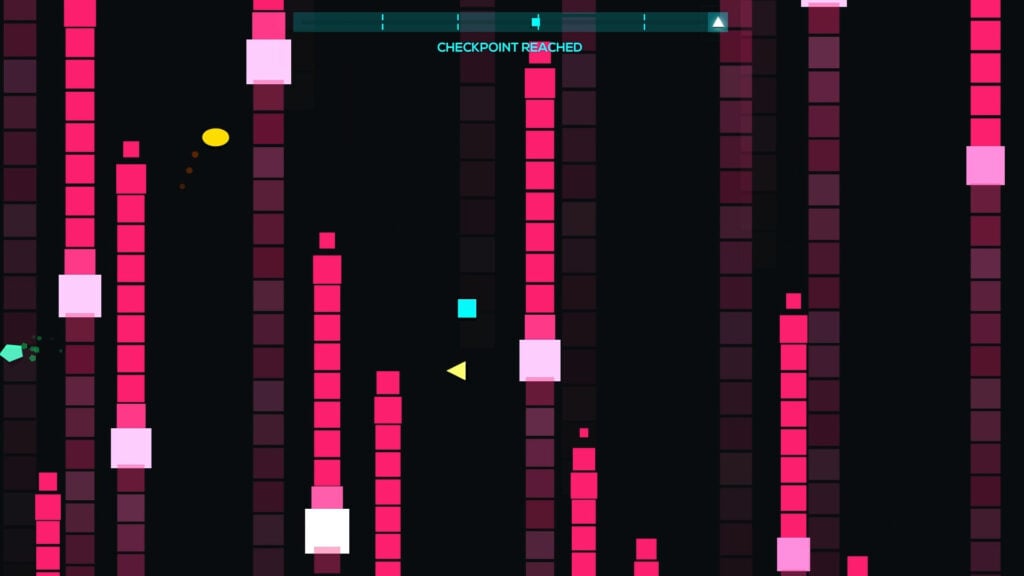
The music in Just Shapes & Beats determines what players must escape. Geometric hazards fill the screen in patterns that follow electronic tracks, while players guide small shapes through whatever safe space remains. A change in the song can transform the entire encounter, so listening helps them anticipate what might happen even as they watch for an opening. Their job is to survive the performance rather than play its notes.
Up to four people can take on the challenge together, locally or online. Rescuing a teammate gives cooperation a practical role, and a narrow escape can become a shared victory even when everyone’s performance was far from perfect. The action is fast and visually busy, although the optional Casual mode makes the story more forgiving. For older kids who already enjoy dodging obstacles in action games, the musical structure adds another skill to learn without requiring them to start with a traditional rhythm-game interface.
Why Kids Will Love Just Shapes & Beats: Siblings and friends can pull each other through a difficult track, turning a narrow escape into something to celebrate together. Being able to rescue a friend gives everyone a reason to keep going even when the screen starts filling with hazards.
ESRB Rating: E10+ for Everyone 10+
Content Descriptors: Animated Blood, Fantasy Violence on Switch; the Steam listing uses Mild Blood and Fantasy Violence
Players: Single-player; up to 4 players in local or online co-op
Platforms: Windows PC, macOS, Linux, Nintendo Switch, PlayStation 4
Rift Of The NecroDancer Gives Every Monster Its Own Rhythm
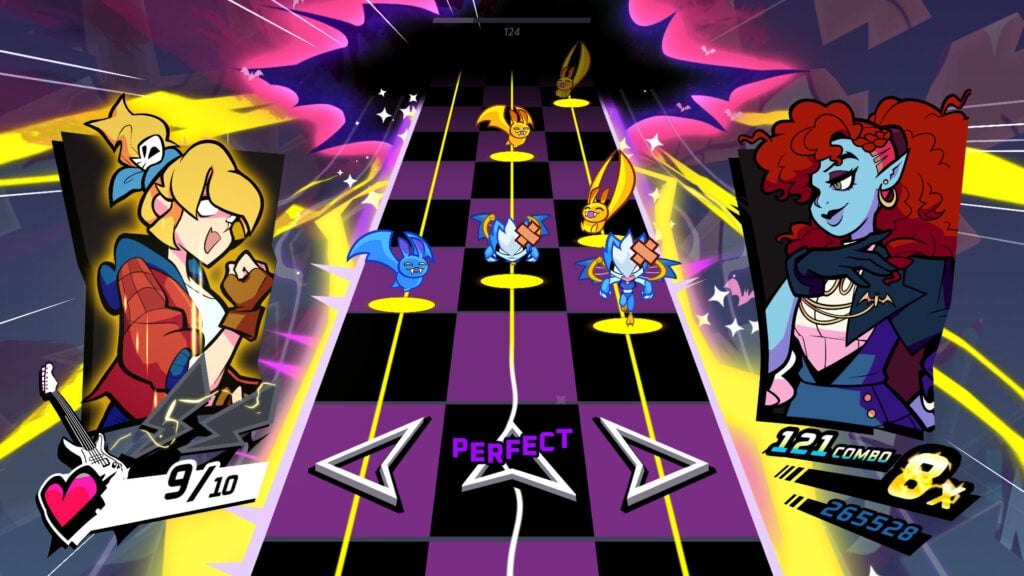
Monsters descend toward the player along three lanes in Rift of the NecroDancer, turning a musical chart into a procession of creatures to defeat. Pressing a button at the right time handles a basic enemy, but other types behave differently, requiring players to understand the creature as well as the beat. Recognizing those behaviors turns a busy section into a pattern that can be learned and anticipated.
The difficulty options let players build their confidence before tackling dense arrangements, while practice tools provide a way to work through troublesome passages. Musical minigames and boss encounters change the format during the story, keeping the lane-based battles from carrying every moment. Returning to individual songs gives older kids and teens a chance to recognize patterns that previously caught them out, then put that knowledge to work in a better performance.
Why Teens Will Love Rift Of The NecroDancer: Learning what each monster does adds personality to the notes they’re trying to hit. Teens who like chasing accurate performances can keep finding small improvements in a song, then test themselves against a harder arrangement.
ESRB Rating: E10+ for Everyone 10+
Content Descriptors: Fantasy Violence
Players: Single-player
Platforms: Windows PC, Nintendo Switch
Rhythm Sprout Sends An Onion Hero Into Musical Battle
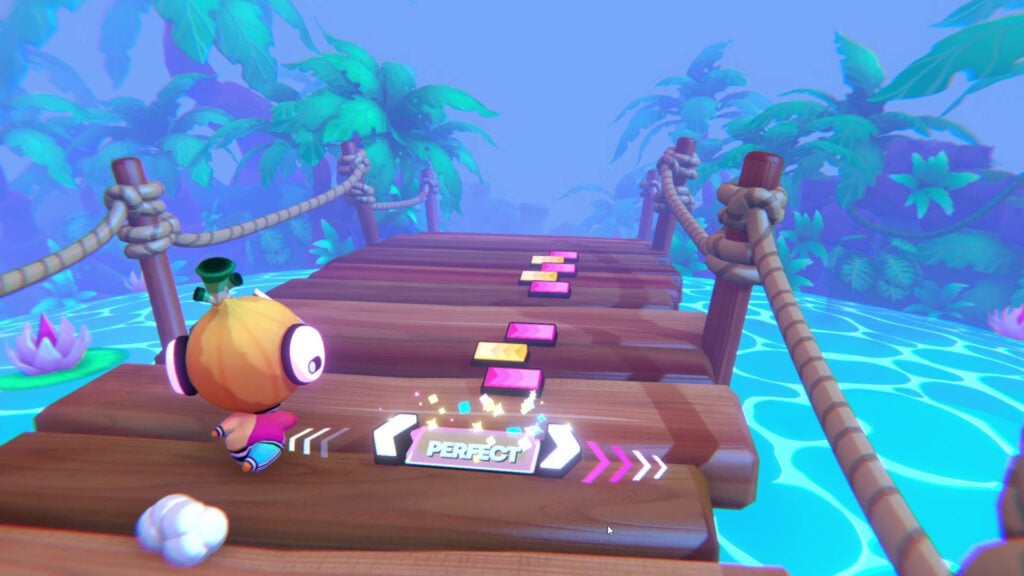
Rhythm Sprout: Sick Beats & Bad Sweets sends a small onion hero through the Vegetable Kingdom, where venturing forward and dealing with enemies are tied to musical prompts. The original soundtrack shifts between influences such as electronic dance music, hip-hop, and K-pop, with each stage built around its track. Environments and encounters give those songs a setting, so progressing feels like traveling through a peculiar little fantasy world.
The dialogue leans into the absurdity of vegetables facing sweet-themed villains, giving players comic breaks between performances. The actual timing can become demanding, however, so older kids are more likely to appreciate both sides of the game. Learning a stage brings opportunities to improve a score, and additional modifiers can alter familiar note patterns or increase the speed once the original version feels comfortable. Those options give dedicated players more to attempt without requiring everyone to begin at the same level of skill.
Why Kids Will Love Rhythm Sprout: The onion hero and ridiculous villains give the music a story to carry forward. Older kids who enjoy humorous games can follow the campaign first, then return to favorite songs when they’re ready to tackle a bigger challenge.
ESRB Rating: E for Everyone
Content Descriptors: Mild Fantasy Violence
Players: Single-player
Platforms: Windows PC, Nintendo Switch, PlayStation 4, PlayStation 5, Xbox One, Xbox Series X/S

