

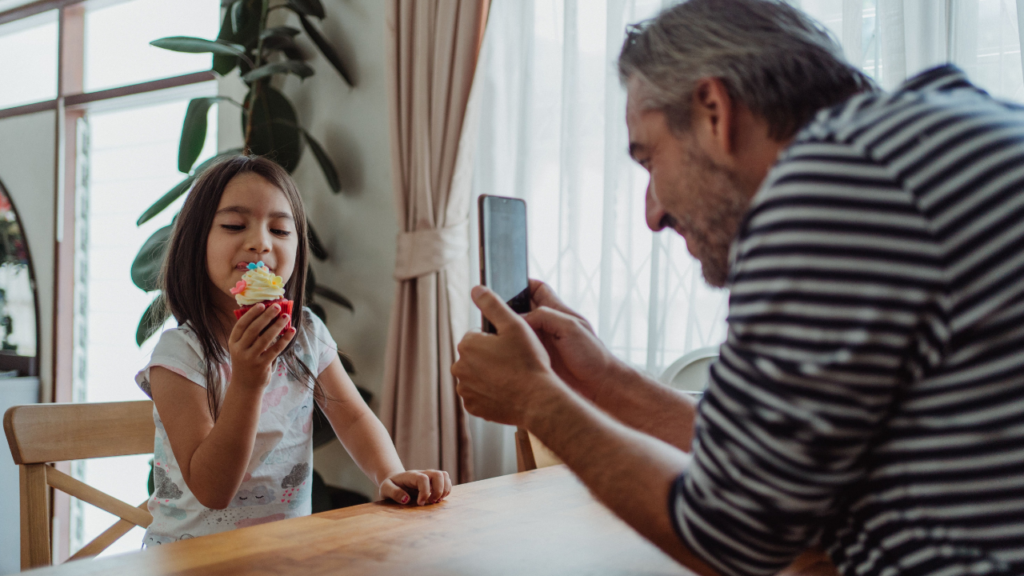
There was a time when a funny thing your child did was simply a funny thing your child did. Today, it can also be a photo, video, Instagram post or TikTok waiting to happen—and that constant documentation may be changing the way some kids experience childhood.
A recent SheKnows article asks whether parents are turning childhood into a kind of performance by documenting so many of their children’s moments. From birthday parties to sports games and everyday silliness, cameras can be present for nearly every milestone.
The concern isn’t that taking pictures is inherently harmful. It’s what can happen when children begin to understand that their behavior may become content for an audience, potentially encouraging them to repeat certain behaviors because they know they’ll get attention.
That can create a subtle shift from simply experiencing a moment to thinking about how the moment will look. A child who knows that being funny, adorable or impressive earns a parent’s phone camera may gradually learn that certain versions of themselves are more likely to be celebrated.
How Sharenting Can Teach Kids to Perform Happiness
This becomes even more complicated when parents regularly share their children’s lives online, a practice commonly known as sharenting. According to ReachLink, children who become aware they’re being documented may begin to “perform rather than simply live,” shaping their behavior around the camera or anticipated reaction.
The article reports that 92% of children under two already have a digital footprint, while the average parent has posted approximately 1,500 photos of their child online by the time they reach kindergarten.
For some children, that can create pressure to match the cheerful, funny or successful version of themselves that their parents have presented online. ReachLink describes this as a possible gap between a child’s private identity and the public identity their parents have created for them.
That doesn’t mean every proud parent post will make a child perform for the camera. But when children repeatedly see that certain emotions and behaviors are rewarded with attention, likes or praise, it can become harder to separate genuine expression from performance.
When Does Parenting Become Vanity Parenting?
There is also an important distinction between documenting a child’s life and expecting that child to reflect well on the parent. Psychologist Carl Pickhardt describes this latter phenomenon as “vanity parenting,” when parents look to their child’s achievements to bring them credit in the eyes of others.
The difference can be subtle. Taking pride in your child’s accomplishment is natural, but problems can arise when a child’s performance becomes tied to the parent’s own sense of success or social status.
Pickhardt warns that children can begin to feel like they are valued more as performers than as people. He writes that a child can end up feeling like a “human doer than a human being.”
For parents, the goal doesn’t have to be putting away the camera completely. It may simply mean remembering that childhood doesn’t always need an audience—and sometimes the most meaningful moments are the ones a family experiences without recording them.

