

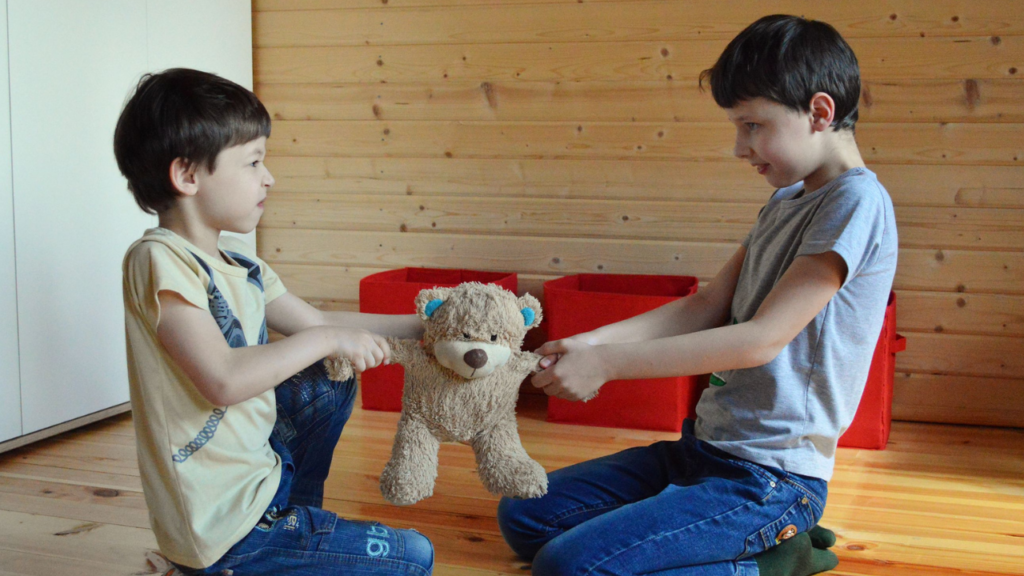
When siblings argue, parents may feel compelled to determine who started it and who is to blame. However, according to clinical psychologist Dr. Kezia Jackson, acting as the family judge can fuel resentment and make future arguments worse.
Instead, use calm, neutral language such as, “I can see you’re both upset. Let’s slow down and hear what happened.” Acknowledge each child’s feelings without automatically taking sides or assuming the older sibling is responsible.
If emotions are running high, give everyone time to calm down before discussing solutions. Once they’re ready, ask each child to explain their perspective and help them identify a fair way forward.
When Does Sibling Fighting Become Something More Serious?
Ordinary sibling rivalry can include bickering, teasing and disagreements over toys or personal space. However, the University of New Hampshire’s Sibling Aggression and Abuse Research and Advocacy Initiative warns that aggressive behavior should not automatically be dismissed as harmless rivalry.
Watch for repeated hitting, threats, intimidation, deliberate humiliation or destruction of treasured belongings. Serious warning signs include one child consistently targeting another, a significant power imbalance, escalating aggression or a sibling appearing afraid.
Parents should also notice whether a child avoids being alone at home with their sibling or seems unusually withdrawn. Physical violence, serious injuries and threats of significant harm require immediate intervention and may warrant professional support.
Practical Ways to Manage Sibling Fighting
Parents can help children develop conflict-resolution skills by coaching rather than solving every disagreement for them. Psychology Today reports that one-third of U.S. children living with a sibling experienced sibling aggression in the previous year.
Establish clear family rules: no hitting, threats, insults or intimidation. When arguments occur, help children take turns speaking, explain what they need and agree on a solution that respects both perspectives.
Praise cooperation, avoid comparisons and make time for individual attention. If aggression is persistent or one-sided, prioritize the targeted child’s safety rather than forcing mediation, and seek help from a qualified professional when needed.

