


Letting children climb, balance and explore on their own outdoors may support their physical and mental health, according to a major review published on October 26.
Researchers led by teams at the University of Exeter in England and the University of British Columbia in Canada pooled findings from 74 studies on what they call outdoor risky play.
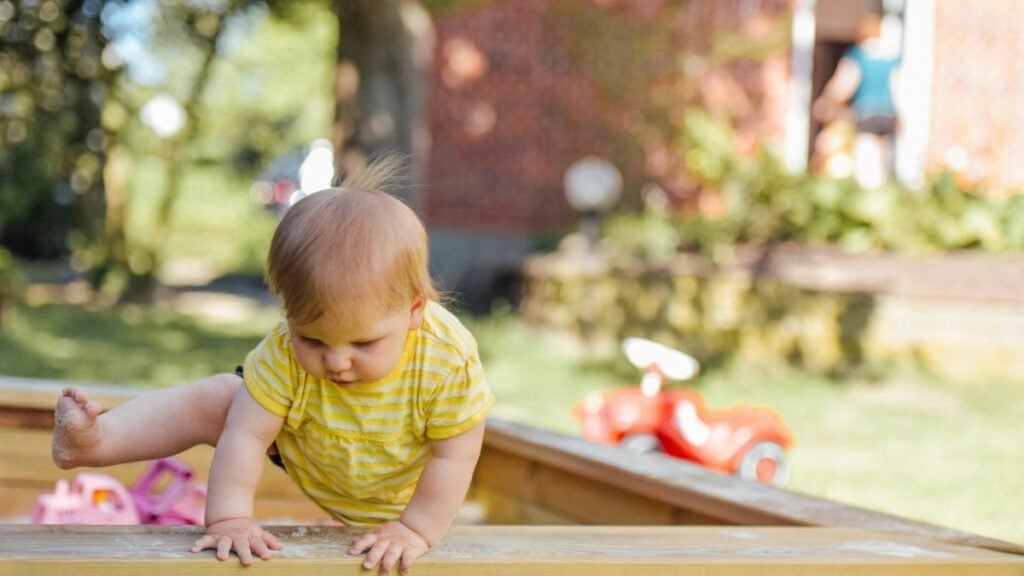
The term covers thrilling, self-directed activities such as climbing to heights, moving fast and exploring unfamiliar spaces without an adult close by.
Risky Playgrounds Built to Encourage Kids For Better Physical Outcomes
Of the studies, 48 were quantitative, 19 were qualitative, and 7 used both approaches. All focused on children ages 3 to 12.
Risky play in general, along with playgrounds built to encourage it, was linked to better outcomes in physical health, mental well-being, social skills, thinking skills and the ability to judge risk.
Parents, teachers and researchers described children who grew more confident and resilient and learned to handle fear and frustration.
The clearest finding involved freedom to roam. Children allowed to travel and play without constant adult supervision tended to be more active. Of 23 studies that measured physical activity, 18 found a positive link with risky play.
Kids’ Safety During Playtime Topped Parents’ List of Concerns

Safety is a top worry for parents, and the review offers some reassurance. Studies that described injuries mostly reported scrapes, bumps and bruises, and some found no more incidents than usual.
None of the qualitative studies reported a serious injury. Only one quantitative study examined injuries directly. It found that children who tried more types of risky play got hurt more often, though the effect was small among children with strong self-control.
Rough-and-tumble play, or playfighting, was the exception. Evidence was inconsistent, and it was linked to more aggression. But that finding rests mostly on older, lower-quality studies, and those earlier methods may have confused playfighting with real aggression.
Safety-First Culture Had Steadily Cut Into Children’s Chances for This Kind of Play
The authors cautioned against firm conclusions. Only 24% of the studies were rated high quality, and the overall evidence was low to moderate. Much of the positive evidence came from interviews and observations rather than controlled experiments.
Many studies were small, which could make real effects harder to detect. Still, risky play shows “promising associations” with children’s health and calls for more rigorous research.

