


Children who visit a park or playground about once a week may enjoy better mental health later on, researchers reported. The findings suggest these trips offer more than fresh air and exercise.
The work comes from the University of Exeter. It examined children ages 4 to 11 using data from the Children of the 90s study, which tracks the same participants over many years.
The analysis included 4,219 children and focused on social-emotional development, the skills kids need to manage feelings, get along with others and handle everyday challenges.
Children taken to the park at least once a week from birth to age 11 scored, on average, 16.5 percent better on mental health assessments than those who went less often. Researchers accounted for factors such as family income and household hardship.
What The Study Found
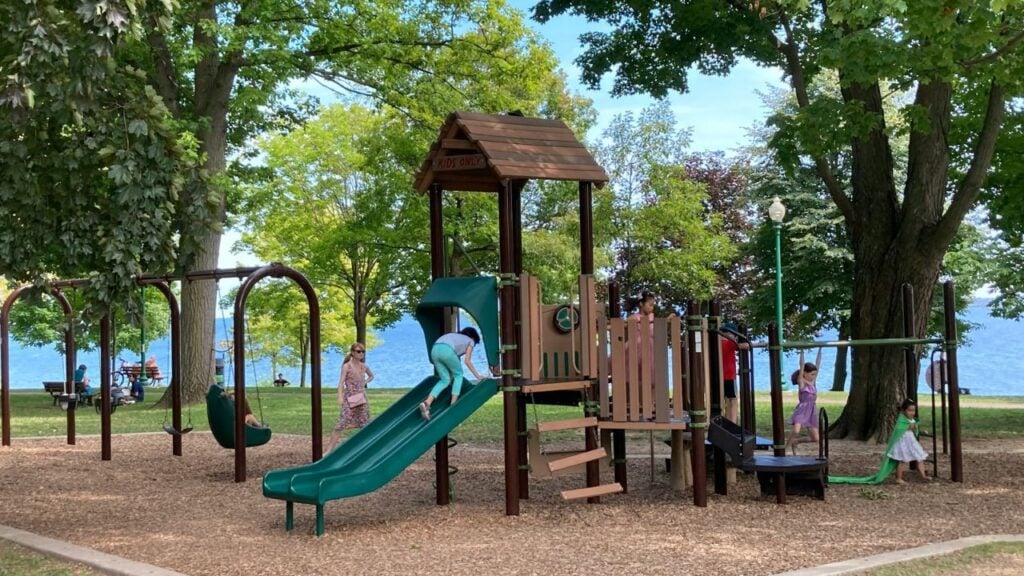
Mark Ferguson, a research fellow at Exeter who led the study, said parks give children room to be active. This activity supports physical and mental health and imaginative play helps build confidence and independence.
He also framed parks as a broader developmental resource. “We believe parks could be more than places to play,” Ferguson said, per the report.

The team also looked at whether the patterns differed by family background. They concluded that parks and playgrounds could help reduce inequalities in child development, but only if the spaces are high quality, safe, welcoming and easy for every family to use.
This caveat carries weight for city planners. Parks are often free or low-cost, which is why the access question matters.
What Are the Limitations of the Research?

The study has boundaries. The data came from one long-running U.K. project and the authors said more research is needed to see whether the results apply to children in more diverse communities. The work also shows an association, not proof that park visits alone cause better outcomes.
The research was funded by the U.K. Medical Research Council and the National Institute for Health and Care Research. It was published in the Journal of Epidemiology and Community Health.
What Parents Can Learn

The researchers said encouraging children to visit a park or playground at least once a week could be a practical way to support emotional well-being, social skills and mental health.
For families, this may be a simple routine. For communities, it raises a larger question about whether every neighborhood has a safe place to play.

