


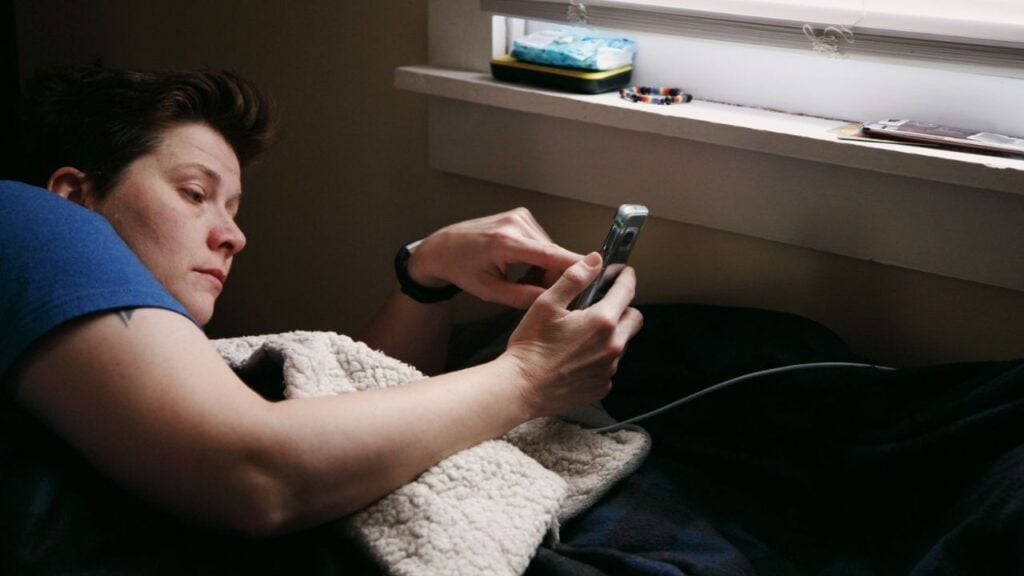
Teens who are scrolling on their phones late at night tend to go to bed later and get less sleep. Even using a phone in the final few minutes before bed can lead to waking up more often during the night, per a new study in JAMA Pediatrics.
The researchers studied 425 U.S. teenagers, with an average age of around 15. On nights when teens used their phones more than usual after 10 p.m., they slept about 20 minutes less and went to bed about 60 minutes later.
A simple solution may exist for these sleep problems. The extra waking associated with the last minute of phone use was very small when teens stopped using their phones at least 20 minutes before bed.
Tracking Screen Time and Sleep Patterns
Most of the research on teens and screen time is based on teens self-reporting how much time they spend on their phones. This study used data collected automatically through a phone app and sleep data from Fitbit devices.
The teens were part of the Adolescent Brain Cognitive Development (ABCD) Study, the largest long-term study of brain development and child health in the United States, backed by the National Institutes of Health. The researchers looked at data from 7,591 nights between late 2020 and early 2024.
How Late-Night Scrolling Affects Sleep

The effects may seem negligible each night, but they can accumulate over time. Each additional minute a teenager spent on their phone after 10 p.m., compared with their normal screen time, was associated with going to sleep 0.9 minutes later and getting approximately 0.4 minutes less sleep.
For instance, 10 extra minutes of scrolling could mean a bedtime delayed by roughly nine minutes and a loss of around four minutes of sleep.
Waking up later the following morning didn’t make up for the lost sleep. The teens who spent more time on their phones also got up later, but they still ended up with less sleep.
Why the Last Five Minutes Matter
This is where the “just five more minutes” phenomenon kicks in. Using a phone in the final five minutes before going to bed was associated with an additional 0.7 minutes of wake time. Most of this occurred in the first 30 minutes after teens initially fell asleep.
The difference was under a minute, so the effect was very small. The findings do, however, suggest that having a phone in the bedroom just before bed affects teenagers’ sleep.
Why Teen Sleep Matters

Many teenagers already struggle to get enough sleep. The American Academy of Sleep Medicine states that teens aged 13 to 18 should be getting 8 to 10 hours of sleep each night.
However, the CDC reported that only about one in four high school students got at least eight hours of sleep on an average school night in 2025.
The CDC also stated that sufficient sleep is important for a teen’s physical and mental health, helps keep them safe and helps them concentrate at school.
What the Study Cannot Prove
The study found a link between late-night phone use and shorter sleep, but it can’t prove that phone use caused the sleep loss.
The researchers also limited the study to teenagers who used Android phones, which may limit how well the findings generalize.
What Families Can Do

The researchers believe that reducing phone use in the evening may improve sleep in teens. This would involve cutting down on screen time after 10 p.m. and ideally not using the phone at all in the hour or so before bedtime.
The CDC’s school health guidance also states that teens who get more evening light, including light from electronic devices, are less likely to get enough sleep.
It recommends sticking to the same bedtime and wake-up time on both school days and weekends. Teens should also put their phones down at least 20 minutes before bed.

