The best PlayStation co-op games for kids aren’t necessarily the easiest games on the platform, but that shouldn’t dissuade you from trying them. Some of the titles on this list are relaxing and creative, while others require good timing, coordination, problem-solving skills, or a decent amount of patience. We’ve made sure to include something for everybody.
The biggest selling point of a good co-op game is that it gives players a real reason to work together, whether that means cooking under pressure, clearing dungeons, solving puzzles, building worlds, or trying to survive one more boss fight. Regardless of the type of games you and your kids enjoy, this list has got you covered.
For the purposes of this list, we focused only on PlayStation co-op games rated E for Everyone or E10+ for Everyone 10+. That means no T-rated games, even if some of them would otherwise make sense for older kids or teens. We also tried to avoid filling the list with games that technically have multiplayer but don’t do much with it.
As always, we’ve added a section after each entry that contains the ESRB rating and any content descriptions parents should be aware of. All these games are designed with young audiences in mind, but it doesn’t hurt to read the content descriptions regardless, just to be on the safe side.
Minecraft Lets Players Build, Explore, And Survive Together
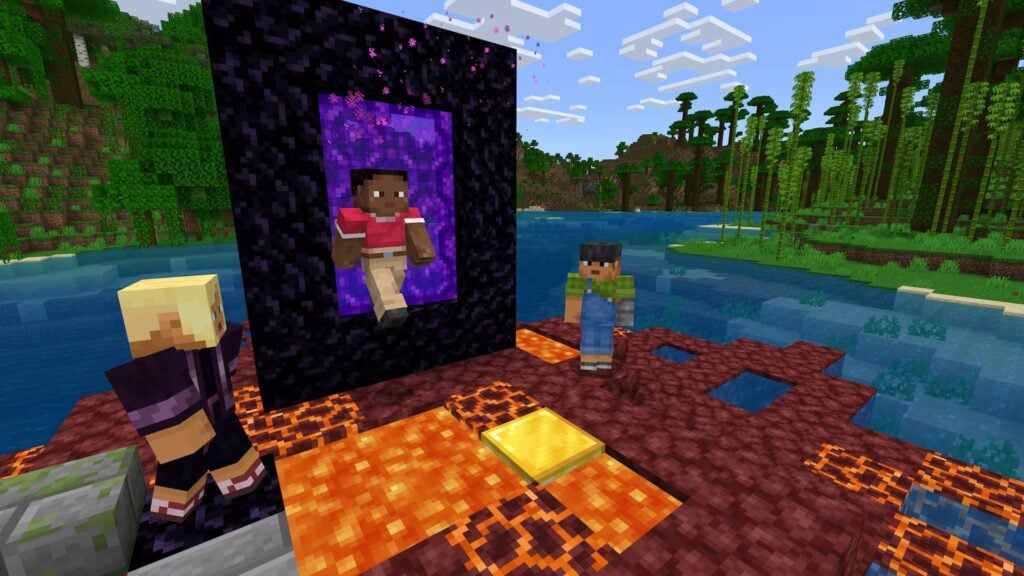
Minecraft is one of the easiest games to recommend for co-op because it’s one of those rare titles that can become whatever the group wants it to be. A party might spend an entire weekend building a massive castle from scratch while another just roams around without committing to a clear goal and messes around with farms, animals, and hidden rooms. That level of flexibility is hard to find in other PlayStation co-op games.
Playing Minecraft in co-op allows parents and their kids to practice teamwork. While some players focus on gathering resources or defending their base from monsters, others can go out and explore solo or stay back and organize things back home. In other words, everyone can play to their strengths.
Although Minecraft doesn’t have a structured narrative in the traditional sense, players can make up their own stories as they go. This can also be done in single-player, but it works especially well in co-op, where everybody can pitch ideas and contribute to the storyline. Alternatively, you and your party can simply set out on an adventure and see where it takes you. No need to draw up any plans beforehand.
Why Kids Will Love Minecraft: Kids who like making their own fun can spend a ridiculous amount of time with Minecraft. Building a base, exploring caves, fighting mobs, raising animals, crafting gear, and showing off strange inventions tend to feel more meaningful when someone else is there to see the result.
ESRB Rating: E10+ for Everyone 10+
Content Descriptors: Fantasy Violence
Players: Single-player. Local split-screen and online multiplayer/co-op available on PlayStation.
Chicory: A Colorful Tale Turns Co-Op Into Shared Creativity
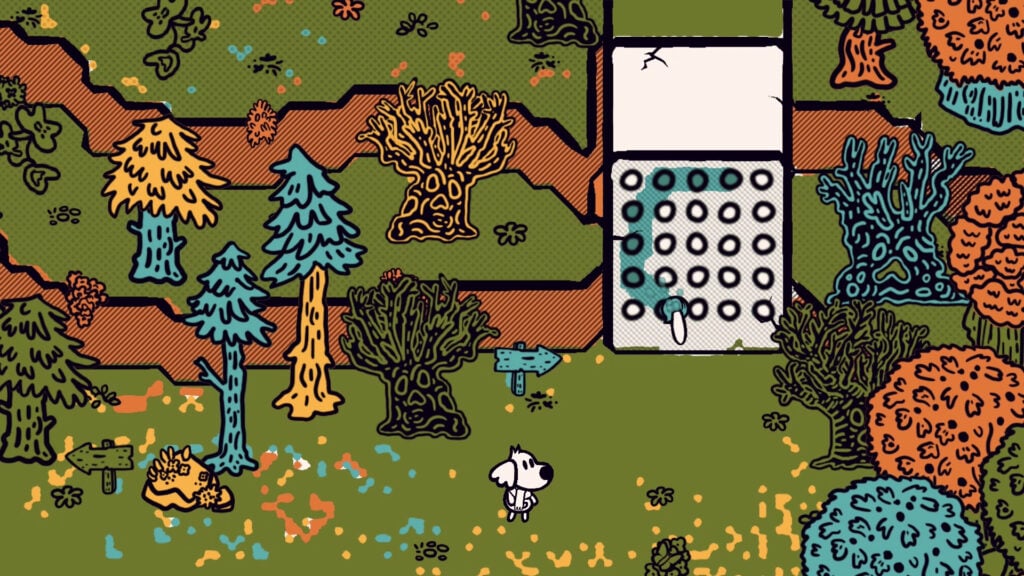
Chicory: A Colorful Tale is a top-down adventure game where the world starts in black and white, and it’s up to the players to paint it back to color. The main player handles exploration, puzzle solving, and story progression using a magical brush that can reshape the environment. A second player can jump in and paint alongside them, which makes the co-op feel different from most games on this list.
The two roles are genuinely different from each other. One player is pushing the adventure forward while the other is free to fill the world with color, experiment with patterns, or help mark paths and puzzle elements along the way. It might not seem like much compared to games where both players are doing the same thing, but in practice, the second role keeps you just as invested in what’s on screen.
Although one player is always in the lead, Chicory doesn’t treat the second player as a passenger. The painting role has real creative ownership, and the game gives you both enough freedom that what the world ends up looking like is genuinely up to you. Take it seriously, and you get something considered and deliberate. Ignore any sense of coordination, and you get something completely chaotic. Either way works.
Why Kids Will Love Chicory: Kids who like to draw, decorate, and put their own stamp on things will find a lot to enjoy here. The game keeps moving with new areas to explore and puzzles to solve, but the real draw (pun not intended) is that the world looks different every time, depending on who’s holding the brush.
ESRB Rating: E10+ for Everyone 10+
Content Descriptors: Comic Mischief, Mild Fantasy Violence, Mild Suggestive Themes
Players: Single-player. 2-player local co-op.
Cuphead Is A Tough Co-Op Challenge With A Stunning Cartoon Style
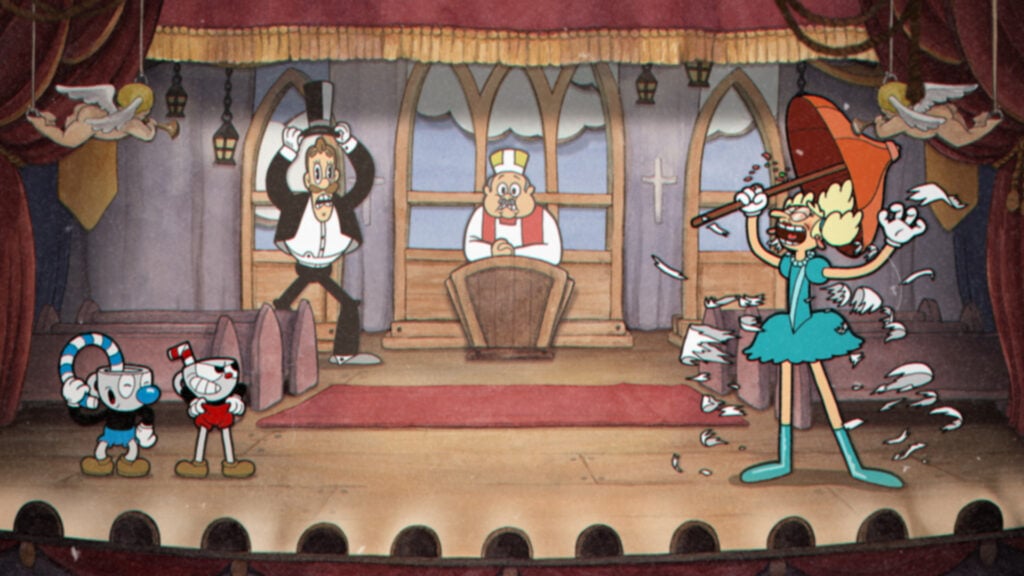
Cuphead has a reputation for being difficult, and that reputation is well earned. This is a boss-heavy run-and-gun game where players spend most of their time learning attack patterns, dodging projectiles, and retrying the same fight until they finally manage to beat it. The controls are very simple to wrap your head around, but clearing stages requires patience and determination.
Defeating many of Cuphead’s bosses is hard work, but every victory feels like a genuine achievement. And when a run does fail, it rarely feels like wasted time. Bosses are short and readable enough that you almost always walk away with a better sense of what went wrong. That’s exactly the kind of design that pushes players to keep trying for more time, no matter how many times they’ve already failed.
The 1930s cartoon aesthetic deserves its own mention. Cuphead looks like a playable animated short, with surreal character designs, rubber-hose animation, and often ridiculous boss themes. The visual style is distinctive enough that you’ll want to tackle every stage just to see what it looks like, and it gives the game a personality that holds up well past the initial impression.
Why Kids Will Love Cuphead: Kids who are drawn to skill-based PlayStation games will get a lot out of learning boss patterns and landing clutch revives on a co-op partner. The animation makes every stage worth seeing, even during a losing run, and finally clearing a fight that seemed impossible is one of the better feelings co-op gaming has to offer.
ESRB Rating: E10+ for Everyone 10+
Content Descriptors: Fantasy Violence, Mild Language, Use of Alcohol and Tobacco
Players: Single-player. 2-player local co-op.
Rocket League Makes Teamwork Easy To Understand But Hard To Master

Rocket League has a concept that’s almost impossible not to fall in love with. It’s basically just soccer, but with rocket-powered cars. The learning curve is less about understanding the game and more about accepting how bad you’re going to be at it for a while. That’s because the gap between knowing what to do and learning how to do it is bigger than it may appear at a glance.
That gap is part of what makes it a good fit for co-op with mixed skill levels. Matches only run for a few minutes, so there’s no real pressure to commit, and it’s easy to keep playing, swap teams, or dial the seriousness up or down depending on the mood. A less experienced player can still make a difference without having to match what a more skilled teammate is doing.
Rocket League is a game that encourages you to play both competitively and cooperatively, especially when you’re in a pre-made party. While playing as a team, you quickly learn when to chase and when to fall back, when to go for it, and when to let someone else take the shot. Of course, sometimes things will inevitably go wrong, no matter how well your team plays, but that’s just the name of the game, like this.
Why Kids Will Love Rocket League: This game is very definitely easy to learn but hard to master. Kids can look at Rocket League as a game for casual fun and maybe blowing up a couple of cars in the process. Or, they can view it as a competitive game where there’s always room for improvement.
ESRB Rating: E for Everyone
Content Descriptors: Mild Lyrics, Users Interact
Players: Single-player. Local split-screen and online multiplayer are available on PlayStation.
Teenage Mutant Ninja Turtles: Shredder’s Revenge Is A Modern Arcade Beat ‘Em Up Done Right
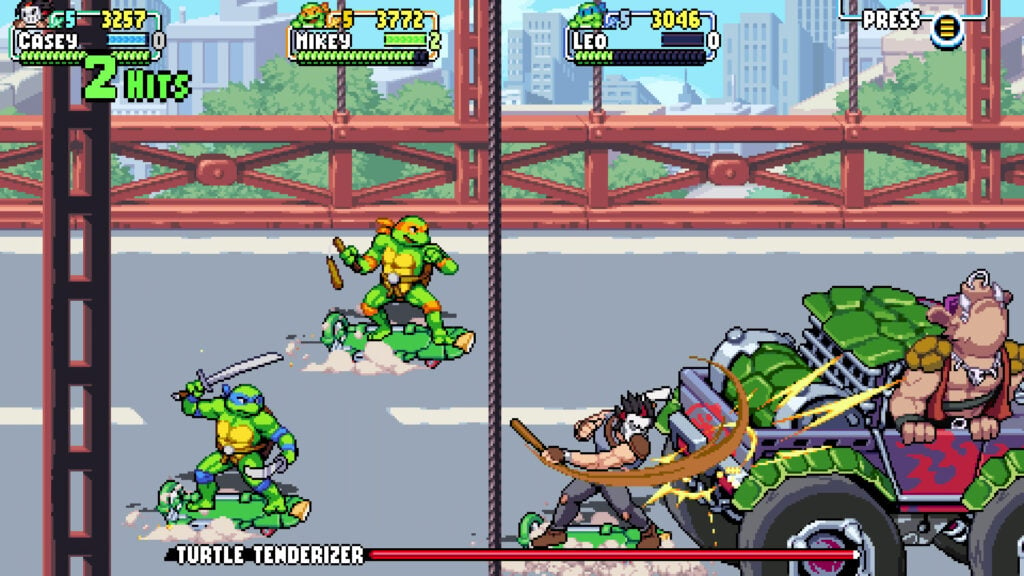
Teenage Mutant Ninja Turtles: Shredder’s Revenge is a beat ’em up that understands exactly why people still love the old TMNT games. The gameplay is as straightforward as it gets and revolves primarily around picking a Turtle, moving left to right, and fighting everything in your path. The game doesn’t try to be more complicated than that, and it’s better for it.
Where Shredder’s Revenge earns its place as a solid co-op game is in how much the experience changes when more players are involved. The screen gets crowded fast, things get chaotic, and simply keeping track of what’s happening becomes an integral part of the experience. Anyone can jump in pretty much on a whim, but there’s enough variety across characters and stages that it doesn’t run out of things to offer in a single session.
Part of what makes Shredder’s Revenge hold up is that it doesn’t overcomplicate the formula. Stages are short and action-packed, making the game feel like a Saturday-morning cartoon combined with an arcade cabinet. Fans of the franchise will get extra mileage out of the references, but the co-op brawling is strong enough even without nostalgia doing the heavy lifting.
Why Kids Will Love Teenage Mutant Ninja Turtles: Shredder’s Revenge: Kids can pick a favorite Turtle and get into the action almost immediately without having to learn any complicated combos beforehand. The best moments tend to come when everyone piles onto the same boss at once, barely pulls through, and somehow keeps the run going.
ESRB Rating: E10+ for Everyone 10+
Content Descriptors: Fantasy Violence, In-Game Purchases
Players: Single-player. 1–4 local players on PlayStation. Online co-op also available.
Overcooked! All You Can Eat Is The Ultimate Test Of Kitchen Co-Op
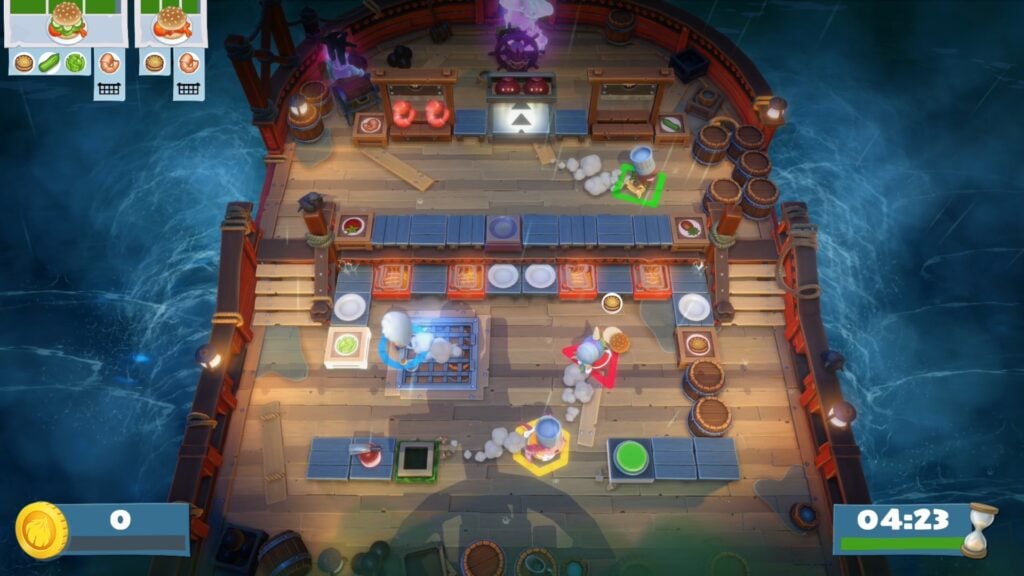
Overcooked! All You Can Eat is another title designed with couch co-op in mind, though it can also be played online. The gameplay revolves around preparing orders and serving them to customers before the timer runs out. Sounds pretty easy, right? Well, the problem is that the kitchens themselves seem personally invested in ruining your day.
What starts as a basic cooking game quickly becomes an exercise in communication, or lack thereof. The layouts are designed to divide the work in ways that require real coordination, and then they change on you before anyone gets comfortable with the setup. A kitchen might split in half mid-level or start drifting across a river while someone is still trying to figure out where the plates went.
All You Can Eat is also the version to get because it bundles both Overcooked games and their extra content together. That adds up to a lot of kitchens to work through, and the short level structure makes it easy to play in small bursts. Just don’t be surprised when a quick session turns into everyone loudly accusing each other of burning soup.
Why Kids Will Love Overcooked! All You Can Eat: The goals are clear enough that kids can follow along from the start, but hitting a good score takes real coordination and commitment. Most sessions eventually result in at least one person admitting they forgot about the rice.
ESRB Rating: E for Everyone
Content Descriptors: Mild Cartoon Violence, Users Interact
Players: Single-player. 1–4 local players. Online co-op available on PlayStation.
Sackboy: A Big Adventure Gives PlayStation One Of Its Best Family Co-Op Platformers
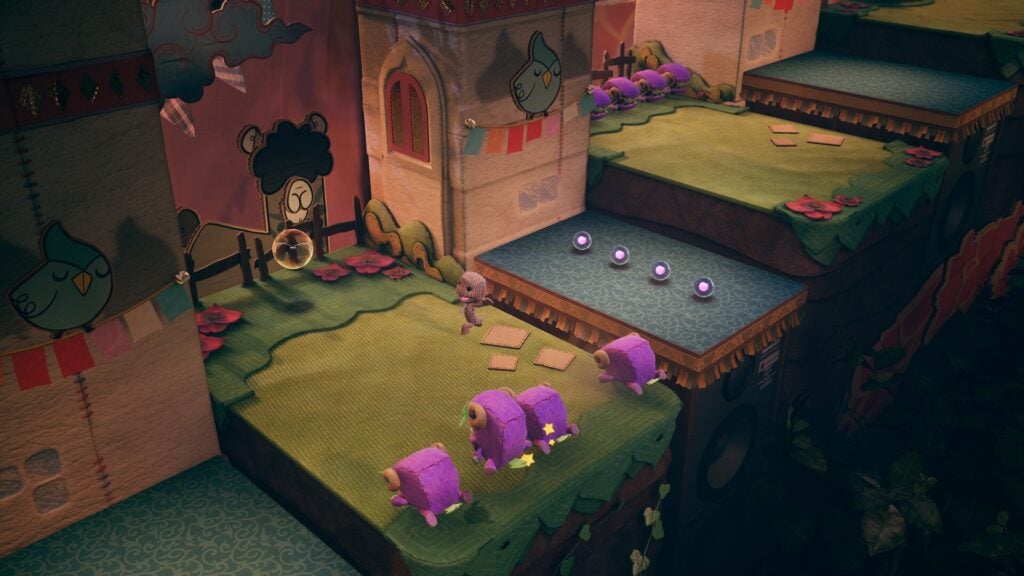
Sackboy: A Big Adventure takes the PlayStation mascot out of the old LittleBigPlanet mold and turns his world into a full 3D platformer. Instead of building levels, players can now run through them while collecting things and dodging hazards. The transition works well, and the game holds up as a standalone experience, even for players who have never played LittleBigPlanet.
What separates it from similar games is that Sumo Digital built dedicated Teamwork Levels that can only be cleared with multiple players. Stages are designed around communication, where progress might mean tossing a partner onto a platform they couldn’t reach on their own, or holding a switch in place while someone else works out the timing from the other side.
The game also holds up as a PlayStation-specific pick beyond the character alone. The PS5 version uses the DualSense’s haptic feedback in ways that give the woolly, craft-world aesthetic a tactile quality that carries through into the platforming itself. The music levels, where enemies and platforms move in sync with tracks by Bowie and Britney Spears, are among the more inventive co-op set pieces the platform has to offer.
Why Kids Will Love Sackboy: A Big Adventure: Kids who like platformers will find a lot to love here, between the stages, costumes, and collectibles. The best moments tend to come when the game asks players to coordinate just enough to get through something, while still leaving them plenty of room for mistakes, jokes, and accidental betrayal.
ESRB Rating: E for Everyone
Content Descriptors: Mild Cartoon Violence, Mild Lyrics, Users Interact
Players: Single-player. 1–4 local players. Online co-op available on PlayStation.
LEGO Star Wars: The Skywalker Saga Lets You Play Through A Galaxy Far, Far Away Together
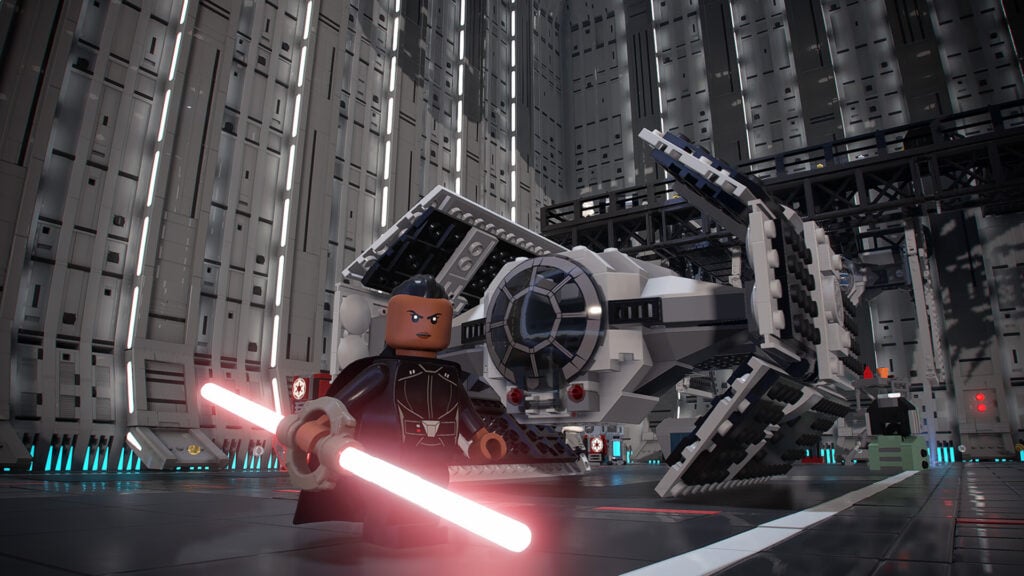
LEGO Star Wars: The Skywalker Saga covers all nine films in the main saga, making it the most ambitious LEGO game to date and one of the easier purchases to justify if you’re looking for something with staying power. Two players can work through 45 story missions across 23 explorable planets, with more than 300 playable characters unlocking as they go.
The game has enough content that two players can naturally divide the workload, while the open-world structure between missions gives both people plenty to chase outside of the story itself. Meanwhile, the class system means different characters will bring different abilities to the table, so feel free to experiment. Solo, the game can feel repetitive in longer stretches, but in co-op, everything is well-paced.
Just like other LEGO games, The Skywalker Saga is brimming with humor. TT Games has always understood that the appeal of LEGO Star Wars isn’t just the license but the way it deflates it. The Skywalker Saga doesn’t shy away from that design philosophy despite being a much larger game than anything that came before it. Iconic scenes play out as LEGO slapstick, and the game is funny enough to hold up even for players with little history with the films.
Why Kids Will Love LEGO Star Wars: The Skywalker Saga: The sheer variety of characters and planets means the game keeps introducing something new well past the first few hours. Getting to play as a Mouse Droid or a Wampa alongside a Jedi makes the game come across like it was put together specifically to reward kids who know too much about Star Wars.
ESRB Rating: E10+ for Everyone 10+
Content Descriptors: Cartoon Violence, Comic Mischief, In-Game Purchases
Players: Single-player. 2-player local co-op.
Just Dance 2026 Edition Turns Any Living Room Into A Dance Floor
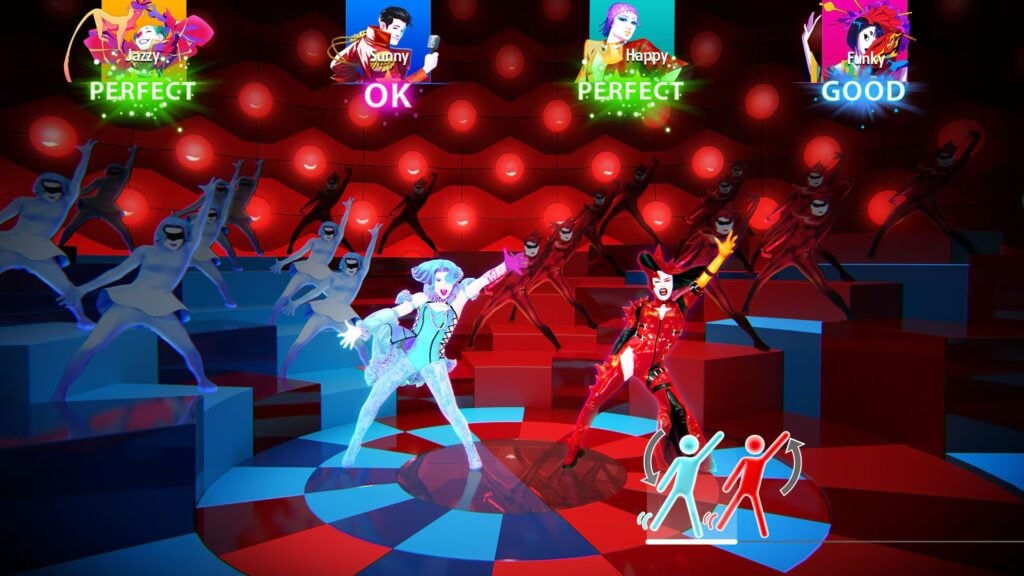
Just Dance 2026 Edition has the lowest barrier to entry out of anything on this list. In case you’re not familiar with the series, the gist is that you follow an on-screen dancer and try to match the choreography across a selection of current and classic tracks. Just Dance 2026 supports up to six players at once, and since the game uses a smartphone app for motion tracking instead of requiring additional hardware, getting everyone into a session is as easy as pie.
The six-player cap is worth mentioning because it can have a pretty big impact on how you play the game. Most co-op titles cap at four players, so Just Dance can accommodate an entire family plus whoever else happens to be in the room. Nobody is waiting their turn or watching from the couch. The song list runs from Bruno Mars and Lady Gaga to Coldplay and Madonna. That’s a wide enough spread that most households will find something everyone is willing to dance to, even reluctantly.
The 2026 edition also introduces Party Mode, which layers visual and action disruptors over songs mid-performance to keep players from settling into a routine. The disruptors change what you’re supposed to do on the fly, a feature that has the side effect of leveling the playing field between someone who has memorized the choreography and someone who is clearly just winging it. It’s a small addition, but it makes the mode more interesting than a straight score comparison.
Why Kids Will Love Just Dance 2026 Edition: The barrier to entry is low enough that kids who don’t usually play games can keep up with the ones who do. Getting a high score matters less than it looks like it does, and the game is chaotic enough with a full group that nobody’s performance stands out for too long.
ESRB Rating: E for Everyone
Content Descriptors: Mild Lyrics, Users Interact, In-Game Purchases
Players: Single-player. Up to 6 players in local multiplayer on PlayStation.
Lovers In A Dangerous Spacetime Is One Of The Best Co-Op Games You’ve Never Heard Of
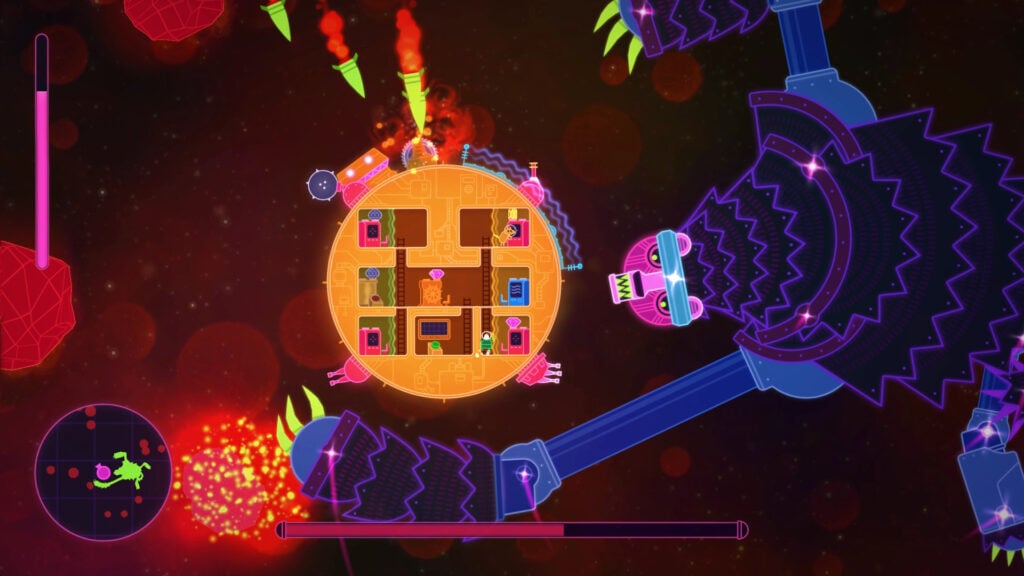
Lovers in a Dangerous Spacetime is a co-op shooter built around a concept that sounds strange on paper and turns out to be even stranger in practice. Two players crew a single battleship through a neon galaxy, rescuing kidnapped space animals from an army called the Anti-Love forces. The ship has more stations than any two people can cover at once, so it’s up to the players to decide who runs what.
The stations handle different things, such as weapons, shields, steering, navigation, and a special attack that charges between uses. With two players and more jobs than hands, someone is always scrambling. One person might be piloting while the other handles the guns, until something attacks from the rear, and both players have to make a quick call about what to abandon. Things can sometimes get hectic since the game doesn’t pause to let you sort it out.
Despite its challenging nature, Lovers in a Dangerous Spacetime never feels unfair. The ship gets upgraded over time using gems found throughout each level, and getting better at the game comes down to communication as much as reflexes. Most of the real co-op lives in the moments when the right move isn’t obvious, and both players have to work it out under pressure.
Why Kids Will Love Lovers in a Dangerous Spacetime: The premise of rescuing cute animals while keeping a spaceship from falling apart hits a sweet spot between approachable and genuinely exciting. The difficulty can get pretty high, but that just means that getting through a tough section actually feels rewarding, and the neon art style makes the game look great even mid-disaster.
ESRB Rating: E10+ for Everyone 10+
Content Descriptors: Fantasy Violence
Players: Single-player. 1–4 player local co-op.
Moving Out 2 Turns The World’s Most Stressful Chore Into A Co-Op Game
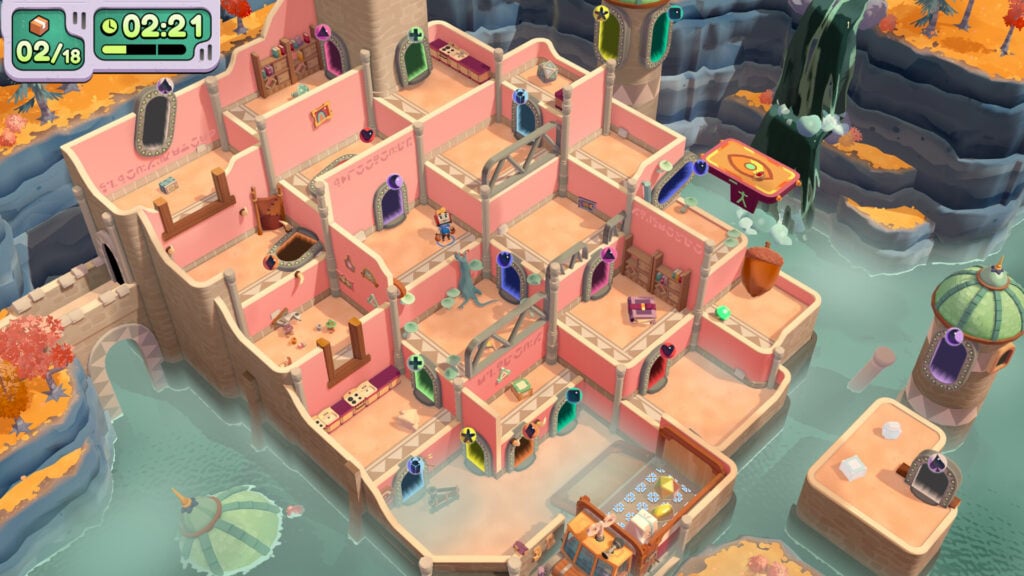
Moving Out 2 is a physics-based co-op game about working as a moving crew. On paper, your job is to grab furniture, get it into the truck, and move on to the next location. Sounds pretty straightforward, but what actually happens most of the time is that items fly through windows, heavy sofas take two people to shift, and at least one thing inevitably ends up in a weird place.
The physics of Moving Out 2 are deliberately imprecise and annoying, but in a funny way. Players can throw items to each other across a level and engage in all sorts of other shenanigans as they attempt, often unsuccessfully, to move objects from one place to another. Moving Out 2 supports up to four players, making it one of the best PlayStation co-op games to enjoy with the whole family.
The original Moving Out is also worth checking out, but the sequel expands the formula beyond regular houses and apartments. Levels span candy-colored worlds, medieval environments, and futuristic settings, each with different hazards and mechanics. Online multiplayer, which wasn’t in the original, also makes it easier to get a session going without everyone needing to be in the same room.
Why Kids Will Love Moving Out 2: The character roster includes a cob of corn and a cassette tape, which should tell you everything you need to know about the tone. The levels are short and varied enough that the game rarely overstays its welcome, and the physics engine reliably produces funny moments at a consistent pace.
ESRB Rating: E for Everyone
Content Descriptors: Crude Humor
Players: Single-player. 1–4 local players. Online co-op available on PlayStation.
Cat Quest Is A Co-Op RPG Series That Gets Better With Every Entry
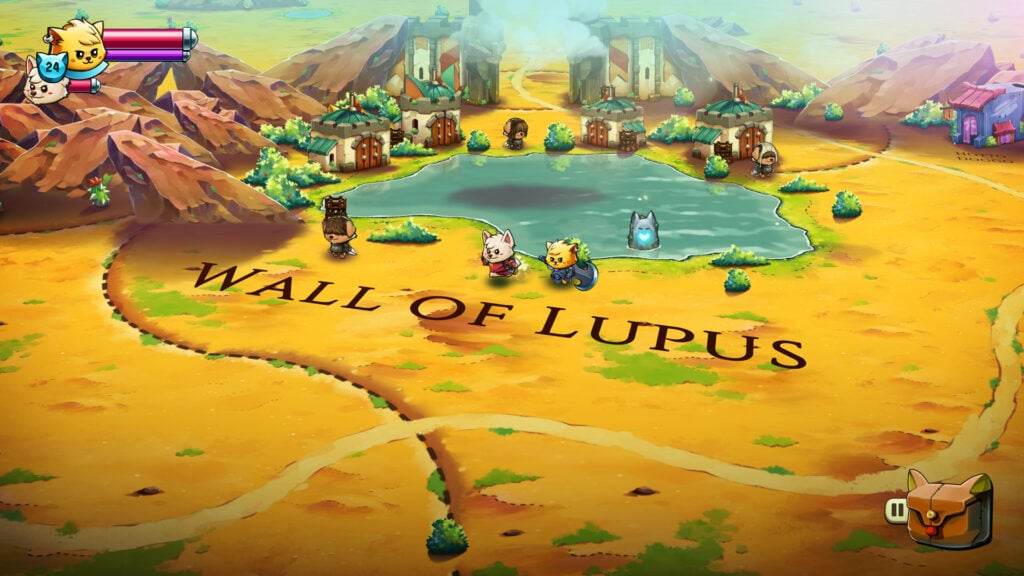
The Cat Quest series is a collection of three action RPGs from The Gentlebros that run on a consistent formula. You’ve got an open world, real-time combat, a quest structure that keeps pointing you in the right direction, and more cat puns than anyone should be comfortable with. Each entry is short enough to finish over a weekend. It’s also one of those rare series that gets noticeably better with each installment.
Cat Quest is single-player only, but Cat Quest II introduces a two-player mode built around a cat and a dog who have to put aside a centuries-old rivalry to save their kingdoms. Cat Quest III keeps the two-player co-op, drops the dog, and lets a second player join as another cat instead. The third game also adds a pirate setting, a ship to sail between islands, and guns alongside the sword-and-spell combat the series is known for.
Cat Quest II is the more grounded of the co-op games and the easier one to recommend as a starting point. Cat Quest III is the better game, with a more ambitious world and a co-op mode that doesn’t force a second character on screen when only one person is playing. Since the original is a single-player game, you can let your kid go through it solo and jump into it afterward for the sequels.
Why Kids Will Love Cat Quest: The series is perfect for kids who want to delve into the world of RPGs for the first time. A lot of the bigger RPGs can take up to 100 hours or more to complete, but the Cat Quest games are comparatively much shorter and less intimidating.
ESRB Rating: E10+ for Everyone 10+
Content Descriptors: Fantasy Violence, Comic Mischief
Players: Single-player. 2-player local co-op in Cat Quest II and Cat Quest III.
Untitled Goose Game Lets Two Players Be Horrible Together
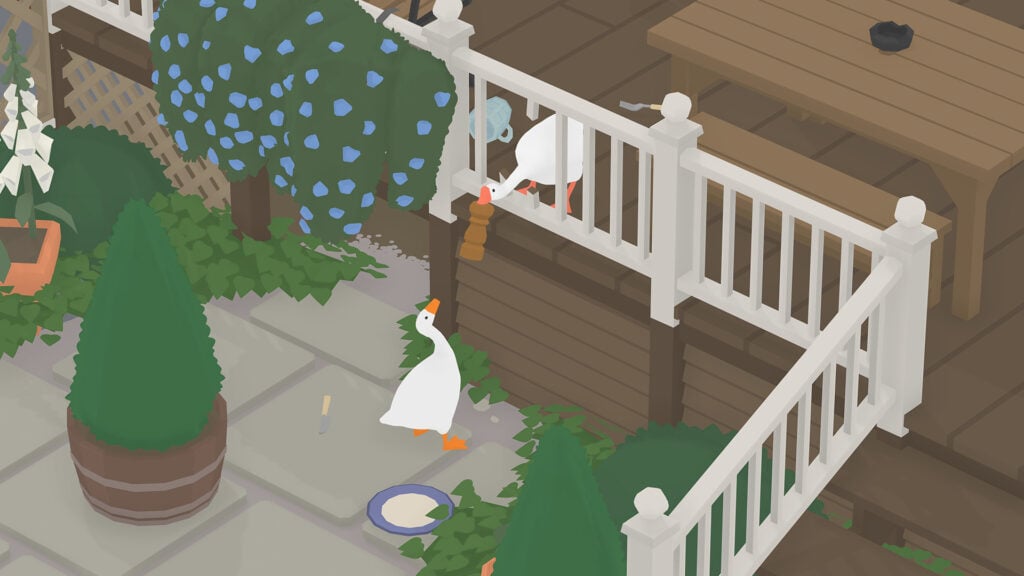
Untitled Goose Game is a short stealth-puzzle game where you play as an annoying goose. Or a pair of them if you’re playing co-op. The goal is to work through a to-do list of pranks that range from stealing a gardener’s hat to making the local shopkeeper deeply regret opening for business that morning. The residents will try their best to shoo you away, but they will not succeed, for you are a mighty goose.
The co-op mode, added as a free update after launch, doesn’t change the objectives or introduce new content. What it changes is the dynamic. With two geese on the loose, tasks that required patience in single-player can be made easier by having one player create a distraction while the other goose completes the objective. NPCs can only deal with one threat at a time, meaning that the second goose always has room to operate.
What makes the co-op work so well is the fact that most of what happens in this game is funnier with someone else watching. Getting chased across a garden because you honked at the wrong moment is funny. Being the one who sets up the distraction while the other player steals a villager’s hat is even funnier. The game is short by design, but nothing is stopping you from spending countless hours just honking at random people and pulling pranks.
Why Kids Will Love Untitled Goose Game: The appeal of playing as a horrible goose who ruins everyone’s day requires no explanation. The controls are simple, the objectives are creative, and there is a dedicated button just for honking. It doesn’t get much better than that.
ESRB Rating: E for Everyone
Content Descriptors: No Descriptors
Players: Single-player. 2-player local co-op.
The Trine Series Has Been Getting Co-Op Puzzle-Platforming Right Since 2009
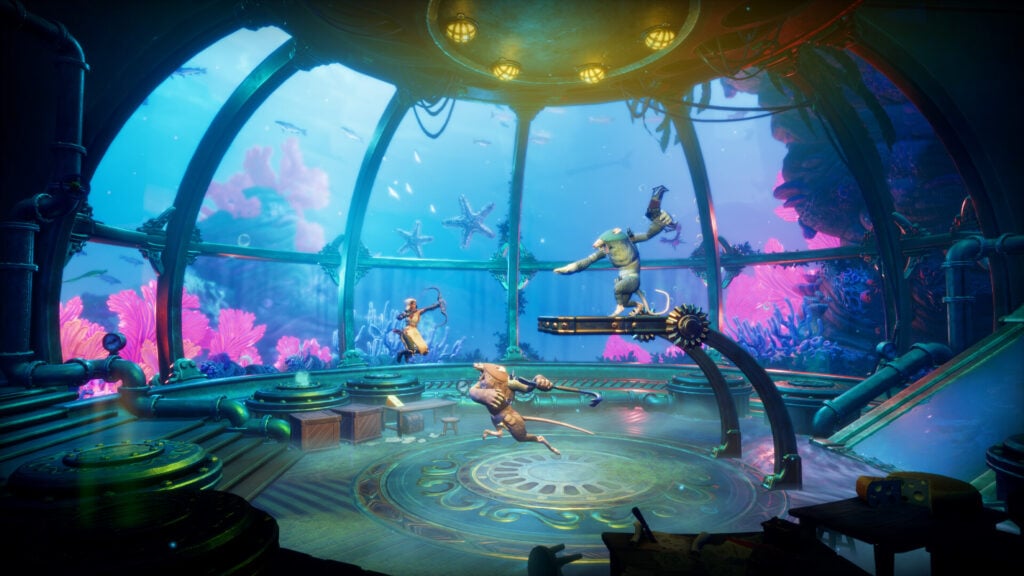
Trine 5: A Clockwork Conspiracy is a side-scrolling puzzle-platformer built around three heroes with very different abilities. Amadeus can move objects with magic, Pontius handles combat and defense, and Zoya uses arrows and ropes to reach places the others can’t. The game works in single-player mode, but the character-swapping format naturally makes more sense when multiple people control the heroes at once.
In solo play, juggling between the three characters and their different abilities can get a bit hectic. But in co-op, those same abilities become three separate people with three different jobs and three different opinions about how to solve the puzzle in front of them. The physics engine lets players approach most problems creatively, so there’s rarely just a single right answer to any one problem.
The Trine series has five entries, and all of them support co-op. The fifth entry is one of the better places to start the series because it looks visually impressive, plays smoothly, and adjusts its puzzle design based on the number of players. Co-op puzzle games can fall apart when one person ends up doing all the thinking, but that’s not really an issue here since everybody has a key role to play.
Why Kids Will Love Trine 5: The three characters are distinct enough that players naturally develop a preference, and the physics-based puzzles reward experimentation over memorization. Kids who enjoy puzzles, platforming, and fantasy adventures will have plenty to work with here.
ESRB Rating: E10+ for Everyone 10+
Content Descriptors: Fantasy Violence
Players: Single-player. 1–4 local players. Online co-op available on PlayStation.
PAW Patrol World Brings The Franchise Into Its First Open-World Co-Op Adventure
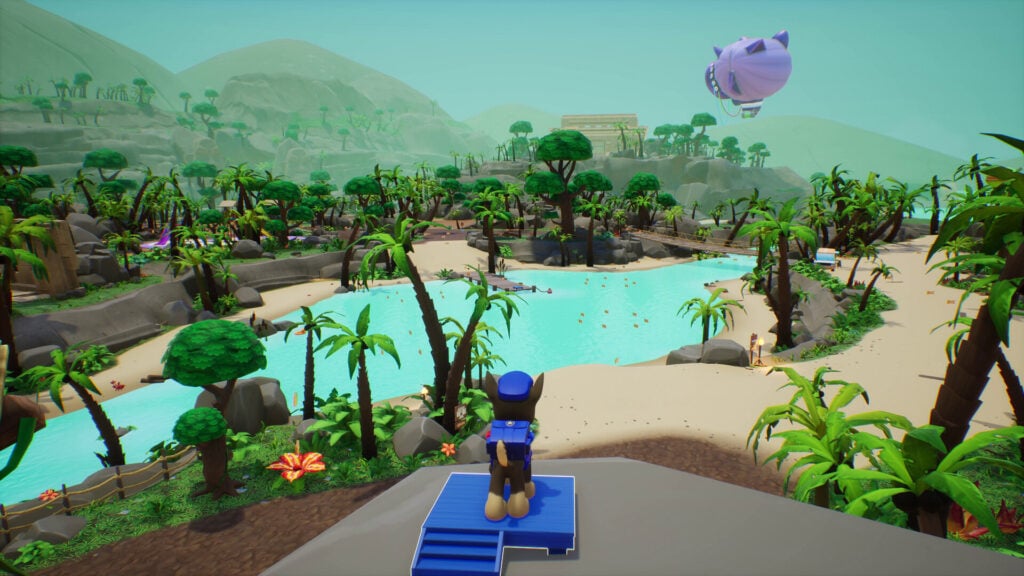
PAW Patrol World is the first game in the franchise to move into a free-roaming 3D environment, a step up from the linear side-scrollers that came before it. The premise follows the show’s usual template: Mayor Humdinger is causing trouble, and the pups have to stop him. Players can switch between eight pups across four open-world locations based on the show, each with their own vehicles and a set of missions to work through.
The co-op is a two-player split-screen setup designed around how most people will play this game, i.e., a parent sitting alongside a young child. Both players can explore freely, but missions require mutual agreement to start, and only one pup can complete a task at a time. If one player wanders too far or gets stuck, holding a button instantly warps them to their partner’s location. It’s a practical design that reflects who this game is designed for.
Missions follow the same pattern throughout the game’s entire runtime, and the challenges never get particularly difficult. Parents playing alongside a young fan won’t find much to keep them engaged on their own, but the value here is giving the youngest players a full open-world game they can actually navigate on their own. Previous PAW Patrol entries didn’t offer that.
Why Kids Will Love PAW Patrol World: Young fans of the show will recognize everything here, from the pups and their vehicles to the locations they’ve watched on screen. The main selling point here is familiarity. The game was clearly made with fans of the show in mind, but PAW Patrol World isn’t a bad pick for players unfamiliar with the cartoons, either.
ESRB Rating: E for Everyone
Content Descriptors: In-Game Purchases
Players: Single-player. 2-player split-screen co-op.
Minecraft Dungeons Takes The Series Into Dungeon Crawler Territory
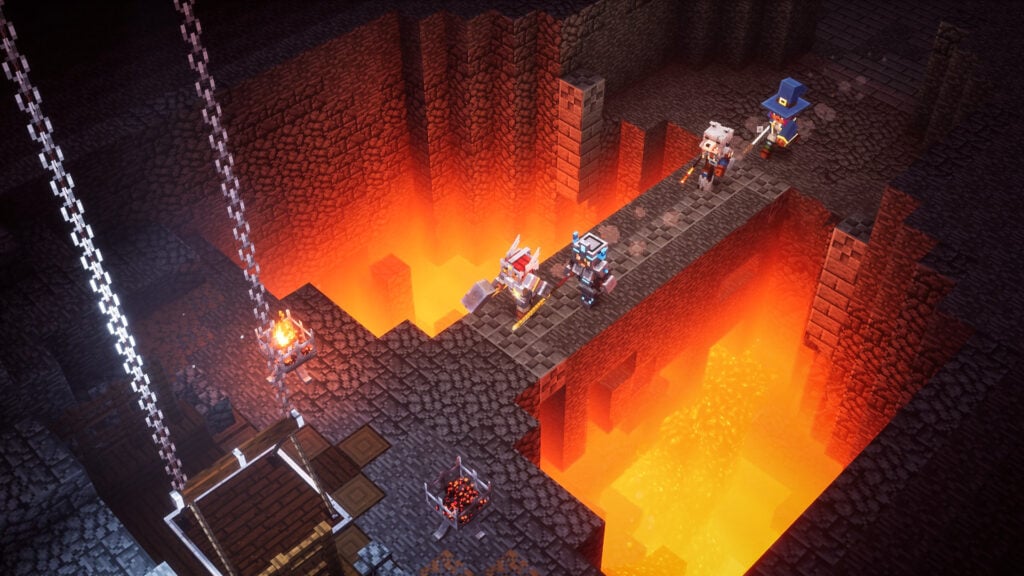
Taking the Minecraft aesthetic and dropping it into a Diablo-style dungeon crawler sounds like it shouldn’t work as well as it does. Minecraft Dungeons strips away the building and crafting that defined the original and replaces them with loot, levels, and waves of familiar enemies to fight through. For players who might find games like Diablo too demanding as a starting point, Minecraft Dungeons offers similar gameplay with much less horror and intensity.
Four players can take on dungeons together in local or online co-op. There’s no traditional class system per se, but the equipment you carry defines your playstyle. Players can take on the role of tanks, damage dealers, or supports by simply equipping the right pieces of gear. Finding said gear can be a little tricky since there’s an RNG element to the loot system, but that tends to be the case with every game in this genre.
Minecraft Dungeons is a good step up for players who like Minecraft but want something with more structure. Missions have clear goals, the combat is fast-paced, and the difficulty adjusts well enough that parties rarely feel overwhelmed even when going up against a ton of enemies all at the same time. The game is shorter than many others in the genre, but that’s actually a good thing since it’s designed to be more of a casual experience.
Why Kids Will Love Minecraft Dungeons: Kids who already like Minecraft will enjoy seeing familiar enemies, weapons, environments, and items used in a more action-focused way. It’s also a strong co-op pick because every player gets to fight, collect loot, and experiment with their own build.
ESRB Rating: E10+ for Everyone 10+
Content Descriptors: Fantasy Violence, Users Interact, In-Game Purchases
Players: Single-player. 2–4 local co-op. Online co-op available on PlayStation.
The Smurfs: Dreams Is A Better Co-Op Platformer Than You Might Expect
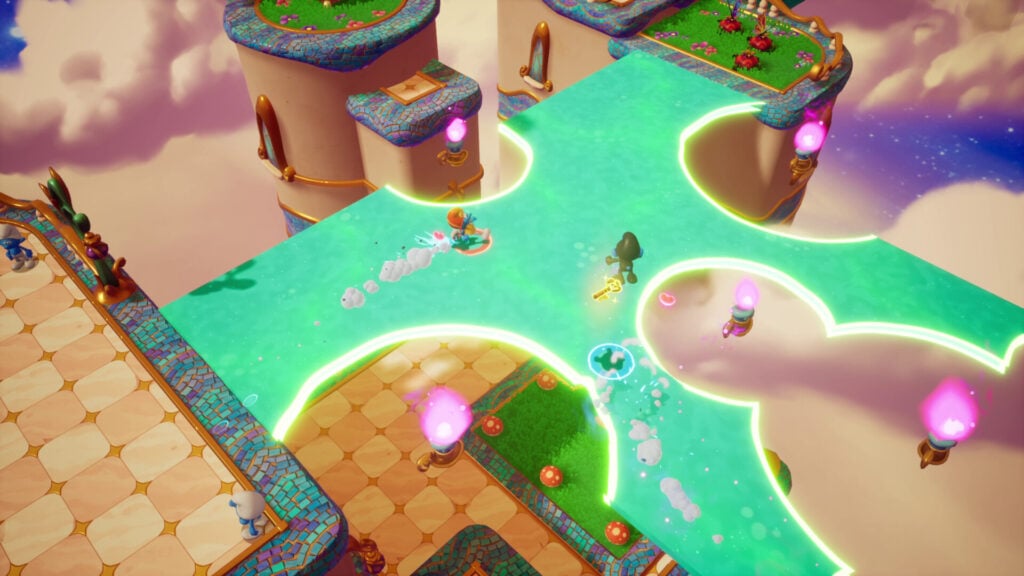
Licensed games based on children’s properties tend to clear a low bar. The Smurfs: Dreams cleared it by a wider margin than anyone would have reasonably expected and ended up being one of the pleasant surprises of 2024, at least as far as PlayStation co-op games are concerned. The game drew comparisons to Super Mario 3D World on release, which is either a bold reference point or exactly the right one, depending on how you feel about the result.
Gargamel has cursed the Smurfs’ food supply and sent the village into a deep sleep. Players dive into the Smurfs’ dream worlds to wake them up before Gargamel reaches the village. Each main level is built around a different Smurf’s subconscious, a feature that gave the designers room to get weird with the themes. Whereas one stage leans into a world of mirrors and reflections, another one turns Smurfs into Tetris-like shapes. That variety holds across the full campaign.
Two players can play through the entire game together and the gadgets acquired along the way give both of them something to actively do, beyond just running through levels. Switching between tools keeps the approach from going stale and the level design rotates through ideas quickly enough that no single type of challenge overstays its welcome. The game is short, but it uses the time well.
Why Kids Will Love The Smurfs: Dreams: The dream setting gives the game an anything-can-happen quality that keeps levels from feeling predictable. Kids who know the Smurfs will get more out of the character-specific stages, but the platforming works well enough on its own that the familiarity with the franchise doesn’t matter much either way.
ESRB Rating: E for Everyone
Content Descriptors: Mild Fantasy Violence
Players: Single-player. 2-player local co-op.
Unravel Two Uses A Thread To Build One Of The Better Co-Op Platformers On PlayStation
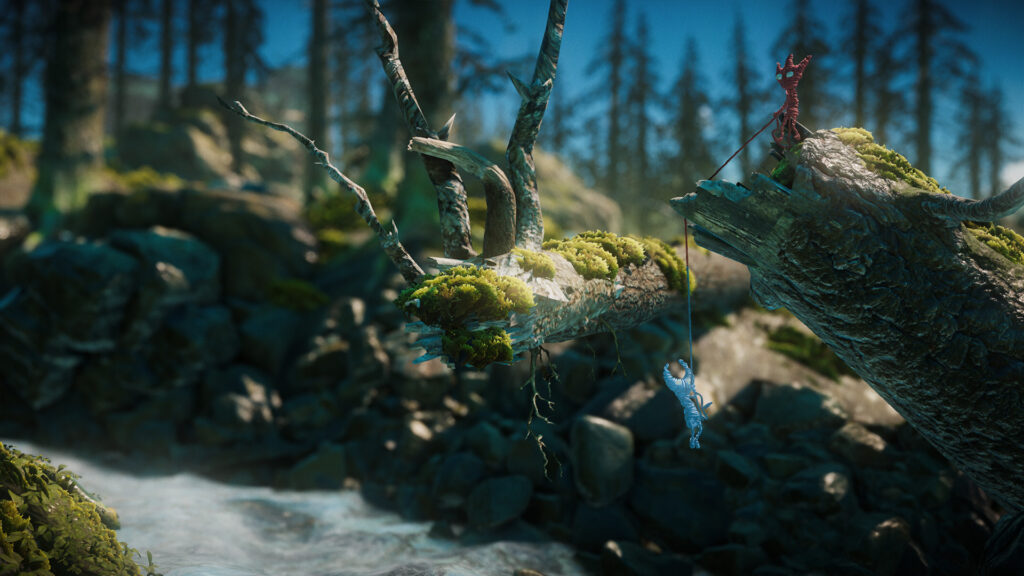
Unravel Two builds its co-op story around two small creatures made of yarn, connected to each other by a thread. Most of what makes the co-op stand out stems from the idea that both players are tethered to each other. One can swing the other across a gap, pull a partner up to a ledge, or use the yarn as a bridge. While progressing through a difficult section, a less experienced player can hitch a ride and essentially let themselves be carried by the other player.
The game is built from the ground up for two players, and it shows. Both Yarnys have the same abilities and interact with the environment in the same way, but the range of skill levels the co-op can accommodate is wider than it looks. When Unravel Two is working at its best, both players feel like they’re solving the same problem from opposite ends of the thread.
The environments are the other major selling point. Yarny stands only a couple of inches tall, and the levels are rendered with near-photographic detail, turning ordinary settings into something that feels vast and strange. A creek becomes a river, a garden becomes a forest, and the sense of scale becomes integral to the experience. The story, told entirely without words, gives the whole thing an emotional quality that holds up past the credits.
Why Kids Will Love Unravel Two: The yarn and thread mechanics are tactile and satisfying in a way that’s easy to pick up but hard to fully master. The visual scale is unlike most platformers, and the levels reward slowing down to look around rather than rushing through them.
ESRB Rating: E for Everyone
Content Descriptors: Mild Fantasy Violence
Players: Single-player. 2-player local co-op.
KeyWe Turns A Post Office Into A Two-Player Coordination Game
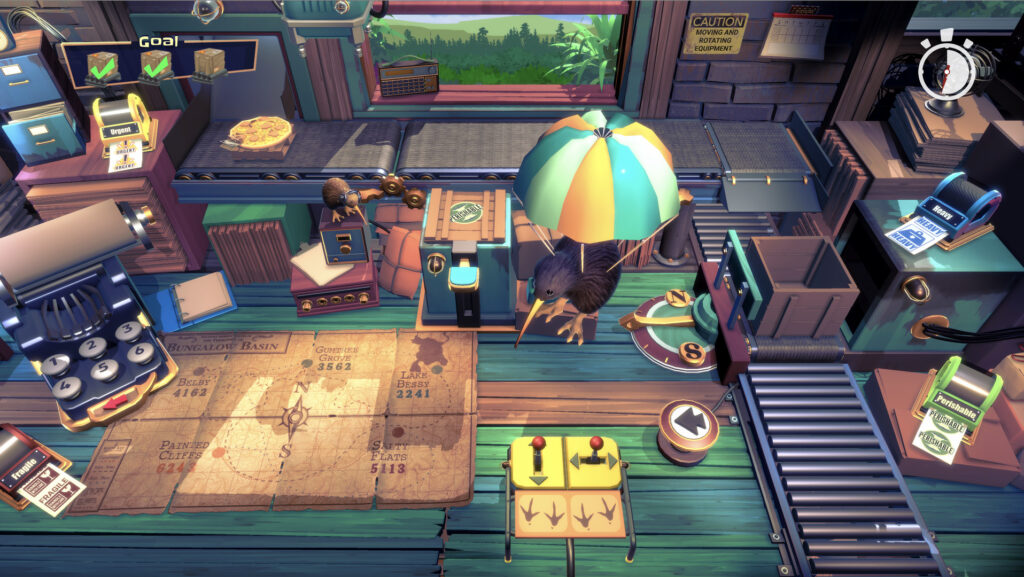
Jeff and Debra are kiwi birds. They just started new jobs at the Bungalow Basin Telepost Office. They will now be responsible for sorting mail, transcribing telegraph messages by butt-slamming the correct keys on an oversized typewriter, and stamping outgoing letters. That’s basically what players can expect from KeyWe in a nutshell.
Two players each control one of the birds and can divide tasks between them. Each stage gives players a shared task and then breaks it into smaller jobs that are awkward to manage alone. One player might be reading instructions while the other jumps between keys, or both might be sorting packages under a time limit while the room keeps introducing new complications. Communication is essential, and so is being able to recover when someone inevitably hits the wrong switch.
The mini-games break up the main stages and often take unexpected turns. One involves racing cassowaries. Another has players helping an octopus manage a leaking water tank. They fit the same absurdist logic as the rest of the game and add enough variety to give sessions a natural rhythm of postal work. The campaign is short, but improved completion times and cosmetic unlocks for the kiwis add some replay value.
Why Kids Will Love KeyWe: Kids who like task-based co-op games will enjoy how quickly the post office turns into a mess. The controls are easy to grasp, but getting a good rank takes planning, timing, and a partner who can follow directions without immediately making things worse. Kids who enjoy Overcooked or similar co-op games will feel right at home here.
ESRB Rating: E for Everyone
Content Descriptors: No Descriptors
Players: Single-player. 2-player local or online co-op.
Sonic Superstars Lets Four Players Tear Through Classic-Style Sonic Stages Together
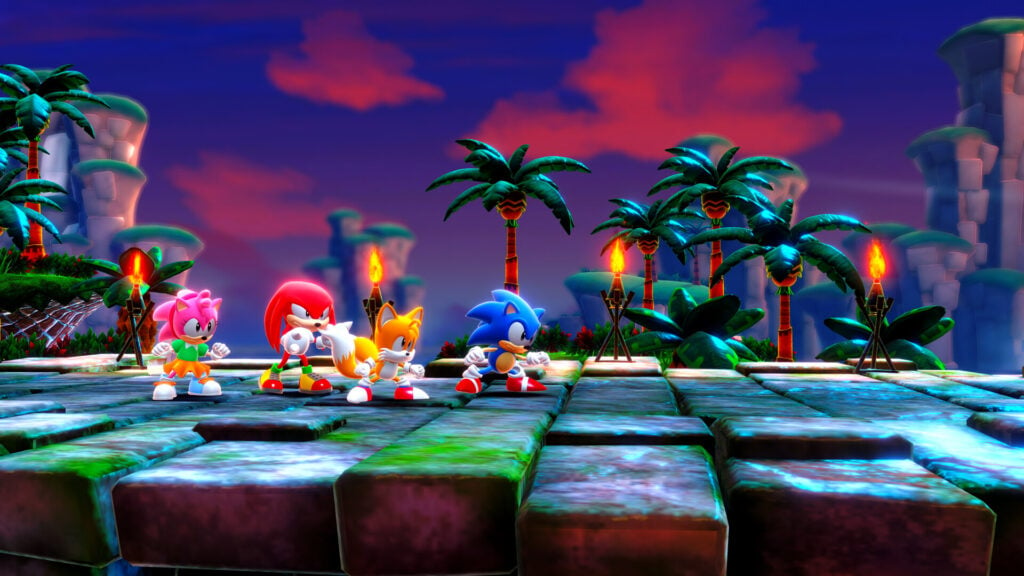
Sonic Superstars brings Sonic back to side-scrolling platforming, but with a modern look and four-player local co-op. Players can pick between Sonic, Tails, Knuckles, or Amy, each with their own unique movement abilities, then run through colorful zones filled with loops, enemies, hazards, boss fights, and the usual ring-chasing.
Sonic has always been built around speed, so adding multiple players can make the screen harder to follow when everyone is moving at different paces. But, at the same time, the hectic nature of Sonic Superstars is also what allows it to stand out from similar co-op games. If everyone is willing to treat the game as a fast group platformer rather than a perfectly controlled speed run, Sonic Superstars has plenty of fun to offer.
Each of the game’s playable characters feels distinct. Tails can fly, Knuckles can climb, Amy has her hammer, and Sonic is still the speed-focused all-rounder. That gives players a reason to try different characters rather than just picking a different color. Sonic Superstars may not be the most polished co-op game out there, but it is an example of a four-player platformer done mostly right.
Why Kids Will Love Sonic Superstars: Kids who like Sonic can play through full stages with friends or siblings instead of taking turns. The speed, character abilities, boss fights, and collectible Chaos Emerald powers give the game plenty of replay value, even when the co-op gets a little unruly.
ESRB Rating: E for Everyone
Content Descriptors: Mild Fantasy Violence, In-Game Purchases
Players: Single-player. 1–4 player local co-op on PlayStation.