

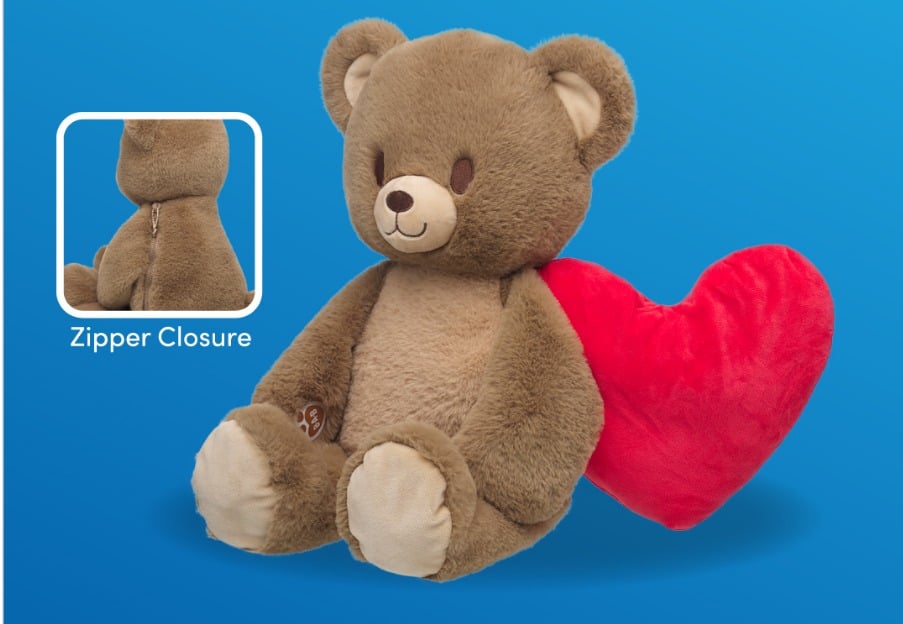
Weighted blankets and weighted plushes are hot items these days for good reason. They’re really comforting and soothing, and so many kids (especially, but not only, neurodivergent kids) get a lot of joy from them.
However, they do pose unique safety risks because of the materials used to add weight, which are often small beads, rice, or other tiny but relatively heavy items. These can alter laundering instructions and create a choking hazard.
In the case of the Build-A-Bear recall, a zipper adds extra concerns.
What Plushes Are Being Recalled?
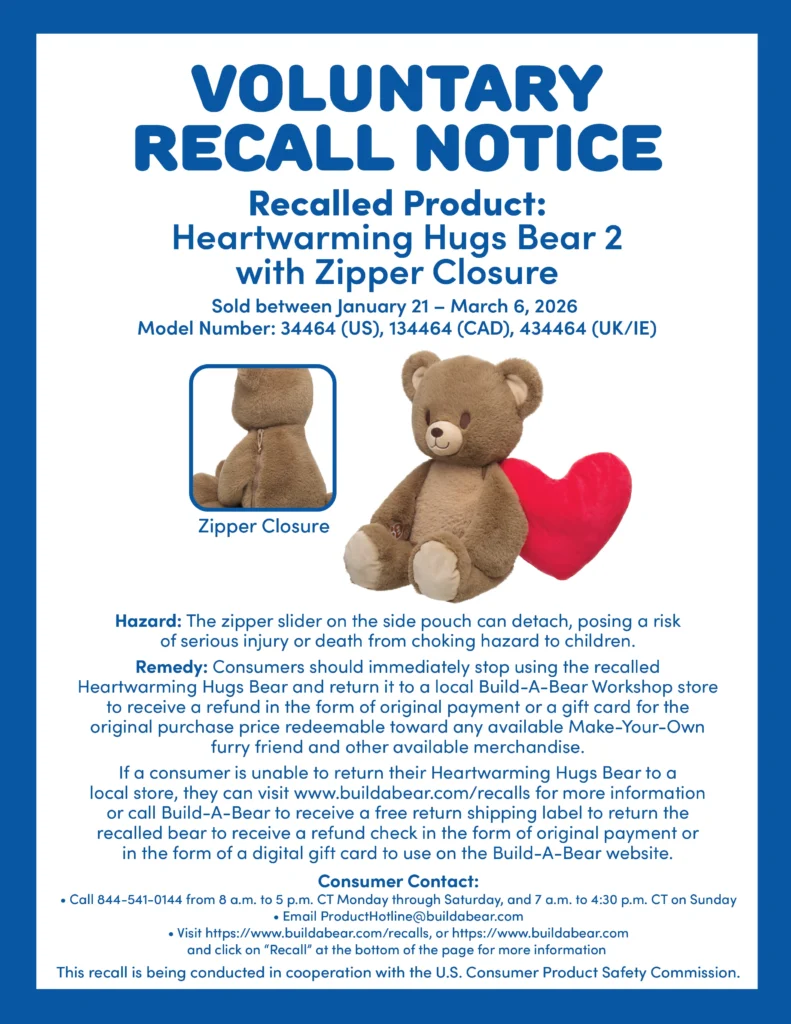
Build-A-Bear is issuing a voluntary recall on the Heartwarming Hugs Bear 2, due to an issue with the zipper slider.
If you’re familiar with the Build-A-Bear product line, you know that their basic model is an unstuffed plush, which kids can customize by having it stuffed to their desired firmness, adding other items inside (like sound buttons or wish charms) before it’s zipped closed, and then adding clothing and accessories.
In the case of the Heawarming Hugs Bear 2, some models have a defective zipper that can detach, creating a choking hazard. Parents should check for the following model numbers on items sold in the U.S., Canada, the UK, and Ireland.
Model Numbers: 34464 (US), 134464 (Canada), 434464 (UK/IE)
If your bear has a model number matching the above, return it to the store for a refund, or contact ProductHotline@buildabear.com to initiate a return by mail.
Parental Awareness Is Part Of The Process
For as long as the Consumer Product Safety Commission (CPSC) has existed, there have been documented instances of plush toys recalled for hazards such as elastic cords (used to attach toys to mobiles) or plastic eyes that could detach and pose a choking risk. As toys have modernized to include more accessories, inserts, and attachments, the list of safety hazards that parents and consumer protection entities monitor has grown.
Today, most toys must meet safety standards to hit the shelves, although parents should be aware that toys purchased from discount websites or imported ones may not be subject to these inspections.
And, of course, even with safety inspections and quality control, it’s possible for a defective item or an unrecognized danger to pass through any company.
Parents should check any new toy for small parts or items that can become detached. For plushes, check seams. Plushes for small children should have eyes that are embroidered or otherwise permanently attached, not sewn-on plastic or similar materials.
If the toy has batteries or other items on the inside (such as weighted beads, sound buttons, light-up devices, etc) parents or caregivers should make sure these items cannot be removed and are not accessible to the child.
The Special Risks Of Weighted Plushes
Some plushes with inserted materials for weighting should not go into the washer or dryer, so always check care instructions. Some synthetic weighting materials may be at higher risk for fire, especially if the plush is damaged in the process and materials are loose in the dryer.
If you purchase your plush from a less-reliable or less-accountable source (rather than a company whose products must go through inspections) you’ll want to take extra cautions, in case the materials used don’t actually match the ones named on the label or in the product description. For weighted plushes and all children’s items, it’s better to avoid questionable sources.
Even when buying from the most trusted companies, be aware that defects can occur and that damage may develop over time.
Inspect your children’s weighted plush regularly for any weak or open seams, developing holes or tears, and other signs of damage or wear that could lead to your child accessing the materials used to add weight.
What’s In My Weighted Plush, Anyway?
Most weighted plushes will contain beads or pellets made of glass, ceramic, or steel.
Some, especially those purchased from independent crafters or smaller businesses, may use organic materials, such as rice or flaxseed. These are often used (along with scented herbs like lavender) in microwave-safe products for warming.
While the beads or pellets can pose a choking hazard, the organic fillers pose a different risk: mold.
There have been particular reports of some plushes with flaxseed getting wet and growing mold inside, which parents didn’t realize until the smell became strong enough to notice.
Should We Just Avoid Weighted Plush Altogether?
Every parent will have to make their own decisions about the risks of weighted plushes.
However, the benefits of that extra weight and comfort can be significant, especially for kids who are neurodivergent, kids who have endured trauma, and kids who struggle with anxiety or separation. For this reason, many parents will conclude that the benefits are worth the risks.
Those risks can be mitigated with regular inspection of the plushes and extra caution when providing them to smaller children. (Remember, no plushes of any kind in the crib or bed for at least the first year of life.)
